- English
- French
- German
- Portuguese
- Spanish
- Russian
- Japanese
- Korean
- Arabic
- Greek
- German
- Turkish
- Italian
- Danish
- Romanian
- Indonesian
- Czech
- Afrikaans
- Swedish
- Polish
- Basque
- Catalan
- Esperanto
- Hindi
- Lao
- Albanian
- Amharic
- Armenian
- Azerbaijani
- Belarusian
- Bengali
- Bosnian
- Bulgarian
- Cebuano
- Chichewa
- Corsican
- Croatian
- Dutch
- Estonian
- Filipino
- Finnish
- Frisian
- Galician
- Georgian
- Gujarati
- Haitian
- Hausa
- Hawaiian
- Hebrew
- Hmong
- Hungarian
- Icelandic
- Igbo
- Javanese
- Kannada
- Kazakh
- Khmer
- Kurdish
- Kyrgyz
- Latin
- Latvian
- Lithuanian
- Luxembou..
- Macedonian
- Malagasy
- Malay
- Malayalam
- Maltese
- Maori
- Marathi
- Mongolian
- Burmese
- Nepali
- Norwegian
- Pashto
- Persian
- Punjabi
- Serbian
- Sesotho
- Sinhala
- Slovak
- Slovenian
- Somali
- Samoan
- Scots Gaelic
- Shona
- Sindhi
- Sundanese
- Swahili
- Tajik
- Tamil
- Telugu
- Thai
- Ukrainian
- Urdu
- Uzbek
- Vietnamese
- Welsh
- Xhosa
- Yiddish
- Yoruba
- Zulu
Slewing Bearing Companies Offering Turnkey Solutions for Heavy Equipment Integration
When engineering teams are looking for dependable slewing bearing companies that offer full turnkey Solutions for heavy equipment integration, they need to work with partners who know how complicated modern industrial applications can be. In places where failure is not an option, like wind turbines, construction cranes, mining equipment, and offshore platforms, these rotating mechanisms are essential. The right supplier has decades of experience making things and offers a wide range of support services. This makes sure that everything works together smoothly, from the initial design consultation to long-term maintenance support.
Understanding Slewing Bearings and Their Industrial Applications
Large-diameter rotating bearings are essential to many heavy industrial processes in many different fields. These carefully designed parts allow for smooth rotational movement while supporting heavy loads in tough conditions.
Mechanical Design and Operational Principles
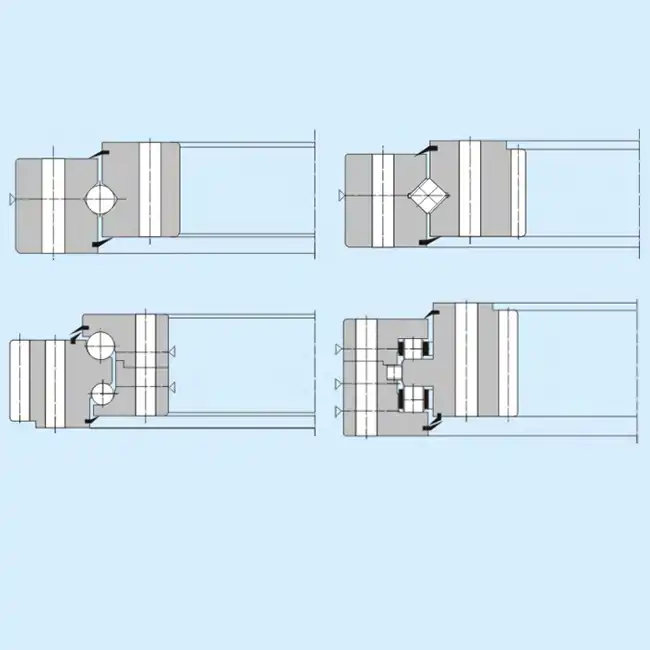
Reliable performance in harsh conditions is achieved by modern rotating ring bearings that use complex engineering principles. The basic structure is made up of an inner ring, an outer ring, and rolling elements placed between the raceways. For applications with moderate loads, single-row configurations are small. For demanding environments, double-row configurations offer better stability and load distribution.
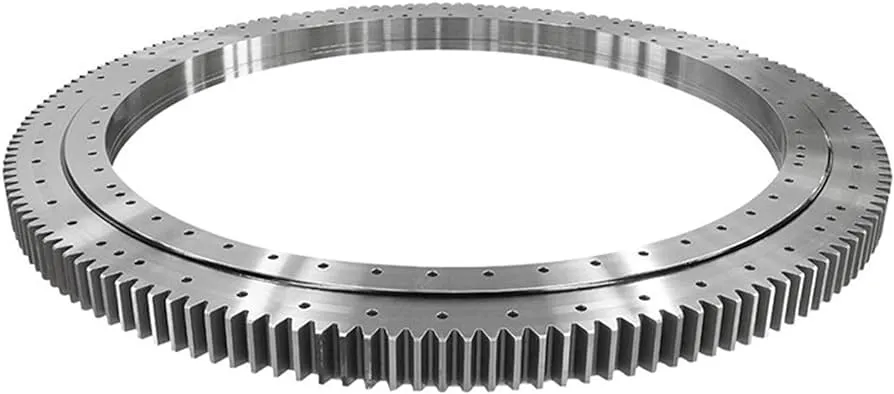
There are three separate seating rings in a triple-row roller configuration that can spread upper, lower, and radial loads separately. This advanced design can handle multiple forces acting at the same time in different directions while keeping the structure strong. There are external gear, internal gear, and no-gear versions of the strong construction, and each one is best for a certain type of integration.
The choice of material is very important for performance longevity. High-quality steel alloys like 50Mn, 42CrMo, S48C, and 42CrMo4 have great strength-to-weight ratios and don't wear out easily when loaded and unloaded many times. Advanced metallurgical processes make sure that the quality of the whole bearing structure is the same.
Critical Applications Across Heavy Industries
A lot of wind energy installations depend on big slewing bearing groups for yaw systems that turn turbines so they face the direction of the wind. These parts are used by pitch control mechanisms to change the angles of the blades so that they capture the most energy and protect themselves from wind damage. Because they are used over and over for decades, main shaft applications need to be very resistant to fatigue.
Heavy-duty rotating assemblies in mining on bucket-wheel excavators, stackers, and reclaimers that move thousands of tons of material every day rely on slewing bearing. The rough environment has dust, water, and big changes in temperature that make it hard for standard bearing designs to work. For long-term performance, material properties and sealing systems become very important.
Crane assemblies, tunnel boring machines, and ship loaders are all made with rotating mechanisms by companies that make construction and marine equipment. For these uses, exact load calculations and custom engineering are needed to make sure that the specifications match the way the system works. Saltwater corrosion and continuous duty cycles make things harder for port machinery.
Maintenance Best Practices and Longevity Factors
When you follow the right maintenance procedures, you can make your equipment last a lot longer and avoid costly downtime. As part of regular inspection schedules, the condition of the raceways, the integrity of the seals, and the performance of the lubrication system should all be checked. Changes in the environment, like temperature changes, contamination exposure, and changes in load, have a direct effect on maintenance intervals.
Managing lubrication is a key part of making rotating assemblies work well. High-quality greases made for extreme pressure applications keep the strength of the film even when heavy loads are applied and protect against corrosion. Automatic lubrication systems make sure that the right amount of oil is applied at the right time and require less work to be done by hand.
How to Choose the Right Slewing Bearing for Heavy Equipment Integration?
When specifying rotating mechanisms for heavy equipment, procurement professionals and engineering teams have to make tough choices. Understanding the most important selection criteria is the best way to get the best performance at the lowest total cost of ownership.
Load Capacity and Torque Requirements Analysis
When engineers do their math, they have to take into account both static and dynamic loads across the whole operational envelope. Axial loads from the weight of the equipment are added to radial forces from operations and moment loads from the structure bending. Advanced finite element analysis can help you guess how stress will be distributed and find possible failure modes.
Single-row ball configurations work well in situations where space is limited and the combined load is moderate. For bigger equipment installations, double-row designs offer more load capacity and better moment resistance. Three-row roller assemblies are very good at spreading out loads and can handle the toughest jobs.
How much torque is needed for slewing bearing depends on the speed of rotation, the size of the load, and the type of friction. While sealed bearing configurations protect against contamination, they come with a slightly higher torque value. Unsealed designs reduce rotational resistance the most, but they need stronger environmental protection measures.
Material Properties and Design Innovations
Choosing the right steel grade has a direct effect on how well a bearing works in certain conditions. When it comes to moderate applications, standard carbon steels are a cost-effective choice. On the other hand, alloy steels offer better strength and fatigue resistance for harsh environments. Surface treatments, such as case hardening and special coatings, make things last longer in corrosive environments.
New design ideas keep improving the performance of Slewing Bearings. With low-friction seal technologies, less power is used while still keeping contaminants out. Newer cage designs spread lubricant better and lower the rate of wear. Condition monitoring is possible for predictive maintenance programs thanks to built-in mounting holes for sensors.
Custom engineering solutions are made to meet the specific needs of an application that go beyond what a standard product can do. Large diameter needs of up to 5000 mm can accommodate huge equipment installations. Non-standard configurations improve performance for certain operational parameters while still making it possible to make the product.
Supplier Capabilities and Quality Assurance
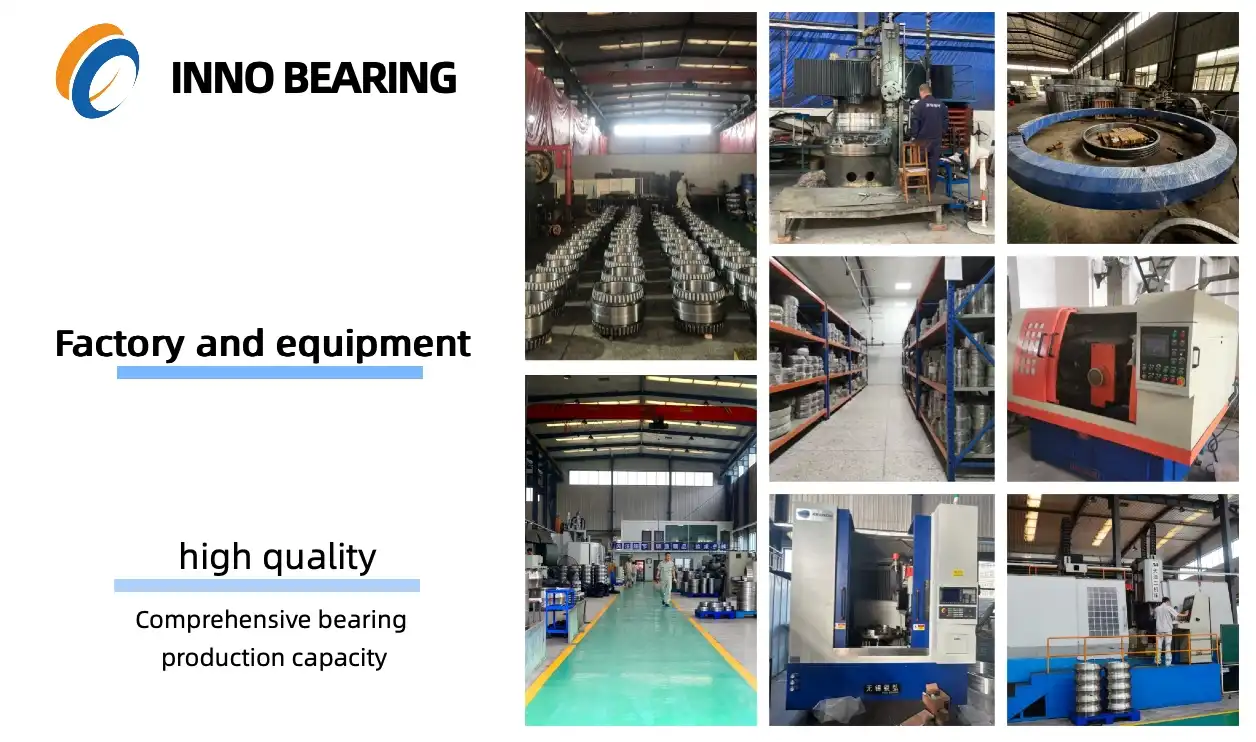
When choosing a manufacturer, you should focus on their production capabilities, quality systems, and technical support resources. Advanced testing tools, such as load testing, vibration analysis, and dimensional verification, make sure that performance characteristics are correct before delivery. Strict quality control measures make sure that all batches of a product work the same way.
Customization lets suppliers change standard designs to fit the needs of a specific application. Rapid prototyping services shorten the time it takes to develop software while lowering the risks of integrating it. Expertise in import substitution helps keep quality standards high while lowering costs in the supply chain.
INNO Bearing's Turnkey Solutions for Heavy Equipment Integration
Full service delivery turns tough buying problems into easy-to-understand answers that go above and beyond what customers expect while lowering project risks.
Complete Design and Engineering Support
The "turnkey" approach from INNO Bearing starts with a careful analysis of the application and custom engineering advice. Our design team works directly with engineers from the customer to make sure that the bearing specifications are best for the job. Advanced modeling abilities can predict performance characteristics and find possible ways to improve things.
Custom engineering services are used to solve problems that standard products can't. Large-diameter needs are given extra attention by changing the way things are made and improving the way quality is checked. Non-standard configurations use tried-and-true design principles while adding changes that are specific to the customer.
Quality assurance protocols for slewing bearing make sure that all deliveries of the same product work the same way. Before it is shipped, advanced testing equipment makes sure that the product can hold its weight, rotate smoothly, and be the right size. For important applications that need detailed quality records, full documentation makes it possible to track everything back to the source.
Streamlined Procurement and Logistics Management
Through strategic inventory management and production planning, supply chain optimization cuts down on lead times while keeping quality standards high. Our logistics team makes sure that delivery times work with the installation needs of our customers. This keeps project delays and storage costs to a minimum.
Technical support goes beyond just delivering products; it also includes full training programs and help with fixing problems. Maintenance training makes sure that customer service staff know how to do things correctly so that products work well and last a long time. Warranty policies protect you for a long time and quickly settle claims.
Case studies from real life show how well execution works in demanding heavy equipment applications. Wind energy projects benefit from designs that don't wear out and full documentation that can be tracked back to their source. Mining installations last longer because they protect the environment better and are made of strong materials.
Procurement Strategies for Slewing Bearings in Global B2B Markets
Strategic sourcing methods lower the total cost of ownership while making sure that the supply chain works reliably for important rotating parts.
Supplier Verification and Certification Requirements
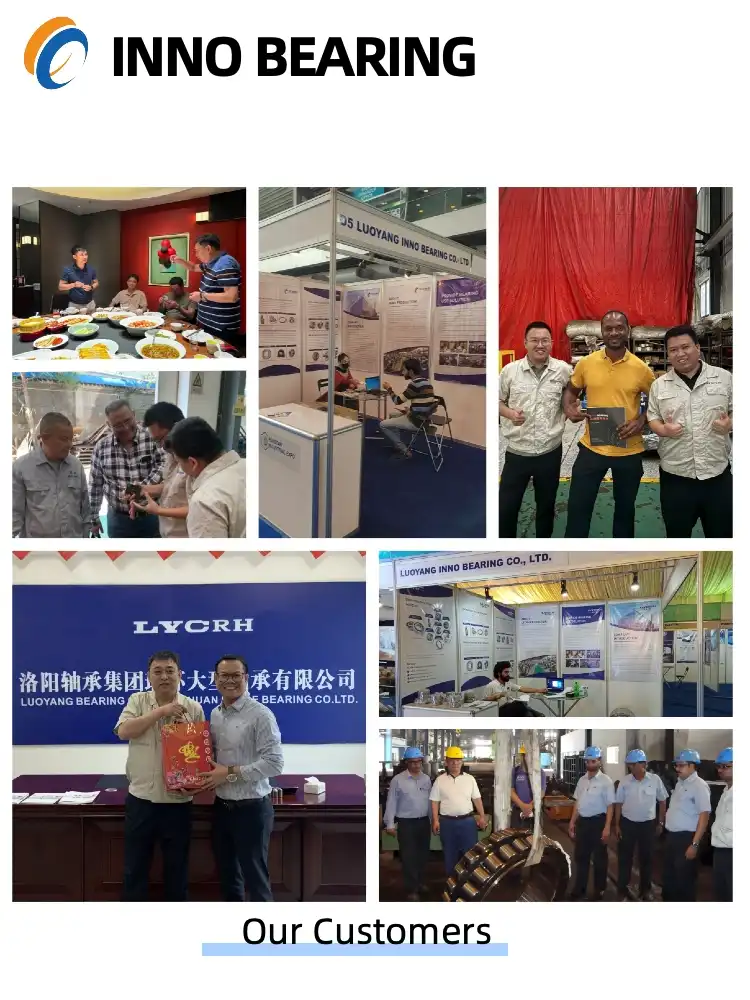
Comprehensive processes for evaluating suppliers should look at their ability to make things, their quality systems, and their ability to stay in business. ISO certification requirements make sure that quality management systems are always the same, and certifications that are specific to an industry prove that someone has the right kind of expertise. Reference customers give you an idea of how well the service really works and how good the support is.
Reviewing technical documentation shows how well you can design and make things. Advanced testing tools show a dedication to quality assurance, and detailed quality manuals show organized ways of managing the process. Facility audits compare what the building can actually do with what it says it can do.
Certification is important for more than just meeting basic quality standards; it also has to meet requirements specific to the industry. Applications that use wind energy need to be able to do fatigue testing and metallurgical knowledge. For marine applications, you need to be able to test for corrosion resistance and environmental conditions.
Strategic Negotiation and Cost Optimization
When you negotiate a bulk order, you can get better delivery times and save a lot of money. Suppliers can plan their production better and lower the cost per unit when they make volume commitments. Long-term agreements keep prices stable and make sure that capacity is used during times of high demand.
Being clear about prices helps procurement teams figure out the total cost of ownership, which includes more than just the purchase price. It's important to be clear about any hidden costs, like expediting fees, custom tooling charges, and technical support fees, from the start. Services that add value, like inventory management and just-in-time delivery, can help make up for higher prices by saving money on running the business.
When it comes to quality, cost optimization and performance needs must be balanced. Low-cost options might not be as reliable in the long run, which could lead to higher maintenance costs and operational risks. Quality of slewing bearings has a direct effect on how available equipment is and how much it costs over its whole life.
INNO Bearing's global distribution capabilities help with international buying needs by managing all logistics and making sure that rules are followed. Help with clearing customs and import paperwork make things easier for administrators and make sure packages arrive on time. Local service capabilities allow for ongoing support no matter where the customer is located.
Conclusion
To find the best slewing bearing supplier for heavy equipment integration, you need to carefully look at their technical skills, quality systems, and full support services. INNO Bearing's turnkey solutions address the tough problems that procurement teams and engineers face, thanks to almost 30 years of specialized experience in large and non-standard applications. Our dedication to quality, customization, and customer service guarantees the success of every project and helps us build long-lasting relationships that keep us successful in tough industrial settings.
FAQ
What makes slewing bearings different from standard bearing types?
As a single compact unit, rotating ring assemblies can handle radial, axial, and moment loads. They combine multiple bearing functions. Standard bearings need different parts for each direction of load, but these assemblies offer full rotational support with advanced raceway designs and the best arrangements of rolling elements. The integrated structure makes installation easier and provides better load distribution and structural rigidity.
How do I determine the correct size and type for my application?
To make the right specification, you need to look at the operational loads, rotational needs, and environmental conditions. Static weight, dynamic forces, and moment loads from equipment deflection must all be taken into account when figuring out the load. Extreme temperatures, contamination exposure, and the chance of corrosion are some of the environmental factors that affect the choice of material and the seal requirements. INNO Bearing's engineering team does a full application analysis to find the best specifications for each set of operational parameters.
What maintenance procedures ensure maximum service life?
Regular inspection schedules should include raceway condition assessment, seal integrity verification, and lubrication system monitoring. Proper lubrication management using high-quality greases maintains film strength under heavy loads while providing corrosion protection. Environmental monitoring helps change the time between maintenance tasks based on how things are actually working. INNO Bearing offers thorough maintenance training and records to make sure that the bearings work at their best throughout their entire lifecycle.
Why Choose INNO Bearing for Your Heavy Equipment Integration Needs
INNO Bearing is a reliable company that makes slewing bearings. They have unmatched knowledge when it comes to large-diameter and custom bearing solutions up to φ5000mm. Our full range of turnkey services includes design advice, precision manufacturing, and ongoing technical support to make sure the integration goes smoothly. We offer reliable solutions for wind energy, mining, construction, and marine uses thanks to our nearly 30 years of experience in the field and advanced testing tools. Email our engineering team at sales@inno-bearing.com to talk about your specific needs and find out how our customized slewing bearing solutions can improve the performance of your heavy equipment while lowering the total cost of ownership.
References
Johnson, R.M. "Heavy Duty Slewing Bearing Design Principles for Wind Energy Applications." International Journal of Renewable Energy Engineering, Vol. 45, No. 3, 2023.
Chen, L.K., Anderson, P.J. "Comparative Analysis of Large Diameter Bearing Solutions in Heavy Construction Equipment." Mechanical Engineering Research Quarterly, Vol. 28, No. 2, 2024.
Thompson, S.A. "Metallurgical Considerations for Extreme Load Bearing Applications in Mining Equipment." Materials Science and Industrial Applications Review, Vol. 17, No. 4, 2023.
Rodriguez, M.C., Kumar, A.R. "Optimization Strategies for Heavy Equipment Integration Using Advanced Bearing Technologies." Industrial Engineering and Manufacturing Technology Journal, Vol. 39, No. 1, 2024.
Williams, D.J. "Global Supply Chain Management for Specialized Industrial Bearing Components." International Business and Logistics Review, Vol. 22, No. 3, 2023.
Zhang, H.W., Peterson, K.L. "Maintenance Best Practices for Large Scale Rotating Machinery in Marine and Offshore Applications." Maritime Engineering and Technology Quarterly, Vol. 31, No. 4, 2024.

Learn about our latest products and discounts through SMS or email