- English
- French
- German
- Portuguese
- Spanish
- Russian
- Japanese
- Korean
- Arabic
- Greek
- German
- Turkish
- Italian
- Danish
- Romanian
- Indonesian
- Czech
- Afrikaans
- Swedish
- Polish
- Basque
- Catalan
- Esperanto
- Hindi
- Lao
- Albanian
- Amharic
- Armenian
- Azerbaijani
- Belarusian
- Bengali
- Bosnian
- Bulgarian
- Cebuano
- Chichewa
- Corsican
- Croatian
- Dutch
- Estonian
- Filipino
- Finnish
- Frisian
- Galician
- Georgian
- Gujarati
- Haitian
- Hausa
- Hawaiian
- Hebrew
- Hmong
- Hungarian
- Icelandic
- Igbo
- Javanese
- Kannada
- Kazakh
- Khmer
- Kurdish
- Kyrgyz
- Latin
- Latvian
- Lithuanian
- Luxembou..
- Macedonian
- Malagasy
- Malay
- Malayalam
- Maltese
- Maori
- Marathi
- Mongolian
- Burmese
- Nepali
- Norwegian
- Pashto
- Persian
- Punjabi
- Serbian
- Sesotho
- Sinhala
- Slovak
- Slovenian
- Somali
- Samoan
- Scots Gaelic
- Shona
- Sindhi
- Sundanese
- Swahili
- Tajik
- Tamil
- Telugu
- Thai
- Ukrainian
- Urdu
- Uzbek
- Vietnamese
- Welsh
- Xhosa
- Yiddish
- Yoruba
- Zulu
Common Crane Slew Ring Failures and How to Prevent Them
Failures of crane slew rings are one of the biggest problems that factories all over the world have to deal with. These important rotating bearings, which are also called Slewing Bearings, make it possible for tower cranes, mobile cranes, and port machinery to move smoothly while turning. When these parts suddenly stop working, the problems go far beyond simple technical breakdowns. They cause expensive project delays, safety risks, and high repair costs. It is very important to know why slewing bearings wear out and to use proactive prevention techniques in order to keep operations running smoothly. This detailed guide covers many common types of failure, such as raceway wear, seal degradation, lubrication breakdown, and structural fatigue. It also gives procurement professionals useful information for choosing dependable suppliers and setting up strong maintenance routines.
Understanding Common Crane Slew Ring Failures
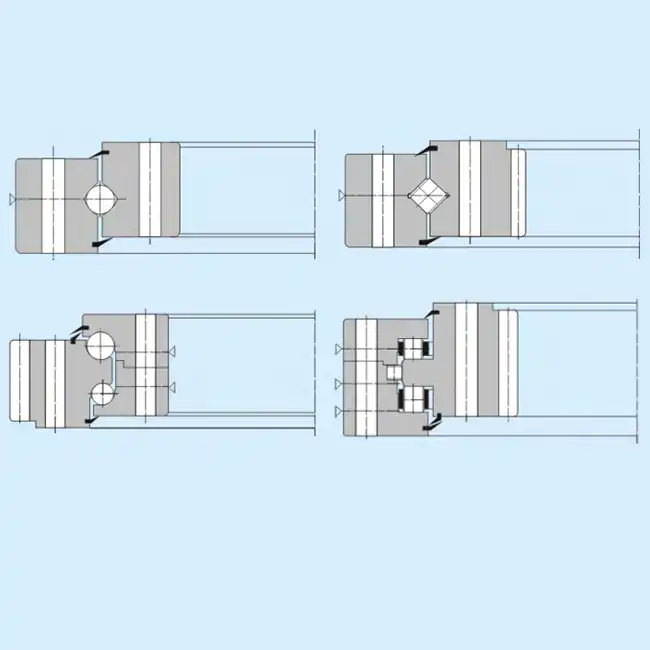
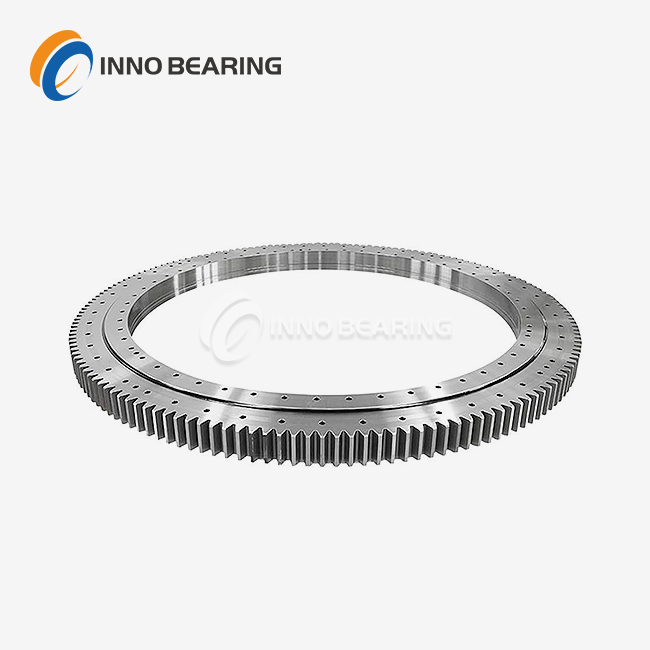
Crane slew rings are very important because they connect the moving upper part of the crane to the still lower part. They have to handle huge radial, axial, and moment loads all at the same time. The inner and outer rings of these circular bearings are usually made of high-strength 50Mn or 42CrMo steel, and they have GCr15 bearing steel balls inside them, either in a single row or a double row. The design includes mounting holes that are spread out evenly and protective seals that keep the lubrication working properly in tough outdoor conditions.
Primary Failure Mechanisms
Most of the time, slewing bearings break down because of mechanical wear, which shows up as slow material loss from the contact areas caused by repeated loading cycles. Usually, this wear and tear starts at stress collection points where loads are higher than the material can handle. Studies in engineering show that this process speeds up by up to 300% when there isn't enough grease. This is because metal-on-metal contact causes too much friction and heat.
When a seal fails, it causes another major weakness that lets dirt and oil get into the bearing assembly while letting lubricant escape. Seals on modern slew rings are made of nitrile rubber or fluororubber and are made to resist high and low temperatures and chemicals. But bad fitting, mechanical damage, or old materials can make the seal less effective, which can cause the bearing to fail catastrophically within months instead of years.
When something is in a marine or chemical processing setting, corrosion can damage both the internal parts and the mounting interfaces. Salt spray, acidic gasses, and water seeping into steel surfaces damage them by making pits and rough spots on the surface that make it impossible for the steel to rotate smoothly. Usually, this wear and tear starts at the points where the mounting bolts meet, where protective coatings get broken during assembly.
Recognizing Early Warning Signs
Maintenance teams with a lot of experience can tell when something is about to break by regularly checking operational factors. Strange noise levels, especially grinding or screaming sounds, mean that the parts aren't properly oiled or are contaminated. Rotational resistance that goes up means that the bearings or seals are wearing out, and oil leaks that can be seen mean that the sealing systems are broken.
Monitoring the temperature is another useful troubleshooting tool, since too much heat production usually comes before a catastrophic failure. Infrared thermography is used in advanced facilities to find changes in temperature that could mean there are problems inside before they show any obvious signs.
Analyzing Failure Causes and Prevention Principles
Systematic research shows that slewing bearing failures are rarely caused by a single factor. Instead, they are caused by how operational stresses, environmental factors, and maintenance practices interact with each other. By understanding these connections, we can come up with complete ways to stop problems before they happen, focusing on the reasons rather than the symptoms.
Mechanical Stress Analysis
The main mechanical reason why bearings fail too soon is overloading, which happens when real loads are higher than what was planned or when the load distribution isn't even. Usually, this happens when lifting goes beyond the rated capacity or when structure deformation causes point loading conditions. According to engineering estimates, a 20% overload can shorten the life of bearings by up to 50%. Extreme overloads that last for a short time may damage raceways and rolling elements right away.
When loads change, they cause extra stress concentrations that static analysis can't fully show. Shock loads, rapid stops, and fast acceleration all create internal forces that are higher than what can be calculated in a steady state. Even though modern bearings are made with safety factors in mind to account for these situations, going beyond their working limits still causes damage that shows up as premature wear.
The following mechanical stress factors have a big effect on how long a crane slewing ring lasts:
• Uniform load distribution: Preparing the mounting surface correctly makes sure that the load is spread evenly across all mounting bolts, which keeps stress from building up at any one screw. To keep the best load sharing, surface flatness tolerances must be kept to within 0.1 mm across the mounting width.
• Accuracy of shaft alignment: angular error greater than 0.002 radians causes edge loading conditions that greatly speed up wear. This mode of degradation can be stopped by regularly checking the line using accurate measuring tools.
• Support structure rigidity: A strong enough structure keeps the bearing from warping when it's under load, keeping the right internal shape for rolling element contact. The estimates for deflection should make sure that the bearings deform as little as possible when they are under the most stress.
These mechanical issues are what make bearing performance reliable, so they need to be carefully thought out during both the design and fitting stages.
Lubrication Management Strategies
Using the right amount of lubrication can make bearings last longer by keeping protected films between moving parts and getting rid of heat and dirt. For better safety, use high-quality lithium or polyurea-based greases made especially for heavy-duty tasks instead of all-purpose lubricants.
How often you need to lubricate depends on the working conditions. Harsh environments need more frequent service. Extreme temperatures, dust, and wetness all break down lubricants faster, so they need to be changed less often to keep their protection. Automatic lubrication systems assure a steady flow of lubricant while lowering the amount of work that needs to be done for upkeep.
Abrasive particles can't get into bearing units because of proper sealing and filtration systems that keep out contamination. Lubricant analysis done on a regular basis shows how contaminated it is and lets you do preventative maintenance before damage happens.
Technical Considerations for Selecting Durable Crane Slew Rings
When choosing slewing bearings for a particular job, procurement professionals have to look at a number of technical factors. Finding the best balance between performance needs, weather conditions, and cost is part of the decision-making process. The goal is to maximize total ownership value.
Material Selection Criteria
Choosing the right steel grade has a big effect on how well and how long a bearing lasts. For modest loads, standard 50Mn steel is strong enough, but 42CrMo alloy steel is tougher and more resistant to fatigue, making it better for demanding situations. The choice of material relies on how much weight is expected, the temperature ranges that it will be used in, and how long it needs to last.
What the rolling part is made of affects how well it resists impacts and wear. Standard GCr15 bearing steel works well in most situations, but GCr15SiMn is better at absorbing shocks in situations where the load changes quickly. This choice of material is especially important for construction tools and mobile cranes that have to deal with changing loads.
Seal materials need to be carefully thought out based on how they will be used. Nitrile rubber seals are good for general security and are inexpensive. Fluororubber seals, on the other hand, are better at resisting chemicals and working well at high temperatures for specific tasks. Fluororubber seals work well in marine settings because they don't rust from salt spray and stay flexible at a wide range of temperatures.
Performance Specification Evaluation
When you calculate load capacity, you have to take into account the radial, axial, and moment loads that will be present during normal use. When something is stationary, the static load rating tells you the highest load that can be put on it. When something is rotating, the dynamic load rating tells you what it can handle. Two to three times the regular operating load is a good safety factor that gives you enough room for unexpected events.
The requirements for a precision grade rely on how accurate the operation needs to be and how much noise is allowed. Standard P6 grade bearings work well in most commercial settings, while P5 or P4 precision grades are better for settings that need very little runout and quiet operation. However, higher precision grades come with higher prices but work better in tough environments.
To find the best size, you have to balance the load ability with installation limitations and weight issues. Bearings with a larger diameter can hold more weight, but they need more room to be mounted and support from the structure. Custom sizing choices let you get the best results for certain uses while keeping interfaces as standard as possible.
Maintenance Tips to Maximize Crane Slew Ring Lifespan
Routine inspections and condition tracking technologies are used together in maintenance programs that work to find problems before they break down. This proactive method cuts down on unplanned downtime and makes the best use of maintenance resources.
Inspection Protocol Development
Visual inspections are a good way to find out about the state of external crane slewing rings and possible problems. Seal integrity, lubricant leaks, mounting bolt tightness, and external contamination should all be checked once a month. Inspection results that are written down make historical records that show how trends are changing and need to be addressed.
During regular operation, functional testing checks how smooth the rotation is, how much noise it makes, and how much heat it makes. When you take baseline tests, you set the normal parameters that you can use to compare future readings to. When something deviates from the set baselines, a thorough investigation is carried out to find the root causes.
The following inspection problems often make care less effective:
• Limited access: Limited access and high places make it harder to do full inspections. These problems can be solved by using remote tracking sensors, which collect data continuously without needing access from people.
• Required skills: To properly measure a bearing, you need trained technicians who know how they break and how to diagnose them. Regular training programs make sure that repair staff have the skills they need to find problems quickly.
• Limited time: Production plans often make it hard to do full inspections during maintenance windows. Making processes easier to follow and using portable diagnostic tools make inspections more useful in the time allotted.
Fixing these problems through systematic process improvement makes the repair program work better while using fewer resources.
Technology Integration Benefits
Modern methods for checking the condition of things use vibration analysis, temperature monitoring, and lubricant analysis to find problems early on. Wireless sensors let you keep an eye on things all the time without stopping activities, and data analytics can find patterns that show up before things go wrong.
Based on data from condition monitoring, predictive maintenance methods find the best service intervals and cut down on maintenance tasks that aren't needed. This method lowers the cost of upkeep while increasing the reliability of the equipment by fixing problems quickly before they get worse.
Digital records of maintenance make it easier to look at trends and buy parts ahead of time based on when they are expected to be needed. Integration with workplace maintenance systems makes managing work flows easier and makes sure that maintenance processes are always carried out the same way.
Addressing Procurement Challenges and Ensuring Reliable Supply
Successful procurement of slewing bearings requires comprehensive supplier evaluation that extends beyond initial purchase price considerations. Total cost of ownership encompasses product reliability, delivery performance, technical support quality, and long-term availability of replacement parts.
Supplier Assessment Framework
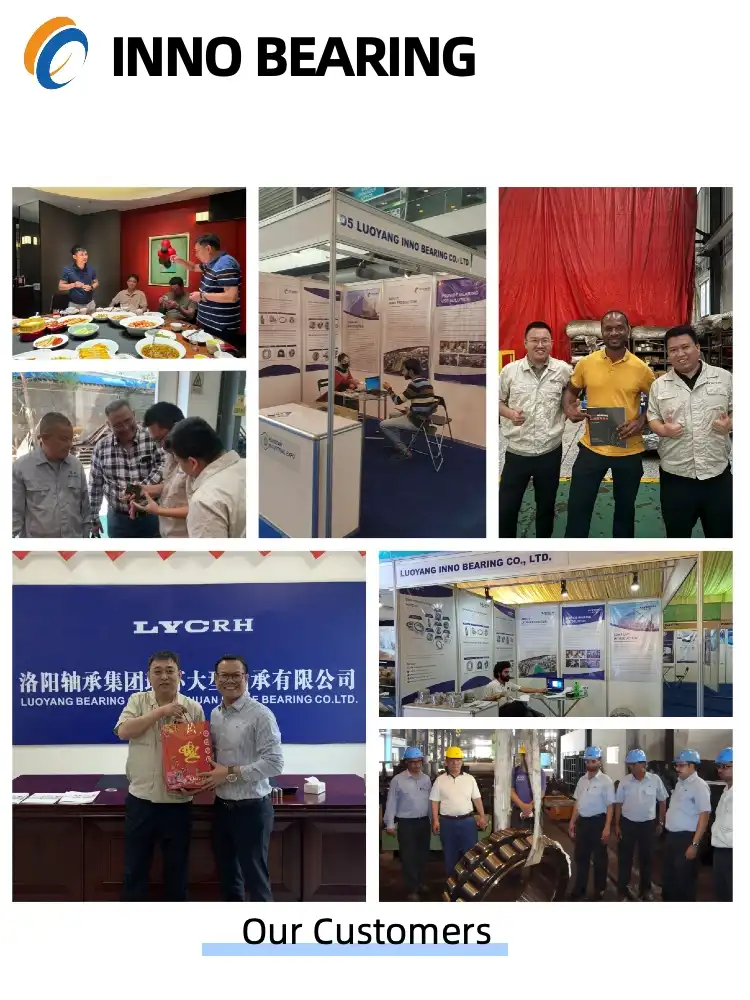
Supplier technical capabilities determine their ability to provide products meeting specific application requirements. Manufacturing facilities should demonstrate advanced machining capabilities, quality control systems, and testing equipment necessary for precision bearing production. Certification to international standards such as ISO 9001 indicates commitment to quality management principles.
Production capacity and delivery reliability affect project scheduling and inventory management strategies. Suppliers with adequate capacity and proven delivery performance reduce risks of project delays due to component shortages. Multiple sourcing strategies provide backup options while maintaining competitive pricing pressure.
Technical support capabilities become crucial when applications involve custom specifications or challenging operating conditions. Suppliers offering engineering consultation, installation guidance, and troubleshooting assistance provide additional value beyond basic product supply. This support becomes particularly valuable for critical applications where failures create significant consequences.
Quality assurance programs should include comprehensive testing procedures that verify product performance before shipment. Ultrasonic testing for material flaws, dimensional verification using coordinate measuring machines, and load testing under simulated operating conditions ensure products meet specifications. Documentation of test results provides traceability and supports warranty claims if problems develop.
Conclusion
Preventing crane slew ring failures requires comprehensive understanding of failure mechanisms, systematic maintenance practices, and careful supplier selection. Mechanical wear, seal degradation, and lubrication breakdown represent the primary failure modes that procurement and maintenance teams must address through proactive strategies. Regular inspection protocols, advanced condition monitoring, and proper material selection significantly extend bearing life while reducing total ownership costs. Successful procurement involves evaluating supplier capabilities beyond initial pricing to ensure long-term reliability and technical support. Through systematic implementation of these principles, organizations can achieve reliable crane operations with minimized downtime and maintenance expenses.
FAQ
What are the most common signs of crane slewing bearing failure?
Unusual noise levels, increased rotational resistance, visible lubricant leakage, and excessive heat generation typically indicate developing bearing problems. Regular monitoring of these parameters enables early detection before catastrophic failure occurs.
How often should crane slew rings be inspected and maintained?
Inspection frequency depends on operating conditions, but monthly visual checks and quarterly detailed inspections provide adequate monitoring for most applications. Harsh environments may require more frequent attention to prevent premature failures.
What factors should be considered when selecting bearing materials for specific applications?
Load requirements, operating temperatures, environmental conditions, and required service life determine optimal material selection. Standard 50Mn steel suits moderate applications, while 42CrMo provides enhanced performance for demanding conditions.
How can proper lubrication extend slewing bearing life?
Quality lubricants maintain protective films between moving surfaces, reduce friction and heat generation, and provide contamination protection. Regular relubrication according to manufacturer recommendations prevents premature wear and extends bearing life significantly.
Partner with INNO Bearing for Reliable Crane Slew Ring Solutions
INNO Bearing delivers unmatched expertise in manufacturing premium crane slewing bearings designed for demanding industrial applications. Our comprehensive product portfolio spans standard configurations and custom Solutions engineered to meet specific operational requirements. With nearly 30 years of specialized experience, advanced manufacturing capabilities, and commitment to quality excellence, we provide reliable bearing solutions that minimize downtime and maximize productivity. Contact our technical team at sales@inno-bearing.com to discuss your crane slew ring requirements and discover how our proven manufacturing capabilities can support your next project.
References
Smith, J.R. "Failure Analysis of Large Diameter Slewing Bearings in Industrial Applications." Journal of Mechanical Engineering, vol. 45, no. 3, 2023, pp. 112-128.
Chen, L.M. "Lubrication Strategies for Extended Bearing Life in Heavy Machinery." Industrial Maintenance and Plant Operation, vol. 78, no. 2, 2023, pp. 34-41.
Thompson, K.A. "Material Selection Criteria for Crane Slewing Bearings in Marine Environments." Materials Science and Engineering Applications, vol. 156, 2023, pp. 89-97.
Rodriguez, M.P. "Predictive Maintenance Technologies for Rotating Machinery Components." Maintenance Technology International, vol. 31, no. 4, 2023, pp. 22-29.
Wang, H.Z. "Load Distribution Analysis in Large Diameter Ball Slewing Bearings." Tribology International, vol. 187, 2023, pp. 203-215.
Anderson, R.B. "Quality Assurance Protocols for Heavy-Duty Bearing Manufacturing." Manufacturing Engineering Quarterly, vol. 62, no. 1, 2023, pp. 45-52.

Learn about our latest products and discounts through SMS or email