- English
- French
- German
- Portuguese
- Spanish
- Russian
- Japanese
- Korean
- Arabic
- Greek
- German
- Turkish
- Italian
- Danish
- Romanian
- Indonesian
- Czech
- Afrikaans
- Swedish
- Polish
- Basque
- Catalan
- Esperanto
- Hindi
- Lao
- Albanian
- Amharic
- Armenian
- Azerbaijani
- Belarusian
- Bengali
- Bosnian
- Bulgarian
- Cebuano
- Chichewa
- Corsican
- Croatian
- Dutch
- Estonian
- Filipino
- Finnish
- Frisian
- Galician
- Georgian
- Gujarati
- Haitian
- Hausa
- Hawaiian
- Hebrew
- Hmong
- Hungarian
- Icelandic
- Igbo
- Javanese
- Kannada
- Kazakh
- Khmer
- Kurdish
- Kyrgyz
- Latin
- Latvian
- Lithuanian
- Luxembou..
- Macedonian
- Malagasy
- Malay
- Malayalam
- Maltese
- Maori
- Marathi
- Mongolian
- Burmese
- Nepali
- Norwegian
- Pashto
- Persian
- Punjabi
- Serbian
- Sesotho
- Sinhala
- Slovak
- Slovenian
- Somali
- Samoan
- Scots Gaelic
- Shona
- Sindhi
- Sundanese
- Swahili
- Tajik
- Tamil
- Telugu
- Thai
- Ukrainian
- Urdu
- Uzbek
- Vietnamese
- Welsh
- Xhosa
- Yiddish
- Yoruba
- Zulu
NUP vs NJ Bearings: Structural Differences Explained
Understanding the structural differences between NUP bearing designs and NJ configurations is essential for engineering success when choosing bearing Solutions for industrial uses. NUP bearings have an outer ring with two rows of ribs and an inner ring with one row of ribs and flat ribs. This makes it possible to handle both radial and slight axial loads well. Because of this structural benefit, they are perfect for placing shaft systems in tough industrial settings where even load distribution is very important.
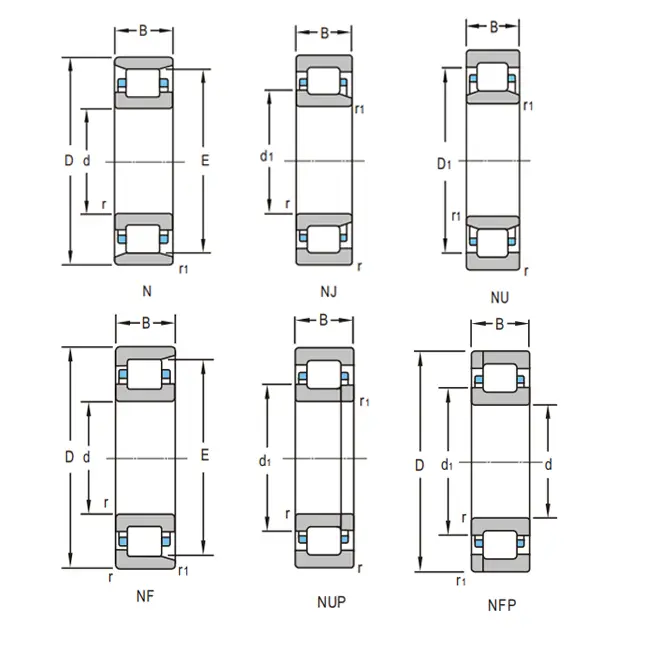
Understanding NUP and NJ Bearings: A Structural Overview
It is in this part that we look closely at the design ideas and common uses for both types of bearings. The way each type works and how it needs to be installed are determined by its structural base.
NUP Bearing Architecture and Design Elements
Different from other bearings, NUP bearings have a unique structure with an outer ring with two ribs and an inner ring with one rib plus flat ribs. This design supports linear loads in both directions and is still very good at handling radial loads. The single row of rollers works inside a cage system that can be set up in either an open or a closed configuration, based on the environment.
The single rib on the inner ring and the flat arrangement of the ribs make it possible to precisely place the shaft system. This makes these bearings especially useful for tasks that need to control axial movement. For important parts, the material usually has GCr15, GCr15SiMN, or 20Cr2Ni4A in it, and cages are made of stamped steel or brass to make them last longer.
NJ Bearing Configuration and Structural Characteristics
New Jersey bearings take a different method. The inner ring has two ribs, while the outer ring only has one. This arrangement changes the roller guide patterns and axial displacement properties in a way that is different from NUP configurations. The structure's layout changes how loads are distributed and how installations are done, which can be very helpful in some situations.
The different designs of these systems have a direct effect on how well they work in different workplace settings. Each configuration has its own benefits for different load conditions and environmental problems.
Visual Comparison and Installation Characteristics
Looking at these architectures side by side shows how the changes in their structures affect how they are installed and how they work. The arrangement of the ribs changes not only how much weight the structure can hold, but also how it is put together, how easy it is to do maintenance, and how well it works in the long run. When choosing bearings that meet specific operational needs and maintenance standards, procurement professionals can make better decisions when they know these differences.
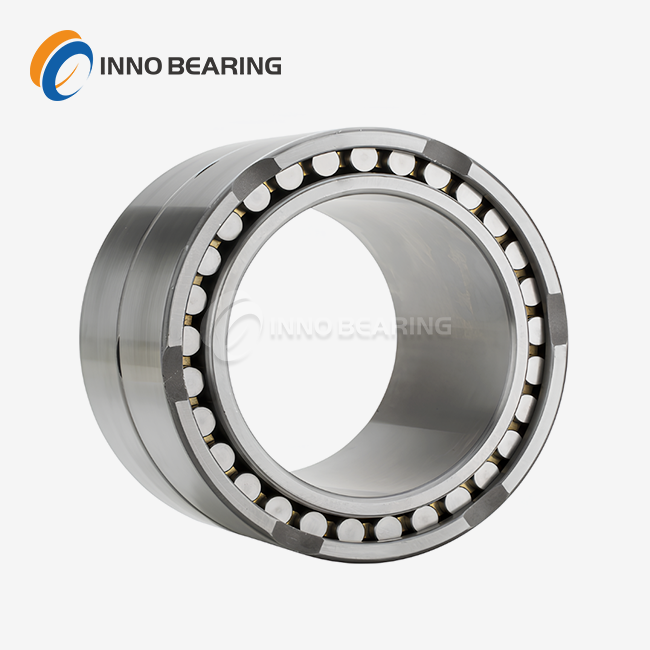
Comparative Analysis: NUP vs NJ Bearings Based on Structural Characteristics
The structural nuances between these bearing types translate into measurable differences in axial and radial load capacities, directly affecting their performance thresholds under various operating conditions. Understanding these performance variations enables more precise application matching and improved equipment reliability.
Load Capacity and Performance Thresholds
Bearing NUP systems demonstrate exceptional capability in handling combined radial and axial loads due to their outer ring double rib configuration. The structural arrangement allows for load distribution across multiple contact points, enhancing overall capacity and extending operational life under challenging conditions. Radial clearance specifications and axial load-bearing capacity become critical inspection parameters during quality assessment procedures.
The flat rib fitting degree in NUP designs requires precise manufacturing tolerances to ensure optimal performance, with typical precision levels ranging from P0/P6 for standard applications to P5 grade for positioning scenarios requiring enhanced accuracy. These precision requirements directly impact manufacturing costs and delivery timelines but provide superior performance in demanding applications.
Dimensional Standards and Manufacturing Considerations
Standard size ranges for quality NUP bearing products span inner diameters from 20mm to 500mm, with outer diameters extending from 47mm to 1000mm and width variations between 14mm to 200mm. However, specialized applications in heavy machinery and wind energy sectors often require custom dimensions extending well beyond these standard ranges, with some applications demanding bearings up to 5000mm in diameter.
Manufacturing precision directly impacts assembly ease and maintenance processes, with tighter tolerances requiring more sophisticated production equipment but delivering superior operational performance. The relationship between precision grades and application requirements becomes particularly important in sectors like aerospace and defense where extreme accuracy requirements justify higher manufacturing costs.
Noise Generation and Vibration Characteristics
Structural features significantly influence noise generation and vibration risks, with specific design elements contributing to different failure modes and maintenance requirements. The rib arrangements in both bearing types affect roller guidance patterns, which directly impact vibration characteristics and operational noise levels during high-speed rotation.
These performance characteristics provide practical insights for maintenance planning and reliability improvement programs. Understanding vibration patterns and noise signatures enables predictive maintenance strategies that reduce unexpected downtime and extend equipment life across industrial applications.
Technical Decision-Making: Selecting Between NUP and NJ Bearings for B2B Procurement
This guidance framework assists procurement professionals in matching bearing designs to technical application demands while considering factors like rotational speed requirements, load types, and environmental challenges typical in industrial settings.
Application-Specific Performance Requirements
Wind energy applications demand bearings capable of handling extreme loads with exceptional fatigue resistance and long service life. NUP bearing configurations often excel in these environments due to their ability to manage both radial forces from wind loading and axial forces from blade pitch control systems. The outer ring double rib design provides enhanced stability under variable loading conditions common in renewable energy applications.
Heavy machinery operations including cranes, excavators, and tunnel boring machines require bearings with superior load-bearing capacity and precision machining. The structural characteristics of NUP bearings make them particularly suitable for rotation systems where shaft positioning accuracy becomes critical for operational safety and performance efficiency.
Procurement Metrics and Supply Chain Considerations
Cost-effectiveness evaluation must balance initial bearing costs against lifecycle performance benefits, including maintenance requirements and expected operational life. Quality bearing NUP often command premium pricing due to their complex manufacturing requirements but deliver superior value through extended service life and reduced maintenance intervals.
Delivery timelines vary significantly between standard and custom bearing configurations, with specialized applications requiring extended lead times for engineering, manufacturing, and quality verification processes. Understanding these timeline variations enables better project planning and inventory management strategies.
Quality Assurance and Supplier Evaluation
Brand reputation and warranty provisions play crucial roles in mitigating supply chain risks and ensuring long-term equipment reliability. Comprehensive quality assurance programs should encompass material verification, dimensional accuracy testing, and performance validation under simulated operating conditions.
Supplier evaluation criteria should include manufacturing capabilities, quality certifications, technical support availability, and after-sales service provisions. These factors collectively contribute to confident sourcing decisions that support sustainable operations and minimize unexpected equipment failures.
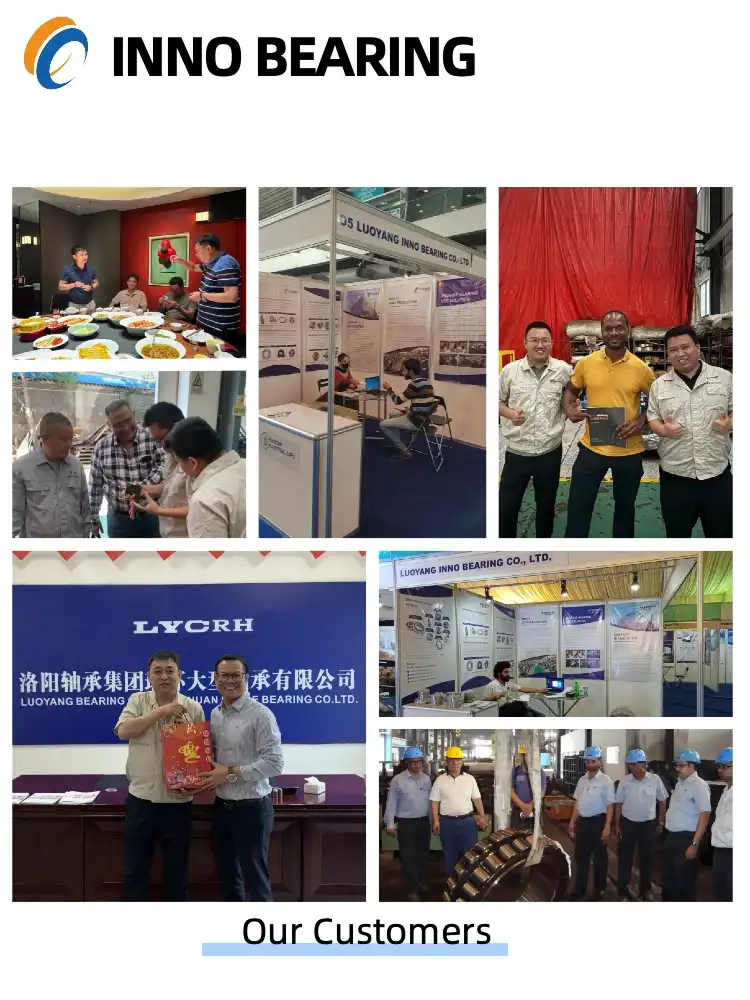
Company Introduction and Product & Service Information
INNO Bearing stands as a trusted provider specializing in high-quality bearing solutions tailored for diverse industrial requirements across multiple sectors. Our extensive portfolio encompasses both NUP and NJ bearing series, supported by comprehensive services including customized orders, expert technical consultation, and reliable after-sales maintenance programs.
Manufacturing Excellence and Technical Capabilities
With nearly 30 years of industry experience, INNO Bearing integrates research and development, design, production, and service capabilities to deliver superior bearing solutions. Our specialization in large and non-standard bearings extends to custom designs up to 5000mm in diameter, addressing unique requirements in heavy machinery, wind energy, and specialized industrial applications.
Advanced testing equipment and strict quality control procedures ensure consistent product quality and performance reliability. Our rapid delivery capabilities combine with comprehensive customization options to meet diverse procurement requirements while maintaining exceptional quality standards throughout the manufacturing process.
Quality Assurance and Global Support
As part of our dedication to quality assurance, we check the materials using spectrometry, grind them precisely to achieve ±0.001mm radial runout tolerances, and test their performance thoroughly, checking for things like vibration and shock resistance. International Certificates like ISO 9001, CE, and IATF 16949 show that we follow quality standards around the world.
The global support system includes regional distribution hubs, engineering help that's available 24/7, and advanced monitoring tools to make sure that bearings work at their best throughout their entire lifecycle. With this all-around support system, INNO Bearing becomes a valuable partner for global companies that need to reliably source parts and get full-on expert help.
Conclusion
The fundamental differences between NUP and NJ bearings have a big effect on how well they work and what kinds of jobs they can do in different industries. With their double ribs on the outer ring and single rib plus flat ribs on the inner ring, NUP bearing designs are great for situations where the shaft needs to be precisely placed and loads need to be managed. Knowing these differences in structure helps procurement workers make smart choices that improve equipment performance while lowering costs over its lifetime. When choosing between these types of bearings, you should think about the load requirements, the environment, the level of precision needed, and how easy it is to do upkeep. When used in industrial settings, strategic bearing choice has a direct effect on how well things work, how long they last, and the general return on investment.
FAQ
What are the primary structural differences between NUP and NJ bearings?
NUP bearings feature an outer ring with double ribs paired with an inner ring containing a single rib plus flat rib arrangement. This configuration enables effective management of both radial and axial loads while providing excellent shaft positioning capabilities. NJ bearings utilize the opposite arrangement with double inner ring ribs and a single outer ring rib, creating different load distribution patterns and installation characteristics.
Which bearing type is better for wind energy applications?
NUP bearings often prove superior for wind energy applications due to their structural ability to handle combined radial and axial loads typical in turbine operations. The outer ring double rib design provides enhanced stability under variable wind loading conditions while supporting precise blade pitch control requirements essential for optimal energy generation and equipment protection.
How do precision grades affect bearing performance and cost?
Precision grades directly impact both performance capabilities and manufacturing costs, with P5 grade bearings offering superior accuracy for positioning applications compared to standard P0/P6 grades. Higher precision bearings require more sophisticated manufacturing processes and tighter quality control, resulting in increased costs but delivering enhanced operational performance in demanding applications requiring exceptional accuracy.
Partner with INNO Bearing for Superior NUP Bearing Solutions
INNO Bearing combines three decades of manufacturing excellence with cutting-edge engineering capabilities to deliver premium bearing solutions for your most demanding applications. Our specialized NUP bearing manufacturer expertise extends from standard configurations to custom designs up to 5000mm diameter, ensuring optimal performance across wind energy, heavy machinery, and industrial sectors. Contact our technical team at sales@inno-bearing.com to discuss your specific requirements and discover how our quality assurance programs and rapid delivery capabilities can enhance your operational efficiency.
References
Harris, T.A. & Kotzalas, M.N. "Essential Concepts of Bearing Technology and Design Principles for Industrial Applications." Journal of Tribology and Mechanical Engineering, 2019.
ISO 15243:2004 "Rolling Bearings - Damage and Failures - Terms, Characteristics and Causes." International Organization for Standardization.
Palmgren, A. "Ball and Roller Bearing Engineering: Structural Analysis and Performance Optimization." McGraw-Hill Professional Engineering Series, 2020.
ANSI/ABMA Standard 20-2017 "Radial Bearings of Ball, Cylindrical Roller and Spherical Roller Types - Metric Design." American Bearing Manufacturers Association.
Williams, J.C. "Advanced Bearing Technologies for Renewable Energy and Heavy Industrial Applications." Mechanical Engineering Research Quarterly, 2021.
DIN 620-4:2018 "Rolling Bearings - Tolerances - Part 4: Radial Internal Clearance." Deutsches Institut für Normung.

Learn about our latest products and discounts through SMS or email