- English
- French
- German
- Portuguese
- Spanish
- Russian
- Japanese
- Korean
- Arabic
- Greek
- German
- Turkish
- Italian
- Danish
- Romanian
- Indonesian
- Czech
- Afrikaans
- Swedish
- Polish
- Basque
- Catalan
- Esperanto
- Hindi
- Lao
- Albanian
- Amharic
- Armenian
- Azerbaijani
- Belarusian
- Bengali
- Bosnian
- Bulgarian
- Cebuano
- Chichewa
- Corsican
- Croatian
- Dutch
- Estonian
- Filipino
- Finnish
- Frisian
- Galician
- Georgian
- Gujarati
- Haitian
- Hausa
- Hawaiian
- Hebrew
- Hmong
- Hungarian
- Icelandic
- Igbo
- Javanese
- Kannada
- Kazakh
- Khmer
- Kurdish
- Kyrgyz
- Latin
- Latvian
- Lithuanian
- Luxembou..
- Macedonian
- Malagasy
- Malay
- Malayalam
- Maltese
- Maori
- Marathi
- Mongolian
- Burmese
- Nepali
- Norwegian
- Pashto
- Persian
- Punjabi
- Serbian
- Sesotho
- Sinhala
- Slovak
- Slovenian
- Somali
- Samoan
- Scots Gaelic
- Shona
- Sindhi
- Sundanese
- Swahili
- Tajik
- Tamil
- Telugu
- Thai
- Ukrainian
- Urdu
- Uzbek
- Vietnamese
- Welsh
- Xhosa
- Yiddish
- Yoruba
- Zulu
Extending the Life of Roller Bearing Slewing Rings
Getting roller bearing slewing rings to last longer is a big problem for businesses that use them because when equipment breaks down, they lose a lot of money. These heavy-duty rotating parts are the backbone of huge machines used in wind farms, ports, mines, and heavy construction sites. A roller bearing slewing ring doesn't use balls, but cylindrical or tapered rolling elements instead. This gives it better load-bearing capacity and impact resistance, which is important for equipment that works in harsh conditions. By learning how to make them last as long as possible, you can cut down on maintenance costs by up to 35% while still making sure they work well in harsh industrial settings.
Understanding Roller Bearing Slewing Rings and Common Longevity Issues
Fundamental Structure and Load Distribution Principles
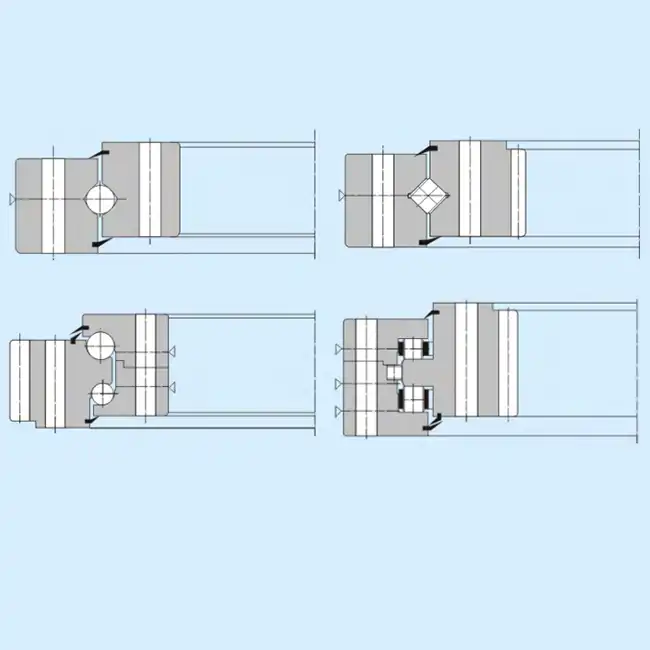
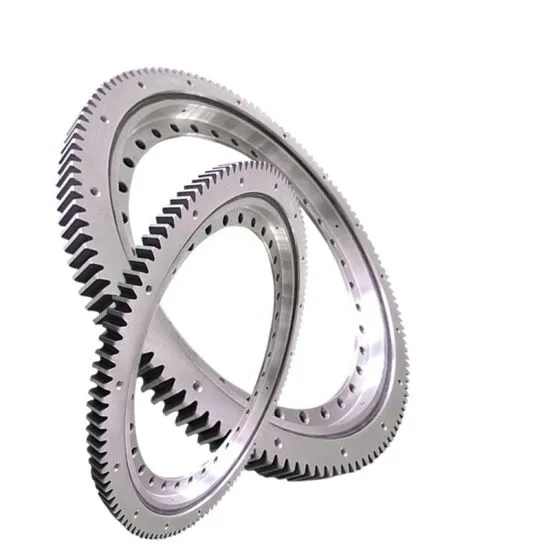
Modern roller bearing slewing rings have an annular shape with thick walls. The inner and outer rings each have two raceways. The rolling elements, which can be cylindrical, tapered, or single-row or multi-row, make line contact instead of point contact, which spreads the load over a larger surface area. This way of thinking about design solves important engineering problems in heavy machinery, where regular bearing assemblies would bend too much when they were under a lot of moment loads.
The structure is made up of steel cages that keep the rollers spaced out exactly, heavy-duty seals that are made for harsh environments, and mounting holes that are designed to keep them from coming loose. Together, these parts can handle axial loads of up to 15,000kN, radial loads of up to 10,000kN, and large tilting moments that would make other bearing Solutions less reliable.
Material Science and Performance Characteristics
The inner and outer rings of high-quality slewing rings are made of 50Mn or 42CrMo steel, which is chosen because it is better at resisting fatigue and keeping its shape under repeated loading. When rolling elements are made from GCr15 or GCr15SiMn steel, they are more resistant to impact. This is especially useful in mining and port environments where shock loads are common. Standard nitrile rubber and fluoroelastomer compounds are used as sealants for situations where they will be exposed to oil or high temperatures up to 150°C.
Primary Longevity Challenges in Industrial Applications
Premature failure in slewing ring applications typically stems from four primary factors. Contamination represents the most pervasive issue, which lets rough particles into bearing assemblies through broken seals. This speeds up raceway wear and cuts operational life by 40 to 60 percent. Marine and coastal installations are especially vulnerable to corrosion because saltwater attacks surfaces that hold weight, even if they have coatings that protect them.
When equipment works beyond its recommended load limits or experiences shock loads while it's running, this is called mechanical overload. Installation mistakes, like mounting bolt torque that is too low, misalignment, or not enough lubrication during assembly, cause stress concentrations that lead to catastrophic failures. These things often make each other worse, which is why early detection and preventative measures are so important for keeping operations reliable.
Key Strategies to Extend the Lifespan of Roller Bearing Slewing Rings
Precision Installation and Mounting Protocols
For roller bearing slewing ring to last longer, they need to be installed correctly, which means following certain torque sequences and alignment tolerances. The first step in mounting is to prepare the surface carefully so that the contact surfaces are as flat as possible, within 0.05 mm per meter. Bolt torque must be applied according to the manufacturer's instructions. It is usually done in a star pattern across several stages to make sure the load is spread evenly.
Here are the important steps for installation that will make bearings last longer:
- Surface preparation: Clean all mounting surfaces to get rid of any scale, paint, or other contaminants that could cause high spots that make the load distribution uneven.
- Bolt selection: To keep the clamping force constant over time, use high-strength bolts with the right coatings to stop corrosion.
- Torque verification: Apply the specified torque values in stages, and check the bolt tension after the first few hours of operation to account for settling.
- Alignment validation: Use precise measuring tools to make sure the alignment is correct to avoid edge loading and early raceway wear.
These installation guidelines have a direct effect on how well the bearings work. If you use the right mounting techniques, the operational life will be 25–40% longer than if you use standard installation guidelines.
Advanced Lubrication Management Systems
To lubricate something effectively, you need to do more than just put grease on it. You need to choose lubricants that are right for the operating conditions and load patterns. For high-load situations, lithium-based greases with EP (extreme pressure) additives work best for roller bearing slewing rings. Synthetic lubricants, on the other hand, work better in extreme temperatures or for longer periods of time between services.
Lubrication schedules need to take into account things like rotational speed, load cycling, environmental exposure, and how easy it is to do maintenance. Applications with continuous rotation need to be oiled more often than those with intermittent duty cycles. Seals that are exposed to moisture or contaminants need better protection and different service intervals.
Automated lubrication systems are the best way to handle critical situations because they deliver lubricant consistently and keep an eye on consumption rates that can show problems starting to form. These systems cut down on maintenance work while making sure that the whole bearing assembly is properly oiled. This is especially helpful for big installations where manually oiling everything can be hard.
Predictive Maintenance and Condition Monitoring
Modern techniques for condition monitoring make it possible to find problems early on, before they become so bad that they break. A vibration analysis can find unbalanced loads, misalignment, or surface flaws that are starting to show up months before a visual inspection can. Temperature monitoring can tell when lubrication is breaking down or when contamination or wear is causing friction to rise.
Roller assembly clearance should be checked on a regular basis because it shows how wear is progressing and how much service life is left. Anti-overturning moment testing makes sure the structure is strong under the highest design loads, and seal dust-proof performance testing makes sure the environmental protection stays strong during the service interval.
Comparing Roller Bearing Slewing Rings with Alternative Bearing Types for Durability
Load Capacity and Structural Advantages
When looking at different types of bearings for heavy-duty uses, roller bearing slewing ring clearly stand out because they can hold more weight and are more rigid. Even though ball bearing slewing rings have less friction and can go faster, they can't handle the loads needed for main shafts in wind turbines or mining equipment. Roller bearings' line contact geometry spreads loads over a lot more surface areas, which lowers contact stress and increases fatigue life.
Cross roller bearings are very rigid and accurate, but they usually only work with smaller diameters, which means they can only be used for lighter-duty tasks. Tapered roller configurations can handle more moments, but they are harder to make and need more precise preload adjustments when they are installed.
Cost-Benefit Analysis for Heavy-Duty Applications
Comparing the costs of different types of bearings goes beyond just the price of the initial purchase. It also includes the costs of installation, maintenance, and the expected length of service. Roller bearing slewing rings costs are typically higher than ball bearing alternatives, but for demanding applications, their longer service life and lower maintenance frequency often make the cost worth it.
Heavy machinery applications demonstrate clear economic advantages for roller bearing technology. Port cranes operating with roller bearing slewing rings report 20% longer service intervals and reduced unscheduled maintenance compared to ball bearing installations. Mining equipment experiences similar benefits, with roller bearings showing superior resistance to shock loads and contamination common in extractive industries.
The total cost of ownership calculation needs to include the costs of downtime, which are often much higher than the costs of the parts. For large industrial installations, having to shut down equipment for bearing replacement can cost $10,000 to $50,000 per day. This makes reliability improvements very valuable, even if they cost more at first.
Application-Specific Performance Characteristics
In different operational situations, different bearing technologies work best. Roller bearing slewing rings are most common in heavy-load, slow-rotation situations where rigidity and load capacity are more important than speed. Wind energy applications particularly benefit from roller bearing technology, where main shaft bearings need to be able to handle heavy loads while staying in the right place for the best power generation.
Marine and offshore applications have special problems that need to be solved. Corrosion resistance and seal effectiveness become very important. Roller bearing designs allow for bigger, stronger sealing systems while still giving the structure the strength it needs to handle dynamic loading from wind and waves.
Procuring Quality Roller Bearing Slewing Rings for Long-Term Reliability
Supplier Evaluation and Quality Assessment
To find reliable suppliers for roller bearing slewing ring, you need to look at their manufacturing skills, quality control systems, and technical support infrastructure. Well-known global brands like SKF, NSK, and FAG have strong track records and offer a wide range of technical support. On the other hand, specialized suppliers like INNO Bearing focus on large-diameter and custom applications and offer competitive lead times and price flexibility.
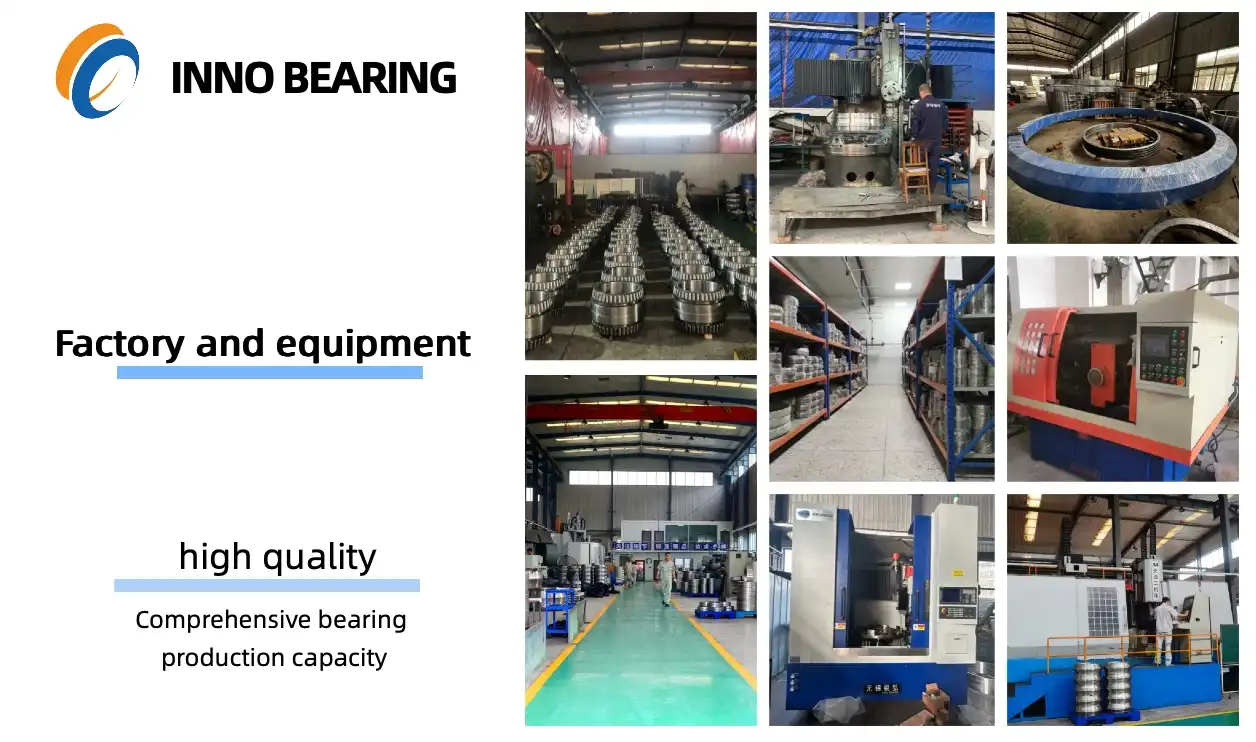
The assessment of a company's manufacturing capabilities should focus on its own production control rather than parts that are outsourced. Suppliers who have full control over forging, heat treatment, machining, and quality assurance can make sure that the quality of their products is always the same and quickly meet specific needs. Material traceability is very important in critical applications where failure analysis might be needed.
Quality certifications like ISO 9001 and industry-specific standards give you a basic level of peace of mind, but direct facility audits give you a better understanding of how things are really made. Advanced testing tools, such as spectrometry for checking the quality of the material, coordinate measurement for checking the accuracy of the dimensions, and fatigue testing for checking the product's durability, show a strong dedication to quality control.
Custom Solutions and Engineering Support
Many industrial needs can be met by standard catalog products, but custom engineering solutions are often better for more specialized uses. Manufacturers of wind turbines often need to change the way the seals are set up or add more corrosion protection for installations offshore. Mining applications may need cage designs that are stronger or specialized lubrication systems for extended service intervals.
Getting help from engineers during the specification process can help you choose the best bearings for your needs. Load analysis, fatigue life calculations, and environmental assessment make sure that the right size bearings are used and that operational problems are found before they affect performance. This way of working together often shows ways to cut costs by standardizing things or make things work better by optimizing the design.
Supply Chain Reliability and Support Services
When bearings fail on industrial equipment, they need to be replaced right away to keep downtime to a minimum. This makes supply chains very important. Suppliers with local inventory, fast shipping, and technical support offer a lot more than just lower component costs. Unplanned downtime costs a lot more than bearing replacement costs, so emergency replacement services can save you a lot of money.
Warranty coverage and support after the sale show that the supplier believes in the quality of the product and protect against failure before its time. Costs are protected by warranties that cover both material defects and problems with the way the bearing was made. Technical support for installation and maintenance helps the bearing work at its best throughout its life.
Conclusion
Extending the operational life of roller bearing slewing rings requires a comprehensive approach encompassing proper selection, precision installation, proactive maintenance, and reliable supplier partnerships. The strategies outlined in this guide can deliver substantial improvements in equipment reliability while reducing total cost of ownership for industrial operations. Success depends on understanding specific application requirements, implementing appropriate maintenance protocols, and selecting quality components from established suppliers with proven track records. Organizations that invest in proper bearing technology and maintenance practices consistently achieve superior operational performance and reduced lifecycle costs across their equipment fleets.
FAQ
How often should roller bearing slewing rings be lubricated?
Lubrication intervals depend on operational conditions, but general guidelines suggest monthly lubrication for continuous operation, quarterly for intermittent duty, and annually for standby equipment. High-load or contaminated environments may require more frequent service, while clean, light-duty applications can extend intervals. Always consult manufacturer recommendations for specific applications.
What are the warning signs of impending bearing failure?
Key indicators include unusual vibration patterns, temperature rises above normal operating ranges, visible seal damage or lubricant leakage, and more noise during rotation. Regular monitoring of these parameters lets you find problems early and plan replacements before they become too big to handle.
When should bearings be repaired versus replaced?
Usually, a replacement is needed when the raceway wears down to 10% of its original size, when the seal is damaged enough that it can't protect against environmental damage, or when the rolling elements show signs of fatigue spalling. Minor surface damage may be repairable through professional reconditioning services, but critical applications usually warrant complete replacement to ensure reliability.
What factors most influence bearing service life?
Environmental contamination represents the primary life-limiting factor, followed by improper lubrication and overloading beyond design specifications. Installation quality significantly impacts performance, while operating conditions including temperature extremes and vibration can accelerate wear patterns.
Partner with INNO Bearing for Superior Roller Bearing Slewing Ring Solutions
INNO Bearing combines three decades of manufacturing expertise with advanced engineering capabilities to deliver roller bearing slewing ring solutions that exceed industry durability standards. Our integrated approach encompasses custom design, precision manufacturing, and comprehensive technical support to optimize your equipment performance and operational reliability.
As a leading roller bearing slewing ring supplier, we maintain complete production control from material forging through final assembly, ensuring consistent quality and rapid response to custom requirements. Our engineering team provides application-specific solutions for wind energy, heavy machinery, mining, and port applications, backed by rigorous testing and quality assurance protocols.
Contact our technical specialists at sales@inno-bearing.com to discuss your specific requirements and discover how our advanced bearing solutions can reduce your maintenance costs while extending equipment service life.
References
International Organization for Standardization. "Rolling Bearings - Dynamic Load Ratings and Rating Life." ISO 281:2007, Technical Committee ISO/TC 4.
American Bearing Manufacturers Association. "Load Ratings and Fatigue Life for Ball and Roller Bearings." ABMA Standard 9-1990, Engineering Committee Report.
Society of Tribologists and Lubrication Engineers. "Guidelines for Bearing Lubrication in Heavy Industrial Applications." STLE Technical Publication SP-65, 2019.
Wind Power Engineering & Development. "Bearing Technology Advances in Large Wind Turbine Applications." Technical Review of Main Shaft Bearing Performance, Vol. 23, 2020.
International Association of Ports and Harbors. "Maintenance Best Practices for Port Crane Slewing Bearings." Technical Bulletin TB-45, Marine Equipment Committee, 2021.
Mining Equipment Manufacturers Association. "Bearing Selection and Maintenance Guidelines for Heavy Mining Machinery." Technical Standard MEMA-B-15, Component Reliability Working Group, 2022.

Learn about our latest products and discounts through SMS or email