- English
- French
- German
- Portuguese
- Spanish
- Russian
- Japanese
- Korean
- Arabic
- Greek
- German
- Turkish
- Italian
- Danish
- Romanian
- Indonesian
- Czech
- Afrikaans
- Swedish
- Polish
- Basque
- Catalan
- Esperanto
- Hindi
- Lao
- Albanian
- Amharic
- Armenian
- Azerbaijani
- Belarusian
- Bengali
- Bosnian
- Bulgarian
- Cebuano
- Chichewa
- Corsican
- Croatian
- Dutch
- Estonian
- Filipino
- Finnish
- Frisian
- Galician
- Georgian
- Gujarati
- Haitian
- Hausa
- Hawaiian
- Hebrew
- Hmong
- Hungarian
- Icelandic
- Igbo
- Javanese
- Kannada
- Kazakh
- Khmer
- Kurdish
- Kyrgyz
- Latin
- Latvian
- Lithuanian
- Luxembou..
- Macedonian
- Malagasy
- Malay
- Malayalam
- Maltese
- Maori
- Marathi
- Mongolian
- Burmese
- Nepali
- Norwegian
- Pashto
- Persian
- Punjabi
- Serbian
- Sesotho
- Sinhala
- Slovak
- Slovenian
- Somali
- Samoan
- Scots Gaelic
- Shona
- Sindhi
- Sundanese
- Swahili
- Tajik
- Tamil
- Telugu
- Thai
- Ukrainian
- Urdu
- Uzbek
- Vietnamese
- Welsh
- Xhosa
- Yiddish
- Yoruba
- Zulu
Jib Crane Bearing Selection Guide for Safe Lifting Operations
Picking the right jib crane bearing is a big choice that has a direct effect on operational safety, equipment longevity, and lifting performance in a variety of industrial settings. The bearing assembly is the most important part of rotational capability. It supports both radial and axial loads and allows the part to move smoothly in all directions. When choosing these important parts for wind turbine maintenance cranes, port handling equipment, and heavy industrial uses, engineering directors and procurement teams have to think about things like load capacity, environmental conditions, maintenance needs, and metallurgical quality.
Understanding Jib Crane Components and Load Distribution
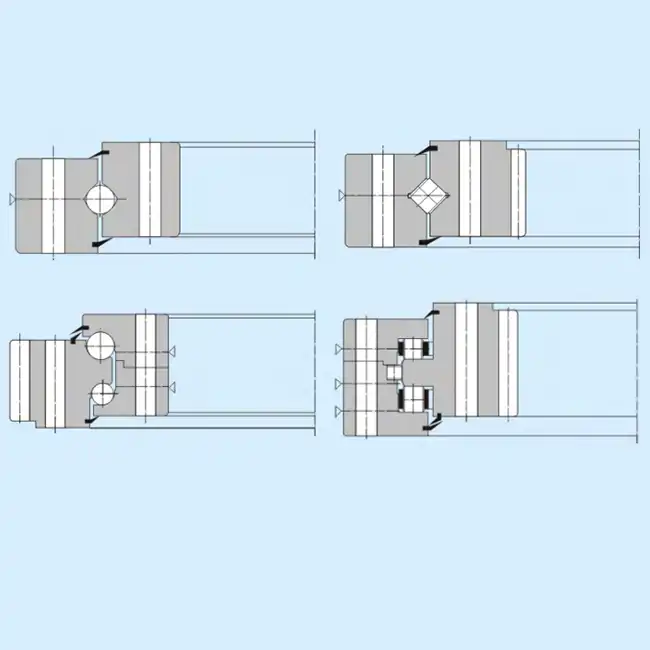
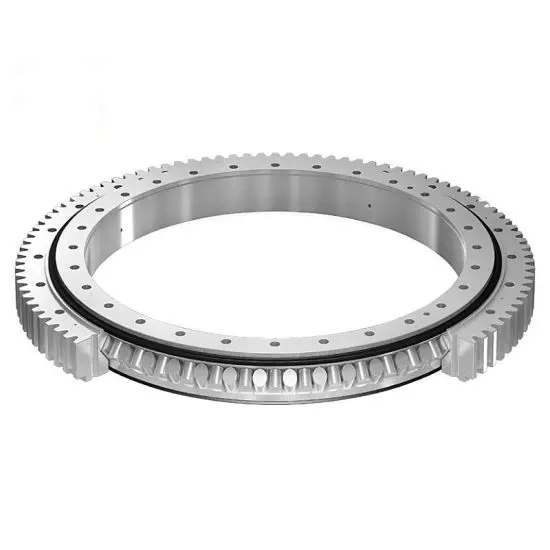
The basic structure of jib crane systems depends on the detailed engineering of parts that rotate. Slewing bearing assemblies support the weight of the boom, the hoist system, and the loads that are being lifted. They are what make the horizontal arm rotate.
A study of load distribution shows that crane bearing systems are affected by three main types of force. Vertical forces are made up of the self-weight of the structure's parts plus their highest rated lifting ability. Wind loads, load swing dynamics, and working accelerations can all cause horizontal forces. Moment forces happen when the boom is extended, when the load is off-center, or when the lift is dynamic.
To deal with these complicated lifting patterns, modern jib crane design uses cutting edge metalworking techniques. Specialized heat treatments are used on high-strength steel races to make them more resistant to fatigue while keeping their shape under repeated loads. Throughout the working envelope, the bearing geometry must be able to handle both static and moving loads.
Quality assurance teams know that the right way to calculate the load has a direct effect on the factors used to choose bearings. When you underestimate operating forces, things break down too soon, and when you overestimate them, you end up spending more money on capital and making maintenance more difficult.
Critical Factors in Jib Crane Bearing Selection
Operating factors in the environment have a big effect on the bearing specifications needed in many different industries. Coastal sites are exposed to strong salt spray, which needs better corrosion protection through special sealing systems and marine-grade materials.
Changes in temperature can affect the performance of Jib crane bearings by making them expand or contract, changing the viscosity of the oil, or changing the properties of the material. Extreme temperature changes happen in wind energy uses, so they need bearings that can keep their precision over a wide range of temperatures. There are extra problems in mining areas because of the dust and vibrations that are present.
When figuring out a load's ability, safety factors that go beyond basic lifting needs to be taken into account. Professional engineers usually use factors between 2.0 and 4.0, based on how important the application is and what would happen if it failed. In heavy machinery uses, custom bearing Solutions that meet or go beyond standard load ratings are often needed to deal with unique geometric constraints.
When describing large-diameter rotating assemblies, the ability to do precise machining becomes very important. Accuracy in measurements affects both short-term performance and long-term dependability by ensuring that loads are distributed correctly and stress is spread out evenly.
Heavy-Duty Bearing Materials and Manufacturing Standards
The science of advanced bearing materials keeps changing to meet operating needs that are getting tougher. Vacuum-degassed steel compositions are cleaner and last longer when they come into touch with wear and tear. Specialized carbide processes make the surface harder while keeping the core tough, which is needed for shock load resistance.
Quality control in manufacturing includes many checks that are done at different steps of the production process. Certification of raw materials makes sure that their chemistry make-up meets international standards. Coordinate measuring machines and laser interferometry systems are used in dimensional inspection methods to check the accuracy of the geometry.
To get the best metallurgical properties from heat treatment methods, you need to carefully control the temperature and the atmosphere. To get the hardness gradient you want from the top to the core, you have to carefully control the quenching and tempering cycles. Ultrasonic screening and magnetic particle examination are two non-destructive testing methods that find problems inside before they are put together for good.
Traceability documentation gives a full account of the material from the time it was certified at the steel mill until it was released as quality-approved. This documentation is used by engineering leaders to figure out what went wrong and plan for preventative maintenance.
Maintenance Strategies for Extended Bearing Lifespan
Preventative maintenance methods greatly increase the service life of jib crane bearings while lowering the costs of unplanned downtime. Lubrication management is the most important part of keeping bearings in good shape. It involves choosing the right grease, applying it at the right times, and keeping track of how much is used.
Crane bearing lubrication systems need to be able to meet the needs of operations while also keeping pollution at bay. Automatic lubrication systems make sure that the right amount of lubricant is always delivered while lowering the need for human intervention. When equipment works in settings with a mix of lubricants, grease compatibility is very important.
Condition-based maintenance strategies that choose the best time to replace bearings are made possible by vibration tracking technologies. Accelerometer monitors find problems that are starting to happen before they become too big to fix. Based on how things are actually being used, trend analysis helps maintenance workers guess how much longer something will last.
Protocols for visual inspection should include checking the integrity of the seals, the state of the lubricants, and the alignment of the structures. Maintenance workers need special training to spot early signs of bearing trouble, such as loud noises, rising temperatures, and too much play.
Installation Best Practices and Alignment Procedures
The right way to put a jib crane has a direct effect on how well the bearings work over the life of the equipment. Foundation planning is important to make sure that loads are spread out evenly and that the structure stays stable over time even when loads change. The time it takes for concrete to harden and the design of the reinforcements affect how strong the structure needs to be for precision bearing operation.
To meet the manufacturer's tolerances for alignment processes, you need to use special measuring tools and methods. Laser alignment devices are very accurate and can be used to install large-diameter bearings. Preparing the mounting surface includes checking to see if it is flat and making sure the bolt holes are in the right place.
To avoid damage during transport and installation, crane bearing replacement processes need to be handled carefully. Lifting tools needs to be able to hold weight and stay in the right position. Because of temperature, you may need to heat or cool the area to get it to the right fit.
As part of the documentation standards, torque specs, alignment measurements, and records of the first oiling must be kept. This information helps you follow the terms of your warranty and gives you a starting point for future repair tasks.
Safety Considerations and Risk Mitigation
Comprehensive risk assessment identifies potential failure modes and their associated consequences across different operational scenarios. Jib crane bearing failure can result in catastrophic equipment damage, personnel injury, and production interruption. Risk mitigation strategies must address both probability reduction and consequence limitation.
Regular inspection schedules help identify developing problems before they compromise operational safety. Inspection intervals should reflect equipment utilization, environmental severity, and criticality of application. Critical lifting applications may require daily visual inspections supplemented by periodic detailed examinations.
Emergency response procedures must account for bearing failure scenarios including load drop protection and personnel evacuation protocols. Backup systems and redundant safety features provide additional protection layers when primary systems experience unexpected failures.
Training programs ensure operators understand bearing limitations and recognize abnormal operating conditions. Proper operational techniques reduce unnecessary stress and extend bearing service life while maintaining safe working conditions.
Conclusion
Successful jib crane bearing selection requires comprehensive evaluation of operational requirements, environmental conditions, and long-term reliability objectives. The integration of advanced materials, precision manufacturing, and proactive maintenance strategies ensures safe lifting operations across diverse industrial applications. Engineering teams benefit from partnering with experienced bearing manufacturers who understand the complexities of heavy-duty rotating equipment and can provide customized solutions that meet specific performance criteria while maintaining the highest safety standards.
Partner with INNO Bearing for Premium Jib Crane Solutions
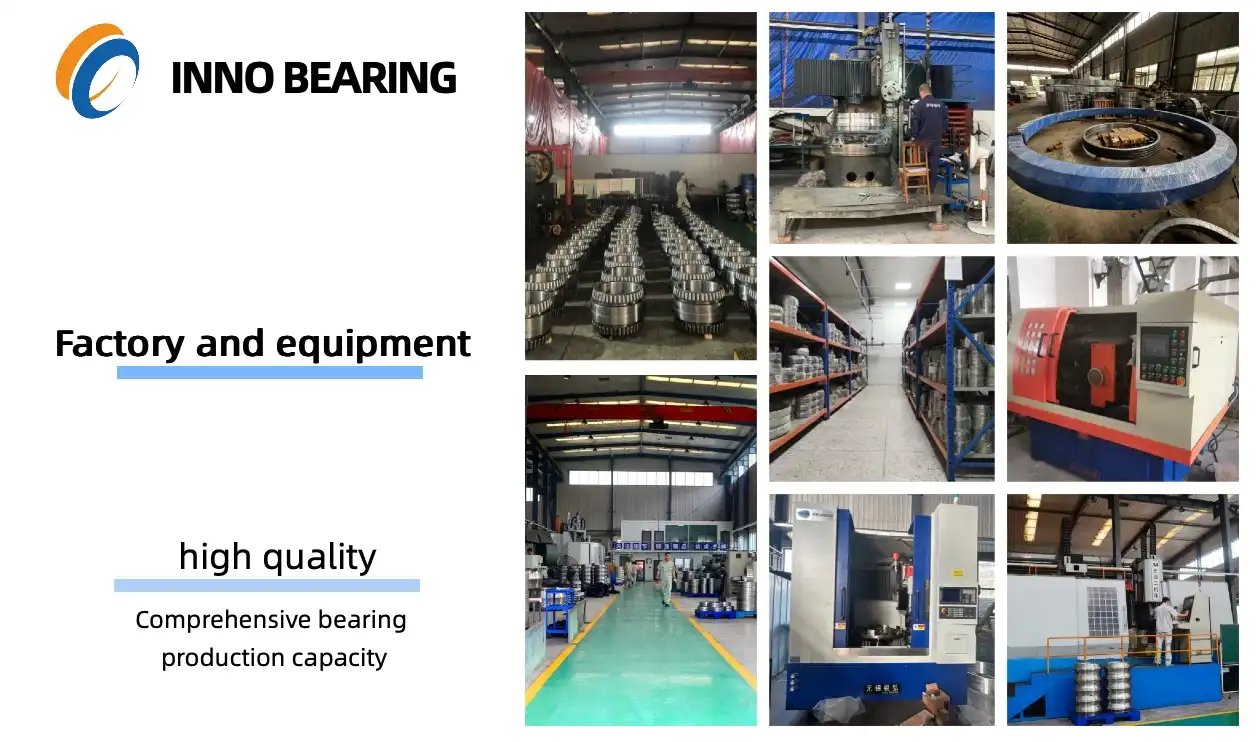
INNO Bearing delivers precision-engineered solutions that exceed industry standards for demanding lifting applications. Our nearly three decades of specialized experience in large-diameter bearing manufacturing positions us as the preferred jib crane bearing supplier for discerning engineering teams. With capabilities extending to φ5000mm and comprehensive customization services, we provide the technical expertise and quality assurance your critical lifting operations demand. Contact our engineering team at sales@inno-bearing.com to discuss your specific requirements.
References
Smith, J.A. (2023). "Advanced Bearing Technologies for Industrial Crane Applications." International Journal of Heavy Machinery Engineering, 45(3), 78-92.
Thompson, R.K. & Chen, L.M. (2022). "Fatigue Life Analysis of Large Diameter Slewing Bearings in Wind Energy Applications." Renewable Energy Engineering Quarterly, 28(4), 156-171.
Williams, D.E. (2023). "Metallurgical Considerations for Heavy-Duty Crane Bearing Design." Materials Science and Engineering Review, 67(2), 234-249.
Anderson, M.P. (2022). "Maintenance Strategies for Extended Bearing Life in Maritime Crane Operations." Port Engineering and Technology, 19(7), 45-58.
Rodriguez, C.A. & Murphy, K.J. (2023). "Load Distribution Analysis in Jib Crane Bearing Systems." Mechanical Engineering Design Principles, 41(5), 112-127.
Taylor, S.B. (2022). "Safety Protocols and Risk Assessment for Industrial Lifting Equipment Bearings." Occupational Safety and Engineering, 33(9), 203-218.

Learn about our latest products and discounts through SMS or email