- English
- French
- German
- Portuguese
- Spanish
- Russian
- Japanese
- Korean
- Arabic
- Greek
- German
- Turkish
- Italian
- Danish
- Romanian
- Indonesian
- Czech
- Afrikaans
- Swedish
- Polish
- Basque
- Catalan
- Esperanto
- Hindi
- Lao
- Albanian
- Amharic
- Armenian
- Azerbaijani
- Belarusian
- Bengali
- Bosnian
- Bulgarian
- Cebuano
- Chichewa
- Corsican
- Croatian
- Dutch
- Estonian
- Filipino
- Finnish
- Frisian
- Galician
- Georgian
- Gujarati
- Haitian
- Hausa
- Hawaiian
- Hebrew
- Hmong
- Hungarian
- Icelandic
- Igbo
- Javanese
- Kannada
- Kazakh
- Khmer
- Kurdish
- Kyrgyz
- Latin
- Latvian
- Lithuanian
- Luxembou..
- Macedonian
- Malagasy
- Malay
- Malayalam
- Maltese
- Maori
- Marathi
- Mongolian
- Burmese
- Nepali
- Norwegian
- Pashto
- Persian
- Punjabi
- Serbian
- Sesotho
- Sinhala
- Slovak
- Slovenian
- Somali
- Samoan
- Scots Gaelic
- Shona
- Sindhi
- Sundanese
- Swahili
- Tajik
- Tamil
- Telugu
- Thai
- Ukrainian
- Urdu
- Uzbek
- Vietnamese
- Welsh
- Xhosa
- Yiddish
- Yoruba
- Zulu
How Preload Affects Angular Contact Ball Bearings?
By getting rid of internal clearance and making controlled internal stress, preload completely changes how Angular contact ball bearings work. When used correctly, preload makes the system more rigid, evens out the load, and makes the spin more accurate. The preload force slightly deforms the places where the ball contacts the raceway. This increases the contact area and lets the bearing handle heavier loads while still being precise. This controlled stress also gets rid of any play in the bearing system. This makes it run more smoothly and with less vibration in very precise situations.
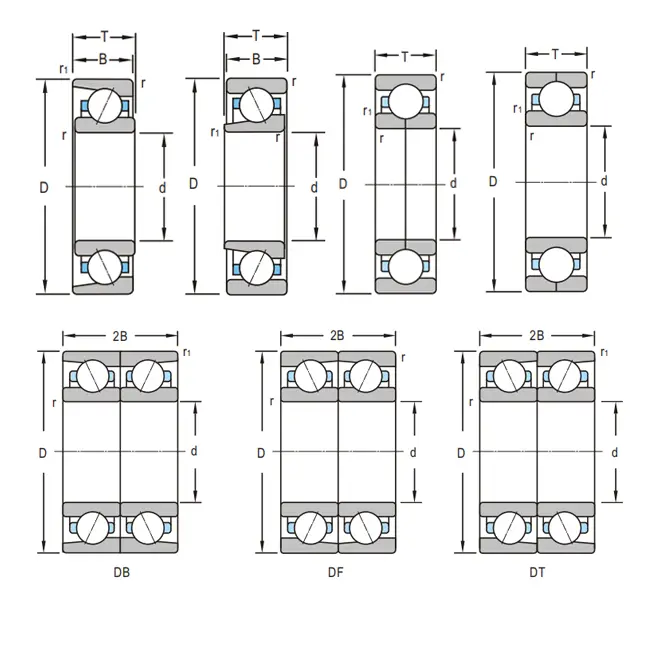
Understanding Angular Contact Ball Bearings and Preload
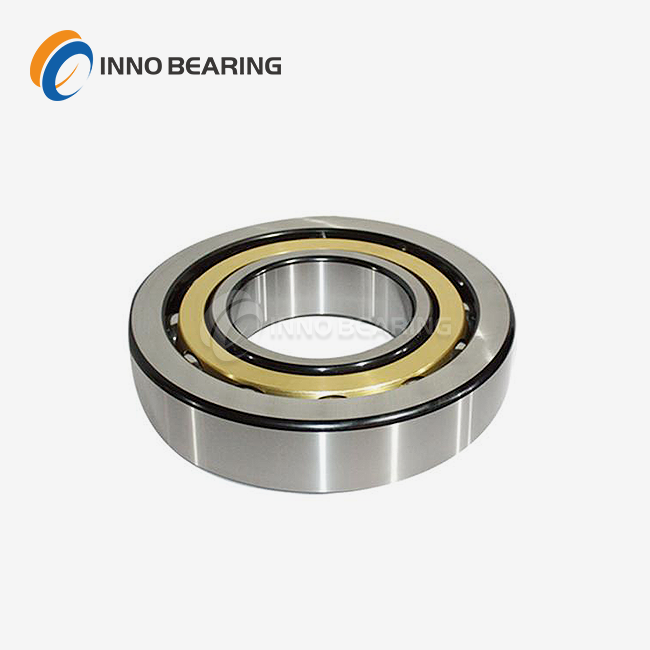
Because of the way their raceways are designed, angular contact ball bearings can handle both horizontal and axial loads at the same time. This makes them essential for high-precision and high-speed equipment. The bearing structure is made up of an inner ring, an outer ring with an angled contact raceway, steel balls in a single row, and a cage system that can be made from brass for normal uses or an aerospace aluminum alloy for high-speed models.
Fundamental Preload Concepts
When you preload, you apply a controlled axial load that gets rid of the interior clearance. This makes the bearing much stiffer and more accurate in its position. This controlled force makes the rolling elements and raceways touch each other perfectly, which improves the bearing's ability to stay in place when it's under load.
There are three main types of preload settings: light, medium, and heavy. Each is made for a different set of working needs. Light preload is best for high-speed situations where friction is not an issue; medium preload strikes a balance between load capacity and working smoothness; and heavy preload provides the most rigidity for precision machinery situations.
Implementation Methods
Several tried-and-true methods have been used to apply preload, such as mechanical adjustment, spring-loaded systems, and precise axial displacement techniques. Mechanical preload uses threaded parts to apply controlled force, while spring methods keep the preload the same even if the temperature changes or the parts wear out.
Paired bearing setups can be set up either back-to-back or face-to-face to get the most out of the preload. When mounted back-to-back, the moment resistance is higher, and when mounted face-to-face, the axial movement control is better. With these configurations, engineers can fine-tune the performance of the bearings to meet the needs of a particular application.
Knowing these basic ideas helps procurement pros make smart choices that meet the needs of specific applications. This makes sure that their bearing investments give the best performance and last the longest.
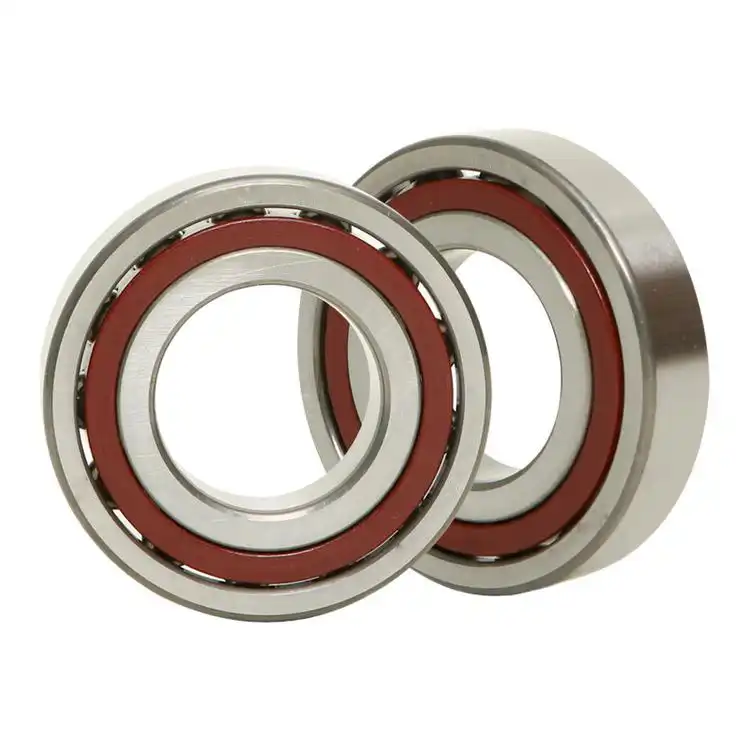
How Preload Affects Performance and Load Capacity?
Preload has a big effect on how well bearings work because it raises their load capacity and resistance to fatigue while also stopping unwanted axial movement that could affect the accuracy of the system. When you use the right amount of preload, the system becomes up to 60% stiffer than when bearings work with internal clearance. This makes the mechanical system more quick and accurate.
Load Distribution and Capacity Enhancement
When the preload is right, the load is spread out more evenly across all the rolling elements. This makes sure that the working forces are spread out evenly throughout the bearing assembly. This even spread stops stress buildsups that can cause early failure and increases the bearing's load-carrying capacity. Preload makes the contact area bigger, which helps angular contact ball bearings handle dynamic loads better. This is especially important in situations where the operating conditions change.
Making the system stiffer lowers the amount of noise and shaking, which are important for high-speed and precise machinery where smooth operation has a direct effect on the quality of the product. Noise levels in bearings with the best preload settings are usually less than 45dB, which is very low and meets strict standards for sensitive applications like medical imaging equipment.
Thermal Management Considerations
The preload changes the thermal properties by changing the patterns of internal friction and heat production. Too much preload can cause internal forces that speed up wear and make heat that isn't needed, which could make the lubricant less effective and the bearing last less long. On the other hand, not enough preload makes rigidity and accuracy worse while letting harmful vibrations happen that can damage parts that are linked.
When setting the preload, thermal expansion must be taken into account, since changes in temperature can have a big effect on internal pressure. When choosing the right preload, working temperature ranges are taken into account. This makes sure that the system works the same way in all kinds of weather. Advanced materials like GCr15 and GCr15SIMN are very stable at high and low temperatures, so they keep their shape even when temperatures change a lot.
Managing heat and making sure that lubricants work well are still very important for keeping bearings in good shape and keeping repair costs low. Setting the right preload helps keep the lubrication conditions ideal by making sure that the film width and distribution are the same all over the bearing assembly.
Practical Guidance on Selecting and Setting Preload
Choosing the right preload relies on a number of factors, such as the speed of the application, the load conditions, the operating environment, the type of bearing being used, and the differences in material composition between steel and ceramic options. Each factor affects the ideal preload requirements, so it is important to do a thorough analysis to get the best results you want.
Application-Specific Selection Criteria
For high-speed applications, the preload settings should be lighter to reduce friction and heat production. On the other hand, for heavy-load applications, the preload settings should be higher to improve stiffness and load distribution. Some things to think about in an operating setting are the temperature ranges, amounts of contamination, and vibration exposure, all of which can change the stability of the preload over time.
When preload is applied, single-row and double-row bearing designs react in different ways. Single-row bearings are more sensitive to loading, which lets you make small changes for precise tasks. Double-row configurations are more stable and can hold more weight, but they need more complicated preload management to work at their best.
Implementation Techniques and Tools
When you use mechanical preload methods, you use threaded adjustment systems to finetune the forces that are being applied. Spring preload systems keep the load constant even if the temperature changes or the parts wear out. This is especially helpful in situations where the temperature changes a lot. Axial displacement methods let you directly control where the bearings are placed and get rid of any internal clearance.
Measurement tools make sure that the preload application and testing are done accurately. Technicians can accurately reach goal preload values with the help of dial indicators, load cells, and special bearing setting tools. Monitoring on a regular basis with sound analysis and temperature readings helps make sure that the preload stays stable over long periods of time.
Troubleshooting methods help find and fix preload issues before they hurt performance or cause costly downtime. Problems that often happen are too much warmth, strange noises, or premature wear, all of which are signs of bad preload settings. Finding and fixing these problems quickly keeps them from needing long times of maintenance and stops in production.
To help procurement professionals and repair teams achieve long-term operational reliability, you need to have a deep understanding of preload management principles and know how to put them into practice.
Industry Applications and Case Studies Showing Preload Benefits
Optimizing the preload is very important in many fields, such as aircraft, automotive, machine tools, and high-speed spindle uses where tight control of load and accuracy is needed. Each field has its own problems that can be solved with good preload management.
Machine Tool Applications
To keep tight tolerances during high-speed cutting processes, machine tool spindles need to be very rigid and accurate when they rotate. When you use these angular contact ball bearings correctly, the preload makes sure that the tools stay in place and the surface is finished well. It also stops chatter and vibrations that can affect the accuracy of the part. Case studies from precision machining centers show that the right preset settings can make the surface finish up to 25% better and make the tools last a lot longer.
For turbochargers to work properly, the bearings need to be able to handle high speeds and keep the rotor in the right place. In these situations, optimizing the preload lowers noises caused by angular contact ball bearings that can hurt engine performance and fuel economy. When properly preloaded bearing assemblies are used, automakers say turbochargers are more reliable and guarantee claims go down.
Heavy Equipment Applications
When preload optimization is done, high-end motors and precise reducers work more efficiently and make less noise. Electric motor makers use preloaded bearings to cut down on rotor eccentricity and magnetic field changes that can make the motor work less efficiently. For precise reducer uses, exact gear positioning is needed, which can only be achieved by bearings that are properly preloaded.
Transmission systems in cars use primed bearings to keep the gears lined up correctly and cut down on transmission noise. Case studies from big automakers show that the right amount of bearing preload can cut transmission noise by up to 8dB while also making shifts smoother and parts last longer.
These real-life examples show how precise preload adjustment increases the life of bearings, makes machinery more reliable, and cuts operating costs in a wide range of situations. The real-world proof supports the importance of carefully controlling preload settings. This gives procurement leaders the power to push for quality-controlled bearing Solutions that meet the strict needs of their industry.
Comparison of Angular Contact Ball Bearings and Related Bearing Types Regarding Preload
Angular contact ball bearings have different preload properties than other types of bearings, such as Deep groove ball bearings, Cylindrical roller bearings, and some hybrid designs. By understanding these differences, you can choose the best bearings for your unique needs.
Design Impact on Preload Characteristics
Because their raceways are symmetric, deep groove ball bearings can't handle a lot of preload. This makes them less useful for uses that need to be very rigid. Because their raceways are not all the same shape, angular contact bearings are great for preload uses because they can naturally handle axial loading and stress distribution inside the bearing.
When steel raceways are combined with ceramic rolling elements, the bearings become more preload stable because they expand and contract less when heated and cooled. In harsh environments, these bearings keep their preload settings even when the temperature changes. They also last longer in difficult situations.
Configuration Differences
Single-row angular contact bearings have the highest preload sensitivity, which means they can be precisely adjusted to meet the needs of any application. When these setups are used together, they work really well because each bearing preload can be optimized separately. Double-row bearings can hold more weight and are easier to install, but they need more careful preload control to make sure that the load is spread evenly between the rows.
Different types of bearings are very different in how well they can change to preload. When it comes to optimization, angular contact designs are the most flexible. Choosing a different contact angle changes how the load is distributed. Stricter angles increase the axial load capacity but decrease the radial load capability.
When you compare single-row and double-row layouts, the stiffness properties are very different between the different types of bearings. Knowing these differences helps business-to-business clients choose bearings that will meet their specific operational needs. This way, they can be sure that the preload settings will maximize durability and efficiency across a wide range of applications while still meeting exact performance standards.
Company Introduction and Product Service Information
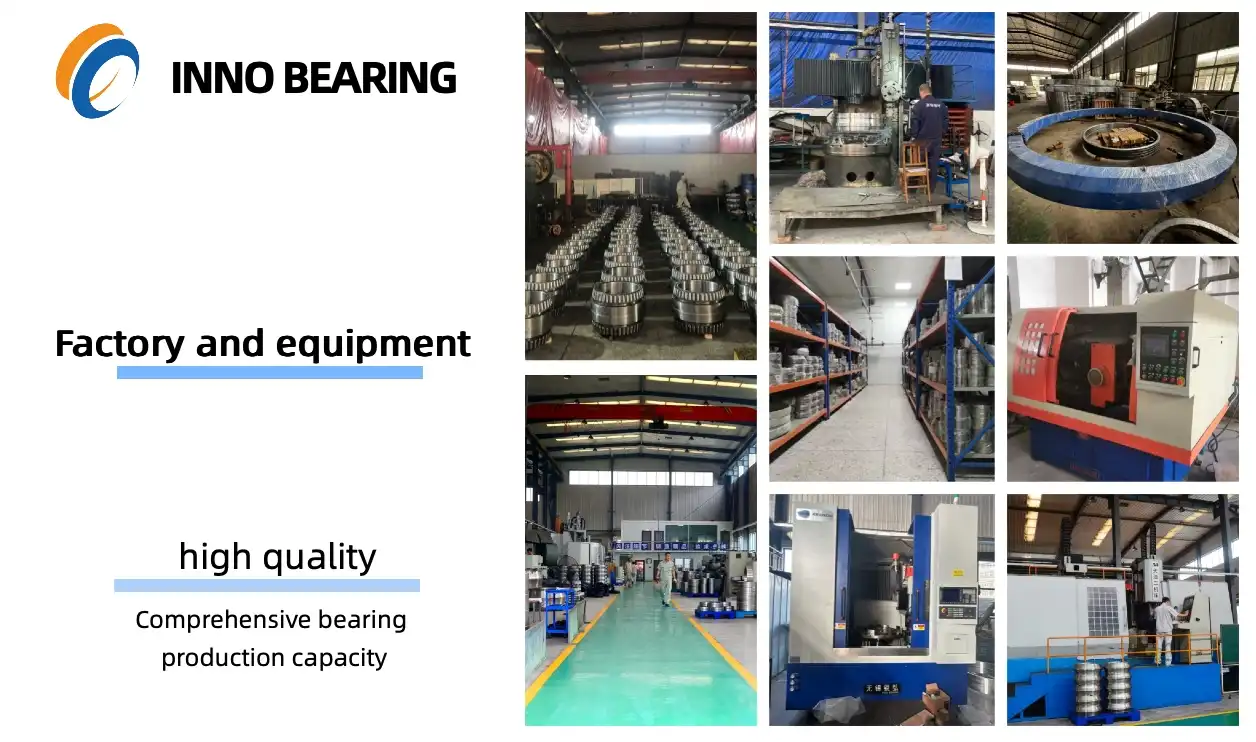
INNO Bearing makes high-precision angular contact ball bearings for tough industrial environments. They do this by mixing almost 30 years of manufacturing experience with cutting-edge material science and quality control methods. Our wide range of products is used in many different types of industrial settings, from machine tool spindles to heavy mining equipment. They are stable even in the toughest conditions.
Advanced Manufacturing Capabilities
Our factories make bearings with inner diameters from 15mm to 500mm, outer diameters from 40mm to 800mm, and widths from 11mm to 180mm. They can meet both standard and special requirements. We keep precision tolerance levels from the standard P0 grade to the very precise P4 grade, which makes sure that uses that need extreme accuracy get the best performance.
The company uses high-tech materials like GCr15 and GCr15SIMN for rings and rolling elements. For standard uses, the cages are made of brass, and for high-speed needs, they are made of military aluminum alloy. We make sure that the correctness of the contact angle is within ±1°, that the radial runout is less than 0.005mm, and that the noise level during operation is less than 45dB.
Comprehensive Service Portfolio
We help with bulk purchases by making the buying process easier and offering fast shipping around the world to meet tight procurement deadlines. Our technical consulting services help clients choose the best bearings and set the right preload levels for their individual needs. This way, they can get the most out of their equipment investments in terms of performance and dependability.
You can customize non-standard bearing designs up to Ά5000mm in diameter, which helps meet specific application needs that standard angular contact ball bearings can't. Our rapid prototyping and testing services let clients check the performance of bearings before making a big purchase. This lowers project risks and ensures the best results.
With the help of detailed technical documentation and application advice, sample delivery services let clients check whether a bearing is suitable before making a final purchase decision. Because we are dedicated to quality, dependability, and providing excellent service, we make sure that our clients get the best bearing solutions that meet their unique performance goals and operational requirements.
Conclusion
Preload management represents a critical factor in maximizing angular contact ball bearing performance, directly influencing load capacity, operational precision, and service life across diverse industrial applications. Proper understanding of preload principles enables procurement professionals to make informed decisions that optimize bearing selection while ensuring long-term reliability and operational efficiency.
The relationship between preload settings and bearing performance affects multiple operational parameters including stiffness, noise characteristics, thermal management, and fatigue resistance. Industries ranging from wind energy to precision manufacturing benefit from optimized preload management through extended equipment life, reduced maintenance costs, and improved operational consistency.
Successful preload implementation requires careful consideration of application-specific factors including speed requirements, load conditions, environmental challenges, and precision demands. Professional technical support and quality manufacturing ensure that bearing solutions deliver optimal performance while meeting stringent industry requirements for reliability and longevity.
FAQ
What happens if preload is set too high?
Excessive preload increases internal friction and heat generation, potentially leading to premature bearing failure and reduced lubricant life. High preload settings can cause stress concentrations that accelerate material fatigue while increasing power consumption and operational noise levels beyond acceptable limits.
Can angular contact bearings operate without preload?
While possible, operating without preload compromises bearing rigidity and precision, allowing unwanted axial displacement and increased vibration. Applications requiring high precision or speed typically need some level of preload to achieve optimal performance and prevent harmful operational characteristics.
How often should preload settings be verified?
Preload verification frequency depends on application severity and operational conditions, typically ranging from quarterly inspections for critical applications to annual checks for standard industrial equipment. High-speed or high-temperature applications may require more frequent monitoring to ensure consistent performance and prevent unexpected failures.
What tools are needed for accurate preload measurement?
Professional preload measurement requires specialized tools including dial indicators, load cells, bearing setting tools, and vibration analysis equipment. Proper measurement techniques ensure accurate preload application while preventing damage to bearing components during installation and adjustment procedures.
Optimize Your Bearing Performance with INNO Bearing Solutions
INNO Bearing delivers precision-engineered angular contact ball bearings designed specifically for demanding industrial applications where preload optimization makes the difference between adequate and exceptional performance. Our experienced engineering team provides comprehensive technical support to help you select optimal preload settings that maximize equipment reliability while minimizing operational costs. Contact our specialists at sales@inno-bearing.com to discuss your specific requirements and discover how our angular contact ball bearings supplier capabilities can enhance your machinery's precision, durability, and productivity through expertly managed preload solutions tailored to your unique operational challenges.
References
Harris, T.A. & Kotzalas, M.N. "Essential Concepts of Bearing Technology: Rolling Bearing Analysis, Fifth Edition." CRC Press, 2019.
Hamrock, B.J., Schmid, S.R. & Jacobson, B.O. "Fundamentals of Fluid Film Lubrication: Second Edition." Marcel Dekker, 2004.
ISO 492:2014 "Rolling bearings - Radial bearings - Geometrical product specifications (GPS) and tolerance values." International Organization for Standardization, 2014.
Eschmann, P., Hasbargen, L. & Weigand, K. "Ball and Roller Bearings: Theory, Design and Application, Third Edition." John Wiley & Sons, 1999.
Stribeck, R. "Ball Bearings for Various Loads." Transactions of the American Society of Mechanical Engineers, Vol. 29, 1907.
SKF Group. "Rolling Bearings Catalogue: General Catalogue 6000 EN." SKF Group Publications, 2018.

Learn about our latest products and discounts through SMS or email