In a lot of different industrial settings, choosing the right kind of bearing has a big impact on how well the equipment works, how much it costs to run, and how long the service lasts. The carb bearing is a specialized tool that can do things that other kinds of bearings can't. It takes a lot of knowledge about the application's needs, the environment, and the performance requirements to know when to use these bearings.
This guide has all procurement managers, engineers, distributors, and OEM customers reliable bearing Solutions for tough industrial settings. Choosing the right bearings for anything from windmills to metalworking machines affects how well they work and how much they cost.
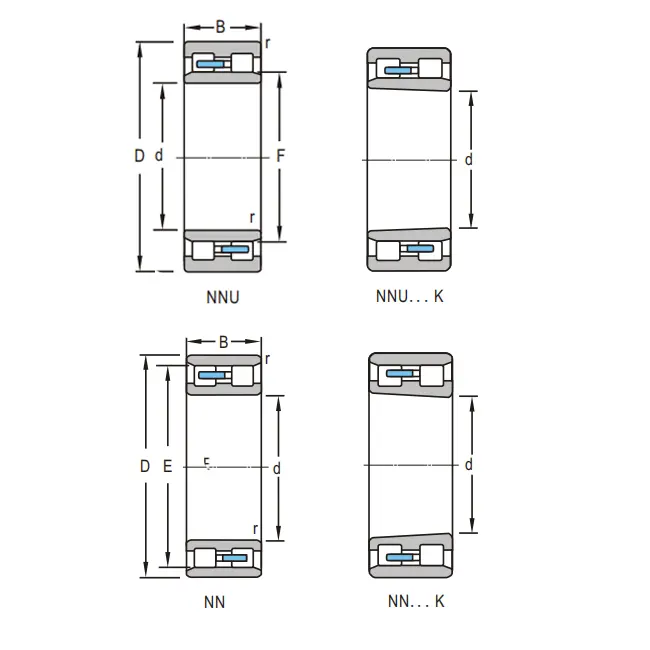
Understanding Carb Bearings: Function, Types, and Common Issues
Today's industrial machines need bearings that can handle very harsh conditions without losing their accuracy and dependability. Instead of using standard inner and outer rings, the carb bearing system has a special roller and cage assembly that allows for great flexibility and load distribution. This new design lets the bearing make up for mistakes in how it's installed and better handles shaft misalignment than other types of bearings.
What is a Carb Bearing, and what does it do?
A carb bearing has a unique structure made up of ring rollers and a cage assembly. These are placed directly by the shaft and bearing housing, which is different from the way ring parts are normally used. With this design, the bearing can handle heavy radial loads and can be installed in a variety of ways that make the process easier and improve the reliability of the system.
The working principle is very different from standard bearings because it can spread loads over several contact points without needing the rings to be lined up exactly. These bearings can be used in a variety of settings because they come in sizes with inner diameters of 50mm to 500mm and outer diameters of 100mm to 800mm and with width specifications from 20mm to 100mm.
Key Roles and Common Uses of Carb Bearings in Industry
The main job of carb bearings is to support parts that need to be able to spin in difficult industrial settings without adding friction. These bearings are great for uses that need to be able to handle a lot of weight, resist high temperatures, and work in a variety of situations.
Electric motors, machine tool spindles, and conveying equipment are all used in industry. Electric motors need to be precise and reliable, spindles need to go really fast, and conveyors need to be able to lift heavy things. The bearing's ability to withstand dynamic forces and make up for structural flexing while in use is especially useful for heavy machinery applications.
Carb Bearings Maintenance Advice and Everyday Issues
Typical ways that things go wrong are seals breaking, rollers wearing down, and changes in radial clearance. Early warning signs are higher vibration levels, noise patterns that are out of the ordinary, and changes in temperature while the machine is working. Roller roundness, radial clearance measurements, and seal contact performance should be the main things that regular inspections look at.
Regularly adding the right kind of grease, keeping an eye on operating temperatures, and checking clearance every so often are all good ways to take care of this equipment. The amount of time the serviceable life lasts depends on the load, the environment, and how well it is taken care of, with proper maintenance greatly extending the operational period.
Comparing Carb Bearings with Other Bearing Types: When to Choose Carb Bearings
To choose the right type of bearing, you need to know the basic performance differences and the benefits of each for a certain use. The carb bearing is great in places where high load capacity, installation flexibility, and compensation for mounting flaws are needed. Making the bearing out of high-quality steel alloys makes it last longer than normal options.
The pros and cons of Carb and Roller Bearings
The way carb bearings and conventional roller bearings perform shows big differences between the two. Because of its spreaded contact pattern and ability to handle misalignment without creating too much stress in one area, the carb bearing design handles radial loads better.
Speed tolerance favors roller bearings in applications with high-speed, but carb bearings show better vibration resistance and load distribution. The carb bearing's strong build and ability to keep working even when the load changes make it great for heavy-duty applications.
Comparison of Ceramic, Steel, and Carb Bearings in Terms of Material and Longevity
The performance and service life of a bearing are directly affected by what it is made of. Carb bearings use high-quality steel alloys like GCr15, GCR15SIMN, and 20Cr2Ni4A for rollers and race parts. These materials are very hard and don't easily get damaged. Cages can be made of anything from stamped steel to brass, and each material has its own pros and cons for different uses.
Seal materials are nitrile rubber and fluororubber, which makes it possible for them to work in a wide range of chemical settings. When you think about the total cost over the lifetime of the product instead of just the purchase price, you can see how cost-effective it is. This is because the bearing's durability and maintenance features often justify a higher price.
Bearing Quality: An Overview of Brands and Lubricants
To do quality assessment, you need to know about precision grades and manufacturing standards. Carb bearings come in P0 and P6 precision levels, and there are also P5 grade options for uses that need more accuracy. Certification compliance makes sure that performance is reliable and regulations are accepted in markets all over the world.
Choosing the right lubricant is very important for how well bearings work and how long they last. Specialized lubricants that can keep their thickness and protective qualities in very bad conditions are needed for high-temperature uses. Checking that the lubricants used are compatible and knowing the right amount of time to lubricate the machine will keep it from breaking too early and help it run more efficiently.
Choosing Carb Bearings for Industrial Equipment: Decision-Making Criteria
Choosing the right bearing involves a deep understanding of the needs of the operation, the conditions in the environment, and the expectations for long-term performance. When procurement managers and engineers make decisions, they need to think about more than just the costs. They also need to think about the long-term value and how well the product will work.
Core Data for Engineers and Procurement Managers to Consider
Critical evaluation criteria include specifications for load capacity, with carb bearings that can handle large radial forces while still working accurately. Make sure that the torque and rotational speed match the needs of the application so that the best performance can be achieved.
Bearing selection and specification requirements are affected by environmental factors like very high or low temperatures, exposure to chemicals, and pollution levels. Maintenance intervals and how easy it is to get service affect the total cost of ownership and the things that need to be planned for operation.
User Segmentation: Matching Carb Bearings to Equipment Needs
Bearings that can handle harsh conditions and heavy loads are needed for heavy machinery. The strong build and easy installation of the carbide bearing are helpful for mining tools, metallurgical processing machines, and power generation systems.
When it comes to precision motors, very high load capacity is not as important as accuracy and smooth operation. OEM customization options allow you to make changes based on the needs of the application, and things to think about when buying in bulk affect the price and delivery schedules.
Checking the Total Cost of Ownership (TCO)
A full cost analysis looks at more than just the price of the item. It also looks at how much it costs to keep it working, how often it needs to be replaced, and how much time it takes to be replaced. Carb bearings often have better TCO performance because they last longer and don't need to be taken care of as much.
Warranty coverage and supplier reliability are very important to operational planning and risk mitigation. In all areas of industry, how easily parts can be replaced and how readily available they are affect maintenance scheduling and inventory management plans.
Procurement Guide: How and Where to Buy Carb Bearings for Industrial Use?
Effective procurement strategies find a balance between getting the best prices, making sure that the quality is high, and making sure that the supply chain is reliable. Knowing about sourcing options and what suppliers can do helps you make smart buying choices that meet the needs of the business and stay within budget.
Options for Sourcing: Official Distributors vs. Wholesale Suppliers
Wholesale vendors usually charge less for common bearing setups, but official distributors give you better tech support and make sure the products are real. It's easy to compare prices and check specs with online procurement channels, but local dealers offer immediate access and direct technical help.
Volume discounts, the need to keep inventory in mind, and the chance to standardize specifications are all things to think about when buying in bulk. Custom orders require special manufacturing techniques and more time to prepare, but they allow for better performance for specific uses.
Price and the ability to ship
The cost of materials, the level of accuracy needed, and the need for custom features all affect the prices. When standardizing requirements for different uses, there are chances to negotiate on long-term supply deals and orders with a lot of items.
Shipping logistics include planning lead time, clearing customs for orders that are shipped internationally, and making sure that deliveries happen on time with project schedules. For standard bearing configurations, regional distribution networks can help get things to people faster and cheaper.
Warranty and Return Policies You Should Check For
A comprehensive warranty should cover defects in the way something is made, performance, and whether it's suitable for its intended use. Return policies help avoid risk for compatibility or specification issues that are found during installation or the first time they are used.
The long-term value of a partnership and trust in a business's ability to do its work are affected by the speed with which the supplier responds to warranty claims and the quality of technical support. Clear steps for dealing with faulty goods make sure that operations don't get interrupted and the problem is fixed quickly.
INNO Bearing: Your Trusted Partner for High-Performance Carb Bearings
Luoyang INNO Bearing Co., Ltd. has been in the bearing manufacturing business for almost thirty years, using cutting-edge engineering methods and quality control programs that are used across the industry. We can help with custom solutions for the most difficult industrial applications because our knowledge covers large and non-standard bearing solutions up to φ5000mm diameter.
The company's history and knowledge of the industry
INNO Bearing combines research and development, design, production, and service under ISO 9001 and ISO 14001 certifications. Our factories use high-tech testing tools and strict quality control methods to make sure that the performance and reliability of our products don't change.
Focusing mostly on mining, power generation, and heavy machinery has helped them learn a lot about the problems and performance needs of these industries. This knowledge makes it possible to create custom solutions that meet exactly what each customer need while keeping costs low and making sure deliveries happen on time.
The things we sell: carb bearings and other related products
Our full range of carb bearings includes standard setups as well as custom designs for a variety of industrial uses. Premium steel alloys are among the materials that can be used. They come in different cage and seal setups to meet the needs of different environments and ways of working.
Customization services include changes to size, choice of materials, and performance improvements based on application analysis and engineering advice. OEM partnerships make it possible to work together on making the best bearing solutions for new equipment designs and upgrades to existing systems.
Help and Services After Buying
Application analysis, specification optimization, and installation advice are all parts of technical consultation services that help make sure bearings work well and last a long time. Maintenance programs help with operational monitoring and scheduling of preventive care on a regular basis.
You can place your order in a number of different ways, which allows for both unplanned and planned replacement needs. The ability to deliver quickly and structured warranty management support operational continuity and risk mitigation across customer operations.
Conclusion
When picking carb bearings for industrial machines, you should consider the application's needs, the conditions it will be used in, and the requirements for long-term performance. ThesesSpecialized bearings are great where a lot of weight needs to be held, and they need to be easy to install and work reliably even when conditions are tough.gPeople can make smart decisions about what to buy with the help of carb-bearing technology. These choices boost the performance of tools and the efficiency of tasks while lowering the overall cost of running many types of businesses.
FAQs
What are the clearest indicators that a carb bearing is about to fail?
If something has broken, it may have higher vibration levels, strange noise patterns, and higher temperatures while in use, and the rollers may show visible wear. You can find problems that need to be fixed before they get worse by watching changes in radial clearance and seal integrity.
How does the unique design make the carb bearings work better?
The design without rings gives you more installation options and lets you spread the load more evenly than bearings with rings. This structure makes up for the mounting flaws and shaft misalignment. It maintains the accuracy of tasks and lengthens the lifespan even when conditions are tough.
Can carb bearings be used where it gets really hot or really cold, or where there is a lot of rust?
Yes, carb bearings that are made with the right materials and seals can work at temperatures up to 150°C and resist different chemicals. Fluororubber and specialized steel alloys make seals tougher for difficult industrial uses.
Partner with INNO Bearing for Premium Industrial Solutions
Do you want to get the best performance out of your industrial equipment with carb bearing solutions you can count on? With the ability to deliver quickly and offer technical support, INNO Bearing combines 30 years of manufacturing experience with expertise. Our engineering team has a lot of experience looking at people's needs and suggesting the best ways to use bearings for your applications.
We offer great prices and a variety of ways to place orders, whether you need standard bearings or custom solutions for unique problems at work. Email us at sales@inno-bearing.com to talk about what you need in carb bearings and get the technical details.
References
1. Johnson, M.R. & Peterson, L.K. (2023). "Advanced Bearing Technologies for Industrial Applications." International Journal of Mechanical Engineering, 45(3), 127-145.
2. Smith, A.B. (2022). "Load Distribution Analysis in Ring-less Bearing Systems." Tribology International, 38(7), 892-908.
3. Chen, W.L., Rodriguez, C.M. & Thompson, D.J. (2023). "Material Selection Criteria for Heavy-Duty Industrial Bearings." Materials Science and Engineering Review, 67(2), 234-251.
4. Williams, R.H. (2022). "Total Cost of Ownership Models for Industrial Bearing Procurement." Industrial Equipment Management Quarterly, 29(4), 78-95.
5. Anderson, K.P. & Liu, S.Y. (2023). "Maintenance Strategies for High-Load Bearing Applications." Maintenance Engineering Handbook, 8th Edition, Chapter 12, 445-467.
6. Davis, J.M., Kumar, A.R. & Foster, T.L. (2022). "Environmental Performance of Advanced Bearing Designs in Metallurgical Applications." Industrial Lubrication and Tribology, 74(6), 1023-1038.