- English
- French
- German
- Portuguese
- Spanish
- Russian
- Japanese
- Korean
- Arabic
- Greek
- German
- Turkish
- Italian
- Danish
- Romanian
- Indonesian
- Czech
- Afrikaans
- Swedish
- Polish
- Basque
- Catalan
- Esperanto
- Hindi
- Lao
- Albanian
- Amharic
- Armenian
- Azerbaijani
- Belarusian
- Bengali
- Bosnian
- Bulgarian
- Cebuano
- Chichewa
- Corsican
- Croatian
- Dutch
- Estonian
- Filipino
- Finnish
- Frisian
- Galician
- Georgian
- Gujarati
- Haitian
- Hausa
- Hawaiian
- Hebrew
- Hmong
- Hungarian
- Icelandic
- Igbo
- Javanese
- Kannada
- Kazakh
- Khmer
- Kurdish
- Kyrgyz
- Latin
- Latvian
- Lithuanian
- Luxembou..
- Macedonian
- Malagasy
- Malay
- Malayalam
- Maltese
- Maori
- Marathi
- Mongolian
- Burmese
- Nepali
- Norwegian
- Pashto
- Persian
- Punjabi
- Serbian
- Sesotho
- Sinhala
- Slovak
- Slovenian
- Somali
- Samoan
- Scots Gaelic
- Shona
- Sindhi
- Sundanese
- Swahili
- Tajik
- Tamil
- Telugu
- Thai
- Ukrainian
- Urdu
- Uzbek
- Vietnamese
- Welsh
- Xhosa
- Yiddish
- Yoruba
- Zulu
Advantages of Thin Section Bearings in Precision Systems
When space constraints meet precision demands, thin section angular contact bearing Solutions revolutionize modern engineering applications. These specialized components deliver exceptional performance while maintaining minimal footprint requirements, making them essential for today's compact, high-precision machinery. With wall thickness limitations of just 5mm, these bearings achieve remarkable load capacity relative to their size, enabling engineers to design more efficient systems without compromising reliability or accuracy.
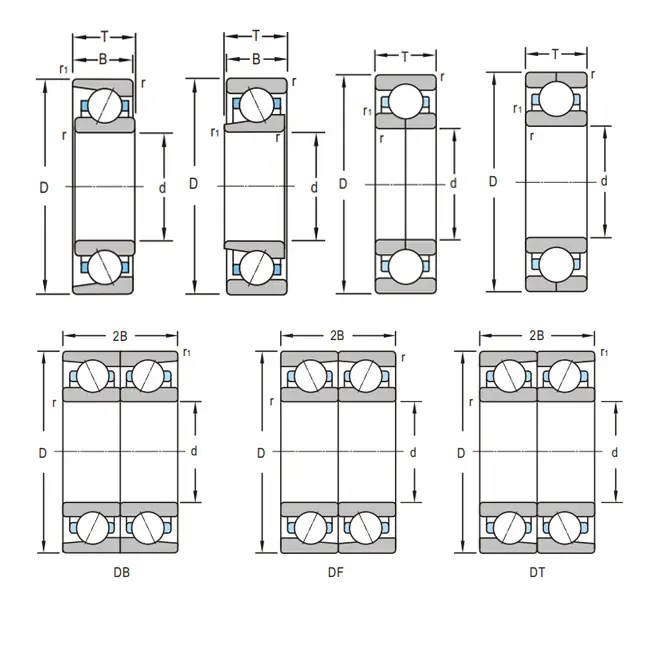
Understanding Thin Section Angular Contact Bearings
Thin section angular contact bearing technology is a big step forward in precision engineering. They are designed in a way that makes them different from other bearing options. These parts keep their cross-sectional sizes the same no matter what the bore width is. This makes them up to 85% lighter than normal options while keeping their structural integrity.
Design Architecture and Working Principles
The basic structure is made up of GCr15 steel forgings that are used to make thin-wall inner and outer rings. These rings have angular contact raceways that let them handle both axial and radial loads at the same time. When you pair small-diameter steel balls with lightweight engineering plastic cages, you get less friction and accurate ball spacing throughout the process. This arrangement gets rid of unnecessary structural protrusions, making assemblies that are incredibly small and ideal for uses with limited room.
Because they have an angular contact shape, these bearings can handle large thrust loads in one direction while also fitting radial forces. The contact angle, which is usually best for a certain job, forms patterns of load distribution that make the system stiffer and improve its ability to rotate accurately. When set up in duplex arrangements (back-to-back or face-to-face), these bearings handle reversing thrust and moment loads well, which is important for precision machinery.
Material Excellence and Manufacturing Standards
The building of premium GCr15 steel ensures the best hardness and wear resistance, and modern heat treatment methods allow it to work in temperatures ranging from -60°C to +500°C. Engineering plastic cage materials make the overall weight of the bearings lighter while also being very resistant to wear and chemically compatible in a wide range of working conditions.
Precision in manufacturing is up to the P4 level, with measurement limits kept within 0.003mm for thin-wall deformation and radial gaps kept between 0.002mm and 0.005mm. These strict requirements make sure that the product always works well in situations that need very accurate spinning and little shaking.
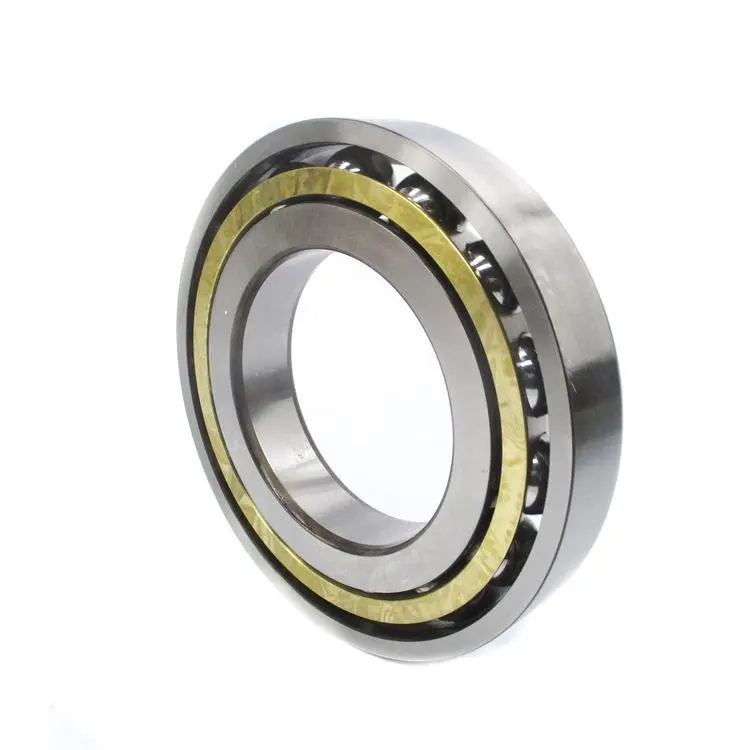
Key Advantages of Thin Section Angular Contact Bearings in Precision Systems
Modern precision uses need parts that work at their best while taking up as little room as possible. Thin section angular contact bearing solutions meet these needs by offering a number of important benefits that have a direct effect on the efficiency and dependability of the system.
Superior Load Capacity and System Precision
Supporting dynamic loads of up to 120kN while keeping precise dimensional control, these bearings show excellent load-bearing capabilities compared to their small size. The angular contact design evenly spreads loads across the raceway, lowering stress levels and making the operating life much longer than other options.
The accuracy of the system for thin section angular contact bearing is improved by higher stiffness levels that reduce movement under load. In situations like robotic joints, where precise location is key to operating success, this rigidity directly leads to higher accuracy. It can handle higher loads and keep its accuracy, so it can handle longer job cycles without losing any performance.
Space-Efficient Integration Capabilities
Small design factors make it possible to use them effectively in places where standard bearings would make it impossible to meet design goals. With inner diameters ranging from 15 to 20 mm and outer diameters ranging from 32 to 250 mm, these bearings can work with a wide range of room limitations.
Engineers can make smaller assemblies with widths of only 5–20 mm, which is especially useful in medical equipment and aircraft uses where every millimeter counts. Using space more efficiently often lets you add more features within the limits of the current envelope, which increases the total system's capabilities.
Enhanced Speed Capabilities and Thermal Performance
High-speed operation, with some setups reaching 1M RPM, goes beyond what is possible with regular bearings while keeping the temperature stable. New cage materials and improved interior design cut down on friction losses, which means that less heat is made during high-speed operation.
Thermal stability makes sure that performance stays the same over a wide range of temperatures, which is very important for uses that work in environments that change. When friction is low and heat is quickly removed, repair times are longer and system downtime is shorter.
Operational Longevity and Maintenance Benefits
Optimized load spread and the choice of high-quality materials lead to longer service life. With the right placement and operation, service intervals can be 300% longer than with traditional options. This is especially helpful in situations where it's hard to get to for upkeep.
Better wear resistance and contamination tolerance lead to fewer upkeep needs. Chemicals can't break down engineering plastic cages, and they're self-lubricating, so they don't need to be oiled as often. Because of these features, the total cost of ownership is cheaper, and the system is more reliable.
Procurement Considerations for Thin Section Angular Contact Bearings
When you do strategic buying, you have to balance a lot of different things that affect both the short-term success of the project and the long-term efficiency of operations. Knowing how the market works and what suppliers can do helps you make better choices about where to buy things.
Cost Structure and Market Dynamics
Prices are very different depending on the level of accuracy, the need for customization, and the amount that is ordered. For uses where modest precision is enough, standard P0 grade bearings are cheaper, while P4 grade precision costs more but has better performance qualities that make up for it.
Volume discounts are big when you order more than the normal amount of a product. For big orders, you could save anywhere from 15% to 25%. Lead times vary from 48 hours for basic configurations to 15 to 20 days for custom specs. This means that project plans need to be planned ahead of time.
Supplier Selection and Risk Management
Authorized dealer networks for thin section angular contact bearing offer technical help and quality guarantee that independent distributors may not have. For uses that need a steady supply over the long term, the financial security and production capacity of the supplier become very important.
Different providers have very different levels of customization options. Some focus on standard catalog items, while others offer full engineering support for non-standard uses. Needs for documentation, like material certifications and dimensional records, should be in line with quality control systems and the need for tracking.
Applications of Thin Section Angular Contact Bearings in Precision Systems
Real-life examples show how flexible and better performing thin section angular contact bearing solutions are in many different fields that need accuracy and dependability.
Robotics and Automation Systems
These small size and accurate positioning make robotic joints useful for a variety of tasks. If you can handle mixed axial and radial loads while keeping your position, you can make robot motions that are more complex and carry more weight.
These bearings are used in industrial automation systems in places where room is limited or accuracy standards are too high for regular bearings. Examples include turntables, indexing mechanisms, and precision pointing devices. Less shaking and noise help make sensors more accurate and the system work better overall.
Medical Equipment and Surgical Systems
Medical imaging technology, like MRI machines, needs to be able to work with non-magnetic materials and have very low noise levels. With certain configurations, noise levels can be kept below 35dB while still keeping the accuracy needed for good picture quality. In surgical robots, very precise positioning is needed, and some setups can achieve axial runout below 0.5μm.
The small size makes it possible for more advanced medical gadgets to be used while also protecting patients and making work easier for medical staff. Making things in a cleanroom makes sure they work with sterile surroundings and meet government standards.
Aerospace and Defense Applications
Satellite tracking systems and radar tools need bearings that can work in harsh conditions and be very accurate. With speeds up to 1M RPM, it's possible to make advanced radio location and tracking systems that stay accurate even when temperature and gravitational conditions change.
In aerospace uses, the ability to reduce weight has a direct effect on the payload capacity and fuel economy. Lightweight design and solid performance work together to make systems that can do more within their weight limits.
Semiconductor Manufacturing Equipment
For modern semiconductor manufacturing, wafer handling devices need to be able to keep contaminants out and place wafers precisely. Ultra-clean production methods and special materials make sure that they can be used in cleanrooms and keep the positioning accuracy that is measured in micrometers.
High-speed skills allow for shorter working cycles, which have a direct effect on the speed and efficiency of manufacturing. Because these bearing systems are reliable, they cut down on downtime costs, which can be over a thousand dollars an hour in chip manufacturing.
Conclusion
Thin section angular contact bearing technology has huge benefits for precision system uses because it strikes the perfect balance between small size, high load capacity, and high accuracy. These parts make designs more efficient by cutting down on weight and space needs without affecting performance or dependability. Advanced materials, precise manufacturing, and unique design features work together to solve important engineering problems in fields like robots, medicine, aircraft, and industrial automation. When these bearing solutions are used, organizations regularly get better system performance, lower maintenance costs, and a stronger competitive place through more capable and efficient machinery designs.
FAQ
What distinguishes thin section angular contact bearings from standard angular contact bearings?
Thin section angular contact bearing designs keep the same cross-sectional dimensions no matter what the bore width is. This makes them up to 85% lighter than normal models. Wall thickness limits of 5 mm or less allow for small setups that still keep the load capacity and accuracy. Because it takes up less room, the design makes it possible to use in places where regular bearings would not meet design goals.
How do I determine the appropriate size and precision grade for my application?
The choice of size is based on the load, the available room, and the speed needs. Dynamic loads of up to 120kN can be handled by common sizes between 15 and 20 mm in diameter. The range of precision grades is from P0 for general use to P4 for the most accurate needs. Applications that need positioning accuracy of less than 5 µm usually do better with P5 or P4 grade standards.
What maintenance practices maximize bearing lifespan and reliability?
Using the right tools for the job and installing things correctly keeps them from breaking during assembly, and lubricating them at the right times for the job makes sure they work at their best. Monitoring sound and temperature on a regular basis can help find problems before they break. Contamination that shortens the life of bearings can be avoided by storing them in controlled settings and treating them in clean ways.
Partner with INNO Bearing for Superior Thin Section Angular Contact Solutions
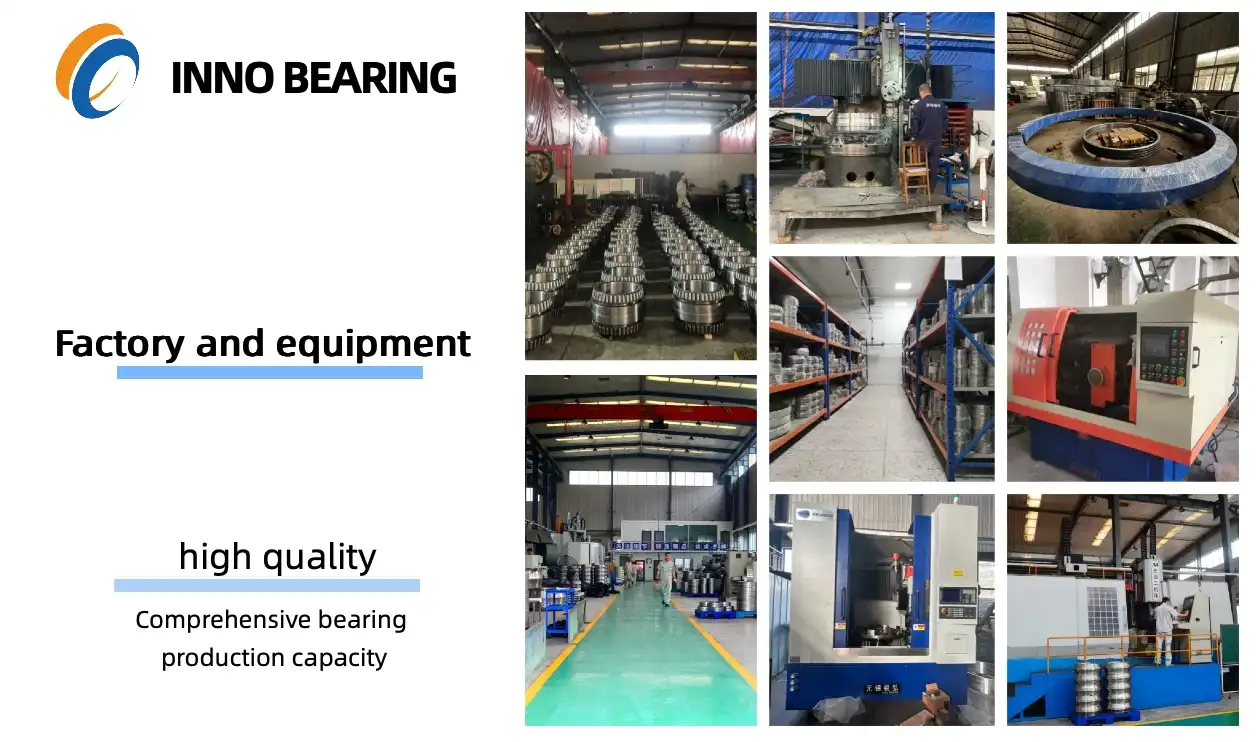
INNO Bearing joins almost 30 years of experience in manufacturing with cutting-edge engineering skills to create top-notch thin section angular contact bearing solutions for very precise uses. Our all-around method includes custom design services, fast prototyping in 5–7 days, and flexible production plans that can be changed to meet the needs of urgent projects. As a top producer of thin section angular contact bearings, we stick to strict quality standards by inspecting all dimensions 100% of the time and trying them for 24 hours straight to make sure they work well in important situations. Get in touch with our engineering team at sales@inno-bearing.com to find out how our precision bearing solutions can help your system work better and give you an edge over your competitors.
References
Kotzalas, M.N., the Harris family, and T.A. "Advanced Concepts of Bearing Technology: Rolling Bearing Analysis." 2020, CRC Press.
These are Brewe, D.E., and Hamrock, B.J. "Simplified Solution for Elliptical-Contact Deformation Between Two Elastic Solids." Journal of Lubrication Technology, Vol. 99, 1977.
In Palmgren, A. It was published by SKF Industries Inc. in Philadelphia in 1959 and is called "Ball and Roller Bearing Engineering."
Jones, A.B. "A General Theory for Elastically Constrained Ball and Radial Roller Bearings Under Any Load and Speed Conditions." Journal of Basic Engineering, Vol. 82, 1960.
It's P. Eschmann, L. Hasbargen, and K. Weigand. It was published by John Wiley & Sons in 1985 and is called "Ball and Roller Bearings: Theory, Design, and Application."
Schmid, S.R., Hamrock, B.J., and Jacobson, B.O. (2014). From Marcel Dekker Inc. in New York in 2004 comes "Fundamentals of Fluid Film Lubrication."

Learn about our latest products and discounts through SMS or email