- English
- French
- German
- Portuguese
- Spanish
- Russian
- Japanese
- Korean
- Arabic
- Greek
- German
- Turkish
- Italian
- Danish
- Romanian
- Indonesian
- Czech
- Afrikaans
- Swedish
- Polish
- Basque
- Catalan
- Esperanto
- Hindi
- Lao
- Albanian
- Amharic
- Armenian
- Azerbaijani
- Belarusian
- Bengali
- Bosnian
- Bulgarian
- Cebuano
- Chichewa
- Corsican
- Croatian
- Dutch
- Estonian
- Filipino
- Finnish
- Frisian
- Galician
- Georgian
- Gujarati
- Haitian
- Hausa
- Hawaiian
- Hebrew
- Hmong
- Hungarian
- Icelandic
- Igbo
- Javanese
- Kannada
- Kazakh
- Khmer
- Kurdish
- Kyrgyz
- Latin
- Latvian
- Lithuanian
- Luxembou..
- Macedonian
- Malagasy
- Malay
- Malayalam
- Maltese
- Maori
- Marathi
- Mongolian
- Burmese
- Nepali
- Norwegian
- Pashto
- Persian
- Punjabi
- Serbian
- Sesotho
- Sinhala
- Slovak
- Slovenian
- Somali
- Samoan
- Scots Gaelic
- Shona
- Sindhi
- Sundanese
- Swahili
- Tajik
- Tamil
- Telugu
- Thai
- Ukrainian
- Urdu
- Uzbek
- Vietnamese
- Welsh
- Xhosa
- Yiddish
- Yoruba
- Zulu
Angular Contact vs Deep Groove Ball Bearings
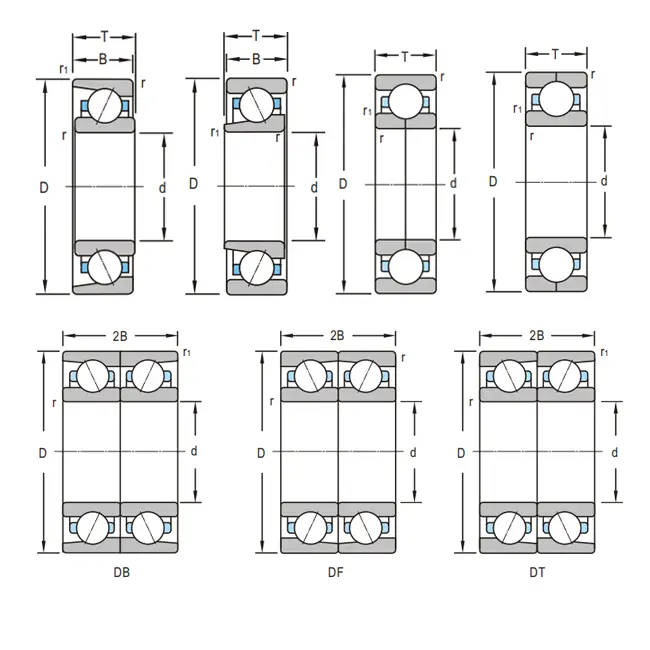
When looking at Angular contact ball bearings and Deep groove ball bearings side by side, the main difference is in how they handle loads and how they are built. Angular contact ball bearings can handle both radial and axial loads at the same time because their contact angles are 15°, 25°, or 40°. Deep groove bearings, on the other hand, are best at handling radial loads. Because of this, angular contact bearings are needed for high-speed, precise tasks in places with both radial and axial forces, such as wind turbine yaw systems, machine tool spindles, and aircraft equipment.
Introduction to Angular Contact and Deep Groove Ball Bearings
Ball bearings are the most important part of modern industrial gear because they allow for smooth rotation and can hold a wide range of loads. These precise parts have a direct effect on how well equipment works, how reliable it is, and how much it costs to run over its whole time. They are used in fields from wind energy to aerospace.
When choosing parts for mission-critical uses, it's important to know the basic differences between the different types of bearings. Picking the wrong bearings can cause early failures, unplanned downtime, big financial losses, and problems with whole production plans.
Understanding Angular Contact Ball Bearing Design
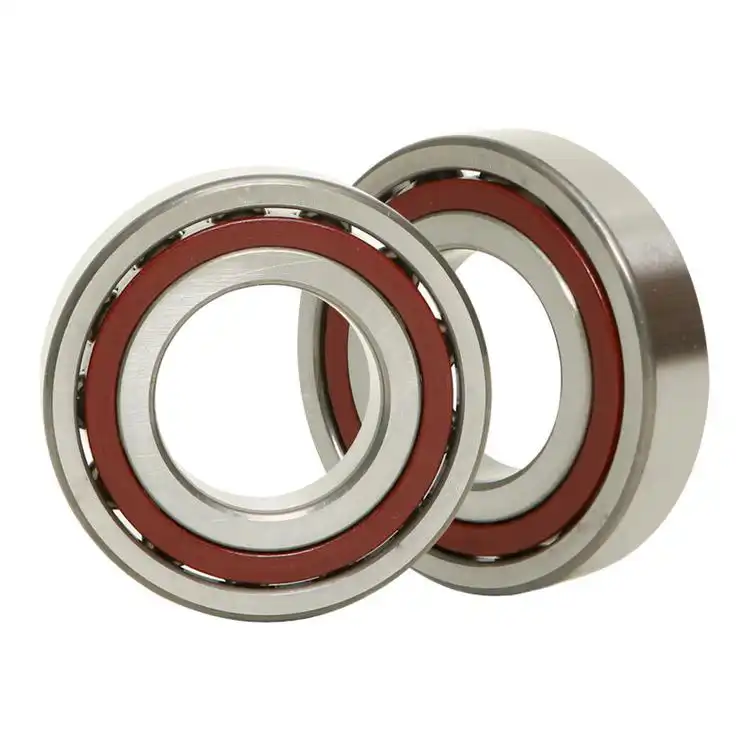
Angular contact ball bearings have a special raceway shape, and the contact angle affects how the load is distributed. Together, the inner ring, outer ring with angled contact raceway, single-row steel balls, and cage can handle a wide range of loads. You can put these bearings in pairs in either a back-to-back or face-to-face arrangement to get the best performance for your needs.
The contact angle has a direct effect on the axial load capacity. 15°-angled bearings are good for high-speed uses, while 25° and 40°-angled bearings can handle higher rotational loads. Because they can do so many things, they are perfect for situations where speed and load ability are important.
Deep Groove Ball Bearing Fundamentals
Asymmetrical raceways are used in deep groove ball bearings, which make them great at handling radial loads while also being able to handle mild axial forces. Because they are simple and strong, they are good for situations where rotational loads are common and cost is an issue. If you use them correctly, the deep raceway lines will spread the load very well and last a long time.
When compared to angular contact bearings of the same size, these ones can handle more radial load. Their sealed versions are very good at keeping out contamination, which makes them good for harsh industrial settings where servicing access is limited.
Key Differences Between Angular Contact and Deep Groove Ball Bearings
Because these types of bearings are made differently, they have different performance levels that meet the needs of different industries. Their operational features, speed limits, and ability to handle loads vary a lot, which makes them less or more suitable for certain uses.
Knowing these technical differences helps procurement teams make choices that meet operational needs and stay within their budgets. Each type of bearing has its own benefits that can improve the performance of tools when they are properly matched to the needs of the application.
Load Capacity and Distribution Analysis
Because their internal geometry is not symmetrical, angular contact ball bearings are very good at handling mixed loads. The contact angle lets you control both radial and axial forces at the same time. For bigger angles, the axial capacity goes up. Because of this, they are necessary for uses like wind turbine pitch systems, where the loads are spread out in complicated ways.
Because they are symmetrical, deep groove bearings are the best at handling rotational loads. They can handle some axial loads, but what they're really good at is holding up against strong radial forces with little deflection. This trait works well in situations where radial loads are the most important, like in conveyor systems and pumps.
When you look at dynamic and static capacities, you can see the changes in load ratings. When it comes to the same size, angular contact bearings usually have higher axial ratings and deep groove versions have better radial ratings. These basic skills can be improved by choosing the right materials and using heat treatment methods.
Speed and Temperature Performance Characteristics
The operating speeds that these types of bearings can handle are very different. Because their ball-to-raceway contact shape is better, angular contact bearings can usually handle higher rotational speeds. High-speed versions with military aluminum alloy cages can work at speeds faster than usual while still being accurate.
Temperature resistance depends on the type of material used and the way it is oiled. Components made of GCr15 and GCr15SIMN steel work reliably in normal temperature ranges, and special treatments make them work longer in harsh settings. At high temperatures, choosing the right lubricant is very important for keeping performance up.
The noise levels of these bearing types are also different. When made to exact specifications, angular contact bearings can get noise levels below 45dB. This means they can be used in places where noise is a problem, like medical equipment and precision instruments.
Practical Applications and Performance Evaluation
Real-world applications demonstrate how bearing selection impacts operational success across various industries. Understanding performance characteristics in practical contexts helps engineering teams optimize equipment design and maintenance strategies.
Case studies from wind energy installations illustrate the importance of proper bearing selection for yaw and pitch systems. The combination of variable loads, environmental exposure, and accessibility constraints demands bearings that deliver reliable performance over extended service intervals.
Wind Energy and Renewable Power Applications
Wind turbine systems present unique challenges that favor angular contact ball bearings for specific components. Yaw systems require bearings capable of handling wind loads while enabling precise turbine positioning. The ability to manage combined radial and axial forces makes angular contact designs ideal for these applications.
Pitch control systems benefit from the precision and speed capabilities of angular contact bearings. The constant adjustment requirements demand bearings that maintain accuracy while handling variable loads. Fatigue resistance becomes crucial given the cyclic nature of wind forces.
Main shaft applications often utilize large-diameter bearings where deep groove designs may provide adequate performance at lower costs. The primarily radial loads from rotor weight align well with deep groove bearing strengths, though specific installations may require angular contact capabilities.
Heavy Machinery and Industrial Equipment Performance
Crane and excavator applications showcase how bearing selection affects equipment capability and reliability. Slewing rings often incorporate angular contact principles to handle the complex loads encountered during lifting and rotation operations. The ability to manage moment loads becomes essential for structural integrity.
Tunnel boring machines operate in challenging environments where bearing reliability directly impacts project schedules. The combination of high loads, contamination exposure, and limited maintenance access favors robust bearing designs with proven track records. Material selection and sealing become critical factors.
Marine equipment faces additional challenges from corrosion and vibration. Salt water exposure demands superior material treatments and sealing technologies. The harsh operating environment requires bearings designed specifically for maritime applications with enhanced durability.
How to Choose Between Angular Contact and Deep Groove Ball Bearings (Decision Support)?
Selecting the optimal bearing type requires systematic evaluation of operational parameters, cost considerations, and performance requirements. A structured approach helps procurement teams balance technical needs with budget constraints while ensuring long-term reliability.
Load analysis forms the foundation of bearing selection. Applications with significant axial components typically favor angular contact designs, while purely radial loading scenarios may benefit from deep groove alternatives. Dynamic load calculations help determine appropriate safety factors and expected service life.
Operational Parameter Assessment
Speed requirements influence bearing selection significantly. High-speed applications exceeding standard limits require angular contact bearings with specialized cages and precision manufacturing. The DN (diameter × speed) factor provides guidance for speed capability evaluation.
Environmental conditions affect material selection and sealing requirements. Temperature extremes, contamination exposure, and chemical compatibility must be considered during bearing specification. Harsh environments may justify premium materials and enhanced protection systems.
Precision requirements determine manufacturing tolerances and quality grades. Applications demanding positioning accuracy require P6, P5, or P4 grade bearings with controlled runout and vibration characteristics. Standard P0 grade angular contact ball bearings suit general industrial applications where extreme precision is not required.
Total Cost of Ownership Considerations
Initial bearing costs represent only a portion of total ownership expenses. Maintenance requirements, expected service life, and downtime costs significantly impact economic analysis. Higher-quality bearings often provide superior value through extended service intervals and reduced failure rates.
Customization capabilities affect lead times and costs for specialized applications. Standard bearing sizes provide cost advantages and shorter delivery times, while custom designs enable optimal performance for unique requirements. The trade-offs must be evaluated based on project priorities and timelines.
Supplier selection influences quality, delivery reliability, and technical support availability. Established manufacturers with proven quality systems provide greater assurance of consistent performance. Local support capabilities become important for maintenance and emergency replacement needs.
Company Introduction and Product Overview
INNO Bearing brings nearly three decades of precision bearing manufacturing expertise to support industrial operations worldwide. Our specialization in large and non-standard bearings up to φ5000mm addresses unique requirements that standard catalogs cannot fulfill.
Our comprehensive product portfolio includes both angular contact and deep groove ball bearings designed for demanding industrial applications. Advanced manufacturing capabilities enable customization options that optimize performance for specific operational requirements while maintaining competitive delivery schedules.
Manufacturing Capabilities and Quality Assurance
Our production facilities incorporate advanced testing equipment that ensures consistent quality and performance. Spectrometer-verified raw materials provide the foundation for reliable bearing performance across operating temperature ranges from -40°C to 150°C. dimensional inspections guarantee conformance to specified tolerances.
Quality control processes include comprehensive testing protocols that verify performance characteristics before shipment. Noise, vibration, and load testing ensure each bearing meets stringent quality standards. Our quality systems maintain 99.9% defect-free delivery rates that support customer operational requirements.
Customization services enable Solutions for unique applications where standard bearings cannot provide optimal performance. Engineering support helps customers specify appropriate bearing configurations for complex loading conditions. Rapid prototyping capabilities reduce development timelines for new applications.
Global Supply Chain and Technical Support
Our inventory management systems maintain availability of over 1,000 standard bearing models with 48-hour shipping capabilities. This approach minimizes customer downtime while supporting just-in-time manufacturing operations. Emergency replacement services ensure critical equipment remains operational.
Technical support services provide application engineering assistance that optimizes bearing selection and installation procedures. Field service capabilities enable on-site troubleshooting and maintenance support when required. Training programs help customer maintenance teams maximize bearing performance and service life.
International shipping capabilities support global operations with reliable delivery schedules. Documentation services ensure compliance with import/export requirements and customer quality systems. Local representation in key markets provides responsive customer service and technical support.
Conclusion
The selection between angular contact and deep groove ball bearings fundamentally depends on load characteristics, speed requirements, and precision demands of specific applications. Angular contact ball bearings excel in applications requiring combined load handling, high-speed operation, and exceptional precision, making them ideal for wind energy systems, machine tools, and aerospace equipment. Their ability to manage complex loading while maintaining accuracy justifies their selection for mission-critical applications where performance and reliability are paramount. Understanding these technical distinctions enables procurement teams to make informed decisions that optimize equipment performance while managing total cost of ownership effectively.
FAQ
What are the main advantages of angular contact ball bearings over deep groove variants?
Angular contact ball bearings provide superior capability for handling combined radial and axial loads simultaneously. Their contact angles of 15°, 25°, or 40° enable precise load distribution that matches complex loading conditions found in wind turbines, machine tools, and aerospace applications. The asymmetrical design also supports higher operating speeds compared to deep groove bearings of similar size.
The precision manufacturing possible with angular contact designs enables applications requiring exceptional accuracy and low noise operation. P4 grade variants achieve radial runout specifications below 0.005mm while maintaining noise levels under 45dB, making them suitable for medical imaging equipment and precision instrumentation.
How do these bearings handle combined loads in practical applications?
Angular contact ball bearings manage combined loads through their specialized raceway geometry that distributes forces across both radial and axial directions. The contact angle determines the load distribution ratio, with larger angles providing increased axial capacity. Paired arrangements in back-to-back or face-to-face configurations further enhance load handling capabilities.
Real-world applications like wind turbine yaw systems demonstrate this capability where bearings must handle wind loads, structural forces, and rotational torques simultaneously. The bearing design maintains structural integrity while enabling precise positioning throughout variable loading cycles.
What factors should be considered when comparing pricing for bulk purchases?
Bulk purchase evaluations must consider total cost of ownership rather than initial bearing costs alone. Factors include expected service life, maintenance requirements, downtime costs, and technical support availability. Higher-grade bearings often provide superior value through extended service intervals and reduced failure rates.
Customization requirements affect pricing and delivery schedules significantly. Standard bearing sizes typically offer cost advantages and shorter lead times, while specialized designs enable optimal performance for unique applications. Volume commitments may justify custom tooling investments that reduce per-unit costs for large quantities.
Partner with INNO Bearing for Precision Bearing Solutions
INNO Bearing delivers comprehensive angular contact ball bearings solutions backed by three decades of manufacturing excellence and engineering expertise. Our commitment to quality, customization capabilities, and responsive technical support ensures your critical applications receive optimal bearing performance. Whether you need standard configurations or specialized designs up to φ5000mm, our experienced team provides the precision bearings and technical guidance your operations demand. Contact our bearing specialists at sales@inno-bearing.com to discuss your specific requirements and discover how our angular contact ball bearings manufacturer capabilities can enhance your equipment reliability and operational efficiency.
References
Harris, Tedric A. and Kotzalas, Michael N. "Essential Concepts of Bearing Technology: Rolling Bearing Analysis." CRC Press, 2019.
Hamrock, Bernard J. and Dowson, Duncan. "Ball Bearing Lubrication: The Elastohydrodynamics of Elliptical Contacts." John Wiley & Sons, 2018.
ISO 492:2014. "Rolling bearings - Radial bearings - Geometrical product specifications (GPS) and tolerance values." International Organization for Standardization.
Palmgren, Arvid. "Ball and Roller Bearing Engineering: Design, Application, and Failure Analysis." SKF Industries Incorporated, 2020.
Nelias, Daniel and Ville, Fabrice. "Detrimental Effects of Debris Dents on Rolling Contact Fatigue." Journal of Tribology, American Society of Mechanical Engineers, 2019.
Warda, Blazej and Chudzik, Adam. "Effect of Ring Misalignment on the Fatigue Life of the Radial Cylindrical Roller Bearing." Materials Science and Engineering Conference Proceedings, 2018.

Learn about our latest products and discounts through SMS or email