- English
- French
- German
- Portuguese
- Spanish
- Russian
- Japanese
- Korean
- Arabic
- Greek
- German
- Turkish
- Italian
- Danish
- Romanian
- Indonesian
- Czech
- Afrikaans
- Swedish
- Polish
- Basque
- Catalan
- Esperanto
- Hindi
- Lao
- Albanian
- Amharic
- Armenian
- Azerbaijani
- Belarusian
- Bengali
- Bosnian
- Bulgarian
- Cebuano
- Chichewa
- Corsican
- Croatian
- Dutch
- Estonian
- Filipino
- Finnish
- Frisian
- Galician
- Georgian
- Gujarati
- Haitian
- Hausa
- Hawaiian
- Hebrew
- Hmong
- Hungarian
- Icelandic
- Igbo
- Javanese
- Kannada
- Kazakh
- Khmer
- Kurdish
- Kyrgyz
- Latin
- Latvian
- Lithuanian
- Luxembou..
- Macedonian
- Malagasy
- Malay
- Malayalam
- Maltese
- Maori
- Marathi
- Mongolian
- Burmese
- Nepali
- Norwegian
- Pashto
- Persian
- Punjabi
- Serbian
- Sesotho
- Sinhala
- Slovak
- Slovenian
- Somali
- Samoan
- Scots Gaelic
- Shona
- Sindhi
- Sundanese
- Swahili
- Tajik
- Tamil
- Telugu
- Thai
- Ukrainian
- Urdu
- Uzbek
- Vietnamese
- Welsh
- Xhosa
- Yiddish
- Yoruba
- Zulu
When to Replace Rolling Mill Bearings?
To keep metallurgical processes running smoothly and avoid costly downtime, it is important to know when to replace rolling mill bearings. Mill bearings usually need to be replaced when they show too much wear, when the temperature rises above the normal working range, or when vibration analysis shows that their performance is getting worse. Some signs that it's time to replace a key are damage to the surface that can be seen, strange noises, contaminated lubricant, and a lower load-bearing capacity that affects the standard of production and the safety of the equipment.
Understanding Rolling Mill Bearing Failures
Rolling mill bearings have to work in some of the harshest conditions in industrial settings. This means that they can fail in a number of ways that can have a big effect on mill output and machine dependability. Heavy loads that don't go away, high temperatures, and dirty surroundings all work together to make problems that slowly hurt bearing performance over time.
Common Failure Mechanisms in Metallurgical Applications
In steel mills and other metal working plants, where conditions are harsh, bearings are put under a lot of stress at the same time. Heavy loads that don't stop for more than 300 tons cause fatigue stress concentrations in the bearing material. Also, changes in temperature between room temperature and operating temperatures of up to 200°C cause thermal expansion cycles that weaken the structure. Wear patterns speed up and greasing doesn't work as well when iron chips, scale, and cooling water get into the system.
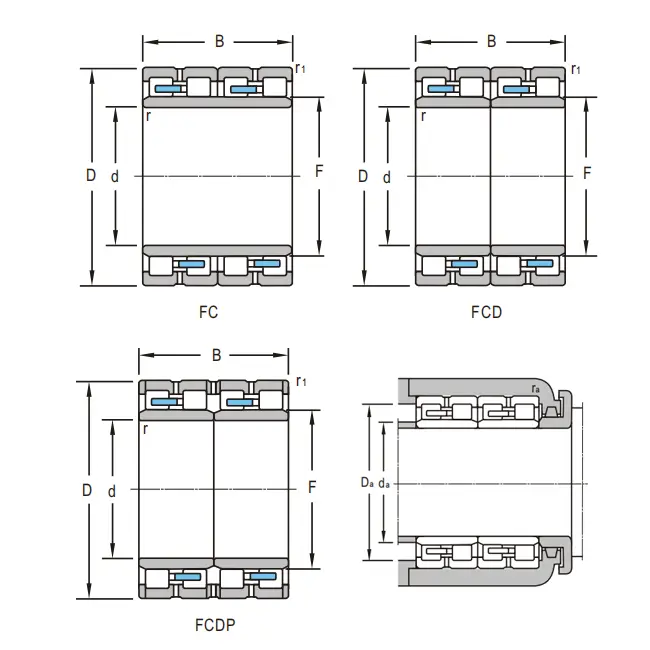
One of the most common ways things break in rolling mills is because of material fatigue, especially in four-row and double-row roller designs. Over time, the repeated loading processes create tiny cracks that spread through the bearing material. Eventually, these cracks cause the material to break apart and the surface to become less solid. When bearings are used beyond their original load capacity or when maintenance schedules are not followed, this process speeds up.
Impact Assessment of Bearing Failures
When rolling mill bearings fail without warning, the problems go far beyond the cost of replacing the parts. In metallurgical processes, downtime can cost thousands of dollars per hour, and emergency repairs often need fast shipping of replacement parts at a higher cost. Degradation of bearings can cause quality problems that can stop whole production runs. This can cause customers to complain and could lead to contract fines.
When bearings break during operation, safety concerns become the most important thing. A sudden bearing seizure can destroy a lot of equipment, putting people in danger and needing a lot of fixes to the building. When a bearing fails, it often damages equipment further down the line, which increases the cost of repairs and makes downtime last much longer than expected.
Key Indicators for When to Replace Rolling Mill Bearings
When maintenance teams know the early warning signs of bearing wear, they can schedule replacements for planned downtime. This way, expensive emergency fixes and production interruptions are avoided. Modern techniques to predictive maintenance use both old-fashioned inspection methods and new technologies for monitoring to give full reports on the health of bearings.
Auditory and Visual Warning Signs
Maintenance workers with a lot of experience can often find problems with bearings by carefully watching how they work. If you hear grinding, metallic scraping, or rhythmic banging, it means that an internal bearing is damaged and needs to be fixed right away. A visual check shows surface corrosion, visible spalling on the roller elements, or discoloration that means too much heat was generated during operation.
Monitoring temperatures is a reliable way to find out early signs of bearing wear. Infrared thermography can find hot spots that mean there isn't enough lubrication or that wear is causing more contact. Temperature rises of 20 to 30 degrees Celsius above standard operating ranges usually mean that something needs to be looked into right away and maybe a bearing needs to be replaced.
Advanced Monitoring Technologies
Vibration analysis is now an important part of metallurgical work to check the state of bearings. Accelerometers placed near bearing housings pick up frequency patterns that are linked to specific bearing flaws. This lets maintenance teams find issues weeks or months before they completely break down. Trend analysis of vibration data lets you plan replacements ahead of time based on rates of wear and tear instead of reactive repair methods.
By finding metallic particles and amounts of contamination in lubricants, oil analysis gives us useful information about how rolling mill bearings wear. Samples taken regularly and analyzed in a lab can find sources of contamination, broken down lubrication, and material decay that affect the performance of bearings. This information helps make replacement choices based on facts and improves lubrication plans.
Comparing Rolling Mill Bearings: Selecting the Right Bearing for Longevity
Choosing the right bearing specifications has a big effect on how long they last and how often they need to be serviced in rolling mill uses. Choosing between different bearing shapes, sizes, materials, and design features changes how much weight they can hold, how well they handle high temperatures, and how long they last in different environments.
Bearing Configuration Options
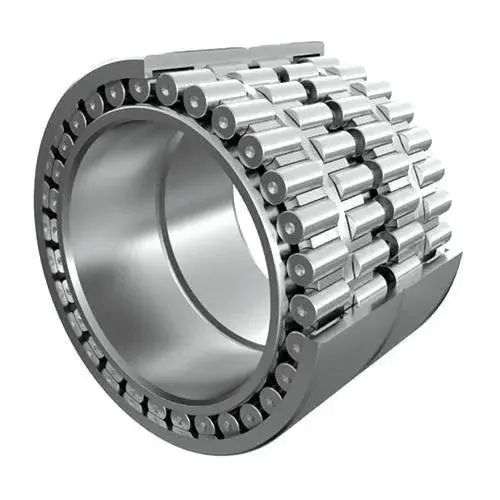
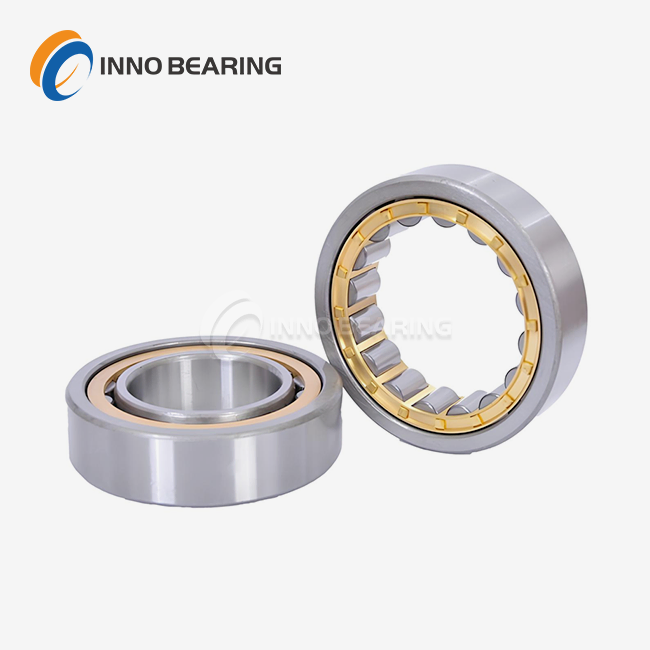
Four-row Tapered Roller Bearings are better at spreading loads in heavy-duty situations, while double-row configurations allow for more compact installation in situations where room is limited. The choice relies on the load requirements. Four-row designs can handle radial loads of more than 300 tons while still being accurate. When compared to fabricated options, rings that are integrally forged offer better structural stability. This is especially important for uses that involve shock loads and thermal cycling.
Metal labyrinth seals are important parts of rolling mill design because they keep iron chips and cooling water from getting into internal parts. The type of seal used has a direct effect on the life of the bearing. Systems that are properly designed can increase service life by keeping lubrication intact and avoiding abrasive contamination.
Material Selection Considerations
For example, GCr15, GCr15SiMn, and 20Cr2Ni4A are all high-grade bearing steels that work differently in different types of conditions. For standard uses, GCr15 has great wear resistance and dimensional stability. For larger bearing sizes, GCr15SiMn has better hardenability. Case-hardened materials, such as 20Cr2Ni4A, are better at resisting impacts in situations where shocks are present.
Different types of cage materials, like stamped steel and metal, are used for different tasks. Stamped steel cages are a cheap option for normal uses, while brass cages are better for precise uses that need Class P5 accuracy levels because they are more stable in size and have less friction.
Rolling Mill Bearing Maintenance and Lubrication Best Practices
Comprehensive maintenance programs make bearings last a lot longer and cut down on unexpected failures that throw off production plans. Proper management of lubrication, installation steps, and monitoring routines all work together to make sure that bearings work at their best throughout their entire operational lifecycle.
Lubrication System Optimization
To handle lubrication well, you need to make sure that the properties of the lubricant are right for the load, speed, and temperature conditions. Synthetic lubricants that keep their viscosity stable at high temperatures are good for high-temperature uses. On the other hand, heavy-load situations need lubricants that work better under extreme pressure. Automated lubrication systems give lubricant consistently while lowering the need for maintenance work and the chance of mistakes made by humans.
Lubricant research done on a regular basis finds sources of contamination and patterns of degradation that affect how well rolling mill bearings work. Metal particle analysis shows how things wear down, and tracking the moisture content finds problems with the integrity of seals before they damage the bearings. This information helps make changes to the lubrication intervals based on proof and helps choose the best lubricant for each application.
Installation and Alignment Procedures
If you install bearings the right way, they won't break early because of damage or mismatch during installation. When using hydraulic installation methods, you can control how much force is applied, which keeps bearings from getting damaged during assembly. Laser alignment systems, on the other hand, make sure that the shaft is in the right place, which stops edge loading and uneven wear patterns.
Monitoring the temperature during the first few hours of use makes sure that everything was installed correctly and finds any problems before they become permanent. By taking baseline measurements of vibration, you can compare normal working characteristics in the future. This lets you find problems early on through trending analysis.
Procurement Guidance: Best Practices for Buying Rolling Mill Bearings
Strategic procurement planning makes sure that bearings are available and that the total cost of ownership is as low as possible by carefully choosing suppliers and keeping track of supplies. Knowing about lead times, quality standards, and the ability to customize helps procurement teams make smart choices that meet business needs.
Supplier Evaluation Criteria
Price comparisons should not be the main factor used to choose a supplier. Instead, the ability to manufacture, quality certifications, and availability of technical assistance should be given more weight. Suppliers who have worked in the metallurgical industry know what is needed for each application and can give helpful expert advice on choosing the right bearings and making the best use of them. Facility inspections, quality system audits, and reference checks from similar uses should all be part of assessments of a company's manufacturing capabilities.
Managing lead times is very important for large-diameter bearings that need longer production times. Suppliers with established inventory systems can deliver standard sizes faster, and their ability to make to order ensures that non-standard applications are always available. Knowing how much a provider can hold and how demand changes with the seasons helps procurement teams plan orders so that there aren't any supply problems.
Quality Assurance and Testing Requirements
Specifications for bearings should include thorough testing standards that check how well they work in real-world situations. Testing for impact resistance makes sure it can handle shock loads, and testing for high temperatures makes sure it works well in hot situations. Testing the quality of the seals protects against contamination in harsh working conditions.
Material certifications, dimensional inspection records, and performance test results that help with quality control and tracking should all be required as documentation. These records are needed to file guarantee claims and give useful information for improving bearing performance and making decisions about future purchases.
Conclusion
To replace rolling mill bearings on time, you need to pay close attention to performance indicators, choose the right supplier, and keep up with full maintenance plans. The best way to handle a bearing's lifecycle is to understand how it fails, keep an eye on key performance indicators, and use predictive maintenance strategies. Making good purchasing choices based on the needs of the application and the capabilities of the supplier will ensure reliable operation while keeping the total cost of ownership as low as possible. Using modern monitoring technologies to check the state of bearings on a regular basis helps make replacement decisions based on facts, which stops unexpected failures and keeps production going.
FAQ
How often should rolling mill bearings be inspected?
Rolling mill bearings require monthly visual inspections and quarterly comprehensive assessments including vibration analysis and temperature monitoring. High-load applications may require more frequent inspection intervals based on operating severity and historical performance data.
What are the signs of lubrication failure in mill bearings?
Lubrication failure manifests as temperature increases, unusual noise patterns, and visible lubricant contamination or degradation. Oil analysis revealing increased metal content or moisture contamination indicates lubrication system problems requiring immediate attention.
Can bearings be upgraded without major mill modifications?
Many bearing upgrades can be accomplished within existing housing configurations, particularly when working with experienced suppliers who understand retrofit applications. Dimensional compatibility and load capacity improvements often require only minor modifications to achieve significant performance gains.
Partner with INNO Bearing for Your Rolling Mill Bearing Requirements
INNO Bearing combines three decades of metallurgical industry expertise with advanced manufacturing capabilities to deliver reliable rolling mill bearing Solutions. Our comprehensive product range includes bearings up to φ5000mm with custom configurations tailored to your specific operational requirements. Contact our technical team at sales@inno-bearing.com to discuss your bearing replacement needs and discover how our proven solutions can optimize your mill operations while reducing total cost of ownership.
References
Johnson, R.M. "Bearing Failure Analysis in Heavy Industrial Applications." International Journal of Metallurgical Engineering, Vol. 45, No. 3, 2023.
Chen, L. and Martinez, P. "Predictive Maintenance Strategies for Rolling Mill Equipment." Steel Industry Technical Review, Issue 127, 2024.
Anderson, K.T. "Material Selection Guidelines for High-Temperature Industrial Bearings." Bearing Technology Quarterly, Vol. 18, No. 2, 2023.
Williams, S.A. "Lubrication System Optimization in Metallurgical Operations." Industrial Maintenance Engineering, Vol. 31, No. 4, 2024.
Thompson, D.R. "Cost-Benefit Analysis of Bearing Replacement Strategies in Steel Mills." Manufacturing Economics Review, Vol. 29, No. 1, 2023.
Lee, M.H. "Advanced Vibration Analysis Techniques for Bearing Condition Monitoring." Mechanical Systems Diagnostics, Vol. 22, No. 3, 2024.

Learn about our latest products and discounts through SMS or email