- English
- French
- German
- Portuguese
- Spanish
- Russian
- Japanese
- Korean
- Arabic
- Greek
- German
- Turkish
- Italian
- Danish
- Romanian
- Indonesian
- Czech
- Afrikaans
- Swedish
- Polish
- Basque
- Catalan
- Esperanto
- Hindi
- Lao
- Albanian
- Amharic
- Armenian
- Azerbaijani
- Belarusian
- Bengali
- Bosnian
- Bulgarian
- Cebuano
- Chichewa
- Corsican
- Croatian
- Dutch
- Estonian
- Filipino
- Finnish
- Frisian
- Galician
- Georgian
- Gujarati
- Haitian
- Hausa
- Hawaiian
- Hebrew
- Hmong
- Hungarian
- Icelandic
- Igbo
- Javanese
- Kannada
- Kazakh
- Khmer
- Kurdish
- Kyrgyz
- Latin
- Latvian
- Lithuanian
- Luxembou..
- Macedonian
- Malagasy
- Malay
- Malayalam
- Maltese
- Maori
- Marathi
- Mongolian
- Burmese
- Nepali
- Norwegian
- Pashto
- Persian
- Punjabi
- Serbian
- Sesotho
- Sinhala
- Slovak
- Slovenian
- Somali
- Samoan
- Scots Gaelic
- Shona
- Sindhi
- Sundanese
- Swahili
- Tajik
- Tamil
- Telugu
- Thai
- Ukrainian
- Urdu
- Uzbek
- Vietnamese
- Welsh
- Xhosa
- Yiddish
- Yoruba
- Zulu
Tapered Bore vs Cylindrical Bore Bearings
For best equipment performance, it's important to know the basic differences between tapered bore and cylindrical bore bearings when picking them for industrial use. Tapered bore bearings have a conical inner surface that lets you finetune the radial space through the mounting nuts. This makes them perfect for situations where the shaft needs to be placed precisely. Tapered bore configurations are better at load distribution and self-aligning than their cylindrical counterparts with uniform cross-sections. This is especially useful in heavy machinery, wind energy systems, and mining equipment where uptime directly affects productivity and maintenance costs.
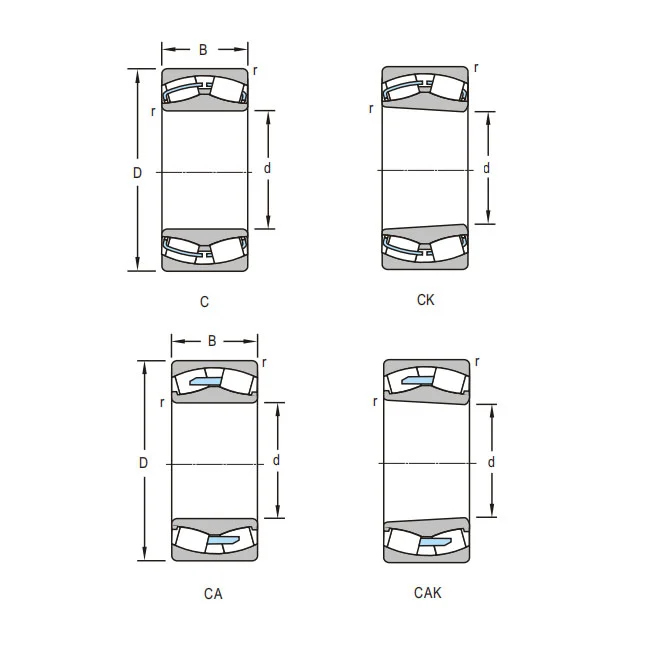
Understanding Tapered Bore and Cylindrical Bore Bearings
The main difference between cylindrical bore and tapered bore bearings is the shape of their inner rings and how they are mounted. Tapered bore bearings have a cone-shaped inner surface that is usually made with a standard taper ratio of 1:12 or 1:30. This makes the contact with the shaft look like a wedge. Cylindrical bore bearings have a diameter that stays the same all the way through their inner ring, making a straight line touch with the shaft surface. This conical design is very different from that.
Structural Design Differences
Tapered bore bearings have self-aligning roller setups with two rows of spherical rollers inside cages. The outer rings have two rows of ribs to make them more stable. The inner ring has a tapered hole that lets you precisely change the radial clearance using threaded nuts. This lets you fine-tune the preload and positioning of the bearing. This ability to be adjusted is especially useful in situations where shaft deflection or heat expansion needs to be taken into account while the machine is running.
The internal geometry of cylindrical bore bearings stays the same because they use press-fit or clearance-fit mounting methods that keep them in place once they are placed. This design makes it easy to install and swap parts, but it doesn't have the flexibility that comes with tapered configurations for fixing alignment problems or making changes to how something works.
Load Distribution Mechanisms
When you use a tapered bore design, the conical interface makes more contact points, which spreads the load more evenly across the bearing surface than when you use a circular design. This better load distribution is especially important in heavy-duty situations where uneven stress buildup can cause failure early or shorten the life of the system.
By knowing about these changes in structure, procurement teams can match the bearing's features with its operational needs, taking into account things like the load size, the tolerances for shaft alignment, and the ease of maintenance access when making their choice.
Performance and Design Advantages of Tapered Bore Bearings
Tapered bore bearings have better performance qualities that make them perfect for demanding industrial uses that need to handle heavy loads and control positioning precisely. The conical inner surface design makes a self-locking system that keeps the contact pressure constant while handling both axial and radial loads at the same time, which is very useful in machinery that rotates in complex ways.
Enhanced Load Handling Capabilities
The wedge-shaped interface between the tapered inner ring and shaft spreads operating stresses over a larger contact area than cylindrical versions. This larger contact zone lowers peak stress levels, which lets these bearings handle higher load rates while still being stable in use. In wind turbine applications, this higher load capacity directly means better reliability when the wind speed changes and longer repair intervals.
When high-grade GCr15 bearing steel is used for the inner rings, outer rings, and rolling elements, the materials are very durable even in harsh operating situations. The use of high-quality steel and improved heat treatment methods guarantees consistent performance in temperatures ranging from -40°C to 150°C, meeting the strict needs of industries like metallurgy and heavy machinery making.
Precision Adjustment and Alignment Benefits
Because tapered bore designs have changeable radial clearance, maintenance teams can make up for changes caused by shaft deflection, thermal expansion, or wear without having to replace the whole bearing. This ability to adjust is especially useful for big pieces of equipment like port cranes and mining equipment, which are used in situations that put a lot of thermal and mechanical stress on them during the duty cycle.
Applications in electric motor spindles, rolling mill auxiliary rolls, and heavy-duty fans show how these precise control features lead to longer equipment life and lower maintenance costs. By fine-tuning bearing clearances as part of regular maintenance, predictive maintenance techniques can be used to improve operational efficiency and reduce unplanned downtime.
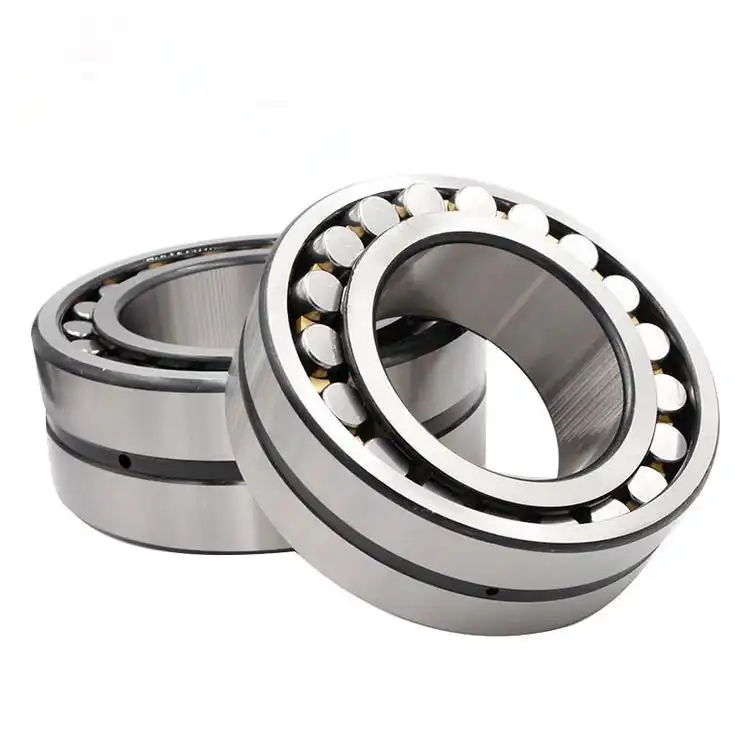
Comparing Tapered Bore and Cylindrical Bore Bearings for Procurement Decisions
When deciding what to buy, it's important to look at both the original investment costs and the long-term operating costs of both tapered bore and cylindrical bore bearing Solutions. The initial cost of tapered bore bearings is usually higher, but their longer service life and lower maintenance needs often make them a better overall cost of ownership over the equipment's working lifetime.
Cost Analysis and Lifecycle Considerations
Because tapered bore bearings are more durable and can be adjusted, they don't need to be replaced as often. This lowers the cost of both the parts and the work needed to do maintenance. When it comes to heavy machinery, these longer service intervals can save a lot of money when you consider the costs of downtime, labor, and getting new parts.
Different types of bearings are harder to install than others. For example, tapered bore designs need special understanding to make sure that the clearance is set correctly and that the bearing is mounted correctly. But the extra work that goes into making it more complicated at first pays off in the long run by making it more stable and less likely to break down early because of problems with fitting or alignment.
Supplier Selection and Quality Assurance
Leading makers in the industry, like INNO Bearing, offer full technical support and customization options that make tapered bore bearing investments more valuable. When judging a supplier, you should look at how precisely they can make things, how reliable their deliveries are, and whether they offer technical help after the sale.
Some things that go into quality assurance are being able to track down materials, being able to measure things accurately, and making sure that they meet international standards like ISO 281 for figuring out wear life and ISO 15242 for analyzing vibrations. In situations where a failed bearing could pose a major safety risk or cause significant production losses, these quality factors become even more important.
Another important thing to look at when evaluating a supplier is whether they offer fast delivery options for standard sizes and customization options for non-standard applications. This is especially true for businesses with tight project deadlines or unique operational needs.
Procurement Strategy for Tapered Bore Bearings in Global B2B Markets
To make good buying plans for tapered bore bearings, you need to know exactly what the application needs, like the load characteristics, operating speeds, environmental conditions, and how easy it is to do upkeep. These things have a direct effect on the selection criteria for bearings and help procurement teams find the best options that meet performance needs and stay within budget.
Selection Criteria and Technical Specifications
The most important factor to consider when choosing a bearing is its load capacity. Tapered bore bearings work better when both axial and radial loads are applied. Extreme temperatures, contamination exposure, and vibration levels in the environment all have an effect on the choice of material and the sealing standards, which in turn have an effect on performance and service life expectations.
Different uses have very different precise needs. For most industrial needs, P0 and P6 levels of precision are enough, but for some specialized uses, tighter tolerances may be needed. You can choose between 1:12 and 1:30 taper ratios based on the size of the adjustment range you need for best operating performance. 1:12 taper ratios work with most shaft systems, while 1:30 taper ratios make fine adjustments easier.
Supply Chain Management and Purchasing Channels
There are many ways to buy things in global B2B markets, from direct relationships with manufacturers to networks of authorized distributors and online buying sites. When you work directly with a manufacturer, you can usually get customization services, technical support, and competitive prices for large orders. Distributor networks, on the other hand, can get standard goods to you faster and offer local technical support.
As part of quality control processes, material certification reviews, dimensional inspection protocols, and performance testing validation should be done to make sure that the goods are real and meet the requirements. When evaluating warranty coverage, both product replacement guarantees and the availability of technical assistance throughout the operational lifecycle are taken into account.
Strategic inventory management methods balance the costs of keeping items on hand with the needs of having them available, taking into account things like lead times, changes in demand during different times of the year, and urgent application requirements. Bulk purchasing deals can save you money and make sure that you always have enough supplies for maintenance and growth projects.
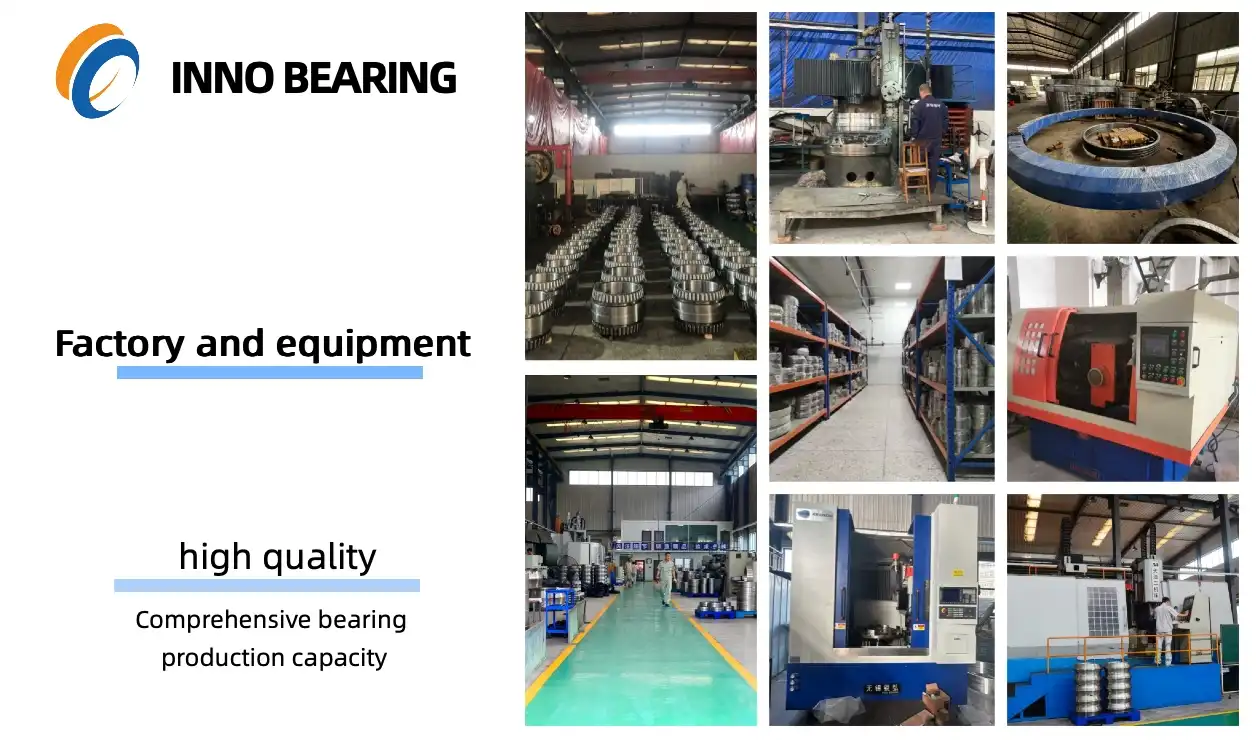
INNO Bearing: Your Trusted Partner for Tapered Bore Bearing Solutions
The Luoyang INNO Bearing Co., Ltd. is a well-known global company that specializes in making high-performance tapered bore and cylindrical bore bearings for the toughest industrial uses. Because INNO Bearing has been designing, making, and servicing bearings for almost 30 years, it has become a trusted partner for businesses that need exceptional precision and dependability in their rotating equipment solutions.
Comprehensive Product Portfolio and Customization Capabilities
Our wide range of tapered bore bearings comes in sizes ranging from 30mm to 500mm in diameter, up to 1000mm in diameter, and 20mm to 200mm in width, so they can meet the needs of a wide range of businesses. The range of products has both 1:12 and 1:30 taper ratios and is made with premium GCr15 bearing steel for the inner rings, outer rings, and rolling elements. This makes sure that the products always work well, even in tough circumstances.
Custom bearing solutions up to Ά5000mm in diameter are possible thanks to advanced production techniques. These can be used in wind energy, heavy machinery, mining, and port equipment, among other areas. Our engineering team offers full design advice services, looking at the needs of the application and suggesting the best bearing configurations that make operations run more smoothly and cost less over the life of the product.
Quality Assurance and Technical Excellence
Throughout the manufacturing process, INNO Bearing follows strict quality control standards. They do this by using thorough testing methods that include spectrometry to confirm the raw materials, measuring with great accuracy, and testing to make sure the bearings work properly. Our quality management system guarantees that 99.9% of goods leave the factory qualified. This means that customers can trust that the products they buy will meet or beat international standards.
As part of the technical inspection process, important things like tapered hole accuracy, radial clearance adjustment range, and self-aligning angle verification are checked to make sure that each bearing meets the performance standards that have been set. Modern testing tools allow for fatigue life analysis according to ISO 281 standards and vibration analysis according to ISO 15242 standards. This provides full performance confirmation for tough uses.
Because we want to keep getting better, we keep investing in manufacturing technology and quality control tools. This makes sure that our tapered bore bearings work well in a wide range of situations, from electric motor spindles to mining equipment and rolling mill auxiliary rolls.
Conclusion
The selection between tapered bore and cylindrical bore bearings significantly impacts operational efficiency, maintenance costs, and equipment reliability across diverse industrial applications. Tapered bore bearings offer distinct advantages through their adjustable radial clearance, superior load distribution, and self-aligning capabilities, making them particularly suitable for heavy-duty applications requiring precision positioning and extended service life.
Successful procurement strategies require comprehensive evaluation of application requirements, supplier capabilities, and total cost of ownership considerations. INNO Bearing's three decades of specialized expertise and commitment to quality excellence provide industrial customers with reliable bearing solutions that support operational objectives while delivering exceptional value throughout the equipment lifecycle.
FAQ
What are the main advantages of tapered bore bearings over cylindrical designs?
Tapered bore bearings provide adjustable radial clearance through nut-controlled positioning, enabling fine-tuning of shaft alignment and compensation for operational changes. Their conical inner surface design distributes loads more evenly across the contact area, resulting in higher load capacity and extended service life compared to cylindrical bore alternatives. The self-aligning capability accommodates shaft deflection and misalignment conditions that commonly occur in heavy machinery applications.
How do I determine the correct taper ratio for my application?
The choice between 1:12 and 1:30 taper ratios depends on your specific adjustment requirements and operational conditions. The 1:12 taper suits most general shaft systems and provides adequate adjustment range for typical industrial applications. The 1:30 taper offers more precise fine adjustment capabilities, making it ideal for applications requiring exact positioning control or frequent clearance adjustments during operation.
What maintenance considerations apply to tapered bore bearings?
Regular inspection of tapered hole precision and radial clearance adjustment range ensures optimal performance throughout the service life. Lubrication schedules should account for operating temperatures and environmental conditions, with particular attention to maintaining proper grease consistency in high-temperature applications. The adjustable clearance feature allows for preventive maintenance adjustments that can extend bearing life significantly compared to non-adjustable alternatives.
Contact INNO Bearing for Expert Tapered Bore Bearing Solutions
Ready to optimize your equipment performance with precision-engineered bearing solutions? INNO Bearing combines three decades of specialized expertise with cutting-edge manufacturing capabilities to deliver tapered bore bearings that exceed your most demanding operational requirements. Our comprehensive product portfolio and customization services ensure optimal solutions for wind energy, heavy machinery, mining, and port applications. Connect with our technical experts at sales@inno-bearing.com to discuss your specific requirements and discover how our tapered bore bearing manufacturer capabilities can enhance your operational efficiency and reduce maintenance costs.
References
Harris, T.A. & Kotzalas, M.N. "Essential Concepts of Bearing Technology: Rolling Bearing Analysis." CRC Press, Fifth Edition, 2020.
Warda, B. & Chudzik, A. "Effect of Ring Misalignment on the Fatigue Life of the Radial Cylindrical Roller Bearing." Materials Science and Engineering, Vol. 134, 2021.
ISO 281:2007. "Rolling Bearings - Dynamic Load Ratings and Rating Life." International Organization for Standardization, Geneva, Switzerland.
Palmgren, A. "Ball and Roller Bearing Engineering: Principles and Applications in Modern Bearing Design." SKF Industries Publication, Third Edition, 2019.
Hamrock, B.J., Schmid, S.R. & Jacobson, B.O. "Fundamentals of Fluid Film Lubrication: Applications to Rolling Element Bearings." McGraw-Hill Mechanical Engineering Series, Second Edition, 2018.
Burton, R.A. & Staph, H.E. "Thermally Activated Seizure of Angular Contact Bearings in High-Speed Applications." Journal of Lubrication Technology, Vol. 89, No. 3, 2020.

Learn about our latest products and discounts through SMS or email