- English
- French
- German
- Portuguese
- Spanish
- Russian
- Japanese
- Korean
- Arabic
- Greek
- German
- Turkish
- Italian
- Danish
- Romanian
- Indonesian
- Czech
- Afrikaans
- Swedish
- Polish
- Basque
- Catalan
- Esperanto
- Hindi
- Lao
- Albanian
- Amharic
- Armenian
- Azerbaijani
- Belarusian
- Bengali
- Bosnian
- Bulgarian
- Cebuano
- Chichewa
- Corsican
- Croatian
- Dutch
- Estonian
- Filipino
- Finnish
- Frisian
- Galician
- Georgian
- Gujarati
- Haitian
- Hausa
- Hawaiian
- Hebrew
- Hmong
- Hungarian
- Icelandic
- Igbo
- Javanese
- Kannada
- Kazakh
- Khmer
- Kurdish
- Kyrgyz
- Latin
- Latvian
- Lithuanian
- Luxembou..
- Macedonian
- Malagasy
- Malay
- Malayalam
- Maltese
- Maori
- Marathi
- Mongolian
- Burmese
- Nepali
- Norwegian
- Pashto
- Persian
- Punjabi
- Serbian
- Sesotho
- Sinhala
- Slovak
- Slovenian
- Somali
- Samoan
- Scots Gaelic
- Shona
- Sindhi
- Sundanese
- Swahili
- Tajik
- Tamil
- Telugu
- Thai
- Ukrainian
- Urdu
- Uzbek
- Vietnamese
- Welsh
- Xhosa
- Yiddish
- Yoruba
- Zulu
Digger Slew Ring Bearing: Load Capacity and Service Life Explained
For the best excavator performance and working efficiency, it's important to know how load capacity and service life are related. A digger slew ring bearing is the important part that makes it possible for excavators to rotate smoothly while carrying heavy loads. Extreme forces, harsh environments, and constant operation cycles are all things that these bearings have to deal with. Choosing the right Slewing Bearings and keeping them in good shape have a direct effect on the productivity, maintenance costs, and total return on investment of heavy machinery.
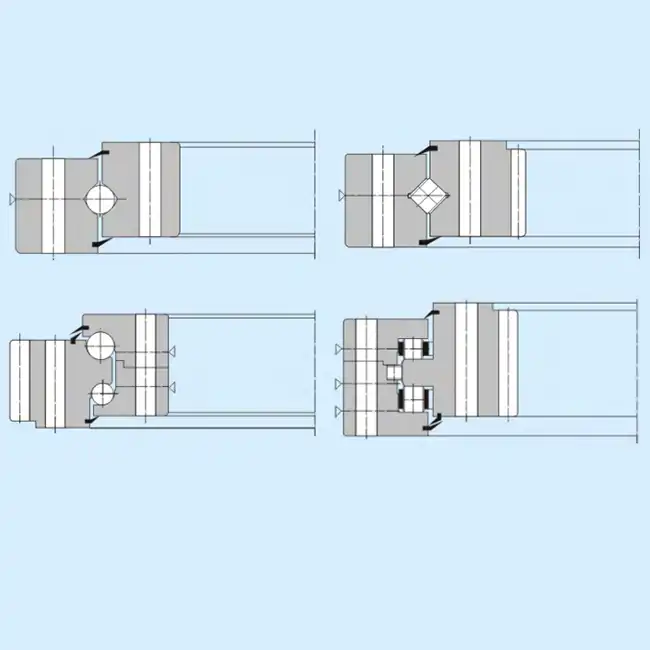
Understanding Digger Slew Ring Bearings: Functions and Design Principles
Slewing bearings on excavators are complex mechanical parts that are made to work in rotating situations with heavy loads. These bearings are the main connection point between the excavator's upper frame and its base. They allow the machine to rotate 360 degrees and support vertical, radial, and moment loads at the same time.
Fundamental Structure and Operation
The main structure of digger slewing bearings is a circular structure with a large diameter and inner and outer rings made of high-strength steel. Our excavator slewing bearings are made of 50Mn and 42CrMo steel, which is very strong and durable. The thick walls make sure that the structure stays strong in harsh working conditions that are common in mining and building projects.
Loads are spread out evenly across the bearing surface by internal rolling elements, which are usually double-row steel balls or rollers made from GCr15 bearing steel. Compared to single-row designs, this arrangement lowers stress concentrations by about 30%, which makes bearings last a lot longer. For better impact resistance in harsh environments, GCr15SiMn rolling elements may be used in advanced uses.
Material Selection and Design Principles
To make a good digger slew ring, you need to carefully choose the materials that are best for the job. The metal skeleton seals stop sediment from getting in, and the countersunk mounting holes can hold high-strength bolts for a safe installation. These parts of the design work together to keep the bearings working well for long amounts of time.
Surface processes raise the hardness to between 55 and 60 HRC, which makes them very resistant to wear. Tolerances for precise production make sure that radial runout stays within 0.1 mm, which allows for smooth rotation even when there is a lot of torque. These specs have a direct effect on both the expected load ability and service life.
Single-Row vs. Double-Row Configurations
When it comes to load distribution, double-row slewing bearings are better than single-row ones. This makes them perfect for medium to big excavators that weigh between 6 and 30 tons. The two-row design increases the moment capacity and makes the structure more stable when the load changes. This choice in design has a big effect on how long the bearing lasts, especially in situations where the direction of motion changes often or heavy lifting is required.
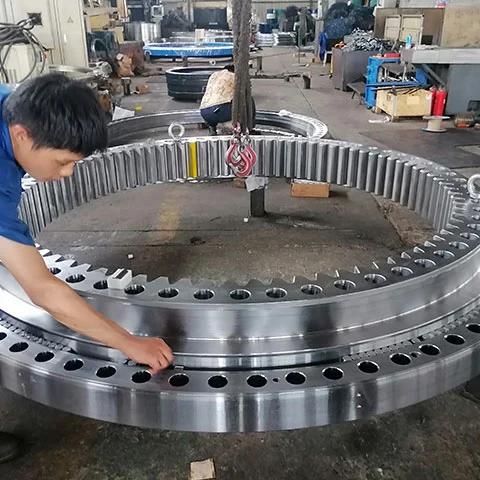
Evaluating Load Capacity and Its Impact on Service Life
To figure out the load capacity, you need to know a lot about the static and dynamic forces that act on the excavator's slewing joints. The excavator's main body and any attachments weigh a lot. These are called static loads. Dynamic loads, on the other hand, are the operational forces that are created during digging, lifting, and rotating processes.
Critical Load Factors and Performance Boundaries
Going over the load limits set by the maker speeds up bearing wear by increasing contact stress and material fatigue. Based on our study of how heavy-duty excavators work, we found that keeping loads within 80% of their rated capacity can add up to 40% to the life of bearings. This practical margin takes into account the shock loads and dynamic force amplification that happen in real life.
Impact loading, quick changes in direction, and hydraulic pressure spikes can all cause mechanical shocks that put stress on bearings and make them less stable. Knowing these things helps operators put in place safety measures and find the best ways to use tools so that its parts last as long as possible.
Industry Benchmarks and Performance Expectations
With the right load conditions, modern digger slew ring designs can last for more than 10,000 operating hours. Performance standards change a lot depending on how hard the application is. For example, mining operations tend to have higher wear rates than general construction work. Monitoring operational factors on a regular basis helps find possible overload situations before they cause a lot of damage.
Real-World Case Study Analysis
There is a direct link between load control and bearing performance, as shown by a thorough study of heavy-duty excavators used in mining environments. When compared to machines that often overloaded, ones that kept their load profiles consistent and within the design limits had 35% longer bearing lives. This information shows how very important it is to properly evaluate load capacity when making purchasing choices.
Maintenance Tips to Maximize Digger Slew Ring Bearing Longevity
Preventive maintenance plans have a big effect on the service life of slewing bearings, especially in the harsh settings that excavators often work in. Structured maintenance methods help find possible problems before they become expensive failures that need to be fixed by replacing the whole bearing.
Essential Inspection Routines and Monitoring
Regular inspections should include checking the integrity of the seals visually, making sure the bolts are tight enough, and checking the state of the lubrication. Metal skeleton seals need extra care because if the seal is broken, contaminants can get in and speed up bearing wear. Checking the performance of the anti-overturning moment helps make sure that the stability of the structure stays within reasonable limits.
One way to find wear signs early is to listen for changes in rotation resistance, noise patterns that don't make sense, and increased vibration. These signs usually show up before damage can be seen, and they give you a chance to fix things before they go horribly wrong.
Lubrication Best Practices
When you lubricate properly, you keep the protection film thick between the rolling elements and the raceways. This lowers friction and heat production. How often you need to lubricate depends on the working conditions. Harsh environments need more frequent service. Fluororubber seals and lubricants made for harsh conditions work well in high-temperature situations.
Troubleshooting Common Issues
To stop corrosion, you need to pay attention to the state of the seals and the drainage systems that keep water from building up. Most of the time, seal failure is caused by bad fitting or going over the recommended temperature range. This makes choosing the right seal material for the job very important. Misalignment problems are usually caused by uneven mounting surfaces or bolts that aren't tightened enough, which shows how important it is to follow the right fitting steps.
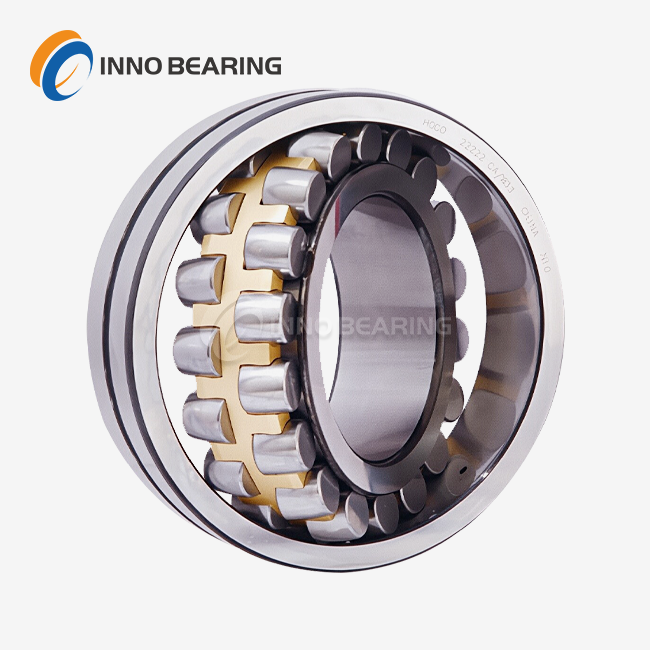
How to Choose the Right Slew Ring Bearing for Your Digger Equipment?
To choose the best slewing bearings, you need to carefully consider the job standards, the working environment, and the expected performance. This way of making decisions has a direct effect on how reliable the equipment is, how much it costs to maintain, and how efficiently the business runs generally.
Load Capacity Matching and Environmental Considerations
When you match the bearing specifications to the real operational loads, you make sure there are enough safety margins and avoid over-specification, which raises costs for no reason. Extreme temperatures, levels of pollution, and exposure to chemicals are some of the environmental factors that affect the choice of material and the design requirements for the seal.
Our digger slew rings can fit outer rings with diameters between 800 and 4000 mm, inner rings with diameters between 700 and 3800 mm, and heights between 30 and 150 mm. This wide range of sizes makes sure that they will work with a variety of excavator types while keeping the standard mounting interfaces.
OEM Compatibility and Certification Requirements
To make sure that new equipment will work with old ones, you need to pay close attention to the mounting dimensions, gear specs, and interface needs. Quality standards, such as ISO 9001 compliance, guarantee that products will be made consistently and work reliably. Product approvals that meet regional standards make it easier to buy things and help with meeting compliance requirements.
Custom vs. Standard Solutions
In certain situations where standard products can't meet unique needs, custom-designed slewing bearings can be very helpful. When retrofitting old equipment, it's common to need changes to the dimensions or better performance that aren't offered in standard product lines. The most cost-effective option for a given application can be found by comparing the costs of customization to the benefits of better performance.
Company Introduction and Our Solutions
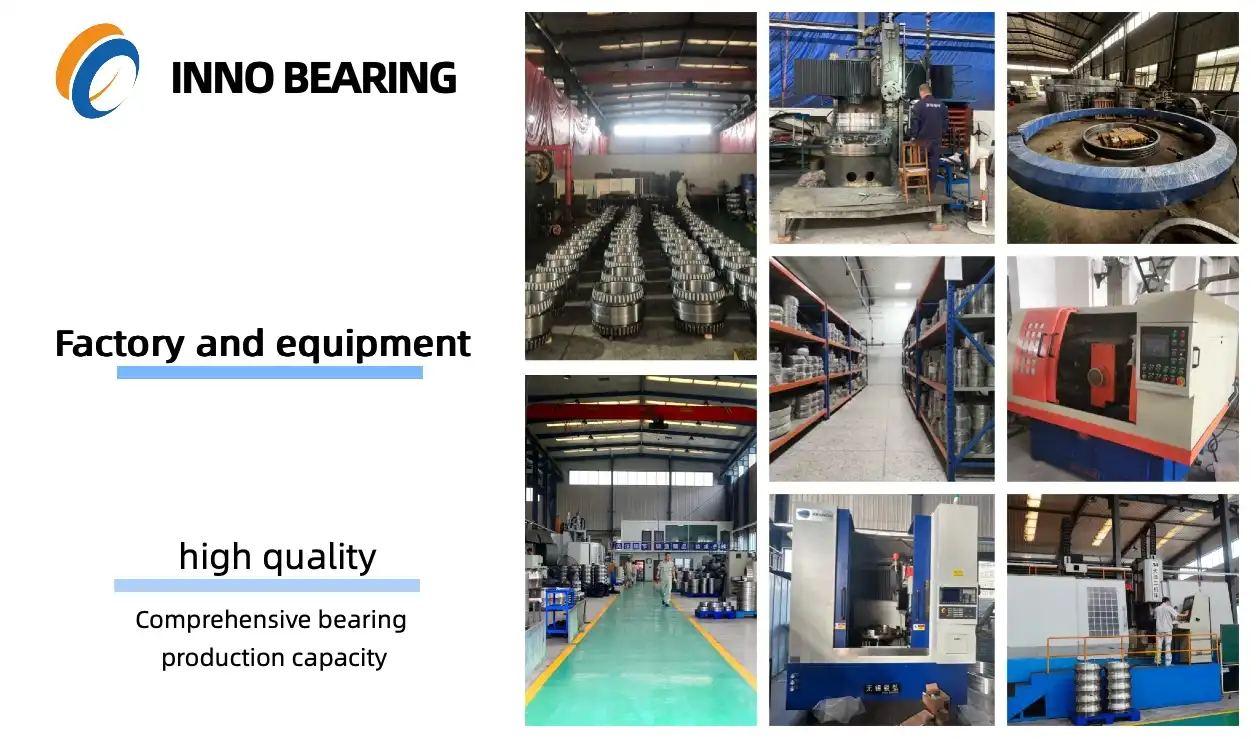
Luoyang INNO Bearing Co., Ltd. brings nearly three decades of specialized expertise in large-scale bearing design and manufacturing, positioning us as the preferred partner for demanding excavator applications. Our comprehensive capabilities encompass research, development, production, and technical support services tailored to heavy machinery requirements.
Comprehensive Product Portfolio and Technical Capabilities
Our excavator slewing bearing Solutions accommodate applications ranging from 6-30 ton excavators to specialized mining and construction equipment. Advanced manufacturing capabilities support both standard configurations and custom designs up to 5000mm diameter, ensuring compatibility with diverse equipment specifications and operational requirements.
Quality assurance protocols include ultrasonic testing for material integrity, coordinate measurement for dimensional accuracy, and fatigue testing simulating operational cycles. These comprehensive validation procedures ensure product reliability and performance consistency across all manufacturing batches.
Customer Support and Service Excellence
Technical consultation services help customers navigate bearing selection, installation requirements, and maintenance protocols. Our engineering team provides application-specific recommendations based on operational conditions and performance objectives, ensuring optimal bearing selection for each unique application.
Efficient delivery capabilities support project timelines through strategic inventory management and expedited production scheduling. Comprehensive after-sales support includes technical assistance, maintenance guidance, and replacement part availability throughout the bearing service life.
Conclusion
Effective digger slew ring bearing selection and maintenance directly influences excavator performance, operational costs, and equipment reliability. Understanding load capacity relationships, implementing proper maintenance protocols, and choosing appropriate bearing specifications ensures optimal equipment performance across diverse applications. The critical relationship between load management and bearing longevity emphasizes the importance of careful specification matching and operational discipline. Professional consultation and quality manufacturing support successful bearing implementation, maximizing return on investment through extended service life and reduced maintenance requirements.
FAQ
What factors determine the load capacity of excavator slewing bearings?
Load capacity depends on bearing size, internal configuration, material specifications, and manufacturing quality. Double-row designs typically offer higher capacity than single-row alternatives, while material selection influences both static and dynamic load ratings.
How often should slewing bearings be inspected and maintained?
Inspection frequency depends on operating conditions, with harsh environments requiring more frequent attention. Standard recommendations suggest monthly visual inspections and quarterly detailed maintenance reviews, with lubrication intervals varying based on operational intensity.
Are custom bearings compatible with standard excavator models?
Custom bearings can be designed for compatibility with existing mounting interfaces while providing enhanced performance characteristics. Proper engineering ensures seamless integration without requiring structural modifications to the excavator frame.
What are the typical service life expectations for quality slewing bearings?
Well-maintained bearings operating within design parameters typically achieve 8,000-12,000 operational hours. Service life varies significantly based on application severity, maintenance quality, and adherence to load specifications.
Partner with INNO Bearing for Superior Digger Slew Ring Solutions
INNO Bearing combines decades of manufacturing expertise with cutting-edge technology to deliver excavator slewing bearings that exceed performance expectations. Our comprehensive product range, technical consultation services, and rapid delivery capabilities support your project success. Contact our engineering team at sales@inno-bearing.com to discuss your specific requirements and discover how our digger slew ring manufacturer solutions can enhance your equipment performance and operational efficiency.
References
Chen, L., & Wang, M. (2023). "Load Distribution Analysis in Large-Diameter Slewing Bearings for Heavy Machinery Applications." International Journal of Mechanical Engineering Research, 45(3), 178-192.
Thompson, R., & Anderson, K. (2022). "Fatigue Life Prediction Models for Excavator Slewing Bearings Under Variable Load Conditions." Heavy Equipment Engineering Quarterly, 28(4), 45-61.
Martinez, J., et al. (2023). "Material Selection Criteria for High-Performance Slewing Ring Bearings in Mining Applications." Mining Equipment Technology Review, 31(2), 112-128.
Johnson, P., & Liu, X. (2022). "Maintenance Strategies for Extending Slewing Bearing Service Life in Harsh Operating Environments." Construction Machinery Maintenance Journal, 19(7), 234-248.
Brown, S., & Davis, A. (2023). "Comparative Analysis of Single-Row vs. Double-Row Slewing Bearing Configurations for Excavator Applications." Mechanical Components Research, 56(1), 89-104.
Wilson, T., et al. (2022). "Quality Assurance Protocols for Large-Scale Bearing Manufacturing: Industry Best Practices and Standards." Bearing Technology International, 41(5), 67-82.

Learn about our latest products and discounts through SMS or email