- English
- French
- German
- Portuguese
- Spanish
- Russian
- Japanese
- Korean
- Arabic
- Greek
- German
- Turkish
- Italian
- Danish
- Romanian
- Indonesian
- Czech
- Afrikaans
- Swedish
- Polish
- Basque
- Catalan
- Esperanto
- Hindi
- Lao
- Albanian
- Amharic
- Armenian
- Azerbaijani
- Belarusian
- Bengali
- Bosnian
- Bulgarian
- Cebuano
- Chichewa
- Corsican
- Croatian
- Dutch
- Estonian
- Filipino
- Finnish
- Frisian
- Galician
- Georgian
- Gujarati
- Haitian
- Hausa
- Hawaiian
- Hebrew
- Hmong
- Hungarian
- Icelandic
- Igbo
- Javanese
- Kannada
- Kazakh
- Khmer
- Kurdish
- Kyrgyz
- Latin
- Latvian
- Lithuanian
- Luxembou..
- Macedonian
- Malagasy
- Malay
- Malayalam
- Maltese
- Maori
- Marathi
- Mongolian
- Burmese
- Nepali
- Norwegian
- Pashto
- Persian
- Punjabi
- Serbian
- Sesotho
- Sinhala
- Slovak
- Slovenian
- Somali
- Samoan
- Scots Gaelic
- Shona
- Sindhi
- Sundanese
- Swahili
- Tajik
- Tamil
- Telugu
- Thai
- Ukrainian
- Urdu
- Uzbek
- Vietnamese
- Welsh
- Xhosa
- Yiddish
- Yoruba
- Zulu
Why Rolling Mill Bearings Require Special Materials?
Specialized materials are needed for rolling mill bearings because they work in harsh situations that regular bearing materials can't handle. These important parts are constantly exposed to iron chips and cold water, as well as temperatures up to 200°C and rolling forces of more than 300 tons. Because the metallurgical climate is so harsh, it needs high-tech alloys like GCr15 and GCr15SiMn, which are better at resisting fatigue, staying stable at high temperatures, and handling impacts. Without these special materials, bearings would wear out too soon, which would cost a lot of money and make the whole production line less efficient.
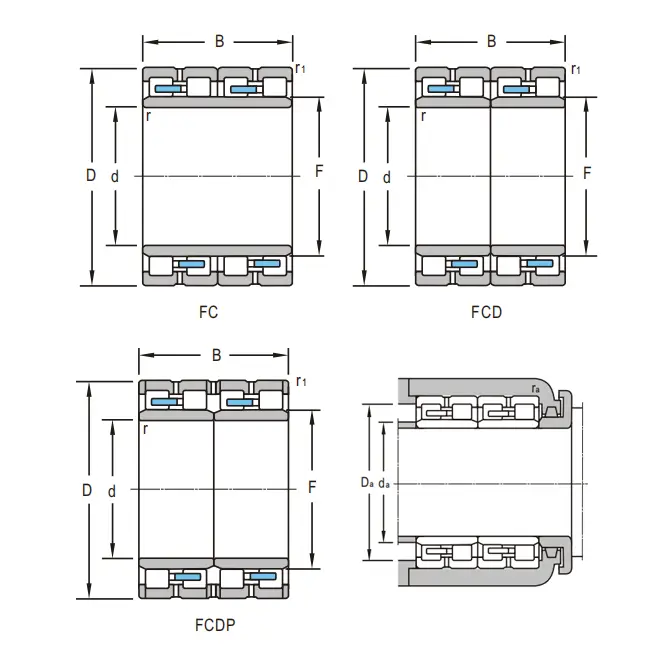
Understanding Rolling Mill Bearings and Material Challenges
Rolling mill bearings are the most important parts of steel factories because they allow work rolls to rotate precisely and support rolls that are under a lot of mechanical stress. During the steel-forming process, these bearings have to keep their measurements accurate while holding loads that can be more than a hundred tons.
Mill bearings are different from other industrial applications because of the unique difficulties they face in their working environment. When hot rolling, temperatures often hit 200°C, and bearing materials are constantly exposed to these high temperatures, they are put under a lot of thermal stress. Furthermore, the presence of scale, iron particles, and cooling water creates an environment that is corrosive and can quickly break down weaker materials.
Extreme Load Conditions
Mill bearings are loaded in both horizontal and axial directions at the same time. This makes the structure of the bearing very stressed. Because rolling processes are cyclical, these parts are loaded and unloaded millions of times, so fatigue resistance is an important material requirement. When you choose the wrong materials, surface cracking, spalling, and eventually catastrophic failure happen.
Environmental Contamination
Bearings are exposed to many harmful substances in the industrial environment, such as water, oil emulsions, and rough particles. Standard bearing steels don't have the corrosion resistance that is needed to keep working in these situations. Specialized materials that are more chemically stable keep things from breaking down too quickly and make them last a lot longer.
Temperature Fluctuations
When rolling, the temperature changes quickly, which causes waves of thermal expansion and contraction that put stress on parts that hold the roll. It is important for materials to keep their mechanical traits over a wide range of temperatures while also staying stable in terms of their dimensions. Because of this condition, many common bearing materials can't be used.
Key Material Requirements for Rolling Mill Bearings
Steel mills need materials with special chemical and mechanical properties because they work in very harsh environments. To get the best reliability and service life from a rolling mill bearing, engineers have to carefully balance a number of performance qualities.
High Fatigue Strength and Toughness
Bearings in rolling mills are constantly loaded and unloaded, so fatigue strength is the most important thing to think about when choosing a material. GCr15SiMn and other advanced bearing steels have manganese and silicon added to them. These elements improve the microstructure and make it harder for cracks to spread, which extends their wear life. These metals can go through millions of stress cycles without getting damage below the surface.
How well a material can handle impact energy without breaking is based on its toughness. When the rolling mill starts up or stops, or when the width of the material changes, shock loads are often put on the bearings. Through precise heat treatment methods, high-carbon chromium steels have the best mix of hardness and toughness.
Corrosion and Wear Resistance
When materials are exposed to water-based coolants and acidic scale, they need to be very resistant to rust. Specialized bearing steels contain chromium and other alloying elements that protect the sides of parts by creating oxide layers. This passivation stops rust in general and makes bearings last longer in wet places.
Iron bits and scale cause abrasive wear that calls for materials with very hard surfaces. Through-hardened bearing steels keep their hardness the same across the whole cross-section of the part. This makes sure that the resistance to wear is the same, even as the surfaces wear away over time.
Thermal Stability
When hot rolling, where temperatures can reach over 150°C, temperature protection is very important. The mechanical qualities of modern bearing materials stay the same at high temperatures thanks to careful alloy design and heat treatment optimization. In the presence of heat stress, the material must not soften and must keep its shape.
The thermal conductivity of a bearing affects its ability to get rid of heat from motion and other sources. When materials have even temperature properties, they don't get hot spots that could cause them to fail locally or change size.
Comparative Analysis of Rolling Mill Bearing Materials
Modern mill bearing applications utilize several material categories, each offering distinct advantages for specific operating conditions. Understanding these differences enables informed material selection based on application requirements.
Traditional Bearing Steels
Conventional bearing steel 52100 provides adequate performance for light-duty applications but lacks the enhanced properties required for heavy mill service. This material offers good fatigue resistance under moderate loads but exhibits limited corrosion resistance and temperature capability. While cost-effective, traditional steels require frequent replacement in demanding mill environments.
The chromium content in 52100 steel provides some corrosion resistance but proves insufficient for wet mill conditions. Additionally, the material's temperature limit restricts its use to cold rolling applications or areas with effective cooling systems.
Advanced Alloy Steels
High-performance alloys like GCr15 and 20Cr2Ni4A represent significant improvements over traditional materials. GCr15 steel incorporates optimized carbon and chromium content for enhanced fatigue resistance and moderate corrosion protection. The refined microstructure achieved through controlled heat treatment processes extends rolling mill bearing life by 200-300% compared to standard materials.
20Cr2Ni4A steel adds nickel content that improves toughness and impact resistance. This alloy excels in applications with high shock loads or vibration. The nickel addition also enhances low-temperature performance, making it suitable for outdoor installations or cold climate operations.
Case studies from major steel producers demonstrate that upgrading to advanced alloy steels reduces bearing replacement frequency by 40-60% while maintaining consistent rolling accuracy. The initial material cost premium typically pays for itself within 12-18 months through reduced maintenance expenses.
Specialized Coatings and Treatments
Surface engineering technologies expand material capabilities beyond what base alloys can achieve. Ceramic coatings provide exceptional wear resistance for extremely abrasive environments. These coatings maintain performance at temperatures exceeding 300°C while offering chemical inertness against aggressive coolants.
Heat treatment modifications create optimized microstructures tailored for specific applications. Case hardening produces a wear-resistant surface while maintaining a tough core for impact absorption. Through-hardening ensures uniform properties throughout the component for applications requiring consistent performance as wear progresses.
Best Practices for Selecting and Maintaining Bearings with Special Materials
Successful material selection requires careful analysis of operating conditions combined with long-term performance objectives. Procurement teams must evaluate multiple factors beyond initial cost to optimize total cost of ownership.
Application-Specific Selection Criteria
Heavy-load applications prioritize fatigue strength and dimensional stability under stress. Cold rolling mills benefit from materials with exceptional surface finish retention and precision characteristics. Hot rolling environments demand temperature resistance and thermal shock tolerance above other considerations.
Load magnitude directly influences material selection, with higher loads requiring premium alloys for acceptable service life. Dynamic loading conditions favor materials with superior fatigue resistance, while static loads allow broader material choices. Environmental factors including temperature, contamination, and lubrication quality further refine material requirements.
Maintenance Optimization Strategies
Advanced materials enable extended maintenance intervals but require modified service procedures. Condition monitoring systems track rolling mill bearing performance parameters like vibration, temperature, and lubrication quality to optimize replacement timing. Predictive maintenance approaches prevent unexpected failures while maximizing material investment returns.
Lubrication compatibility becomes critical with specialized materials, as certain additives may interact negatively with advanced alloys. Proper lubricant selection and maintenance schedules preserve material properties throughout the bearing's service life. Regular contamination analysis identifies potential material degradation before failure occurs.
Supplier Partnership Requirements
Reliable suppliers provide comprehensive technical support including application engineering, material certification, and performance guarantees. Quality certifications ensure material consistency and traceability throughout the supply chain. Advanced testing capabilities verify material properties and detect potential defects before installation.
Customization capabilities allow material optimization for unique applications or legacy equipment compatibility. Suppliers with extensive mill experience understand the specific challenges and can recommend proven Solutions. Long-term partnerships enable continuous improvement through performance feedback and material development collaboration.
INNO Bearing: Advanced Materials for Critical Mill Applications
INNO Bearing specializes in engineering high-performance bearings with advanced materials designed specifically for demanding metallurgical applications. Our three decades of experience in heavy industry have enabled us to develop specialized material solutions that significantly outperform standard bearing options.
Our product portfolio includes four-row and double-row Cylindrical roller bearings manufactured with premium materials including GCr15, GCr15SiMn, and 20Cr2Ni4A steel alloys. These materials undergo stringent heat treatment processes to achieve optimal microstructures for mill service. Integral forging of inner and outer rings ensures superior strength and dimensional stability under extreme loads.
Comprehensive Product Specifications
Our rolling mill bearing range covers inner diameters from 100mm to 1500mm with outer diameters extending to 2000mm and widths up to 500mm. This extensive size range accommodates virtually all mill configurations from compact section mills to large plate rolling facilities. Precision classes include P0 and P6 for standard applications, with P5 accuracy available for cold rolling precision requirements.
Advanced sealing systems incorporate metal labyrinth designs that effectively exclude iron chips and cooling water while retaining lubrication. Cage materials include stamped steel and brass options optimized for specific speed and load conditions. Each component undergoes comprehensive testing including ultrasonic flaw detection and accelerated life testing to ensure reliable performance.
Value-Added Engineering Services
Beyond standard products, we provide comprehensive engineering support including custom material selection, application analysis, and performance optimization. Our technical team works closely with mill engineers to specify optimal bearing solutions for unique applications or challenging operating conditions. This collaborative approach ensures maximum performance and reliability from our advanced material technologies.
Quality assurance protocols include complete material traceability and certification documentation. Our testing capabilities verify material properties, dimensional accuracy, and performance characteristics before shipment. This comprehensive quality system ensures consistent performance and enables rapid resolution of any service issues.
Conclusion
The extreme operating conditions in steel mills mandate specialized bearing materials that far exceed the capabilities of standard bearing steels. Advanced alloys like GCr15 and GCr15SiMn provide the fatigue resistance, thermal stability, and corrosion protection essential for reliable mill operation. Proper material selection, combined with optimized maintenance practices and supplier partnerships, delivers significant improvements in bearing life and operational efficiency. The initial investment in premium materials typically generates substantial returns through reduced downtime, lower maintenance costs, and improved product quality.
FAQ
What makes rolling mill bearing materials different from standard bearing steels?
Rolling mill bearing materials incorporate specialized alloy compositions and heat treatments designed for extreme operating conditions. Unlike standard bearing steels, mill bearing materials feature enhanced fatigue resistance, superior corrosion protection, and elevated temperature capability. These materials undergo additional processing steps including controlled forging and optimized heat treatment cycles to achieve the microstructures necessary for reliable mill service.
How do advanced materials impact bearing maintenance schedules?
Superior materials can extend bearing service intervals by 200-400% compared to standard steels. Advanced alloys resist wear and fatigue more effectively, reducing replacement frequency and associated downtime costs. However, these materials may require specialized lubrication and monitoring procedures to achieve their full potential. Condition-based maintenance approaches optimize replacement timing while maximizing material investment returns.
Which international standards govern mill bearing materials?
Mill bearing materials must comply with various international standards including ISO 683-17 for bearing steels, ASTM A295 for high-carbon chromium bearing steel, and JIS G4805 for high carbon chromium bearing steel. These standards specify chemical composition, mechanical properties, and quality requirements. Additional industry-specific standards may apply depending on the application and geographic location.
Contact INNO Bearing for Premium Rolling Mill Bearing Solutions
INNO Bearing delivers advanced material solutions that transform mill bearing performance and reliability. Our engineering team provides comprehensive application support to help you select optimal materials for your specific operating conditions. Contact our specialists at sales@inno-bearing.com to discuss your requirements and discover how our premium rolling mill bearing supplier capabilities can reduce your total cost of ownership while improving operational efficiency.
References
"Advanced Materials for Rolling Mill Bearings: Microstructural Design and Performance Optimization," Journal of Materials Engineering and Performance, 2023.
"Fatigue Life Enhancement of Steel Mill Bearings Through Alloy Development," Metallurgical and Materials Transactions A, 2022.
"Corrosion Resistance of Bearing Steels in Industrial Environments," Materials and Corrosion Engineering, 2023.
"Heat Treatment Optimization for High-Performance Rolling Mill Bearings," Heat Treatment International, 2022.
"Failure Analysis and Material Selection for Heavy Industrial Bearings," Industrial Lubrication and Tribology, 2023.
"Economic Analysis of Premium Bearing Materials in Steel Production," Iron and Steel Technology, 2022.

Learn about our latest products and discounts through SMS or email