- English
- French
- German
- Portuguese
- Spanish
- Russian
- Japanese
- Korean
- Arabic
- Greek
- German
- Turkish
- Italian
- Danish
- Romanian
- Indonesian
- Czech
- Afrikaans
- Swedish
- Polish
- Basque
- Catalan
- Esperanto
- Hindi
- Lao
- Albanian
- Amharic
- Armenian
- Azerbaijani
- Belarusian
- Bengali
- Bosnian
- Bulgarian
- Cebuano
- Chichewa
- Corsican
- Croatian
- Dutch
- Estonian
- Filipino
- Finnish
- Frisian
- Galician
- Georgian
- Gujarati
- Haitian
- Hausa
- Hawaiian
- Hebrew
- Hmong
- Hungarian
- Icelandic
- Igbo
- Javanese
- Kannada
- Kazakh
- Khmer
- Kurdish
- Kyrgyz
- Latin
- Latvian
- Lithuanian
- Luxembou..
- Macedonian
- Malagasy
- Malay
- Malayalam
- Maltese
- Maori
- Marathi
- Mongolian
- Burmese
- Nepali
- Norwegian
- Pashto
- Persian
- Punjabi
- Serbian
- Sesotho
- Sinhala
- Slovak
- Slovenian
- Somali
- Samoan
- Scots Gaelic
- Shona
- Sindhi
- Sundanese
- Swahili
- Tajik
- Tamil
- Telugu
- Thai
- Ukrainian
- Urdu
- Uzbek
- Vietnamese
- Welsh
- Xhosa
- Yiddish
- Yoruba
- Zulu
Heavy-Duty Slewing Ring Gears for Port and Offshore Cranes
When it comes to operating port and marine cranes, the dependability of the rotating parts can make or break how well you do your job. Heavy-duty slewing ring gears are what hold these huge machines together and allow them to rotate smoothly in all directions while carrying heavy loads in rough marine settings. Because these bearing systems are combined, they can both rotate and transmit power, so they don't need any extra transfer parts. These precision-engineered parts, which come in materials like 42CrMo steel and outer ring sizes ranging from 500 to 3500mm, make sure that your cranes work perfectly even in the toughest situations.
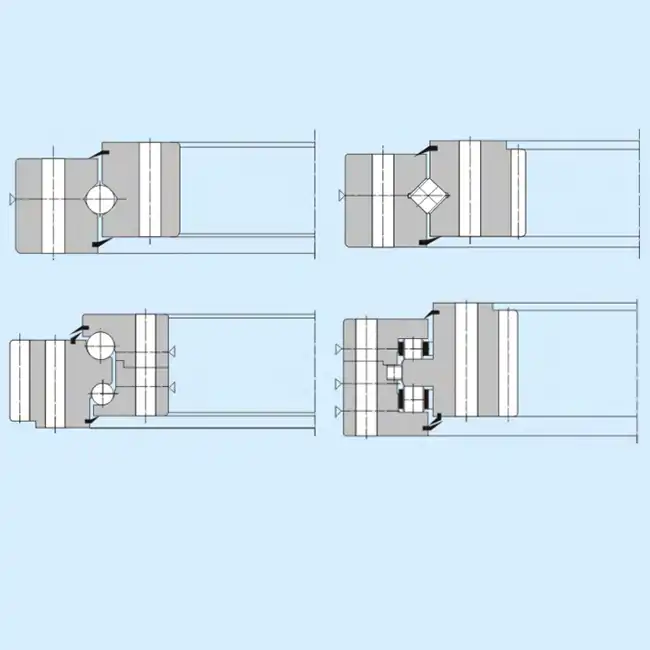
Understanding Heavy-Duty Slewing Ring Gears
When it comes to big rotating machines, heavy-duty slewing ring gears are a complex mix of bearing technology and gear transmission systems. Unlike most bearings, these units have gear teeth built right into the structure of the bearing. This makes for a small option that can handle both rotational movement and power transfer at the same time.
The Engineering Behind Rotational Excellence
The main idea behind these systems is that they should be able to handle different kinds of loads while still keeping fine spinning control. The inner and outer rings have teeth that are made to be straight or spiral, and the number of modules can be anywhere from 2 to 12. After being hardened and cooled, these teeth have a surface hardness of between HRC58 and 62, which makes them very resistant to wear.
The core structure is made up of accurate cages, high-grade steel balls or rollers, and inner and outer rings that are welded together. The system can handle large axial, rotational, and moment loads at the same time because of how it is built. The rolling elements, which are usually made of GCr15 bearing steel or GCr15SiMn for better impact protection, spread the loads evenly across the contact areas.
Structural Variations for Diverse Applications
These days, slewing ring gear systems can be set up in different ways to meet different operating needs. For moderate load uses, single-row designs are small. For heavy-duty tasks that are popular in port and offshore settings, double and triple-row designs offer more load capability.
Internal gear setups put the gear teeth on the inside circumference, which makes installations more space-efficient when there aren't many exterior mounting points. External gear types have teeth on the outside ring, which makes it easier to connect the motor directly and do maintenance. For uses that need specific transmission ratios, gearless models don't have any gears built in at all. Instead, they use external drive mechanisms.
Material Selection for Maritime Durability
Port and offshore uses have to deal with difficult environments, so it's important to choose the right materials. Rings are usually made of 50Mn and 42CrMo steels, which are chosen because they don't wear easily and keep their shape under repeated loads. However, the 42CrMo choice has better strength properties, which makes it ideal for uses that are subject to high environmental stress.
For normal uses, sealing systems use nitrile rubber. For better oil and high-temperature protection, they use fluororubber mixtures. When used for long periods of time, these improved binding materials keep out contaminants and keep the lubrication's integrity. When you combine high-quality materials with precise production, you get solid performance in saltwater settings where resistance to corrosion is very important.
Selecting the Right Slewing Ring Gear for Port and Offshore Cranes
To pick the right slewing ring gear system, you need to carefully consider the working conditions, the surroundings, and the performance goals. To find the best option for your application, you have to look at things like load needs, rotational speeds, environmental factors, and integration limits during the decision process.
Critical Selection Parameters
Load capacity study is the first step in choosing the right solution. When they are working, port and ocean cranes have to deal with a lot of static and dynamic loads, such as wind forces, the weight of the goods, and the inertial forces that happen when the crane speeds up and slows down. The gear system that is chosen must be able to handle peak loads with enough safety gaps while still running smoothly when the load changes.
The torque needs directly affect the choice of gear modules and the size of the whole system. For uses with more torque, bigger gear units and more tooth engagement are needed to spread the forces out evenly. Extreme temperatures, exposure to saltwater, and levels of contamination all have an effect on the materials that can be used and the requirements for covering them.
Performance Trade-offs and Design Considerations
Several differences in performance become clear when you compare slewing ring gears to regular gear and bearing combinations. When compared to different components, integrated systems are easier to install and match more precisely. On the other hand, they might need special upkeep methods and be hard to repair individual parts of.
Because these systems need to be made with great accuracy, they need very strict quality control measures. Specifications for surface finish, carburized layer level, and gear pitch accuracy all have a direct effect on how smoothly things work and how long they last. Coordinate measuring tools and CNC machining centers are used by top makers to get the tight tolerances needed for solid performance.
Supplier Evaluation and Partnership Development
To find suitable suppliers, you have to look at their production skills, quality systems, and support services. Reputable makers keep their ISO 9001 approval up to date and use advanced testing methods like vibration analysis, fatigue testing, and outdoor modeling. When standard goods can't meet the needs of a particular application, being able to offer customization services becomes very important.
Reliability in delivery and global support networks have a big effect on project timelines and ongoing upkeep tasks. Suppliers with well-established inventory management systems and key relationships can quickly meet replacement needs that come up out of the blue. The general value of supplier ties is higher when professional support services are available. These services include application building and troubleshooting help.
Maintenance and Problem-Solving for Slewing Ring Gears in Harsh Environments
Mechanical systems have to deal with special problems in maritime settings. To make sure they work well and last longer, they need proactive repair plans. Understanding typical failure modes and taking the right preventative steps can cut down on upkeep costs and downtime by a large amount.
Common Challenges in Marine Applications
In port and ocean settings, corrosion is the main danger to slewing ring gear systems. Exposure to saltwater speeds up the rusting process, especially in places where protective layers have been worn away. Regular visual checks and non-destructive tests are needed to find possible problems before they get too bad to handle. This is called early spotting of corrosion.
Contamination from dust, sand, and other debris can make lubricant less effective and speed up the wear process. The quality of the sealing system is very important for keeping out contaminants and making sure that the right amount of oil is distributed. Checking and replacing seals on a regular basis helps keep the system clean and the grease working well.
Load-related wear patterns often appear slowly, which makes it hard to find early on without the right tracking tools. Structures that aren't aligned correctly, foundations that settle, or bad installation methods can all lead to uneven load distribution. These problems make wear happen faster and could cause failure before its time if they are not fixed quickly.
Proactive Maintenance Strategies
Setting up structured repair routines makes it easier to find problems before they affect operations. Sticking to the greasing plan makes sure that the right film forms, that heat is removed, and that metals don't touch each other. It is more effective to protect things when the right oils are used, taking into account temperature ranges, load conditions, and outdoor exposure.
Condition tracking tools give us useful information about how healthy a system is and how its performance is changing over time. Vibration analysis can find flaws, misalignments, and bearing problems before they do a lot of damage. Temperature tracking finds strange heating patterns that could mean there are problems with greasing or too much load.
Monitoring torque during spinning can help find rises in operating resistance that could mean problems are starting to happen. Backlash readings are taken on a regular basis to make sure that gear engagement stays within accepted limits. When these tracking tasks are done regularly, they make it possible to use predictive repair methods that cut down on unplanned downtime.
Real-World Solutions and Case Studies
Maintenance programs that work well often use what they've learned from failure analysis and real-world experience. One offshore platform operator started doing eye checks once a week and lubricating services once a month. This cut the number of emergency repairs by 40%. The app included taking pictures of wear patterns and keeping track of how much lubricant was being used.
Another port facility fixed rust problems that kept happening by switching to fluoroelastomer seals and washing everything every day with fresh water. When this method was used with applying corrosion-inhibiting chemicals every three months, the average time between services was increased by 60% while the amount of work needed for upkeep decreased.
Advanced workers have started to use thermal imaging and ultrasonic tests as normal parts of checking procedures. These technologies make it possible to find internal wear patterns and greasing problems without taking the system apart. Investing in monitoring tools has paid off because it has improved the timing of upkeep and cut down on the number of times parts need to be replaced.
Procurement Strategies for Heavy-Duty Slewing Ring Gears
To make good buying plans for heavy-duty slewing ring gears, you need to know how the market works, what suppliers can do, and how much it will cost to own everything. When buying is done right, the short-term costs are balanced with the long-term practical benefits, and the supply chain is supported reliably.
Systematic Procurement Planning
Defining requirements is the first step in making sure that buying goes smoothly. In the detailed specs, you should list the required sizes, the maximum loads, the working conditions, and the expected performance. When engineers, procurement, and operations teams work together, they can make sure that all important factors are taken into account when specifications are being made.
When making a budget, you need to include the costs of the initial buy, the costs of installation, and the costs of ongoing upkeep. The starting cost of premium goods is usually higher, but their higher durability and dependability can lead to a lower total cost of ownership through less upkeep and a longer service life. Lifecycle cost analysis helps show why it's worth spending money on better options.
Supplier Selection and Relationship Management
When looking at possible providers, you need to check their manufacturing skills, quality control methods, and financial security. Site trips to factories help people understand how things are made, how quality control works, and how much they can hold. Checking with current customers for references shows the real performance history and backs up the quality of the service.
When choosing a supplier, diversity issues may come into play, especially for government projects or businesses that already have diversity goals. Local providers can be helpful because they can save you money on shipping costs and get help to you faster in an emergency. However, technical skills and high standards must continue to be the most important factors in the decision process.
Market Trends and Pricing Considerations
The current state of the market shows that there is more demand for high-performance slewing systems. This is because green energy and infrastructure growth are growing. Price stability is affected by changes in the cost of materials, which is why long-term supply deals are appealing for big projects. Knowing how demand changes with the seasons can help you get better deals on goods and make the best use of your money.
As equipment designs change to meet specific working needs, the ability to customize it becomes more and more important. During the product creation process, suppliers that offer design optimization services and fast prototyping give their customers a competitive edge. It's often more cost-effective to be able to change standard patterns than to make totally new ones.
Future Trends and Innovations in Slewing Ring Gears for Heavy-Duty Cranes
Through advancements in materials science, production techniques, and digital integration, slewing ring gear technology keeps getting better. Procurement experts can make better choices that are in line with future operational needs and technology advances when they understand new trends.
Advanced Materials and Coating Technologies
The main goals of research into next-generation materials are to make them more resistant to rust and better at withstanding wear and tear. Rare earth elements added to advanced steel alloys give them better mechanical qualities while still being cost-effective for large-scale uses. Plasma nitriding and diamond-like carbon coats are two new ways to treat surfaces that make things last longer in harsh settings.
Compared to standard all-steel designs, hybrid ceramic-steel bearing elements have less friction and better wear protection. Due to high costs, these technologies are currently only used in a few specific situations. However, as output rates rise, they may become easier to use in more port and offshore situations.
Smart Monitoring and Predictive Maintenance
Adding sensor technologies to bearing systems lets you check important factors like temperature, shaking, and load spread in real time. Wireless sensor networks get rid of the need for complicated wire setups and provide a steady stream of data that can be analyzed. Machine learning systems look at past performance data to guess what repairs will be needed and how to make things run more smoothly.
Digital twin technologies make virtual copies of real systems, which lets you test out different ways of running and maintaining them. These tools help make repair plans more effective and predict when parts will need to be replaced based on how they are used, not just random intervals of time.
Sustainability and Environmental Considerations
Environmental awareness leads to the creation of eco-friendly ways to make things and materials that can be recycled. To have less of an effect on the environment, manufacturers are using more energy-efficient production methods and tactics to cut down on waste. Design for teardown ideas make it easier to recycle parts when they're no longer useful.
Biodegradable oils and cleaning products that are safe for the environment make upkeep less harmful to the environment. Even though their performance may be different from standard goods, they are still getting better at what they do for marine uses.
When green energy systems are added to port operations, they open up new ways to collect energy from crane operations. Future slewing system designs may be affected by regenerative braking systems and energy storage technologies that aim to make operations more energy efficient.
Conclusion
Heavy-duty slewing ring gears are important parts of port and offshore crane operations. They need to be carefully chosen, properly maintained, and bought in a planned way. Bearing and gear functions should be combined into a single system for better operation, but this needs specific knowledge to be done right. To be successful, you need to know what the application needs, check out the skills of the provider, and keep up with proactive maintenance programs. As technology changes through new materials, smart tracking systems, and environmental concerns, procurement workers must balance what they need now with what they will need in the future to get the best return on their investment.
FAQ
What factors determine the appropriate size for a slewing ring gear in port crane applications?
Choosing the right size relies on a number of important factors, such as the highest load capacity needed, the amount of room available for fitting, and the rotational speed needs. The outer ring's width is usually between 500mm and 3500mm. Bigger sizes can hold more weight, but they need stronger support systems. When engineers do their math, they have to take into account steady loads, dynamic forces during operation, and the right safety factors for the situation.
How do environmental conditions affect material selection for offshore applications?
Exposure to saltwater, high temperatures, and amounts of contamination have a big effect on the materials that are chosen. In marine settings, better seal materials like fluororubber mixtures and special surface treatments are needed to make things less likely to rust. The choice between 50Mn and 42CrMo steel relies on how harsh the climate is and how long the steel is expected to last.
What maintenance intervals are recommended for slewing ring gears in port equipment?
Maintenance frequency depends on operational intensity, environmental exposure, and manufacturer recommendations. Typical schedules include monthly visual inspections, quarterly lubrication services, and annual comprehensive assessments. High-usage applications may require more frequent attention, while condition monitoring systems can help optimize maintenance timing based on actual equipment condition rather than fixed schedules.
Partner with INNO Bearing for Premium Slewing Ring Gear Solutions
Since almost 30 years ago, INNO Bearing has been making heavy-duty slewing ring gear systems for tough port and offshore uses. Our advanced production methods can handle sizes up to φ5000mm, and we offer customization choices to meet your unique business needs. We make sure that the parts you need for your important equipment are reliable and work well by using strict quality control systems, fast delivery, and technical help available around the world. Get in touch with our expert team at sales@inno-bearing.com to talk about your slewing ring gear provider needs and find out how our tried-and-true Solutions can help your business run more smoothly.
References
International Organization for Standardization. "Slewing Bearings - Part 1: Design and Application Guidelines." ISO 12043-1:2007, Geneva: ISO, 2007.
American Gear Manufacturers Association. "Design Manual for Enclosed Epicyclic Gear Drives." AGMA 6123-B06, Alexandria: AGMA, 2006.
Det Norske Veritas. "Certification of Lifting Appliances." DNV-OS-D101, Høvik: DNV GL, 2018.
Society of Naval Architects and Marine Engineers. "Marine Engineering Handbook for Port and Offshore Equipment." SNAME Technical Papers, Jersey City: SNAME, 2019.
European Committee for Standardization. "Cranes - Mobile Cranes - Part 2: Slewing Jib Cranes." EN 13000-2:2014, Brussels: CEN, 2014.
International Association of Ports and Harbors. "Guidelines for Port Equipment Maintenance and Safety Standards." IAPH Technical Report Series No. 15, Tokyo: IAPH, 2020.

Learn about our latest products and discounts through SMS or email