- English
- French
- German
- Portuguese
- Spanish
- Russian
- Japanese
- Korean
- Arabic
- Greek
- German
- Turkish
- Italian
- Danish
- Romanian
- Indonesian
- Czech
- Afrikaans
- Swedish
- Polish
- Basque
- Catalan
- Esperanto
- Hindi
- Lao
- Albanian
- Amharic
- Armenian
- Azerbaijani
- Belarusian
- Bengali
- Bosnian
- Bulgarian
- Cebuano
- Chichewa
- Corsican
- Croatian
- Dutch
- Estonian
- Filipino
- Finnish
- Frisian
- Galician
- Georgian
- Gujarati
- Haitian
- Hausa
- Hawaiian
- Hebrew
- Hmong
- Hungarian
- Icelandic
- Igbo
- Javanese
- Kannada
- Kazakh
- Khmer
- Kurdish
- Kyrgyz
- Latin
- Latvian
- Lithuanian
- Luxembou..
- Macedonian
- Malagasy
- Malay
- Malayalam
- Maltese
- Maori
- Marathi
- Mongolian
- Burmese
- Nepali
- Norwegian
- Pashto
- Persian
- Punjabi
- Serbian
- Sesotho
- Sinhala
- Slovak
- Slovenian
- Somali
- Samoan
- Scots Gaelic
- Shona
- Sindhi
- Sundanese
- Swahili
- Tajik
- Tamil
- Telugu
- Thai
- Ukrainian
- Urdu
- Uzbek
- Vietnamese
- Welsh
- Xhosa
- Yiddish
- Yoruba
- Zulu
How 4 Point Contact Ball Bearings Handle Axial Loads?
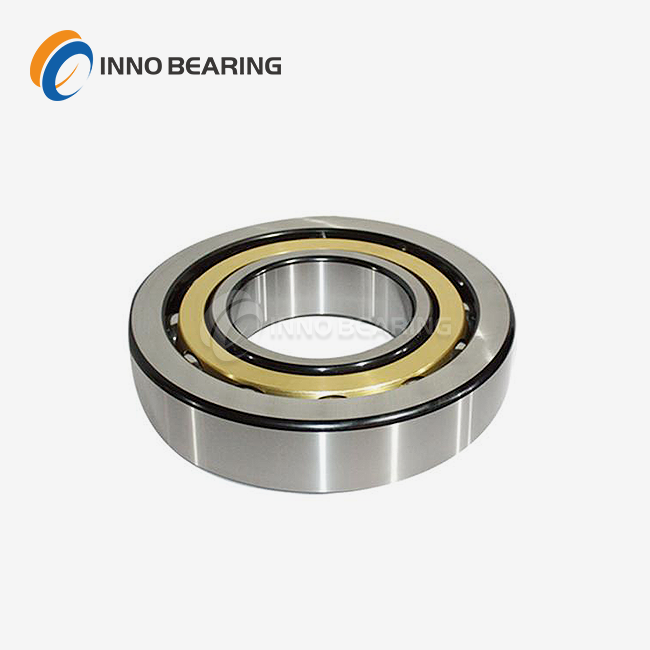
A 4 point contact ball bearing is very smartly made so that steel balls touch the inner and outer ring raceways at four different places. This lets it support both axial forces and radial loads at the same time. This one-of-a-kind shape spreads loads evenly across several contact zones. This keeps stresses from building up and keeps the spinning stable under complex loading conditions. The two circle arc raceways make the best contact angles, which increase the load-carrying capacity and keep the machine running smoothly at speeds of up to 15,000 RPM.
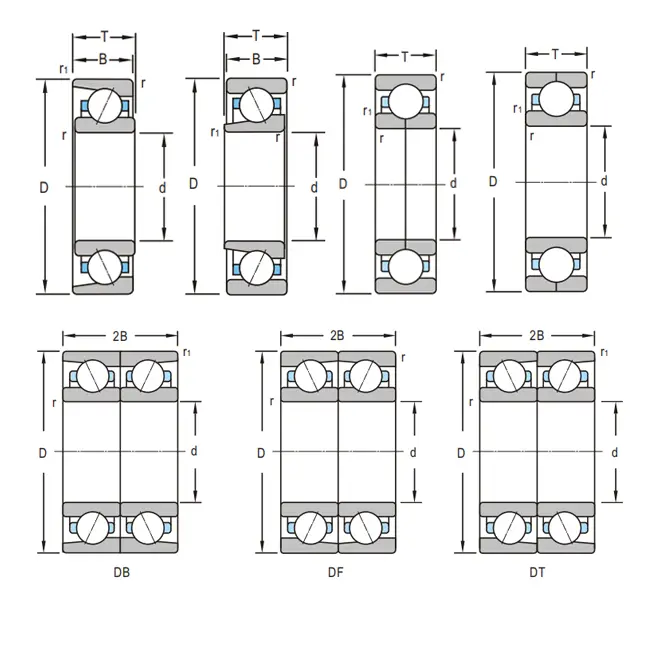
Understanding 4 Point Contact Ball Bearings and Axial Load Handling
The main idea behind how these special bearings handle radial loads is because of how they are built on the inside. Standard bearings only have two contact points. The four-point contact design makes the load spread more even, which increases both the axial and radial load capacities.
Unique Design Features for Superior Load Management
These bearings are excellent engineering because they have a few important design features that work together to handle heavy axial loads:
Contact Angle Optimization: The exact calculations of the contact angles make sure that the axial forces move smoothly through the steel balls and onto the raceway surfaces. Because of the way the shapes are arranged, a single set of bearings can be used instead of several standard ones in many situations.
Double Circular Arc Raceways: The inner and outer rings have double circular arc raceways that were made to work with the four-point contact pattern. This design lets the bearing handle axial loads going in both directions without the need for extra parts or complicated fitting setups.
Separatable Ring Construction: Being able to separate the inner and outer rings makes installation easier, which is especially important in large-scale industrial settings where entry may be limited. This function greatly cuts down on the time it takes to put together and maintain.
Load Transfer Mechanism and Performance Characteristics
When axial loads put pressure on the bearing system, the steel balls touch both the inner and outer ring raceways at four key places at the same time. This multiple-point contact spread stops stress builds up in one area, which can cause other types of bearings to fail early.
The load transfer device works with a system that is carefully balanced, and each steel ball carries a load. The GCr15 steel construction makes sure that the hardness levels are right, between 60 and 64 HRC. This gives the material the power it needs to handle high-stress situations while keeping its shape.
The performance of these bearings stays the same at temperatures ranging from -50°C to 150°C. This means they can be used in heavy machinery, mining equipment, and offshore applications that are exposed to harsh circumstances.
Comparison of 4 Point Contact Ball Bearings with Other Bearing Types
Knowing the pros and cons of the different bearing technologies helps procurement workers make smart choices that meet operational needs and stay within budget.
Performance Analysis Across Bearing Technologies
When looking at different bearing choices for axial load applications, there are a few main things that set four-point contact designs apart from other options:
Angular Contact Bearings: Angular contact bearings work best when the horizontal load is going in one direction. To handle forces going in both directions, they usually need to be paired up. With four-point contact bearings, this isn't needed, which makes the system simpler and requires up to 40% less installation room.
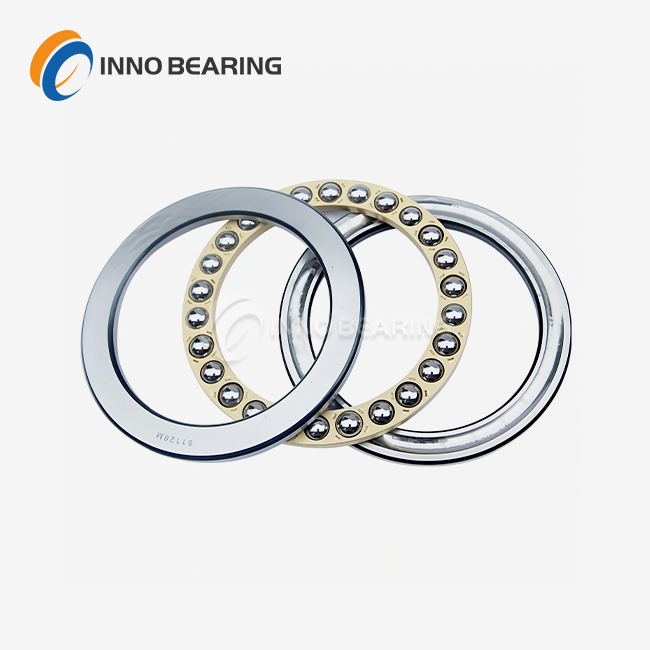
Traditional Thrust bearings are very good at supporting longitudinal loads, but they aren't very good at supporting radial loads. Four-point contact bearings are more useful in situations where both types of loads are present at the same time because they can handle both.
Deep groove ball bearings: Regular deep groove designs can handle light axial loads, but they don't have the special shape needed for heavy axial loads. The better contact structure in four-point designs lets them handle higher axial loads while still being able to handle radial loads.
Cost-Benefit Considerations and Space Efficiency
When you look at the total cost of ownership instead of just the buying price, the economic benefits of four-point contact 4 point Angular contact ball bearings become clear. Being able to replace various bearing arrangements with a single unit makes inventory simpler, maintenance easier, and downtime during repair intervals shorter.
Another big benefit is that it saves space, which is especially important for small machines where every millimeter counts. By getting rid of complicated bearing arrangements, engineers can make equipment setups work better while keeping or even improving performance standards.
Lifecycle performance data shows that four-point contact bearings in industrial settings usually have a 20–30% longer service life than multi-bearing systems of the same type. This is mostly because they distribute load better and make the system simpler.
Maintenance and Best Practices to Optimize Axial Load Performance
To get the most out of four-point contact bearings when they are loaded axially and to extend their life, they need to be maintained in a way that is specific to their working environment and load.
Essential Lubrication Strategies and Schedules
Lubrication is the most important part of making sure that bearings last a long time and can handle radial loads well. The right lubricants are chosen based on the temperature ranges, loads, and rotational speeds that will be met in a given application.
High-Speed Uses: Synthetic oils that are better at withstanding high temperatures and having low viscosity are good for bearings that work at speeds close to 15,000 RPM. These lubricants work better with brass cage designs because they reduce friction and heat generation inside the cage.
Heavy-Load Environments: Lubricants with higher viscosity grades and better extreme pressure additives are needed for places where there are a lot of axial loads. When these tough conditions happen, steel cage designs make them last longer.
Maintenance times depend on how the machine is being used, but best practices in the industry say that important applications should be inspected every three months and normal industrial environments should get service every six months. Continuous monitoring tools can make these intervals longer while also letting you know about problems early on.
Common Failure Modes and Prevention Strategies
Knowing how things usually break down lets you do preventative maintenance that stops expensive unplanned downtime and damage to the equipment.
Axial Misalignment Problems: When the shaft isn't lined up correctly, the load isn't spread evenly across the four contact spots, which speeds up the wear patterns. Using laser measurement tools to check the alignment on a regular basis helps keep the bearings working at their best.
Controlling Contamination: One of the most common reasons why bearings fail early is that they are contaminated with particles. Regular oil analysis and sealing systems that work well help find contamination problems before they do a lot of damage.
Vibration analysis methods give useful information about the condition of bearings without having to take them apart. Frequency analysis can find specific fault patterns linked to damaged raceways, worn cages, or lube problems, which lets maintenance workers do the right things.
Real-World Applications and Case Studies of 4 Point Contact Ball Bearings Handling Axial Loads
The versatility and reliability of four-point contact bearings have made them essential components across numerous industrial sectors where axial load management represents a critical performance factor.
Wind Energy and Heavy Machinery Applications
Wind turbine manufacturers have increasingly adopted four-point contact bearings for yaw and pitch control systems where bidirectional axial loads occur regularly due to changing wind conditions and blade positioning requirements.
A major European wind turbine manufacturer reported a 35% reduction in maintenance frequency after switching to four-point contact bearings in their pitch control assemblies. The improved load distribution eliminated the premature failures previously experienced with conventional bearing arrangements.
In heavy machinery applications, these bearings excel in crane turntables and excavator swing mechanisms where combined axial and radial loads create challenging operating conditions. The unified bearing solution simplifies maintenance procedures while improving overall equipment reliability.
Aerospace and Defense Industry Success Stories
The aerospace industry demands exceptional precision and reliability from 4 point angular contact ball bearing components, making four-point contact designs attractive for radar tracking systems and satellite positioning equipment.
Recent case studies from defense contractors demonstrate the ability of high-precision four-point contact bearings to maintain positioning accuracy within ±0.002mm over extended operational periods. This performance level enables advanced radar systems to maintain target tracking capability under extreme environmental conditions.
The temperature stability and vibration resistance of these bearings make them particularly suitable for airborne applications where weight constraints and reliability requirements both reach extreme levels. P4 grade precision ensures minimal runout even under high-g loading conditions.
Procurement Guide for 4 Point Contact Ball Bearings
Successful procurement of four-point contact bearings requires careful consideration of multiple factors that influence both immediate project success and long-term operational performance.
Critical Sourcing Factors and Supplier Evaluation
When evaluating potential suppliers, procurement professionals should prioritize manufacturers with demonstrated expertise in large-diameter bearing production and customization capabilities. The ability to handle bearings up to 5000mm outer diameter distinguishes specialized manufacturers from general-purpose suppliers.
Lead time considerations become particularly important for large or custom bearings, where standard delivery schedules may extend several weeks. Suppliers with rapid prototyping capabilities can significantly accelerate project timelines, particularly during development phases where multiple iterations may be necessary.
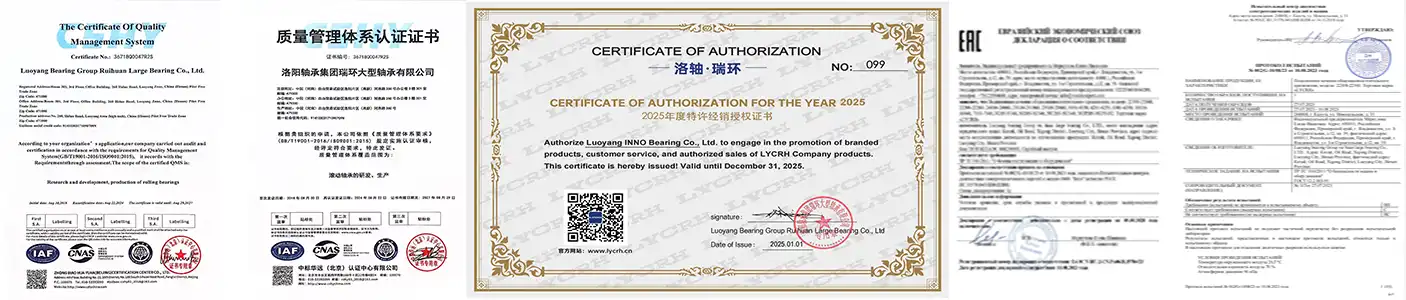
Quality certifications and traceability documentation ensure compliance with industry standards and regulatory requirements. ISO certification, material test Certificates, and dimensional inspection reports provide essential quality assurance for critical applications.
Customization Capabilities and Technical Support
The complexity of modern industrial equipment often requires bearing modifications or custom designs that standard catalog products cannot accommodate. Suppliers with in-house engineering capabilities can provide valuable design consultation during the specification process.
Technical support services extend beyond initial product delivery to include installation guidance, maintenance training, and troubleshooting assistance. This comprehensive support approach helps maximize bearing performance and minimize operational risks.
Global service networks ensure consistent support availability across multiple facility locations, particularly important for multinational organizations with equipment deployed worldwide.
INNO Bearing: Your Trusted Partner for Advanced Bearing Solutions
Luoyang INNO Bearing Co., Ltd. brings nearly three decades of specialized expertise in manufacturing premium four-point contact bearings designed for the most demanding industrial applications. Our comprehensive capabilities span from standard production to fully customized Solutions, supporting equipment sizes up to 5000mm diameter with unmatched precision and reliability.
Industry-Leading Manufacturing Excellence
Our advanced manufacturing facilities incorporate state-of-the-art quality control systems that ensure every bearing meets stringent performance specifications. The triple-inspection protocol validates material integrity through spectral analysis, confirms precision machining accuracy using 3D profilometers, and verifies performance through extensive load testing.
Material selection focuses on vacuum-degassed GCr15 steel for optimal hardness consistency and dimensional stability. Specialized heat treatment processes achieve hardness levels between 60-64 HRC while maintaining the toughness necessary for shock load resistance.
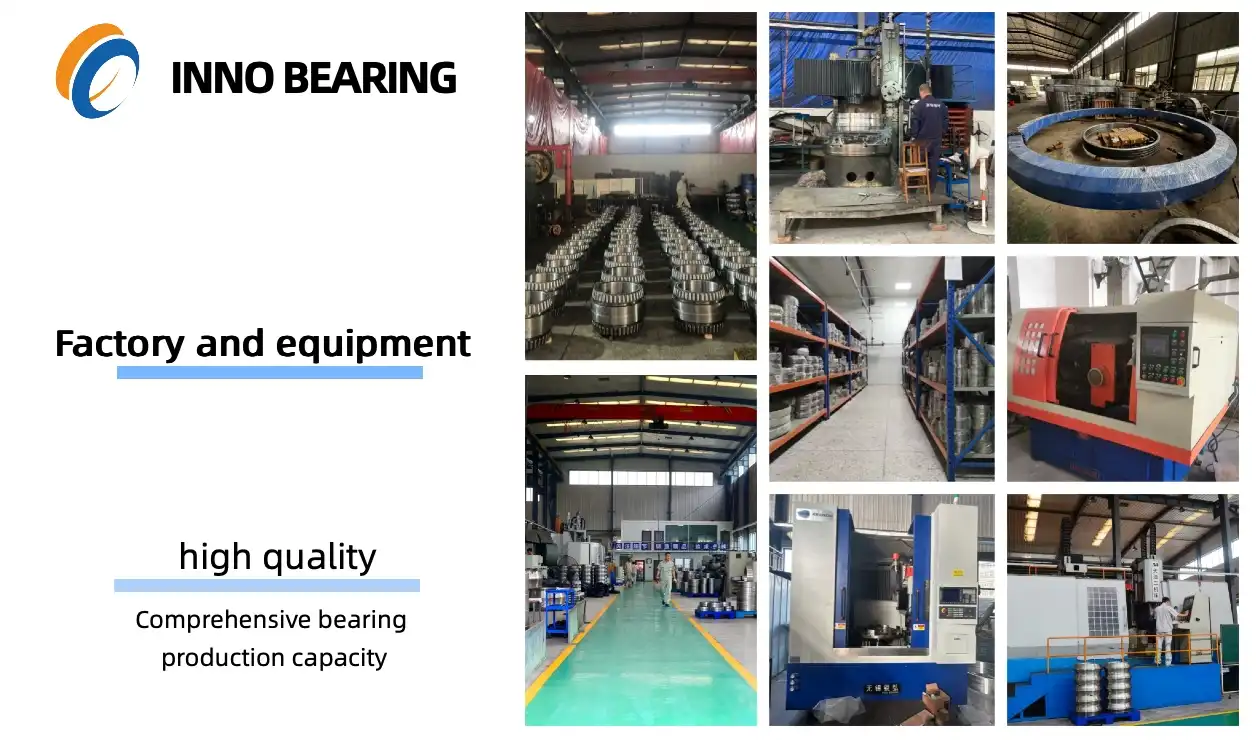
Production capabilities include both brass and steel cage options, allowing optimization for specific speed and load requirements. High-speed applications benefit from brass cages that reduce friction and noise levels, while heavy-duty environments utilize steel cages for maximum durability.
Comprehensive Service and Support Network
INNO Bearing maintains regional distribution centers that ensure rapid delivery of both standard and custom 4 point contact ball bearing solutions. Our 48-hour dispatch capability for European and North American markets minimizes equipment downtime during emergency replacement situations.
Technical consultation services help customers optimize bearing selection and application parameters for maximum performance and longevity. Our engineering team provides detailed load analysis, lubrication recommendations, and installation guidance tailored to specific operating conditions.
Custom engineering services accommodate unique application requirements with rapid prototyping capabilities that average 15 days for complex designs. This accelerated development process enables faster project completion and reduced time-to-market for new equipment designs.
Conclusion
Four-point contact ball bearings represent a sophisticated engineering solution for applications requiring reliable axial load handling combined with rotational precision. Their unique design enables bidirectional axial load support while maintaining radial load capabilities, making them invaluable across industries from wind energy to aerospace applications. The superior load distribution provided by the four-point contact geometry, combined with advanced materials and precision manufacturing, ensures dependable performance under demanding operating conditions. Proper selection, maintenance, and supplier partnership remain critical factors for maximizing bearing performance and achieving optimal total cost of ownership in industrial applications.
FAQ
What makes four-point contact bearings different from angular contact bearings?
Four-point contact bearings can handle bidirectional axial loads with a single bearing unit, while angular contact bearings typically require pairing to achieve similar capability. The four-point design provides more compact solutions with simplified installation requirements.
How often should four-point contact bearings be lubricated?
Lubrication intervals depend on operating conditions, but quarterly inspections are recommended for critical applications and semi-annual service for standard industrial environments. High-temperature or high-speed applications may require more frequent attention.
Can these bearings operate at high speeds?
Yes, properly designed four-point contact bearings can operate at speeds up to 15,000 RPM when equipped with appropriate lubrication and brass cages optimized for high-speed performance.
What load capacities are available?
Load capacities vary with bearing size, but typical ranges include axial loads from 22 kN to 380 kN and radial loads from 19 kN to 340 kN, depending on specific design parameters and size requirements.
Partner with INNO Bearing for Superior Axial Load Solutions
Engineering teams and procurement managers seeking reliable 4 point contact ball bearing manufacturer solutions can benefit from INNO Bearing's three decades of specialized manufacturing expertise. Our custom engineering capabilities, rapid prototyping services, and global support network ensure optimal bearing solutions for your most demanding applications. Contact our technical team at sales@inno-bearing.com for comprehensive consultation, competitive quotations, and sample availability. Experience the INNO difference through our commitment to quality, innovation, and customer success in bearing technology.
References
Harris, T.A. & Kotzalas, M.N. "Advanced Concepts of Bearing Technology: Rolling Bearing Analysis, Fifth Edition." CRC Press, 2007.
Palmgren, A. "Ball and Roller Bearing Engineering." SKF Industries Inc., Philadelphia, 1959.
Eschmann, P., Hasbargen, L. & Weigand, K. "Ball and Roller Bearings: Theory, Design and Application." John Wiley & Sons, 1985.
ISO 15312:2018 "Rolling Bearings - Thermal Speed Rating - Calculation and Coefficients." International Organization for Standardization.
Gentle, C.R. & Pasdari, M. "Computer Modelling of Stiffness and Damping in Rolling Element Bearings." Mechanical Systems and Signal Processing, Vol. 4, No. 6, 1990.
Wardle, F.P. "Ultra-Precision Bearings." Woodhead Publishing in Mechanical Engineering, 2015.

Learn about our latest products and discounts through SMS or email