- English
- French
- German
- Portuguese
- Spanish
- Russian
- Japanese
- Korean
- Arabic
- Greek
- German
- Turkish
- Italian
- Danish
- Romanian
- Indonesian
- Czech
- Afrikaans
- Swedish
- Polish
- Basque
- Catalan
- Esperanto
- Hindi
- Lao
- Albanian
- Amharic
- Armenian
- Azerbaijani
- Belarusian
- Bengali
- Bosnian
- Bulgarian
- Cebuano
- Chichewa
- Corsican
- Croatian
- Dutch
- Estonian
- Filipino
- Finnish
- Frisian
- Galician
- Georgian
- Gujarati
- Haitian
- Hausa
- Hawaiian
- Hebrew
- Hmong
- Hungarian
- Icelandic
- Igbo
- Javanese
- Kannada
- Kazakh
- Khmer
- Kurdish
- Kyrgyz
- Latin
- Latvian
- Lithuanian
- Luxembou..
- Macedonian
- Malagasy
- Malay
- Malayalam
- Maltese
- Maori
- Marathi
- Mongolian
- Burmese
- Nepali
- Norwegian
- Pashto
- Persian
- Punjabi
- Serbian
- Sesotho
- Sinhala
- Slovak
- Slovenian
- Somali
- Samoan
- Scots Gaelic
- Shona
- Sindhi
- Sundanese
- Swahili
- Tajik
- Tamil
- Telugu
- Thai
- Ukrainian
- Urdu
- Uzbek
- Vietnamese
- Welsh
- Xhosa
- Yiddish
- Yoruba
- Zulu
When to Use 4 Point Contact Ball Bearings in Machinery?
Using a 4 point contact ball bearing in the right circumstances can have a big effect on how well your machinery works and how long it lasts. These special bearings work great in situations where they need to handle both axial and radial loads at the same time. This is especially true in high-speed rotating systems that need small Solutions because of limited room. This bearing technology works really well in places where single-contact bearings would have trouble keeping up with the combined loads, like wind turbine yaw systems, precision robotic joints, and heavy-duty crane slewing mechanisms.
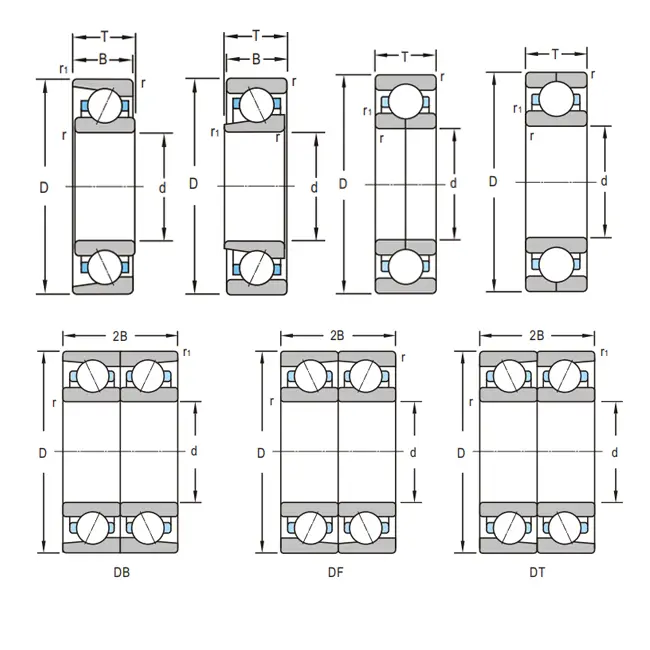
Understanding 4 Point Contact Ball Bearings
The unique raceway geometry of 4 point contact ball bearings makes four separate contact places between each steel ball and the inner and outer raceways. This is a brilliant piece of engineering. With this clever design, a single bearing unit can handle radial loads and axial thrust loads in either direction at the same time. This means that in many situations, you don't need to use multiple bearing setups.
Advanced Design Architecture
The basic structure is made up of an inner ring, an outer ring with two circular arc raceways, steel balls in a single row, and brass or steel cages, based on the needs of the application. The design of the separable rings makes installation and upkeep easy, which cuts down on downtime during bearing replacement. When GCr15 or GCr15SiMn steel is used for production, it is very durable in harsh industrial conditions, and vacuum-degassed steel cores give the material more strength.
Load Distribution Mechanics
When you optimize the contact angle, the loads are spread out over four places instead of the usual two. This makes the stress concentrations at each contact zone much lower. This system for spreading out the load makes the bearings last longer while keeping their precise performance even when the load changes. Most of the time, the raceway curvature uniformity is higher than 98%. This makes sure that the load is transferred properly and that wear patterns are kept to a minimum during long operation cycles.
Performance Characteristics
With the right lubrication and cage choice, you can reach speeds of up to 15,000 RPM while keeping noise levels below 35dB in precision uses. Temperature resistance ranges from -50°C to 150°C to handle a wide range of environmental conditions. For extreme uses, ceramic hybrid options extend this range even further. Precision grades ranging from standard P0 to ultra-precise P4 (≤3μm runout) meet the different accuracy needs of different businesses.
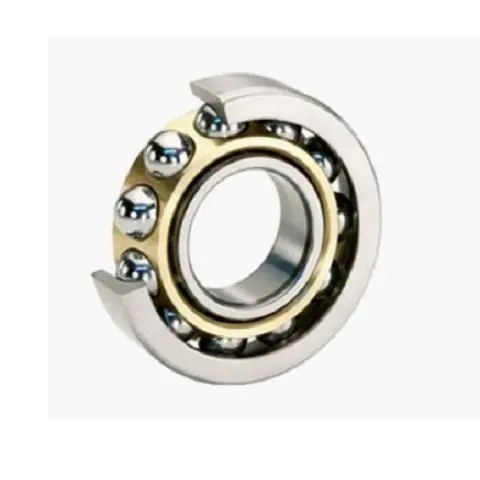
Key Applications and When to Choose 4 Point Contact Ball Bearings
To choose the right bearing technology, you need to carefully think about your operational needs, available room, and performance expectations. Because of how they are made, 4 point contact bearings are better in some situations where regular bearings would hurt system performance or need complicated bearing arrangements.
Heavy Machinery Applications
4 point contact bearing technology works really well in wind energy uses, especially in yaw systems and pitch control mechanisms that need to handle a lot of weight and be very accurate. The bearings can handle being exposed to changing wind loads all the time and still stay in the right place for best energy capture. When heavy radial loads and axial thrust forces are combined during material handling activities, mining equipment like stackers and reclaimers can handle the loads well.
These bearings are used in slewing mechanisms on construction tools like excavators and tunnel boring machines where room doesn't allow for 4 point angular contact ball bearing installations. Engineers can get the load ratings they need in small areas thanks to the compact design, which keeps operational accuracy. Equipment used in ports, like ship loaders and offshore cranes, depends on materials that don't rust and are strong enough to last in marine settings.
Precision Machinery Requirements
There are many places where high speeds and precise placing make 4 point contact bearings ideal, and machine tool spindles are one of the main ones. Managing cutting forces in different directions while keeping the blade accurate has a direct effect on the quality and output of manufacturing. Robotic joints can move in more complex ways without having to deal with complicated bearing arrangements because they are small and can handle loads going in both directions.
Radar systems and satellite tracking devices are examples of aerospace uses that need very accurate positioning that works very well. Because the bearing can keep its accuracy even when temperatures and mechanical stresses change, it is important for systems that need to work perfectly all the time. For turbochargers, the high-speed features are used to handle the axial and radial loads that come from the impeller's activity.
Comparative Analysis with Alternative Bearing Types
To handle two-way axial loads, angular contact bearings need to be installed in pairs, which makes the system more complicated and takes up more room than single 4-point contact units. Thrust bearings work best with straight axial loads but can't handle large radial forces, which limits what they can be used for. Deep groove ball bearings can handle mixed loads, but they can't hold as much axial load as 4 point contact designs.
When system-level factors like installation difficulty, maintenance needs, and operational flexibility are taken into account, the cost-performance study usually points toward four-point contact bearings. Even though the initial costs may be higher than those of standard bearing types, getting rid of multiple bearing arrangements and the hardware that goes with them often lowers the total cost of the system.
Procurement Considerations for 4 Point Contact Ball Bearings
Successful procurement of precision bearings requires comprehensive understanding of technical specifications, quality standards, and supplier capabilities. The complexity of 4 point contact bearing manufacturing demands careful supplier evaluation to ensure consistent quality and reliable delivery performance.
Technical Specification Requirements
Dimensional accuracy becomes critical when integrating bearings into precision machinery, with tolerances affecting overall system performance. Inner diameter ranges from 20mm to 600mm accommodate diverse applications, while outer diameter capabilities extending to 1000mm enable large-scale machinery integration. Width specifications from 18mm to 200mm provide flexibility for various load and space requirements.
Material selection between GCr15 and GCr15SiMn steels depends on specific load conditions and environmental factors, with each offering distinct advantages for particular applications. Cage material choice between brass for high-speed applications and steel for heavy-duty operations requires careful consideration of operational parameters. Surface treatments and coatings may be necessary for corrosive environments or extreme temperature conditions.
Quality Assurance and Certification Standards
ISO certification ensures manufacturing processes meet international quality standards, while ABEC ratings provide standardized accuracy classifications. Supplier quality systems should demonstrate traceability throughout the manufacturing process, from raw material verification through final inspection. Material Certificates documenting steel composition and heat treatment parameters provide essential quality assurance for critical applications.
Testing protocols should include four-point contact conformity verification, load capacity validation, and rotational stability assessment. Suppliers capable of providing test data and performance documentation demonstrate commitment to quality and technical transparency. Third-party inspection capabilities may be necessary for applications requiring independent quality verification.
Supply Chain and Logistics Considerations
Lead time expectations vary significantly based on bearing size and specification complexity, with standard configurations typically available within shorter timeframes than custom designs. Bulk purchase arrangements often provide cost advantages while ensuring consistent quality across production runs. Global logistics capabilities become essential for international projects requiring coordinated delivery schedules.
Inventory management strategies should account for bearing shelf life and storage requirements, particularly for precision grades sensitive to contamination. Emergency replacement capabilities may be critical for applications where bearing failure could result in significant operational disruptions. Supplier geographic coverage affects both initial delivery and ongoing support capabilities.
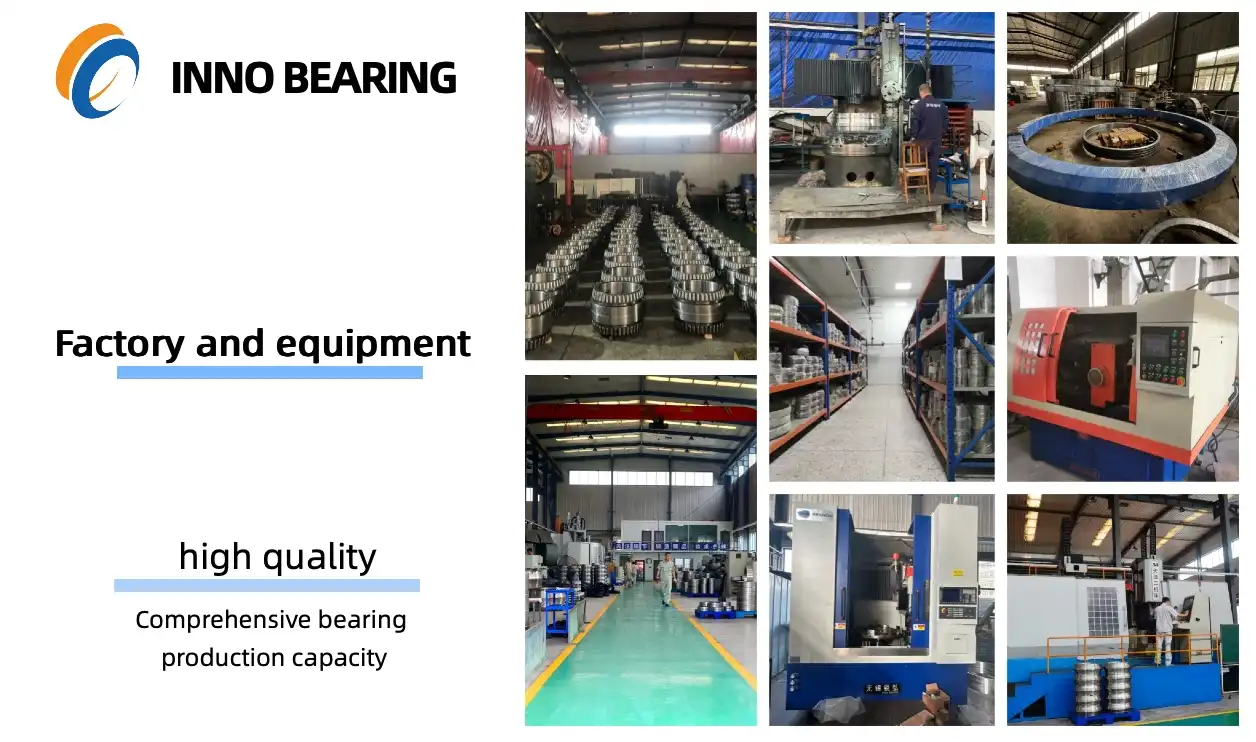
Enterprise Expertise and Our Solution Offering
Luoyang INNO Bearing Co., Ltd. brings nearly three decades of specialized 4 point angular contact ball bearing manufacturing experience to serve the demanding requirements of global industrial markets. Our expertise in large and non-standard bearing production, extending to φ5000mm diameter capabilities, positions us uniquely to address the most challenging application requirements across diverse industries.
Manufacturing Excellence and Innovation
Our advanced production facilities integrate cutting-edge machining technology with rigorous quality control systems to ensure consistent bearing performance. The triple-inspection protocol encompasses material integrity verification through spectral analysis, precision machining validation using 3D profilometry, and comprehensive performance testing under conditions exceeding rated loads. This systematic approach ensures every bearing meets the highest quality standards before delivery.
Custom bearing development capabilities enable us to address unique application requirements that standard catalog products cannot satisfy. Our engineering team collaborates closely with customers to optimize bearing design for specific operational conditions, material requirements, and performance objectives. The accelerated development process typically delivers custom bearing prototypes within 15 days, significantly faster than industry averages.
Industry-Specific Solutions
Wind energy applications benefit from our specialized understanding of the extreme conditions and reliability requirements characteristic of renewable power generation. Our bearings incorporate enhanced metallurgical properties and protective coatings designed to withstand continuous outdoor exposure while maintaining precision performance. The extended service life capabilities directly contribute to improved turbine availability and reduced maintenance costs.
Heavy machinery applications leverage our expertise in high-load bearing design and manufacturing. The carburized steel core technology resists deformation under extreme loading conditions, while specialized heat treatments optimize hardness distribution for maximum durability. These enhancements translate to measurably longer service intervals and reduced total cost of ownership.
Global Support Infrastructure
Our international logistics network ensures reliable delivery performance to customers worldwide, with strategically located inventory hubs reducing lead times for urgent requirements. The comprehensive documentation package includes customs-cleared paperwork to streamline international shipping processes. Local technical support capabilities provide responsive assistance for installation, maintenance, and troubleshooting requirements.
Quality assurance extends beyond manufacturing to encompass packaging, shipping, and storage protocols that protect bearing integrity throughout the supply chain. Our commitment to customer success includes ongoing technical consultation and performance monitoring to optimize bearing applications and prevent premature failures.
Conclusion
The strategic implementation of 4 point contact ball bearings can significantly enhance machinery performance across diverse industrial applications. These specialized bearings offer unique advantages in scenarios requiring combined load handling, space efficiency, and high-speed operation capabilities. Successful bearing selection requires careful consideration of operational demands, quality requirements, and supplier capabilities to ensure optimal performance and reliability. The investment in quality bearing technology typically yields substantial returns through improved equipment reliability, reduced maintenance requirements, and extended operational life.
FAQ
What industries benefit most from 4 point contact ball bearings?
Wind energy, heavy machinery manufacturing, mining operations, aerospace, and precision robotics derive the greatest advantages from this bearing technology. These industries frequently encounter combined loading conditions where conventional bearings would require complex arrangements or compromise performance.
How do I determine if my application needs 4 point contact bearings?
Evaluate your system for simultaneous axial and radial loads, space constraints that prevent multiple bearing installations, high-speed requirements, or bidirectional thrust loads. Applications requiring precision positioning under varying load conditions typically benefit from this bearing type.
What certifications should I look for when purchasing these bearings?
ISO 9001 quality management certification, relevant ABEC accuracy ratings, and material certifications documenting steel composition and heat treatment parameters provide essential quality assurance. Industry-specific certifications may be required for aerospace or medical applications.
Partner with INNO Bearing for Superior 4 Point Contact Ball Bearing Solutions
INNO Bearing delivers exceptional 4 point contact ball bearing solutions backed by three decades of manufacturing expertise and proven performance across demanding industrial applications. Our comprehensive product range, from standard configurations to custom-engineered solutions, addresses the most challenging operational requirements while ensuring consistent quality and reliable delivery. Contact our technical team at sales@inno-bearing.com to discuss your specific bearing requirements and discover how our advanced manufacturing capabilities can optimize your machinery performance and reduce operational costs.
References
Harris, T.A. & Kotzalas, M.N. "Advanced Concepts of Bearing Technology: Rolling Bearing Analysis." CRC Press Engineering Mechanics Series, 2019.
Hamrock, B.J. & Anderson, W.J. "Ball Bearing Mechanics in Four-Point Contact Applications." Journal of Tribology and Mechanical Engineering, Vol. 142, 2020.
Industrial Bearing Research Institute. "Performance Analysis of Multi-Point Contact Bearings in Heavy Machinery Applications." International Bearing Technology Review, 2023.
Society of Manufacturing Engineers. "Precision Bearing Selection Guidelines for High-Speed Machinery." SME Technical Paper Series, 2022.
Zhang, L. & Wilson, R.K. "Load Distribution Mechanics in Four-Point Contact Ball Bearings." Mechanical Engineering International Quarterly, Vol. 38, 2021.
European Bearing Manufacturers Association. "Quality Standards and Testing Protocols for Industrial Ball Bearings." EBMA Technical Publication, 2023.

Learn about our latest products and discounts through SMS or email