- English
- French
- German
- Portuguese
- Spanish
- Russian
- Japanese
- Korean
- Arabic
- Greek
- German
- Turkish
- Italian
- Danish
- Romanian
- Indonesian
- Czech
- Afrikaans
- Swedish
- Polish
- Basque
- Catalan
- Esperanto
- Hindi
- Lao
- Albanian
- Amharic
- Armenian
- Azerbaijani
- Belarusian
- Bengali
- Bosnian
- Bulgarian
- Cebuano
- Chichewa
- Corsican
- Croatian
- Dutch
- Estonian
- Filipino
- Finnish
- Frisian
- Galician
- Georgian
- Gujarati
- Haitian
- Hausa
- Hawaiian
- Hebrew
- Hmong
- Hungarian
- Icelandic
- Igbo
- Javanese
- Kannada
- Kazakh
- Khmer
- Kurdish
- Kyrgyz
- Latin
- Latvian
- Lithuanian
- Luxembou..
- Macedonian
- Malagasy
- Malay
- Malayalam
- Maltese
- Maori
- Marathi
- Mongolian
- Burmese
- Nepali
- Norwegian
- Pashto
- Persian
- Punjabi
- Serbian
- Sesotho
- Sinhala
- Slovak
- Slovenian
- Somali
- Samoan
- Scots Gaelic
- Shona
- Sindhi
- Sundanese
- Swahili
- Tajik
- Tamil
- Telugu
- Thai
- Ukrainian
- Urdu
- Uzbek
- Vietnamese
- Welsh
- Xhosa
- Yiddish
- Yoruba
- Zulu
Angular Contact Ball Bearing Load Direction Explained
Angular contact ball bearings are precision-engineered parts that can handle both horizontal and axial loads because of the way they are shaped on the inside. These bearings have contact angles of 15°, 25°, or 40°. The axial load-bearing capacity is higher when the contact angles are bigger. It is very important for procurement managers and engineers to know the way of the load when they are choosing bearings that will work best in tough industrial settings like wind energy, heavy machinery, and precision equipment.
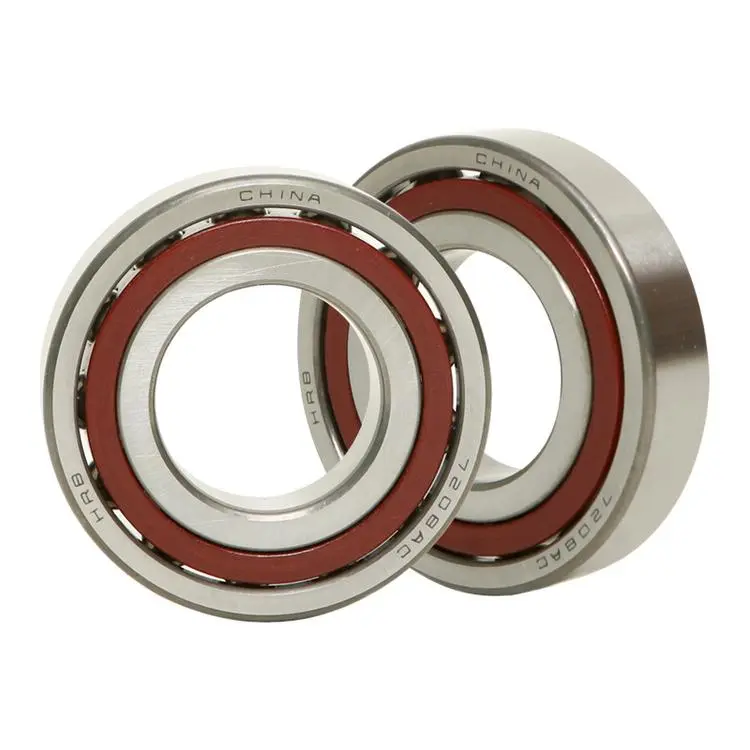
Understanding Angular Contact Ball Bearings and Their Load Direction
Because of their carefully designed raceway geometry, angular contact ball bearings are able to handle a wide range of load ratios. In these bearings, load direction is made up of two main parts: axial forces that run parallel to the shaft plane and radial forces that act perpendicular to the shaft axis. How well the bearing spreads these loads is based on the contact angle, which is the angle between the line connecting the ball-to-raceway contact points and a plane that is not parallel to the bearing axis.
Contact Angle Impact on Load Performance
Choosing the right contact angle has a direct effect on how well the bearing works and how much weight it can hold. Bearings with 15° contact angles work best in high-speed situations with mild axial loads and strong radial forces. This makes them perfect for precision reducers and machine tool spindles. When both types of load need to be taken into account equally, like in turbochargers and high-end motors, the 25° setup gives you the best performance. On the other hand, contact angles of 40° maximize axial load capacity and are good for heavy-duty uses in mining equipment and industrial gearboxes.
Load Measurement and Distribution Principles
To accurately measure load, you need to know how forces move through the bearing's internal parts. The load zone changes depending on the loads that are being applied and the internal clearances. This is where the balls stay in touch with both the inner and outer raceways. Engineers need to think about both dynamic load ratings and static load ratings when working with parts that stay still or rotate slowly. Dynamic load ratings show how long a bearing will last under different loads. The right load direction analysis makes sure that the bearing choice meets practical needs and extends the life of the bearing.
Key Design Features and Their Role in Load Handling
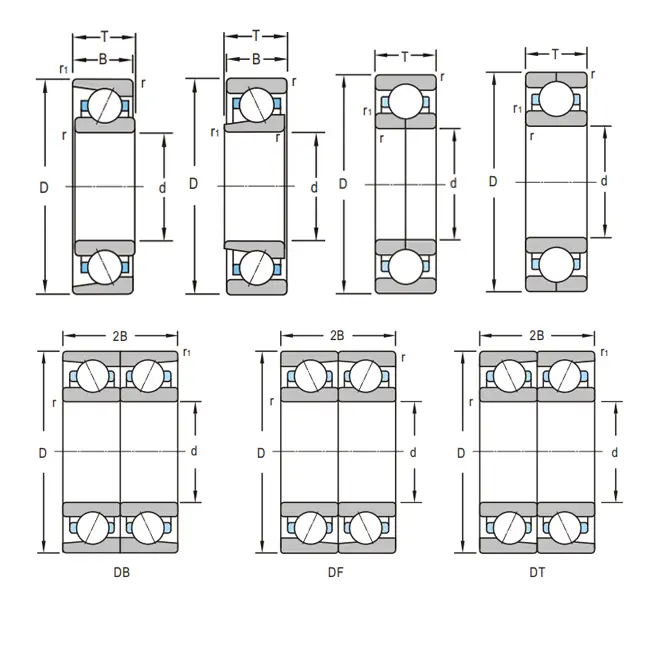
The design of a bearing has a big effect on how well it distributes loads and how reliable it is generally. The structure is made up of an inner ring, an outer ring with an angular contact track, steel balls in a single row, and a cage assembly. Together, these parts control the direction of the load while keeping the shaft precisely positioned and rotating.
Single Row vs. Double Row Configurations
When used alone or in pairs, single row angular contact ball bearings can handle radial loads that only go in one direction well. Back-to-back mounting makes rigid shapes that work well for tasks that need high moment resistance, while face-to-face mounting gives the shaft better guidance. When two single row bearings are combined into one unit, it's called a double row design. This makes it possible for applications with limited axial room to use a small solution that still has a high load capacity in both directions.
Material Selection for Load Optimization
The choice of materials has a big impact on how well they hold weight and how reliable they are in use. When made from GCr15 or GCr15SIMN steel, the inner and outer rings are very hard and don't wear out easily under different loads. Steel balls made from the same materials make sure that the load zone works the same way everywhere. Brass is a common material for cages, while aerospace aluminum alloy is used for high-speed models that need lower centrifugal forces and better heat absorption.
Precision Grades and Load Capacity
Different levels of accuracy, from standard P0 to precise P4, have a direct effect on how evenly the load is distributed and how long the bearing lasts. Higher precision grades keep the size limits smaller, which lowers stress concentrations and makes it easier for rolling elements to share the load. Key inspection factors include an accurate contact angle with deviations of no more than 1°, radial runout of no more than 0.005mm, and running noise of no more than 45dB, which ensures the best performance when handling loads.
Maintenance and Optimization for Load Performance
Proper maintenance practices preserve load-bearing capabilities and extend service life in demanding industrial applications. Understanding maintenance requirements helps procurement teams evaluate total cost of ownership when selecting bearing Solutions for critical equipment.
Lubrication Requirements for Load Management
Lubrication quality directly affects load distribution uniformity and bearing fatigue life. High-quality lubricants maintain consistent film thickness under varying load conditions, preventing metal-to-metal contact between rolling elements and raceways. Lubrication intervals depend on load magnitude, speed, and environmental conditions, with heavily loaded applications requiring more frequent attention to maintain optimal performance.
Contamination Prevention and Load Capacity
Contamination significantly reduces bearing load capacity by creating stress concentrations and accelerating wear patterns. Sealing systems must effectively exclude contaminants while retaining lubricants under operational loads. Regular inspection protocols help identify contamination sources and prevent premature bearing failure in critical applications.
Common Failure Modes and Load-Related Issues
Improper angular contact ball bearings load direction or magnitude creates specific failure patterns recognizable through vibration analysis and visual inspection. Overloading produces characteristic wear patterns on raceways, while incorrect load direction causes uneven ball wear and increased noise levels. Understanding these failure modes helps maintenance teams optimize bearing selection and installation procedures.
Procurement Considerations: Selecting Bearings Based on Load Direction Needs
Strategic procurement requires evaluating technical specifications alongside supplier capabilities to ensure reliable bearing performance throughout equipment lifecycles. Load direction requirements influence multiple procurement factors including sizing, precision requirements, and supplier selection criteria.
Technical Specification Evaluation
Procurement teams must evaluate dynamic and static load ratings against actual application requirements, incorporating safety factors appropriate for equipment criticality. Speed limitations, temperature ranges, and precision grades require careful consideration to ensure bearing selection matches operational demands. Documentation requirements, particularly for aerospace and defense applications, necessitate complete traceability and compliance certification.
Supplier Assessment and Quality Assurance
Leading bearing manufacturers provide comprehensive technical support and quality assurance programs essential for critical applications. Supplier evaluation should include manufacturing capabilities, testing procedures, and quality management systems. Certification compliance, delivery reliability, and technical support availability significantly impact total procurement value beyond initial purchase price.
Custom Solutions and Bulk Purchasing Advantages
Custom bearing solutions address unique load direction requirements that standard products cannot accommodate. Bulk purchasing arrangements provide cost advantages while ensuring supply chain continuity for high-volume applications. Lead time optimization, inventory management support, and dedicated technical assistance create additional value for strategic procurement relationships.
Company Introduction and Product & Service Information
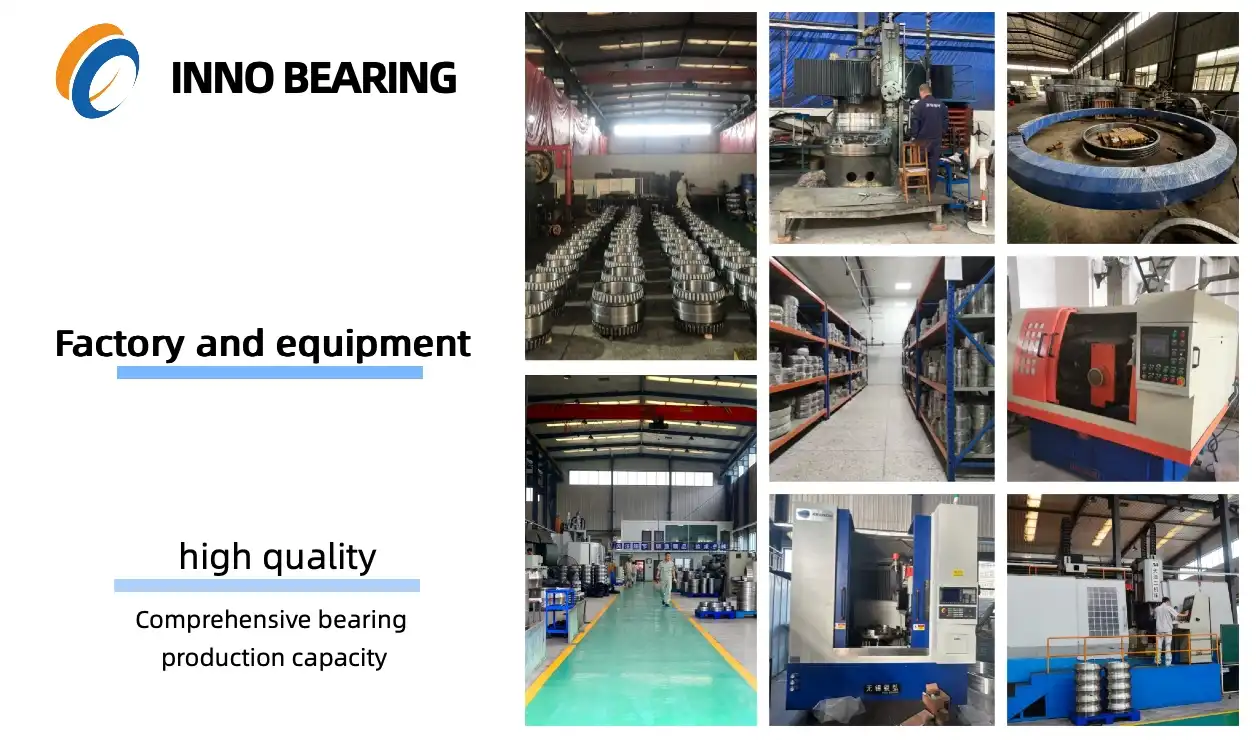
INNO Bearing stands as a trusted leader in angular contact ball bearing manufacturing, delivering comprehensive product ranges engineered to meet complex load direction requirements across global B2B markets. With nearly 30 years of industry experience, we integrate research and development, design, production, and service capabilities to provide superior bearing solutions for demanding industrial applications.
Our manufacturing expertise extends to large and non-standard angular contact ball bearings up to φ5000mm diameter, offering customization, repair, and import substitution solutions for critical equipment. Advanced testing equipment and strict quality control procedures ensure every bearing meets exacting specifications for load capacity, precision, and reliability.
Technical capabilities include rapid prototyping, custom engineering support, and comprehensive testing services that validate bearing performance under actual load conditions. Our commitment to quality excellence and customer satisfaction drives continuous improvement in manufacturing processes and product development initiatives.
Conclusion
Angular contact ball bearing load direction understanding proves essential for successful procurement decisions across industrial applications. Proper bearing selection based on load direction requirements ensures optimal equipment performance, extended service life, and reduced maintenance costs. The combination of technical expertise, quality manufacturing, and comprehensive support services creates significant value for procurement teams seeking reliable bearing solutions. Strategic partnerships with experienced bearing manufacturers provide access to advanced technologies and engineering support that enhance equipment reliability while optimizing total cost of ownership throughout operational lifecycles.
FAQ
How does load direction impact bearing service life?
Load direction significantly affects bearing fatigue life through stress distribution patterns within the bearing assembly. Proper load direction alignment with bearing design parameters maximizes contact area utilization and minimizes stress concentrations, potentially extending service life by 200-300% compared to improperly loaded bearings.
Can angular contact ball bearings operate under purely radial loads?
Angular contact ball bearings can handle purely radial loads but require axial preloading or paired mounting arrangements to maintain proper internal geometry. Single bearings under pure radial loads may experience internal sliding and reduced performance compared to applications with combined loading conditions.
What distinguishes single row from double row load capacities?
Single row angular contact ball bearings require paired mounting for bidirectional axial loads, while double row designs handle bidirectional loads within a single bearing unit. Double row bearings typically provide 60-80% of the combined capacity of two single row bearings while occupying less axial space.
Partner with INNO Bearing for Advanced Angular Contact Ball Bearing Solutions
INNO Bearing delivers precision-engineered angular contact ball bearings designed to optimize load direction performance across demanding industrial applications. Our three-decade manufacturing expertise, combined with advanced testing capabilities and rapid customization services, ensures your equipment achieves maximum reliability and efficiency. Contact our technical team at sales@inno-bearing.com to explore custom bearing solutions tailored to your specific load requirements. As a leading angular contact ball bearings manufacturer, we provide comprehensive support from initial design consultation through ongoing maintenance optimization, helping you achieve superior operational performance and cost-effectiveness.
References
Harris, T.A., and Kotzalas, M.N. "Essential Concepts of Bearing Technology: Rolling Bearing Analysis." CRC Press, 2007.
Eschmann, P., Hasbargen, L., and Weigand, K. "Ball and Roller Bearings: Theory, Design and Application." John Wiley & Sons, 1985.
Palmgren, A. "Ball and Roller Bearing Engineering." SKF Industries Inc., 1959.
Hamrock, B.J., and Dowson, D. "Rolling Element Bearings." NASA Reference Publication, 1981.
Tallian, T.E. "Failure Atlas for Hertz Contact Machine Elements." ASME Press, 1999.
ISO 281:2007 "Rolling Bearings - Dynamic Load Ratings and Rating Life." International Organization for Standardization, 2007.

Learn about our latest products and discounts through SMS or email