To make high-performance Thrust ball bearings, you need to be very good at managing radial loads, technical precision, and metalworking. Since we've been an original equipment maker (OEM) for almost 30 years, we know that high quality is important for thrust ball bearing uses, especially in the wind energy, heavy machinery, and mining industries. This detailed guide shows how our OEM/ODM services can provide custom thrust bearing Solutions that go above and beyond industry standards while making purchasing easier for engineering directors, buying managers, and quality assurance teams all over the world.
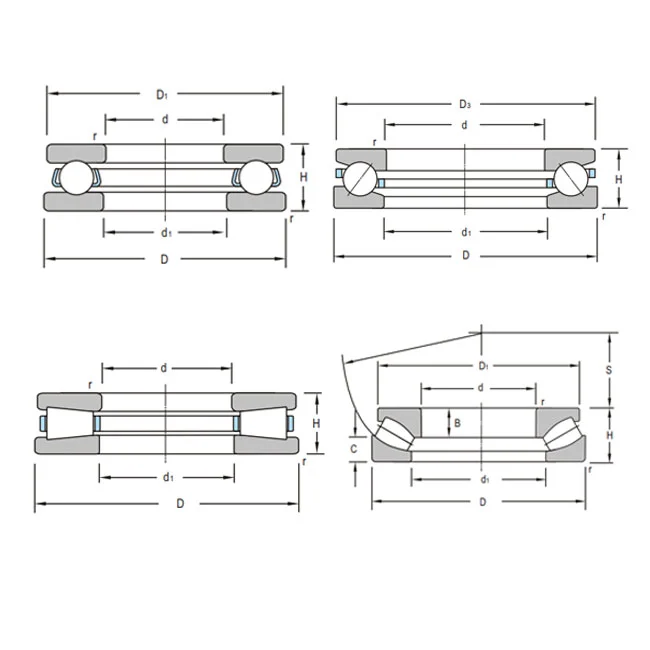
Understanding OEM/ODM Excellence in Axial Load Solutions
Original Equipment Manufacturing (OEM) and Original Design Manufacturing (ODM) are two different ways to make Thrust bearings. When you work with an OEM partner, they will make bearings that exactly meet your needs. When you work with an ODM partner, you will work together to come up with new axial load solutions from idea to production.
When it comes to thrust ball bearings, deep customization is very important because standard goods rarely meet the strict needs of wind turbine turning systems, industrial machinery, or offshore equipment. A lot of the time, our clients have problems with bearings that don't last long enough in tough settings or can't handle enough weight.
There are no longer any one-size-fits-all options in the bearing business. For modern uses, bearings need to be designed to work in certain circumstances, like high temperatures, toxic environments, and changing rotational loads. Because of this change, there is a need for OEM relationships with people who know both material science and application-specific engineering.
Our OEM Manufacturing Strengths That Drive Performance
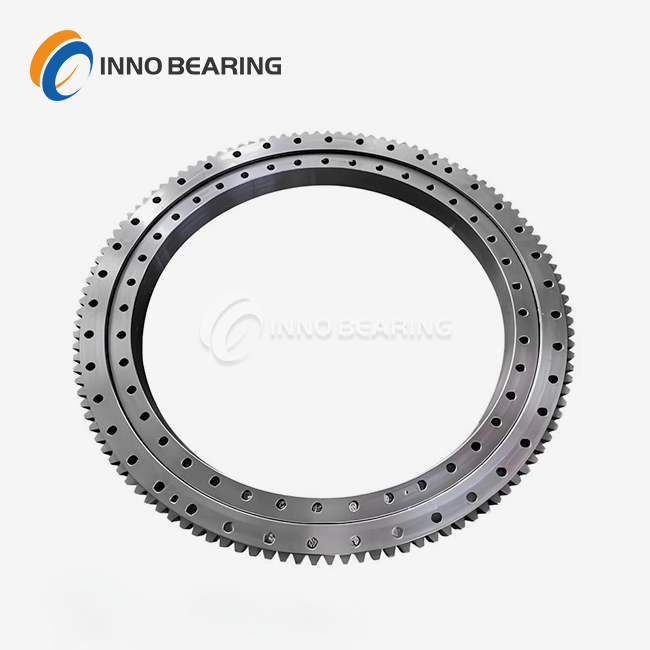
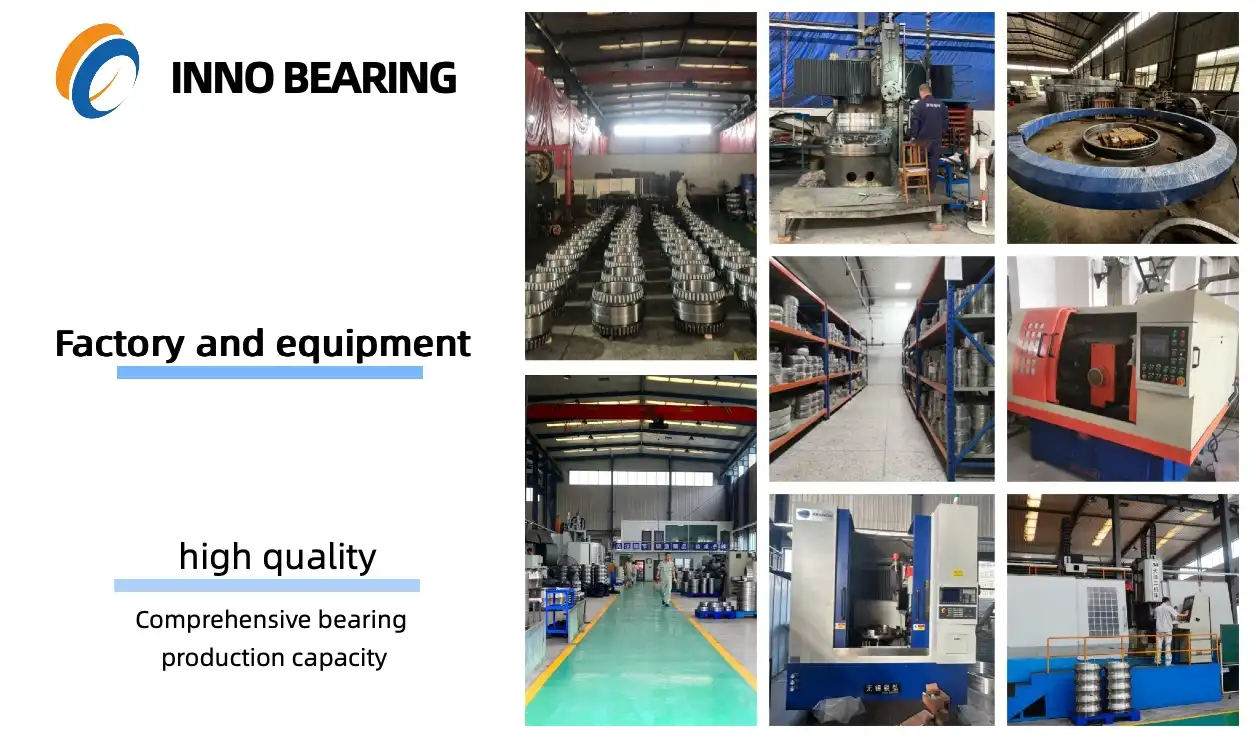
INNO Bearing uses its nearly 30 years of experience making bearings to provide the best thrust ball bearing options. Our factory specializes in big, non-standard bearings with a diameter of up to ±5000mm. This makes us the only ones who can handle wind energy and heavy machinery jobs that no one else can.
Our production skills include advanced methods for heat treatment, high-precision cutting tools, and full testing facilities. With these tools, we can keep limits on dimensions of ≤0.001mm and make sure that all of our production batches use the same material. During the whole production process, quality control systems check the bearing clearance, the finish on the raceways, and the roundness of the balls.
The main goals of research and development funds are to improve weather protection, make bearings last longer, and make them better at carrying weight. Our tech team works closely with clients to understand the problems that are unique to each application and come up with custom solutions that meet the needs of real-world operations.
Supply chain management for a ball thrust bearing makes sure that materials are always available and that deliveries happen on time. Strategic relationships with steel sources ensure access to high-quality GCr15 and other specialty metals, and automatic stocking systems make sure that the right amount of standard bearing parts is always in stock.
Comprehensive Customization for Every Application Need
Bearing shape adjustment is the first step in customizing the physical form. To fit your exact fitting needs, we can change the inner diameters from 10mm to 300mm, the outer diameters from 30mm to 400mm (expandable to φ5000mm), and the heights from 8mm to 50mm. Raceway patterns can be changed to better spread out loads and lower stress levels in certain areas.
Improving certain functional features meets certain speed needs. Ceramic hybrid balls and special heat-resistant grease are used in high-temperature uses. Better seal designs and protective coats work better in corrosive settings. Optimized cage materials and ball spacing setups are used for situations with changing loads.
Advanced materials like 20Cr2Ni4A are used for uses that need to last a very long time, and precision-machined metal bars are used to reduce friction. Specialized heat treatment processes, protective covering, and precise grinding are used on the surface to get P5 accuracy grades when normal P0/P6 limits are not enough.
Custom branding includes laser writing, custom packing, and paperwork that is made just the way you want it. Compliance certification covers norms specific to different industries, such as those in wind energy, marine, and aircraft. Technical paperwork includes thorough results on performance tests and material Certificates.
The ODM Advantage: Co-Developing Revolutionary Bearing Solutions
Through ODM agreements, big steps forward are made possible in thrust ball bearing technology. Recently, people have worked together to make bearings that can handle 25% more weight than industry norms and can handle temperatures above 150°C for use in metalworking. These improvements happen when we combine our production understanding with what our clients need.
Co-development projects usually try to solve problems that have been around for a long time in the business. Customers of wind energy gain from designs that don't wear out quickly, which means that repair times are longer. Bearings made for big loads and rough conditions are sent to companies that make mining equipment. Offshore uses benefit from better rust protection and structure dependability.
Rapid development and thorough testing procedures for a thrust ball bearing speed up the process of innovation. We can make working prototypes in 72 hours and test how well they work in the real world before going into full production. This method lowers the risk of growth while still ensuring the best results in real-world settings.
Protecting your intellectual property keeps your economic benefits safe. Agreements for joint development make it clear who owns what and let both parties gain from new technologies. This framework supports new ideas while protecting secret plans and production methods.
Our Streamlined Customization Process
The first meeting includes a thorough study of the application and a list of requirements. Our research team looks at the load conditions, working temperatures, external factors, and fitting limitations to figure out which bearing configurations will work best. When people talk about technology, they often find ways to make things work better than what was originally planned.
Advanced CAD tools and finite element analysis are used in design creation to find the best bearing shape and material. Within 72 hours of submitting a requirement, clients get thorough 3D models, suggestions for materials, and estimates of how well the product will work. During the development process, comments and requests for changes are taken into account during design rounds.
Prototype confirmation lets you test the prototype in the real world before committing to full production. Protocols for testing include temperature cycle, sound analysis, and rapid life tests that are meant to mimic real-world conditions. The results give you faith in the bearing's performance and show you what changes need to be made to the design.
Production application for a ball thrust bearing follows well-known quality processes, and progress is reported on a daily basis. Bulk orders usually get finished in 15 to 20 days, which is 30% faster than the average shipping time in the industry. Quality checks make sure that measurements are correct, materials aren't damaged, and performance stays the same throughout the manufacturing process.
Measurable Benefits That Impact Your Bottom Line
Improvements in performance lead to measurable benefits in operations. Better load capacity lowers the size of the bearings that are needed while still leaving enough room for safety. An extended service life lowers the number of replacements needed and the costs of upkeep that come with them. Better resistance to weather makes it possible to work in places that were hard to access before.
Optimizing costs comes from making manufacturing processes more efficient and buying materials in a smart way. The perks of mass production lower unit costs while keeping quality standards high. Standardized customization choices make it possible to get semi-custom solutions at prices that are close to standard for common use cases.
Delivery dependability makes sure that projects stay on plan by communicating ahead of time and giving clear lead times. Standard parts can be quickly accessed through regional warehouse networks in North America, Asia, and Europe. Emergency substitute options keep the costs of unplanned downtime to a minimum.
Technical support includes help with startup, making sure upkeep is done correctly, and fixing problems. IoT sensors are used in predictive maintenance programs to check the state of bearings and guess when they will need to be serviced. This preventative method stops breakdowns before they happen and improves maintenance planning and cleaning plans.
Conclusion
Choosing the right OEM partner for making thrust ball bearings has a direct effect on how well the equipment works, how reliable it is, and how much it costs in the long run. Because we can customize everything, use cutting-edge production methods, and have a lot of experience in the field, INNO Bearing is the best partner for challenging uses in the wind energy, heavy machinery, and industrial sectors. Our dedication to technical excellence, quality assurance, and customer satisfaction makes sure that your bearing solutions work better than expected and provide great value. When you mix new technologies, precise manufacturing, and quick customer service, you get long-lasting relationships that help both of you succeed in global markets that are very competitive.
FAQs
What makes your thrust ball bearings different from others in the catalog?
Our bearings have better materials, better shapes, and can be customized for specific uses that normal goods can't do. Precision engineering and better metalworking allow us to offer 25% higher load capacity, as well as physical freedom up to φ5000mm that meets the needs of each installation.
How do you make sure that the quality of each unique bearing production run is the same?
We keep 99.9% defect-free rates by doing 12+ performance tests, spectrometer-based material checks, and precision grinding to 0.001mm limits. Before being shipped, every bearing goes through a lifespan modeling, tremor analysis, and temperature testing to make sure it will work well.
What is the smallest amount of unique thrust bearings that I can order?
Minimum amounts depend on how complicated the customization is, but we can meet small-batch needs for developing prototypes and other unique uses. No matter how many units you need, our flexible manufacturing method lets you make them at a low cost.
Partner with INNO Bearing for Your Custom Thrust Ball Bearing Solutions
For advanced thrust ball bearing uses, you need mechanical skills that go beyond what most factories can do. INNO Bearing has nearly 30 years of specialized knowledge and state-of-the-art production tools that allow them to make unique bearing solutions that meet your most difficult needs. We are dedicated to building quality and operating efficiency, as shown by our track record in wind energy, heavy machinery, mining, and ocean uses.
Our OEM/ODM services give your projects the freedom and accuracy they need, whether you need higher load capacity for mining equipment, temperature resistance for difficult locations, or custom sizes for one-of-a-kind installations. As a reliable company that makes thrust ball bearings, we make sure that every product meets the greatest quality, performance, and shipping standards.
Are you ready to talk about your unique thrust ball bearing needs? Our tech team is ready to look at the problems you're having with your application and suggest improved solutions that will make it run better. Get in touch with us right away at sales@inno-bearing.com to start making your unique bearing solution.
References
Harris, T.A., and Kotzalas, M.N. "Advanced Concepts of Bearing Technology: Rolling Bearing Analysis, Fifth Edition." CRC Press, 2006.
Palmgren, A. "Ball and Roller Bearing Engineering, Third Edition." SKF Industries Inc., 1959.
International Organization for Standardization. "ISO 281:2007 Rolling Bearings - Dynamic Load Ratings and Rating Life." Geneva: ISO Press, 2007.
Eschmann, P., Hasbargen, L., and Weigand, K. "Ball and Roller Bearings: Theory, Design and Application, Second Edition." John Wiley & Sons, 1985.
American National Standards Institute. "ANSI/ABMA 7-2018 Thrust Ball Bearings - Boundary Dimensions and Tolerances." Bearing Manufacturers Association, 2018.
Burton, R.A. "Thermal Deformation in Frictionally Heated Contact Surfaces with Application to Thrust Bearing Design." Wear Journal, Volume 15, Issue 4, 1970.