- English
- French
- German
- Portuguese
- Spanish
- Russian
- Japanese
- Korean
- Arabic
- Greek
- German
- Turkish
- Italian
- Danish
- Romanian
- Indonesian
- Czech
- Afrikaans
- Swedish
- Polish
- Basque
- Catalan
- Esperanto
- Hindi
- Lao
- Albanian
- Amharic
- Armenian
- Azerbaijani
- Belarusian
- Bengali
- Bosnian
- Bulgarian
- Cebuano
- Chichewa
- Corsican
- Croatian
- Dutch
- Estonian
- Filipino
- Finnish
- Frisian
- Galician
- Georgian
- Gujarati
- Haitian
- Hausa
- Hawaiian
- Hebrew
- Hmong
- Hungarian
- Icelandic
- Igbo
- Javanese
- Kannada
- Kazakh
- Khmer
- Kurdish
- Kyrgyz
- Latin
- Latvian
- Lithuanian
- Luxembou..
- Macedonian
- Malagasy
- Malay
- Malayalam
- Maltese
- Maori
- Marathi
- Mongolian
- Burmese
- Nepali
- Norwegian
- Pashto
- Persian
- Punjabi
- Serbian
- Sesotho
- Sinhala
- Slovak
- Slovenian
- Somali
- Samoan
- Scots Gaelic
- Shona
- Sindhi
- Sundanese
- Swahili
- Tajik
- Tamil
- Telugu
- Thai
- Ukrainian
- Urdu
- Uzbek
- Vietnamese
- Welsh
- Xhosa
- Yiddish
- Yoruba
- Zulu
Rolling Mill Bearing Maintenance Guide
Maintenance on rolling mill bearings is an important part of metallurgical work; proper care ensures peak performance and improves the life of the bearings. These special parts have to work in harsh situations, like temperatures up to 200°C, huge rolling forces, and being exposed to iron chips and cooling water all the time. Systematic lubrication schedules, precise alignment checks, and proactive tracking techniques that stop catastrophic failures are all examples of good maintenance practices. Knowing the specific needs of rolling mill bearings helps maintenance teams come up with complete plans that keep machines running as smoothly as possible while also increasing output in harsh industrial settings.
Understanding Rolling Mill Bearings
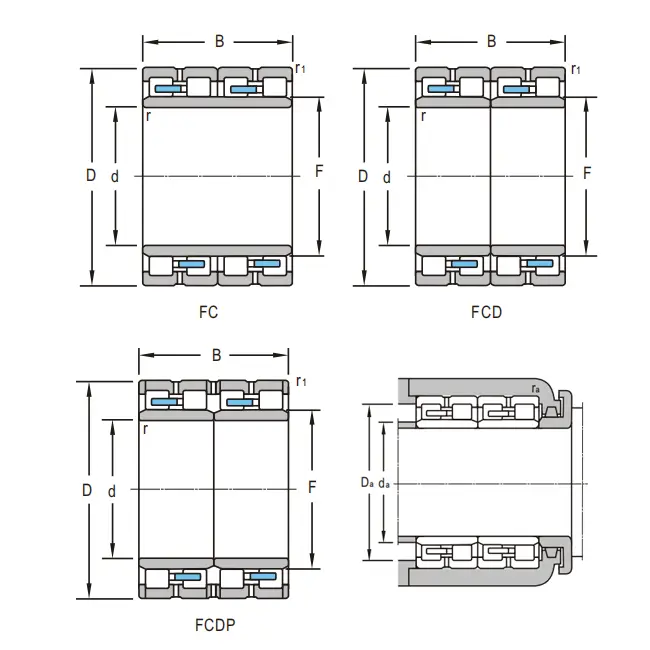
Rolling mill bearings are the most important parts of industrial equipment because they are made to handle the tough conditions in steel factories. These special parts allow rotational movement to happen smoothly even when under a lot of stress, and they keep the precise balance that is needed for good product quality.
Key Design Features and Materials
Modern rolling mill bearings are made from high-tech materials that are designed to last a very long time. High-quality steel alloys like GCr15, GCr15SiMn, and 20Cr2Ni4A are used for the inner rings, outer rings, and rollers. Each was chosen for its specific performance qualities. When something is used continuously, these materials are better at resisting wear, tiredness, and thermal stress.
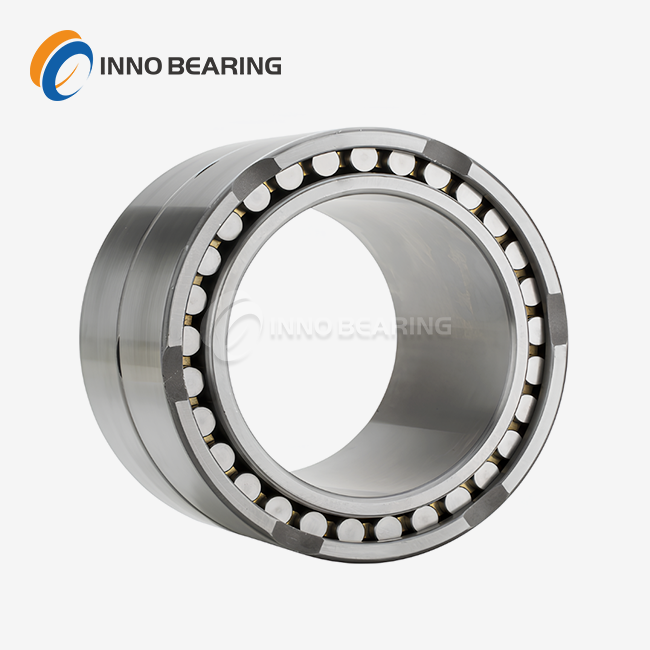
There are either four-row or two-row roller configurations in the structure design, which successfully spreads loads across multiple contact points. Integrally cast inner and outer rings get rid of any possible weak spots and give the structure its full strength. Metal labyrinth plugs keep iron chips and cooling water from getting into internal parts, which greatly increases their useful life.
Types and Working Principles
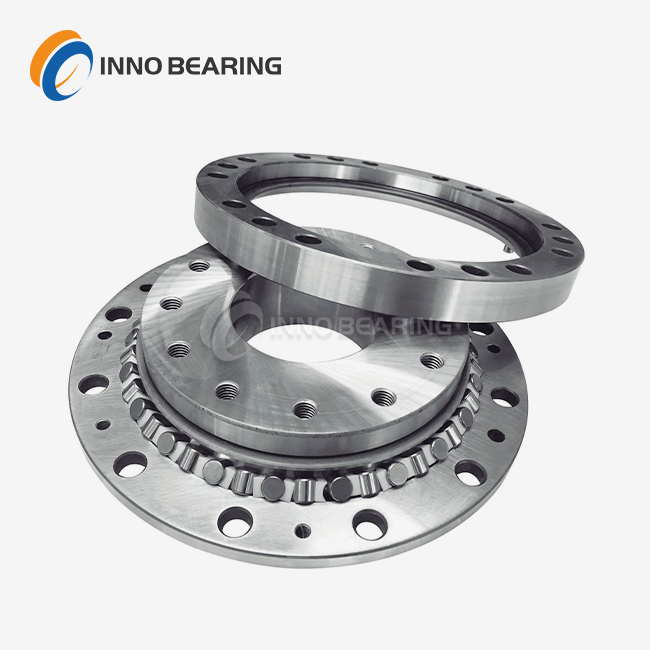
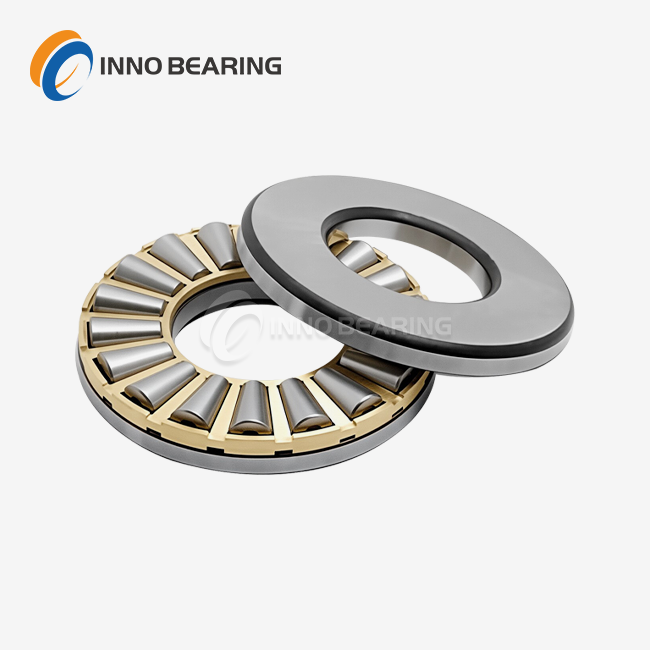
In rolling mill equipment, different types of bearings are used for different tasks. When linear load support is needed, angular contact bearings work best, while radial forces are better handled by Cylindrical roller bearings. The choice is based on practical needs, such as the direction of the load, the speed of rotation, and the environment.
These bearings distribute load by having carefully engineered contact surfaces that keep friction to a minimum while increasing load capacity. It works by using controlled rolling motion, which reduces wear compared to sliding friction. This lets the mill keep running even when it's under a lot of pressure while keeping the accuracy of the spinning that is needed for it to be efficient.
Common Problems in Rolling Mill Bearings and Their Causes
When bearings fail in rolling mills, they usually show certain signs that point to deeper problems that need instant attention. When repair teams know about these issues, they can take steps to fix them before they become major problems.
Primary Failure Modes
Wear is the most common type of failure, which usually happens because there isn't enough lubricant or contamination. When there is too much wear, the clearance rises, which causes vibration, noise, and eventually failure. Overheating happens when temperatures are higher than what was intended, breaking down materials and causing them to fail early.
Breakdown of lubrication has a big effect on the performance of rolling mill bearings, causing more friction, more heat, and faster wear. When iron chips or cold water get on bearing surfaces, they become abrasive and break down quickly.
Root Cause Analysis
When materials are loaded and unloaded over and over again in ways that are higher than what was intended, they wear out. When parts are overloaded, they are stressed beyond their designed limits. This makes tiny cracks that spread over time. Problems with misalignment cause uneven load distribution, which puts more stress on certain areas and shortens the life of the bearing as a whole.
When installations are done wrong, they often fail before they should. If you place the bearings incorrectly, set the preload too low, or get dirt on them during installation, they won't work properly from the start. These problems with installations show how important it is to follow the manufacturer's instructions and keep the work area clean.
Best Practices for Rolling Mill Bearing Maintenance
Maintenance plans that work well use organized methods for lubrication, inspection, and predictive monitoring to get the most out of bearing performance and dependability.
Advanced Lubrication Strategies
Proper lubrication is still essential for bearings to last a long time in rolling mills. High-temperature lubricants that are made to work in metallurgical settings are very important for keeping things from breaking down or oxidizing. Operating conditions, load factors, and ambient temperatures must all be taken into account when setting application periods.
With automated lubrication systems, the right amount of grease is always delivered, and mistakes are less likely to happen. These methods keep track of how much is being used and let you know when it's time to refill. Lubricant analysis tools find levels of contamination and signs of wear and tear, which lets you replace the lubricant before it causes damage to the bearings.
Modern Inspection and Monitoring Techniques
Vibration analysis uses frequency analysis and trend tracking to give early warning signs of bearing wear. Technicians can find deviations from established baseline readings that point to problems that are starting to form. Temperature tracking systems keep an eye on temperatures all the time and let operators know when they get too high.
Ultrasonic testing and oil analysis are examples of predictive maintenance technologies that find problems before they show any signs. With these tools, maintenance teams can plan changes for planned downtime instead of having to fix problems as they happen. Visual checks, measurements of clearance, and checks for seal integrity should all be part of regular inspection plans to make sure that everything is being watched over.
Choosing and Procuring the Right Rolling Mill Bearings
When choosing the right bearings, you need to carefully think about the application's operational factors, environmental conditions, and performance needs.
Critical Selection Criteria
The main selection factor is load capacity, which includes both static and dynamic load rates. Bearings need to be able to handle the highest working loads while still having enough safety margins to deal with shock loads and misalignment. In rolling mills, where temperature changes often, temperature tolerance is very important.
Material compatibility makes sure that rolling mill bearing parts can withstand chemical attacks from external contaminants and process fluids. Different uses have different requirements for dimensional accuracy. For example, cold rolling mills usually need higher levels of accuracy than hot rolling applications.
Market Overview and Procurement Considerations
Bearings from top brands like SKF, Timken, NSK, FAG, and others have been used successfully in rolling mills in the past. When it comes to design features, material needs, and technical help, each manufacturer has its own pros and cons.
It's important to think about both the initial cost and the total cost of ownership when planning your procurement strategies. The total cost of ownership includes things like the expected service life, the need for maintenance, and the support from the provider. This is because lead times are very important when planning maintenance chores or machine upgrades. There may be longer wait times for custom bearing choices, but they work best for some conditions.
INNO Bearing: Your Trusted Rolling Mill Bearing Partner
When it comes to making high-performance rolling mill bearings for tough metallurgical uses, Luoyang INNO Bearing Co., Ltd. has been doing this for almost 30 years. We have a lot of experience researching, developing, designing, and making big bearings with a diameter of up to ±5000mm.
Comprehensive Product Range and Capabilities
The construction of our rolling mill bearing Solutions makes them resistant to impact and can handle temperatures up to 200°C as well as strong rolling forces. For the four-row and double-row roller designs, premium GCr15, GCr15SiMn, and 20Cr2Ni4A materials are used to make rings that are integrally forged.
To meet the needs of a wide range of applications, the sizes that are available are 100–1500mm in diameter on the inside and 200–2000mm on the outside, with widths that range from 80–500mm. For standard uses, the precision class choices are P0 and P6, and for precision cold rolling mill systems, the accuracy is P5.
Quality Assurance and Technical Support
Advanced testing methods make sure that every bearing meets high quality standards by finding all flaws, checking for impact resistance, and checking the integrity of the seal. Because we are dedicated to metallurgical excellence, we can offer our customers dependable solutions that cut down on downtime and boost production.
Technical support services include advice from experts, help with maintenance, training programs, and getting extra parts. These wide range of services strengthen our position as a reliable partner in improving bearing performance throughout the entire span of an item of equipment.
Conclusion
Proper lubrication, regular inspection, and predictive monitoring methods are all part of rolling mill bearing maintenance that needs to be done in a planned way. Facilities can make equipment more reliable while reducing downtime by learning about bearing design principles, typical failure modes, and best maintenance practices. Choosing the right bearings for the job based on the load, the climate, and the level of accuracy needed guarantees the best results in tough metallurgical situations. When you work with experienced bearing manufacturers, you can get access to specialized knowledge and a wide range of support services that are important for long-term operational success.
FAQ
How often should rolling mill bearings be lubricated?
Lubrication frequency depends on operational conditions including temperature, load, and contamination levels. Heavy-duty applications typically require lubrication every 500-1000 operating hours, while extreme conditions may necessitate more frequent intervals. Automated lubrication systems provide optimal consistency.
What indicators suggest rolling mill bearing replacement is necessary?
Key replacement indicators include excessive vibration levels, temperature increases above normal ranges, visible wear or damage, increased noise levels, and lubricant contamination. Vibration analysis and temperature monitoring provide early warning signs before catastrophic failure occurs.
Are ceramic bearings suitable alternatives to steel bearings in rolling mills?
Ceramic bearings offer advantages in specific applications including superior corrosion resistance and reduced weight. However, steel bearings remain preferred for most rolling mill applications due to their superior load capacity, impact resistance, and cost-effectiveness under heavy-load conditions.
Partner with INNO Bearing for Superior Rolling Mill Solutions
INNO Bearing delivers comprehensive rolling mill bearing solutions backed by nearly 30 years of metallurgical expertise. Our specialized manufacturing capabilities produce custom bearings up to φ5000mm with rapid delivery and exceptional quality assurance. Contact our technical team at sales@inno-bearing.com to discuss your specific requirements and access our complete product catalog. As a trusted rolling mill bearing manufacturer, we provide tailored solutions that optimize performance while reducing total ownership costs for your critical applications.
References
American Society of Mechanical Engineers. "Rolling Mill Bearing Design Standards and Performance Criteria." ASME Industrial Standards Manual, 2023.
International Rolling Mill Association. "Maintenance Best Practices for Heavy-Duty Rolling Mill Equipment." Technical Publication Series, Volume 15, 2022.
Steel Technology Institute. "Advanced Materials and Lubrication Strategies for Metallurgical Bearing Applications." Research Report STI-2023-047.
National Institute of Standards and Technology. "Predictive Maintenance Technologies for Industrial Bearing Systems." Technical Documentation NIST-SP-1800-25.
Metallurgical Equipment Manufacturers Association. "Rolling Mill Bearing Selection and Procurement Guidelines." Industry Best Practices Manual, 2023 Edition.
American Iron and Steel Institute. "Bearing Failure Analysis and Prevention in Steel Production Facilities." Technical Bulletin AISI-TB-2023-12.

Learn about our latest products and discounts through SMS or email