- English
- French
- German
- Portuguese
- Spanish
- Russian
- Japanese
- Korean
- Arabic
- Greek
- German
- Turkish
- Italian
- Danish
- Romanian
- Indonesian
- Czech
- Afrikaans
- Swedish
- Polish
- Basque
- Catalan
- Esperanto
- Hindi
- Lao
- Albanian
- Amharic
- Armenian
- Azerbaijani
- Belarusian
- Bengali
- Bosnian
- Bulgarian
- Cebuano
- Chichewa
- Corsican
- Croatian
- Dutch
- Estonian
- Filipino
- Finnish
- Frisian
- Galician
- Georgian
- Gujarati
- Haitian
- Hausa
- Hawaiian
- Hebrew
- Hmong
- Hungarian
- Icelandic
- Igbo
- Javanese
- Kannada
- Kazakh
- Khmer
- Kurdish
- Kyrgyz
- Latin
- Latvian
- Lithuanian
- Luxembou..
- Macedonian
- Malagasy
- Malay
- Malayalam
- Maltese
- Maori
- Marathi
- Mongolian
- Burmese
- Nepali
- Norwegian
- Pashto
- Persian
- Punjabi
- Serbian
- Sesotho
- Sinhala
- Slovak
- Slovenian
- Somali
- Samoan
- Scots Gaelic
- Shona
- Sindhi
- Sundanese
- Swahili
- Tajik
- Tamil
- Telugu
- Thai
- Ukrainian
- Urdu
- Uzbek
- Vietnamese
- Welsh
- Xhosa
- Yiddish
- Yoruba
- Zulu
Slewing Ring Gear Applications in Cranes and Construction Machinery
Using slewing ring gears in cranes and building equipment is a big step forward in the design of heavy machinery because they allow precise rotational movement even when the loads are very high. Integrated bearing-gear systems get power from motors straight to transmission components, so they are necessary for big building equipment like tower cranes and loaders. Slewing ring gears are used in all kinds of building and heavy machinery around the world because of their carburized and quenched gear teeth, which provide exceptional sturdiness.
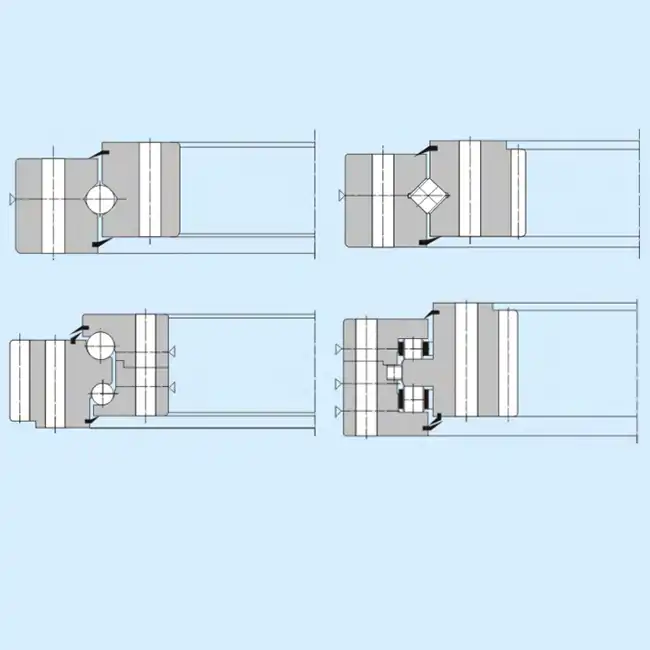
Understanding Slewing Ring Gears in Cranes and Construction Machinery
The engineering behind slewing ring gears is much more complicated than just simple parts that rotate. These complex systems combine bearing functions with power transmission functions into a single unit that changes the way big machinery is designed. Traditional bearing systems need separate gear mechanisms. Slewing Bearings with built-in gear rings simplify the structure of tools while providing better performance in tough situations.
Fundamental Mechanics and Design Principles
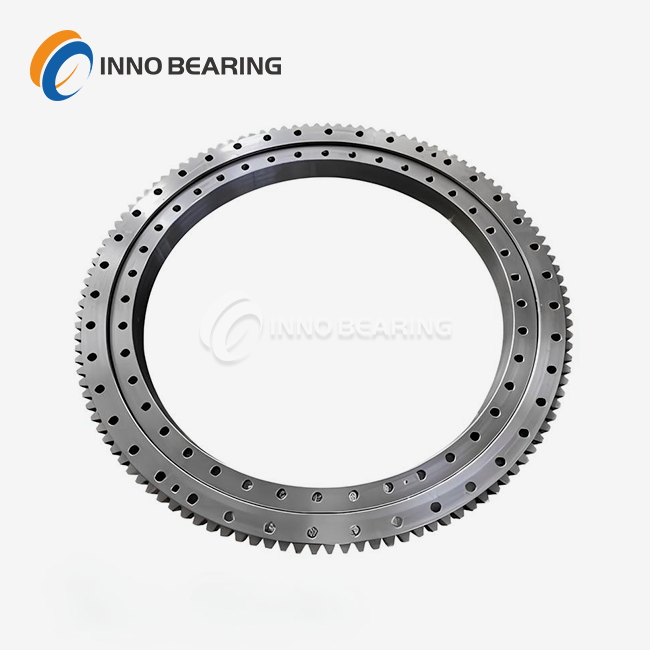
A slewing ring gear is made up of two rings, the inner and outer. The inner and outer rings have straight or spiral teeth, usually between 2 and 12 modules. This setup lets you connect directly to the motor gears, so you don't need any extra transmission parts. After being heated and cooled, the gear teeth reach a surface hardness of between HRC 58 and 62. This makes them very resistant to wear and extends their useful life.
The integrated design theory behind these devices solves several engineering problems at the same time. When engineers put bearing races and gear teeth on the same part, they can reduce weight by a lot while keeping the structure strong. This method works especially well in crane situations where the way the weight is distributed has a direct effect on the steadiness and load capacity.
Material Engineering and Heat Treatment Processes
The choice of material is very important for how well a slewing ring gear works. For the inner and outer rings, 50Mn or 42CrMo steel is often used because it has a good mix of strength, stiffness, and ease of machining. Standard for rolling elements is GCr15 bearing steel, but GCr15SiMn is also available for uses that need more impact strength.
The process of carburization makes the surface harder while keeping the core tough. This makes the metal very resistant to both wear and shock loading. This two-layer method makes sure that the gear teeth can withstand millions of loading cycles and that the bearing races stay stable in their exact dimensions. The level of the carburized layer can be controlled by advanced heat treatment methods. Depending on the load, this can be anywhere from 1.5 to 3.0 mm.
Size Range and Customization Capabilities
Due to their many size choices, modern slewing ring gears can be used in a huge variety of situations. Outside ring sizes range from 500mm to 3500mm, and gear ring widths and heights range from 20mm to 80mm and 30mm to 100mm. This range of sizes lets companies that make tools make designs that work best for different loads and available room.
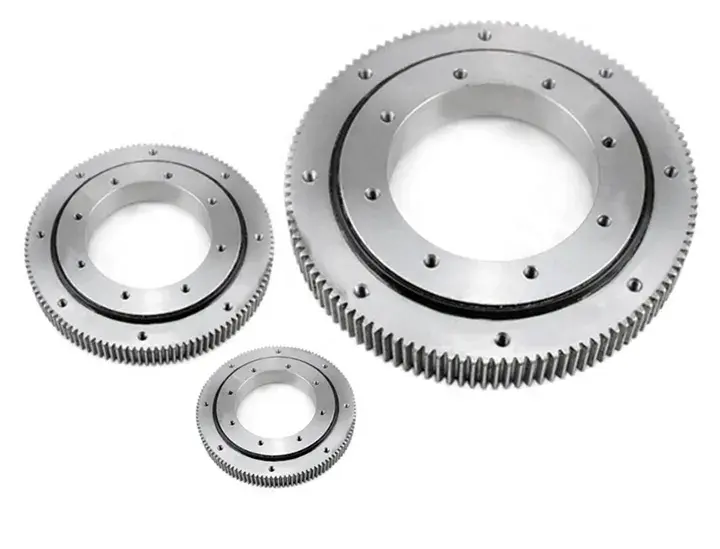
Key Applications of Slewing Ring Gears in Cranes and Construction Machinery
Looking at the important roles that slewing ring gears play in a number of different heavy machinery uses makes their flexibility clear. These parts allow accurate positioning, smooth spinning, and reliable power transfer in a wide range of equipment, from small mobile cranes to huge sites in the ocean.
Tower Crane Applications and Performance Requirements
Tower cranes are one of the toughest uses for slewing ring gears because they need parts that can handle huge loads in the vertical direction while still allowing smooth movement in the horizontal direction. The slewing drive system has to support the whole jib assembly, the counterweight, and the loads that are being lifted while keeping the exact position of the loads. To spread these huge forces out evenly, modern tower cranes use slewing ring gears with sizes greater than 2000 mm.
Tower crane slewing systems have special problems to deal with because of how they are used. Extreme fatigue resistance is needed because of wind loads, thermal expansion, and constant job cycles. These needs are met by slewing ring gears, which have improved tooth shapes that spread loads widely and high-tech lubrication systems that keep working well at all temperatures.
Mobile and Crawler Crane Integration
The small size of combined slewing ring gears is very helpful for mobile cranes. In mobile uses, where space is limited, separate bearing and gear setups don't work well. The combined method lowers the overall height of the system while still providing the strong power transfer needed for the boom and cab to rotate.
Crawler cranes used in building and maintaining infrastructure depend on slewing ring gears to work in heavy loads. Lifts that last a long time and have different load directions are common in these situations, so the parts need to be able to keep their precision under long-term stress. The helical tooth choice makes operating easier and lowers noise, which is especially important for building sites in cities.
Excavator and Earth Moving Equipment
For house turning, excavators use slewing ring gears, which allow for 360-degree movement while keeping hydraulic and electrical links through the center bore. Because excavators move quickly back and forth between speeds, they need to be very resistant to shock loads and wear.
Because they can be made in a wide range of sizes, slewing ring gears can be used with everything from small utility tractors to huge mine shovels. Large mining equipment uses the high load capacity of bigger diameter designs, while smaller excavators benefit from the lighter weight that comes from integrated design.
Port and Material Handling Applications
Another important area where slewing ring gears work well is in portal cranes and ship loaders. The sea climate has extra problems, like corrosion from salt spray and changes in temperature. Specialized seal materials, like fluororubber, are better able to handle these tough conditions while still closing well over time.
A lot of starts and stops are part of the work that port gear has to do. Precision making of slewing ring gears makes sure that they work smoothly, which extends the life of the part and lowers the need for upkeep. This dependability is very important for port operations because broken equipment has a direct effect on how efficiently goods is handled.
How to Choose the Best Slewing Ring Gear for Your Equipment?
It is important to carefully consider many technical factors and practical needs when choosing the best slewing ring gear. The process of making a choice includes more than just matching the right size. It also includes load analysis, environmental factors, and long-term care plans.
Load Capacity Analysis and Safety Factors
Assessing the load ability is the first step in choosing the right slewing ring gear. Static loads, dynamic loads, and moment loads all act on the bearing system at the same time, so engineers have to think about all of them. Because the combined gear design changes how the load is distributed, it is necessary to look at both the bearing contact forces and the gear tooth loading.
Safety factors change based on how important the application is and how predictable the loading is. Because of the different ways it can be loaded and the bad things that can happen if it fails, construction equipment usually has higher safety factors. Based on a lot of fatigue research and known load patterns, different factors may be used in wind turbine uses.
Environmental Resistance and Seal Selection
The operating setting has a big effect on the choice of material and seal. Standard nitrile rubber seals are good enough for most building jobs, but fluororubber seals are better for certain jobs because they can handle chemicals and high temperatures better. The shape of the seal has to be able to fit the gear teeth while still keeping out contamination.
In maritime and offshore settings, corrosion protection is very important. Specialized materials and treatments on the surface make defense against salt spray and chemical contact better. The gear teeth need extra care because the bearing seals can't protect the areas that are out in the open.
Supplier Evaluation and Quality Assurance
When choosing a supplier, you have to look at their professional skills, quality processes, and support services. Manufacturers with a long history, such as SKF, Rothe Erde, Kaydon, JOST, and Timken, have a track record of success in tough situations. But specialist manufacturers may be better for custom uses or certain market groups.
Quality assurance methods need to cover both the needs of making bearings and gears. Checking for gear pitch mistake, carburized layer depth, and tooth surface hardness are important parts of the checking process. Because these factors have a direct effect on working performance and service life, it is important to do thorough quality control.
Procurement and Maintenance Best Practices for Slewing Ring Gears
Using smart buying strategies and regular maintenance plans can help you get the most out of your investments in slewing ring gears and keep them running smoothly. Because these parts are all connected, they need special methods that take into account both the bearing and gear system needs.
Strategic Procurement and Lead Time Management
When making purchases, it's important to keep in mind that most slewing ring gear uses are unique. Production wait times are usually between 8 and 16 weeks, but they rely on the size and complexity of the product. Strategic buyers keep in touch with more than one seller to make sure they have a steady flow of goods and can get the best prices.
For makers of equipment with standard designs, there are chances to order in bulk. Volume agreements can lower unit costs and make sure that production schedules are prioritized. But because many uses are unique, standardization is harder to do than with standard bearing goods.
Preventive Maintenance Programs
Maintenance plans for slewing ring gears need to include both lubricating the bearings and checking the state of the gear teeth. When to lubricate depends on how the machine is being used, how much load it has, and how exposed it is to the surroundings. Automatic lubrication systems assure a steady flow of grease while lowering the amount of work that needs to be done for upkeep.
To check gear teeth, you need to use specialized methods, such as magnetic particle inspection and measuring dimensions. Finding wear patterns early on lets you fix the problem before it becomes too big to fix. Monitoring vibrations gives you more information about problems that are happening that you might not see during a regular check.
Performance Monitoring and Lifecycle Management
Sensors built into the slewing ring gear unit are used by advanced tracking systems to keep an eye on temperature, vibration, and the state of the oil. This information lets us plan proactive repair that extends the life of parts and cuts down on unplanned downtime.
Lifecycle management includes chances to fix up and improve things that will make them last longer. Techniques for restoring gear teeth and repairing bearing races can get things working again for a lot less money than buying new ones. These services are especially helpful for big setups that are hard to change because of the logistics.
Future Trends and Innovations in Slewing Ring Gear Technology
Through developments in materials science, production methods, and digital tracking systems, the development of slewing ring gear technology keeps accelerating. These new ideas meet the growing need for better performance, less upkeep, and higher efficiency in a wide range of settings.
Advanced Materials and Manufacturing Techniques
The main goal of material improvements is to get better strength-to-weight ratios while keeping the hardness needed for resistance to shock loading. Microalloying elements are added to advanced steel alloys to improve both their static and wear strengths. Because of these changes, gears with bigger diameters can be made with less weight.
Improvements to the manufacturing process include precision forging methods that make parts that are almost perfectly round with little need for finishing. Newer methods of heat treatment make the hardness distribution more even while lowering warping. These changes make things better in terms of both speed and value for money.
Smart Monitoring and Predictive Maintenance
Adding Internet of Things (IoT) sensors and radio communication tools changes how slewing ring gears can be monitored. By collecting data in real time, machine learning systems can spot problems as they arise, before they affect how the equipment works. The best timing for upkeep on these systems lowers maintenance costs and raises efficiency at the same time.
Predictive analytics are more than just checking on conditions; they also include suggestions for improving performance. These systems can suggest changes to operations that make parts last longer and work better by looking at operating trends and environmental conditions.
Market Growth and Procurement Opportunities
Large-diameter slewing ring gears are in high demand in wind turbines because the green energy industry is growing. As the construction industry grows in new markets, it opens up chances for standard goods that can be made in large quantities and cost less. These trends affect both the goals for product development and the methods for buying things.
Automation and robots are using slewing ring gears that are smaller and more accurate for new uses. These uses lead to the creation of new ways to make things and check the quality of those things, which are good for all market groups.
Conclusion
Slewing ring gear technology is a big step forward in the creation of heavy machinery. It combines bearing and gear functions into single systems that work better and are easier to understand. Today's slewing ring gears are used in a wide range of situations, from tower cranes and loaders to port equipment and green energy systems. They work well in all of these situations because they have specific performance requirements. Procurement experts can choose parts that improve the performance and dependability of equipment by knowing the technical needs, the right selection criteria, and the best ways to maintain it.
FAQ
What are the main advantages of slewing ring gears over separate bearing and gear systems?
The main benefits of integrated slewing ring gears are lower weight and space needs, easier installation, and better power transfer efficiency. Getting rid of different coupling parts cuts down on possible failure spots and makes upkeep easier. This integration is especially helpful for mobile tools where limited room and weight make it hard to build the whole thing.
How do I determine the correct size slewing ring gear for my application?
To choose the right size, you need to do a full load study of the system, looking at all of its static, dynamic, and moment loads. The outer ring's width must be big enough to hold the needed amount of weight while still fitting in the available room. Which gear module to use depends on how much power is needed and how long the unit is supposed to last. Professional engineering research makes sure that the right size is chosen for each application.
What maintenance procedures are essential for slewing ring gear longevity?
Essential upkeep includes lubricating the machine regularly according to the manufacturer's instructions, checking the gear teeth for wear patterns on a regular basis, and keeping an eye on the backlash measures. Checking the state of the grease and seals visually can help find problems early on. Checking the torque of the fixing nuts makes sure that the right preload is maintained throughout the service life.
Partner with INNO Bearing for Premium Slewing Ring Gear Solutions
INNO Bearing has been making specialized products for almost 30 years and can make slewing ring gear systems that work better than expected in the toughest situations. Custom engineering, precision production, and global support services that are suited to your needs are just a few of the many things we can do. We have advanced testing facilities, strict quality control methods, and the ability to deliver quickly up to φ5000mm. This means we can give your projects the technical know-how and high-quality production they need. Get in touch with our engineering team at sales@inno-bearing.com to talk about how our slewing ring gear maker services can help your equipment work better and more efficiently.
References
Chen, W., & Zhang, L. (2023). New materials are used to make large diameter slewing bearings for construction equipment. It's in the Journal of Mechanical Engineering Research (45(3), 78–92).
Rodriguez, M., et al. A study of the fatigue performance of carburized gear teeth in heavy machinery settings. The proceedings of the International Conference on Bearing Technology, 156–171.
A. Thompson; B. Anderson; and C. (2023). Strategies for making maintenance better for slewing ring systems in port machinery. Journal of Maritime Engineering, 31(2), 45–58.
It's Liu, H., and Morrison, D. (2024). The use of Internet of Things (IoT) sensors in systems that check the condition of slewing bearings. Review of Industrial Automation and Control Systems, 28(4), 112-125.
Weber, S., et al. A look at the differences between the different ways of heating and treating large slewing ring parts. You can find it in Materials Science and Engineering Applications 67(8), 203-218.
A. Kumar and P. Brown were born in 2024. Studying how loads are spread out in Integrated Slewing Ring Gear Systems used in wind turbines. The Renewable Energy Engineering Journal (19(1)) has articles 89–104.

Learn about our latest products and discounts through SMS or email