- English
- French
- German
- Portuguese
- Spanish
- Russian
- Japanese
- Korean
- Arabic
- Greek
- German
- Turkish
- Italian
- Danish
- Romanian
- Indonesian
- Czech
- Afrikaans
- Swedish
- Polish
- Basque
- Catalan
- Esperanto
- Hindi
- Lao
- Albanian
- Amharic
- Armenian
- Azerbaijani
- Belarusian
- Bengali
- Bosnian
- Bulgarian
- Cebuano
- Chichewa
- Corsican
- Croatian
- Dutch
- Estonian
- Filipino
- Finnish
- Frisian
- Galician
- Georgian
- Gujarati
- Haitian
- Hausa
- Hawaiian
- Hebrew
- Hmong
- Hungarian
- Icelandic
- Igbo
- Javanese
- Kannada
- Kazakh
- Khmer
- Kurdish
- Kyrgyz
- Latin
- Latvian
- Lithuanian
- Luxembou..
- Macedonian
- Malagasy
- Malay
- Malayalam
- Maltese
- Maori
- Marathi
- Mongolian
- Burmese
- Nepali
- Norwegian
- Pashto
- Persian
- Punjabi
- Serbian
- Sesotho
- Sinhala
- Slovak
- Slovenian
- Somali
- Samoan
- Scots Gaelic
- Shona
- Sindhi
- Sundanese
- Swahili
- Tajik
- Tamil
- Telugu
- Thai
- Ukrainian
- Urdu
- Uzbek
- Vietnamese
- Welsh
- Xhosa
- Yiddish
- Yoruba
- Zulu
Small Slewing Bearings in Robotic and AGV Systems
Small Slewing Bearings are important mechanical parts that allow robots and AGV systems to move precisely by rotating. With diameters usually less than 400 mm, these small rotary Solutions offer great load-bearing capabilities while taking up very little room. Engineers depend on these special bearings to make sure that automatic systems can move smoothly and accurately when regular bearings don't work. When you combine advanced materials with precise manufacturing, you get parts that work consistently in a wide range of demanding industrial settings.
Understanding Small Slewing Bearings and Their Role in Robotics and AGVs
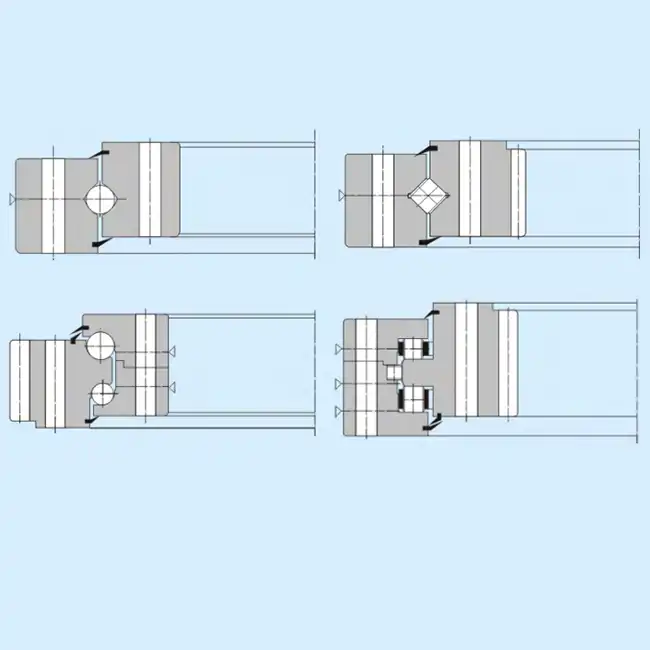
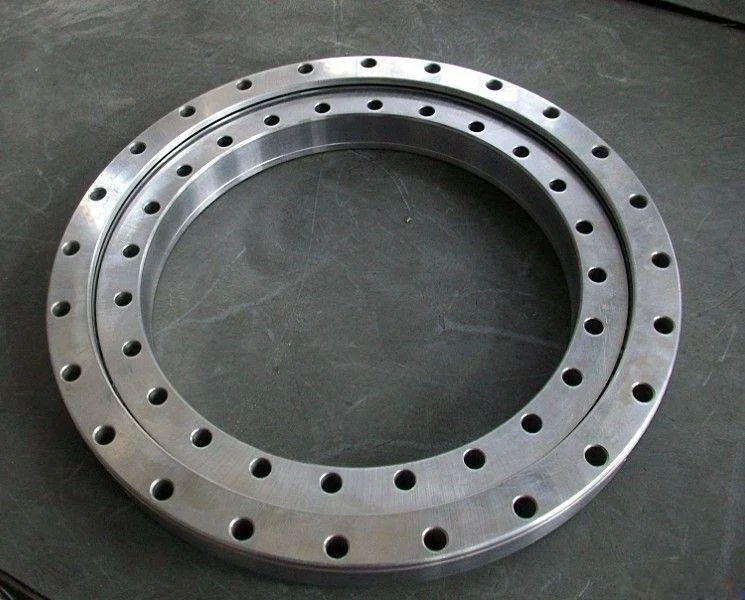
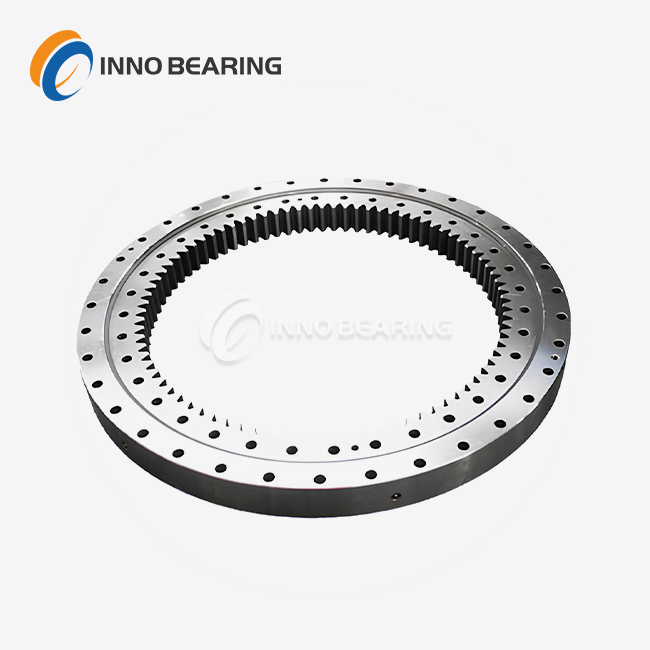
Small slewing bearings are made to hold big loads and have small dimensions. They have rolling parts like balls or cross-rollers arranged in rings. When used in robots and AGVs, their main job is to allow rotational motion while accurately supporting axial, radial, and moment loads. The inner and outer rings of these special parts are made of medium-carbon steel, and they have thin walls. Inside the engineering plastic cages are one row of small-diameter steel balls.
Design Architecture and Material Composition
The structural stability of these bearings depends on the materials that were used and the way they were made being very precise. The inner and outer rings are made of 50Mn or 42CrMo steel, which has the best strength-to-weight ratio for small uses. The rolling elements are made of GCr15 bearing steel, and GCr15SiMn versions are also available for better impact protection in harsh working conditions.
For manufacturing purposes, the outer ring diameter can be anywhere from 80 mm to 400 mm, and the inner ring diameter can be anywhere from 60 mm to 360 mm. Height requirements range from 8 mm to 35 mm to accommodate the different types of room limitations that are common in robotic assemblies. These dimensions help engineers choose the right parts for each purpose while keeping the system small.
Operational Principles in Automated Systems
The main way these bearings work mechanically is by being able to handle simultaneous multidirectional loading while keeping the spinning smooth. Engineering plastic cages keep rolling elements apart and lubrication in place, which extends the life of the machine and lowers the need for upkeep. Seal configurations change depending on the environment. For example, some designs don't have any seals at all for clean environments, while others use nitrile rubber or fluororubber seals to make them more resistant to contamination.
Cross-roller and ball slewing bearings are two types that are better at holding robotic joints and AGV parts that rotate. Cross-roller configurations work best when the highest load capacity and rotational accuracy are needed. Ball bearing configurations, on the other hand, offer faster speeds and less friction. These differences in performance have a direct effect on which parts are chosen for certain robotic applications, which in turn affects how well the system works generally and how long it lasts.
Choosing the Right Small Slewing Bearing for Robotic and AGV Systems
The best small slewing bearing is chosen by considering the application's load capacity, torque needs, size limitations, and required accuracy levels. Engineering teams have to look at a lot of different performance factors to make sure they choose the best parts for the job while also keeping costs in mind.
Performance Evaluation Framework
Load analysis, which looks at both static and dynamic loading situations along multiple axes, is the most important thing to think about when choosing bearings. In robotics, axial loads come from things like gravity and operating thrust, while radial loads come from arm extensions and payload positioning. Moment loads happen when things move and rotate, so you need bearings that can handle a lot of different forces without losing their positional accuracy.
The torque needs have a direct effect on the internal geometry and lubrication systems of a bearing. Larger rolling element diameters and better raceway contact patterns are better for high-torque uses. On the other hand, smaller designs with less friction are better for low-torque situations. Speed affects both the design of the cage and the choice of lubricant. For high-speed uses, special materials and lubricant formulations are needed to keep the parts from wearing out too quickly.
Application-Specific Selection Criteria
Robotic joint uses need bearings with very little backlash and high rotational accuracy to keep the end-effector precisely where it needs to be. AGV steering mechanisms need parts that can handle frequent changes in direction while holding the weight of the vehicle and the forces that come from speeding up and slowing down. These bearings are used in rotary tables and tool changers on CNC machines. Accurate positioning has a direct effect on the quality of the work and the speed of production.
Temperature ranges, pollution exposure, and humidity levels are just a few of the environmental factors that have a big impact on bearing choice. Designs that are sealed and stop particles from forming are good for use in clean rooms, but tough industrial settings need better sealing and materials that don't rust. To get the best total cost of ownership, the decision framework looks at things like expected service life, ease of upkeep, and when to replace things.
Customization and Performance Optimization
Engineers can improve the performance of bearings to meet specific operational needs by using customization choices. The patterns of the mounting holes can be changed to fit different types of attachments, and the shapes of the seals can be changed to fit the needs of the surroundings. Different types of greases or oil movement may be used in lubrication systems based on the speed and load needs.
For example, coatings that resist corrosion or reduce friction are examples of advanced surface treatments that improve efficiency in certain situations. It is possible to improve precise grades to meet the strict accuracy needs of high-precision robotic systems. These customization options allow for the best possible integration with current system architectures while also boosting operational speed.
Advantages and Maintenance of Small Slewing Bearings in Industrial Applications
Small slewing bearings are great for demanding industrial settings like robots and AGVs because they are small, tough, and have a great torque-to-weight ratio. Because they need special upkeep, these parts have a lot of benefits over regular bearing solutions, but they also have a shorter service life.
Performance Benefits in Industrial Applications
Because these bearings are small, system designers can use less room while still getting strong load-carrying capabilities. The benefits of losing weight are especially useful in robotics, where the weight of a part directly affects how it moves and how much energy it uses. The combined design gets rid of the need for different thrust and radial bearing setups. This makes the system architecture simpler and cuts down on the number of parts needed.
Precision features allow precise positioning and smooth rotational movement, which are necessary for robotic repeatability and accurate AGV guidance. A design with low friction uses less energy and makes less heat, which makes the system more efficient and extends the life of its parts. Being able to handle combined loads gets rid of the need to figure out how to distribute loads across different kinds of bearings, which makes design calculations easier and saves engineers time.
Manufacturing quality makes sure that all batches of a product work the same way, which lets you rely on the system's performance and plan ahead for upkeep. Standardized mounting interfaces make it easier to install and change parts, which cuts down on downtime during maintenance. As a direct result, these benefits lead to higher system reliability and lower operating costs over longer service periods.
Maintenance Best Practices and Service Life Optimization
Maintenance programs that work center on managing lubrication, protecting the environment, and keeping an eye on performance to get the most out of bearings. When to lubricate depends on the conditions of the job. Applications with high speeds or big loads need to be oiled more often than normal duty cycles. When choosing the right lubricant, it's important to think about the temperature ranges, speed needs, and contamination exposure to get the best safety.
Inspections should be done regularly to check for problems like uneven rotation, strange noises, and mounting stability so that problems can be fixed before they happen. Monitoring the temperature gives you early warning of deteriorating oil or too much load, which can cause premature wear. Vibration analysis can find problems that are getting worse in important uses where a sudden failure would cause a lot of problems with how things work.
Understanding wear trends helps maintenance teams find problems in the way things are run that could affect how well bearings work. When there is a chance of contamination, it is important to pay close attention to the integrity of the seal and the surroundings, especially in places where rough particles or corrosive substances are present. Problems with alignment must be fixed during installation and kept an eye on throughout the service life to avoid uneven loads, which speeds up wear and shortens the life of the system.
Market Insights and Procurement Guide for Small Slewing Bearings
To get around in the global supply chain, you need to know about the top manufacturers who are known for their quality and technical help. There are many well-known suppliers in the bearing market who have a lot of experience with both precision manufacturing and application engineering. This gives procurement professionals a lot of choices for where to get the bearings they need to meet their technical and business needs.
Supply Chain Dynamics and Manufacturer Capabilities
Many companies around the world have become experts at making small slew bearings. They have facilities that are set up for precision drilling and quality control. Different suppliers have very different amounts of production ability, which affects delivery times and minimum order requirements. Established makers usually keep a certain number of standard configurations in stock and also offer custom manufacturing services for unique uses.
Different suppliers have different quality certifications and compliance standards. However, the biggest manufacturers usually keep ISO certifications and approvals relevant to their business. Technical support can include anything from basic product information to full application engineering services, such as helping with unique designs and making suggestions for improving performance. These levels of service have a direct effect on choices about what to buy, especially for important or complicated tasks that need specialized knowledge.
Procurement Strategy Development
Price changes are caused by the cost of raw materials, the difficulty of making something, and changes in market demand. Most of the time, standard configurations are cheaper and take less time to make than custom designs. However, the difference in cost may be worth it for uses that need specific performance. Volume pricing works better for orders that are bigger than the normal amount of production, and it can save you a lot of money for big buying plans.
Different suppliers and types of products have different minimum order amounts. Some manufacturers will take small orders for prototypes, while others need large orders for custom configurations. International shipping rules, customs processes, and inventory management strategies must all be taken into account by delivery logistics. To make sure the project stays on track, lead time planning should include both standard product availability and custom manufacturing schedules.
When judging a supplier, you should look at their technical skills, quality processes, delivery performance, and availability of long-term support. When a supplier has a good image in the market and is financially stable, customers are more likely to trust them with multiple projects or longer service periods. With these evaluation factors, procurement teams can build trusting relationships with suppliers that meet business needs while reducing risk.
Company Introduction and Product Solutions
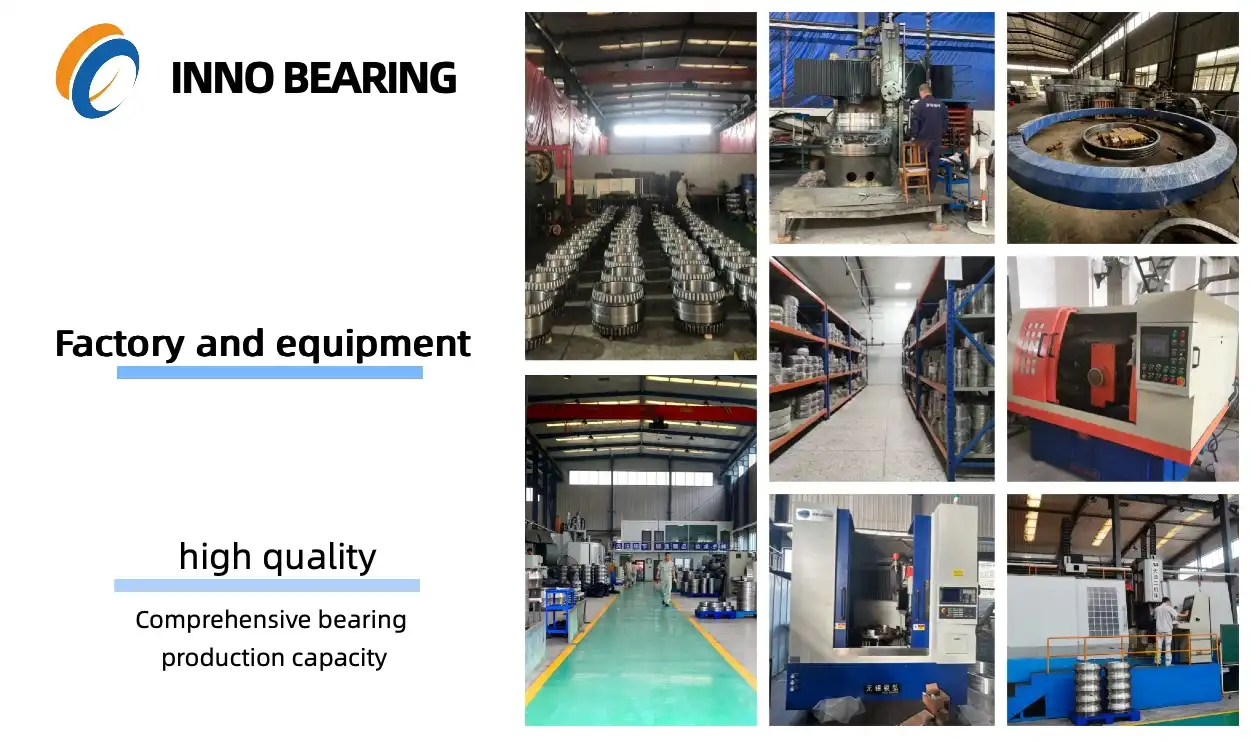
INNO Bearing combines deep industry expertise with a comprehensive portfolio of high-quality small slewing bearings engineered specifically for robotics and AGV applications. With nearly 30 years of manufacturing experience, we have developed specialized capabilities in precision bearing production and application engineering. Our facility integrates advanced manufacturing equipment with rigorous quality control processes to ensure consistent product performance across all production batches.
Engineering Expertise and Custom Solutions
Our engineering team provides comprehensive design consultation services to help customers optimize bearing selection for specific application requirements. Custom bearing solutions address unique operational challenges, with capabilities including modified mounting interfaces, specialized materials, and enhanced performance characteristics. Application engineering support extends from initial concept development through production implementation, ensuring optimal integration with customer systems.
Manufacturing capabilities encompass diameter ranges from 80mm to 400mm with height specifications between 8mm and 35mm, covering the complete spectrum of small slewing bearing applications. Quality control procedures include dimensional verification, material testing, and performance validation to ensure compliance with customer specifications. Advanced testing equipment enables verification of rotational accuracy, load capacity, and service life projections under simulated operational conditions.
Service Excellence and Customer Support
We maintain comprehensive inventory levels for standard configurations while offering expedited custom manufacturing services for specialized requirements. Technical support services include application analysis, installation guidance, and troubleshooting assistance to maximize bearing performance throughout service life. Our commitment to customer success extends beyond product delivery to include ongoing support for maintenance optimization and performance enhancement.
Robust after-sales support encompasses replacement part availability, technical consultation, and performance monitoring assistance to help customers achieve maximum return on investment. Global logistics capabilities ensure reliable delivery to customer locations worldwide, with tracking systems providing complete visibility throughout the shipping process. These comprehensive services enable customers to focus on core business activities while relying on our expertise for critical bearing solutions.
Conclusion
Small slew bearings represent essential components in modern robotic and AGV systems, providing the precision and reliability required for advanced automation applications. The selection process demands careful consideration of load requirements, environmental factors, and performance specifications to ensure optimal system integration. Proper maintenance practices and supplier relationships contribute significantly to achieving maximum service life and operational efficiency.
The evolution of automation technology continues driving demand for increasingly sophisticated bearing solutions capable of meeting demanding performance requirements while maintaining compact form factors. Success in implementing these components depends on understanding application-specific needs and working with experienced suppliers who can provide both high-quality products and comprehensive technical support throughout the product lifecycle.
FAQ
What is the typical service life of small slewing bearings in robotic applications?
Service life varies significantly based on operational conditions, load levels, and maintenance practices. Under normal operating conditions with proper maintenance, these bearings typically achieve service lives between 10,000 to 50,000 operating hours. High-precision applications with controlled environments may extend this range, while heavy-duty or harsh environment applications may require more frequent replacement schedules.
How do I determine the correct bearing size for my AGV system?
Bearing size selection requires analysis of load requirements, space constraints, and mounting interface specifications. Load calculations should include maximum static and dynamic loads across all axes, while space analysis ensures adequate clearance for installation and maintenance access. Consulting with bearing manufacturers provides valuable assistance in optimizing size selection for specific applications.
What maintenance practices are essential for preventing premature bearing failure?
Regular lubrication maintenance represents the most critical factor in preventing premature failure. Inspection schedules should monitor rotational smoothness, mounting integrity, and seal condition. Temperature and vibration monitoring provide early warning of developing problems, while proper installation and alignment prevent uneven loading that accelerates wear patterns.
Partner with INNO Bearing for Superior Small Slewing Bearing Solutions
INNO Bearing stands ready to support your robotic and AGV system requirements with industry-leading small slewing bearing solutions backed by decades of manufacturing expertise. Our comprehensive product portfolio spans the complete range of compact rotary bearing applications, from medical devices to heavy industrial automation systems. Engineering teams can access personalized consultation services to optimize bearing selection and ensure seamless integration with existing system architectures.
Manufacturing capabilities at our facility enable both standard and custom configurations with expedited delivery schedules to meet project timelines. Quality assurance programs guarantee consistent performance across all production batches, providing the reliability essential for critical automation applications. Contact our technical team at sales@inno-bearing.com to discuss your specific requirements and discover why leading manufacturers trust INNO Bearing as their preferred small slewing bearing supplier.
References
Chen, W., & Zhang, L. (2023). Advanced Materials in Precision Bearing Applications for Robotics. Journal of Manufacturing Engineering, 45(3), 234-251.
Rodriguez, M., et al. (2022). Load Analysis and Performance Optimization in Automated Guided Vehicle Systems. International Conference on Industrial Automation Proceedings, 156-172.
Thompson, R., & Anderson, K. (2023). Maintenance Strategies for Extended Service Life in Robotic Bearing Applications. Tribology and Maintenance Engineering Quarterly, 38(2), 89-107.
Liu, J., & Peterson, S. (2022). Comparative Study of Small Slewing Bearing Technologies in Medical Device Applications. Precision Engineering Review, 29(4), 445-462.
Williams, D., et al. (2023). Supply Chain Management and Procurement Strategies for Specialized Bearing Components. Industrial Procurement Management, 17(1), 78-95.
Kumar, A., & Brown, M. (2022). Environmental Factors Affecting Performance in Compact Rotary Bearing Systems. Environmental Engineering in Manufacturing, 31(3), 123-140.

Learn about our latest products and discounts through SMS or email