- English
- French
- German
- Portuguese
- Spanish
- Russian
- Japanese
- Korean
- Arabic
- Greek
- German
- Turkish
- Italian
- Danish
- Romanian
- Indonesian
- Czech
- Afrikaans
- Swedish
- Polish
- Basque
- Catalan
- Esperanto
- Hindi
- Lao
- Albanian
- Amharic
- Armenian
- Azerbaijani
- Belarusian
- Bengali
- Bosnian
- Bulgarian
- Cebuano
- Chichewa
- Corsican
- Croatian
- Dutch
- Estonian
- Filipino
- Finnish
- Frisian
- Galician
- Georgian
- Gujarati
- Haitian
- Hausa
- Hawaiian
- Hebrew
- Hmong
- Hungarian
- Icelandic
- Igbo
- Javanese
- Kannada
- Kazakh
- Khmer
- Kurdish
- Kyrgyz
- Latin
- Latvian
- Lithuanian
- Luxembou..
- Macedonian
- Malagasy
- Malay
- Malayalam
- Maltese
- Maori
- Marathi
- Mongolian
- Burmese
- Nepali
- Norwegian
- Pashto
- Persian
- Punjabi
- Serbian
- Sesotho
- Sinhala
- Slovak
- Slovenian
- Somali
- Samoan
- Scots Gaelic
- Shona
- Sindhi
- Sundanese
- Swahili
- Tajik
- Tamil
- Telugu
- Thai
- Ukrainian
- Urdu
- Uzbek
- Vietnamese
- Welsh
- Xhosa
- Yiddish
- Yoruba
- Zulu
Spherical Roller Bearing vs Cylindrical Roller Bearing
Understanding the main differences between spherical roller bearing and cylindrical roller bearing technologies is important for successfully purchasing the right bearing option for commercial use. When shaft misalignment and heavy radial loads are common in self-aligning applications, Spherical roller bearings work best. Cylindrical roller bearings, on the other hand, work best in high-speed, precise applications that need little movement. Both kinds of bearings are used for different tasks, and picking the best one has a direct effect on the dependability of equipment, the cost of maintenance, and the general efficiency of production across many industries.
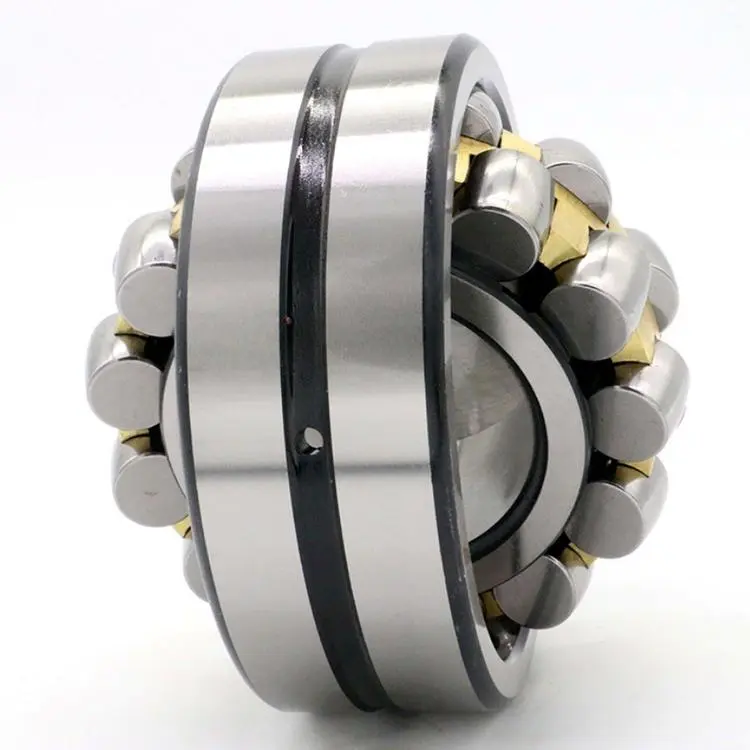
Understanding Spherical Roller Bearings and Cylindrical Roller Bearings
The basic building blocks of these two bearing systems show how they work and what kinds of uses they are best for. By understanding these main differences, buying teams can make smart choices that meet the needs of specific machines.
Self-Aligning Design Characteristics
Spherical roller bearings have a special double-row spherical roller structure. The inner ring has a circular track, and the outer ring has two rows of ribs. This new design has stamped steel or brass bars and double-row rollers that can be used in either an open or closed arrangement. Because the raceways are spherical, these bearings can handle rotational errors of up to two to three degrees. This makes them perfect for situations where perfect shaft alignment is not possible.
Spherical roller bearings come in sizes ranging from 20 mm on the inside to 1000 mm on the outside, 47 mm to 2000 mm on the width, and 16 mm to 300 mm on the thickness. Modern ways of making things let you make shapes that are unique and reach up to φ5000mm for specific uses. The inner rings, outer rings, and wheels of these bearings are made of GCr15 bearing steel. Heavy-load types use 42CrMo material to make them last longer.
Precision-Oriented Cylindrical Design
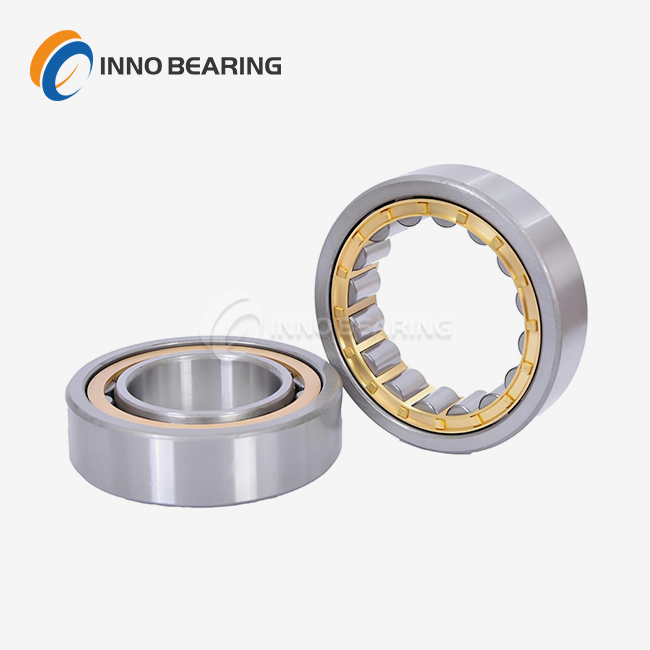
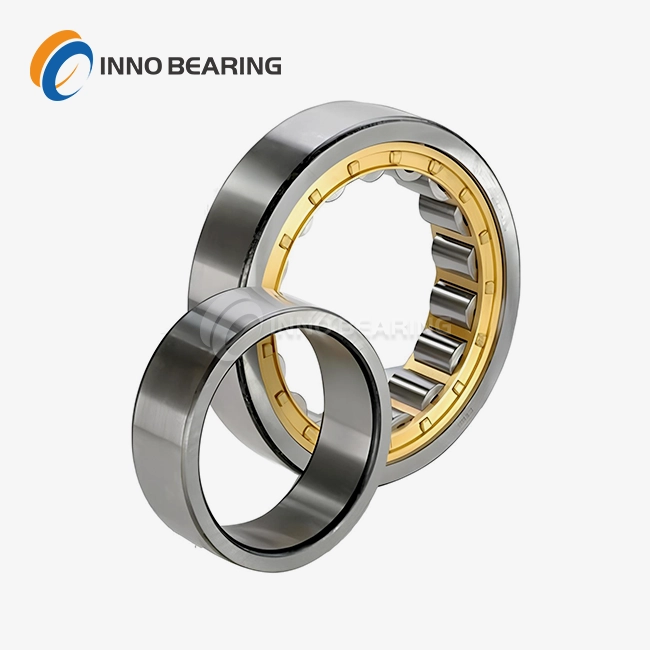
Because they have straight rollers, cylindrical roller bearings put precise and high-speed efficiency first. The cylinder-shaped rollers spread the weight evenly along their whole length, which gives them a high rotational load capacity while keeping their shape. When exact shaft positioning and little radial play are needed, these bearings work great.
Cylindrical roller bearings are rigid, so they can't fix errors very well. However, they work better in high-speed situations where accuracy is very important. Their design usually includes inner or outer rings that can be taken off, which makes installation and upkeep easier in complicated machinery setups.
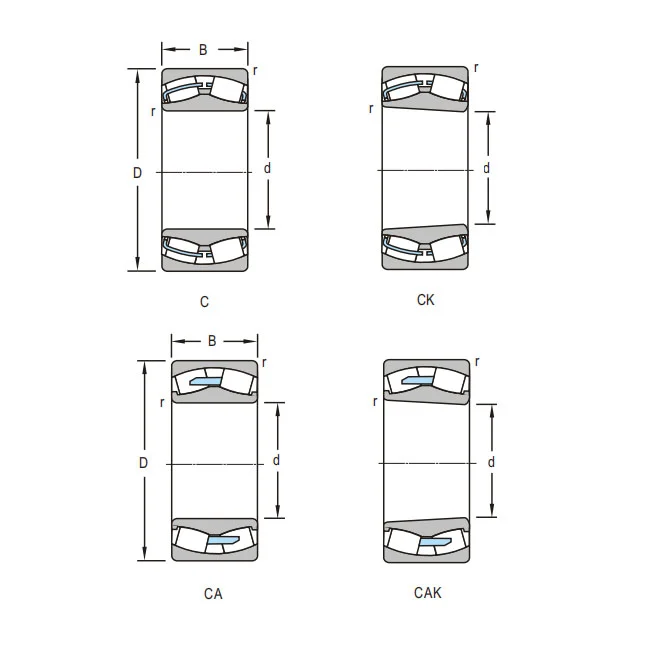
Technical Comparison: Key Performance and Design Features
When you look at the technical details of both kinds of bearings, you can see how they work and what benefits they have in different industrial settings.
Load Capacity and Misalignment Tolerance
The technical performance factors show that these bearing systems are very different from one another. Spherical roller bearings can handle radial loads of up to 2,000kN, mild axial loads, and shafts that aren't lined up correctly. Their ability to self-align makes up for differences in installation and temperature growth that happen during use.
With heat-treated cages, spherical roller bearings can operate in temperatures ranging from -20°C to +150°C, making them ideal for tough industrial settings. For normal uses, the precision grades come in P0 and P6 levels. For more important uses that need higher accuracy, the precision grades come in P4 and P5 levels.
Because they are rigid and have tight limits, cylindrical roller bearings work well in high-speed situations. They can hold more horizontal load per unit width than spherical forms, but they need to be carefully lined up when they are installed. Because they have less internal friction, they are perfect for uses that want to save energy and make as little heat as possible.
Durability and Maintenance Considerations
How long a bearing lasts and how often it needs to be maintained are both affected by the material makeup. Spherical roller bearings are made of high-purity steel that is more than 98% dense and have coatings that keep them from rusting in tough settings. The inner tapered hole choice, which has an inner diameter of at least 50 mm and a 1:12 taper ratio, makes fitting on tapered shafts safe.
Different types of bearings need different amounts of lubrication because of how they work. Different types of greasing can be used with spherical roller bearings, and they can work well with both grease and oil systems. Because they self-align, they don't have to deal with edge loads or stress peaks that could cause them to wear out too quickly.
Because they can work at high speeds, cylindrical roller bearings need more careful lubrication control. In precision uses, choosing the right lubricant and using it correctly are very important for getting the best performance and a longer service life.
Application Scenarios: When to Choose Which Bearing
In the real world, industry uses show the actual benefits of each type of bearing in a range of operational situations and performance needs.
Heavy Industry Applications for Spherical Roller Bearings
Spherical roller bearings are very useful in big machinery where strong performance and the ability to compensate for errors are important. With chromium-plated cages and ceramic rollers, these bearings can handle temperatures up to 150°C in steel factories, cutting down on wear by up to 40% compared to normal designs.
Designs that are shock-resistant and made for crane slewing rings and ship loaders are useful for port gear. These bearings are put through a lot of tests to make sure they meet the strict ISO 281:2017 standards for impact toughness. This makes sure they work well in marine settings where resistance to corrosion and structural stability are very important.
IP66-sealed versions keep crushers, conveyors, and grinding mills clean, which is important for mining operations. In mine settings, where it is rough and dusty, bearings need to be able to keep working even when they are exposed to harsh contaminants and heavy shock loads.
Precision Applications for Cylindrical Roller Bearings
When high spinning speeds and exact shaft positioning are needed, cylindrical roller bearings are the best choice. As a result of their low friction and ability to precisely position themselves, electric motors and gears use less energy and have lower running costs.
Cylindrical roller bearings are used in machine tools for spindle designs that need to be precise and strong. Because these bearings don't move much, they keep tolerances tight during machining, which has a direct effect on the quality of the product and the speed of production.
Compressors, turbines, and other high-speed industrial tools use the speed powers of cylindrical roller bearings while still being reliable. Their balanced design lowers noise and shaking, which makes the workplace better and extends the life of tools.
Procurement Considerations for B2B Buyers
When making strategic buying choices, it's important to think about the technical needs, the supplier's abilities, and the total cost of ownership, all of which affect the long-term success of operations.
Selection Criteria and Quality Standards
Self-aligning performance, axial load-bearing capacity, and dimensional accuracy are some of the most important things to look for when inspecting spherical roller bearings. These things directly affect the dependability of operations and the amount of upkeep needed in a wide range of workplace settings. As part of quality assurance procedures, all raw steel should be tested for sharpness and 20% of each batch should be sampled to check the accuracy of the grinding.
Different industries and uses have different certification needs. Bearings should meet quality standards set by ISO 9001 and industry-specific standards, like API 610 for oil and gas uses. Understanding catalog naming systems and specification forms helps you place orders more accurately and make sure they work with the way your machinery is already set up.
When choosing bearing providers, the dependability of the supply chain becomes very important. Manufacturers who can do a lot of tests, like lifetime modeling using the ABLT-1 method and vibration analysis according to ISO 15242-2 standards, can be more sure that their products will work well and last a long time.
Market Intelligence and Sourcing Strategies
The market is showing that there is a rising need for custom bearing options that meet the needs of specific applications. Companies that offer custom design and fast prototyping services have an edge over their competitors because they can cut down on development times and improve performance.
There are bulk buying options for normal bearing configurations, but for special uses, unique engineering and longer wait times may be needed. To find the right balance between inventory costs and access needs, you need to carefully look at how things are used and rate how important different pieces of tools are.
Emergency replacement options and technical help services make working with a provider a lot more valuable. When it comes to important applications, suppliers that offer on-site help within 72 hours and real-time monitoring of bearing health through IoT technologies are worth the extra cost.
How to Ensure Optimal Bearing Performance and Longevity?
To get the most out of a bearing, you need to pay close attention to how it is installed, maintained, and watched over so that it doesn't break down too soon and works as efficiently as possible.
Installation and Alignment Best Practices
Using the right fitting methods has a big effect on how well bearings work and how long they last. When installing spherical roller bearings, it's important to pay close attention to the housing tolerances and the mounting processes. However, because they can self-align, there is some room for installation differences. Using the right heating methods for thermal fitting keeps bearing parts from getting damaged and makes sure they seat properly.
Different types of bearings have different alignment steps because of how they were made. When installing cylindrical roller bearings, they need to be perfectly lined up so that the edges don't load up and wear out too quickly. Laser alignment tools and precise measure tools make sure that the bearings are placed correctly, which extends their life and improves their performance.
The type of bearing and the conditions of use must determine the lubricant that is used and how it is applied. Knowing what the maker says about the lubricant's thickness, how often to use it, and how much to use will ensure that the bearing works at its best for as long as it lasts.
Predictive Maintenance and Monitoring
Modern technologies for tracking bearings allow for planned maintenance strategies that cut down on unexpected downtime and make the best use of maintenance costs. Monitoring temperature, vibration analysis, and acoustic emission tests can help you find changes in the state of a bearing early on.
Setting standard performance settings during the initial installation makes it easier to check on the state over time. By keeping an eye on key performance signs on a regular basis, maintenance teams can plan to change bearings during planned maintenance windows instead of having to act quickly when something breaks.
Systems for keeping records and keeping track of things should keep track of bearing performance data, upkeep tasks, and when to replace them. This knowledge helps with attempts to keep getting better and makes it easier to choose the best bearings for future uses.
Conclusion
Choosing between spherical roller bearings and cylindrical roller bearings relies on the needs of the product, the conditions of use, and the level of performance that is most important. Spherical roller bearings can handle misalignment better and work well in tough conditions, which makes them perfect for big machines used in mining, steel production, and port operations. Cylindrical roller bearings work great in high-speed, precise tasks that require exact measurements and low energy use. When procurement teams understand these basic differences, they can make smart choices that improve the performance of equipment, lower upkeep costs, and make it more reliable in a wide range of workplace settings.
FAQ
What are the main ways that circular and cylindrical roller bearings are different?
Spherical roller bearings can self-align and can handle shaft misalignment of up to 2 to 3 degrees. Cylindrical roller bearings, on the other hand, can go faster and with more precision, but they need to be perfectly lined up. It is possible for spherical designs to support both radial and axial loads, but cylinder designs are better at supporting radial loads per unit area.
Can spherical and cylindrical roller bearings be used interchangeably?
Because they have different mounting requirements, load factors, and size requirements, these bearing types cannot be simply swapped out. For spherical roller bearings to move freely, their housings need to be designed in a certain way. Cylindrical roller bearings, on the other hand, need to be precisely aligned and mounted in a different way. If you want to change the type of bearing, you must talk to bearing experts first.
How do operating temperatures affect bearing selection?
With the right cage materials and grease, spherical roller bearings can usually work well from -20°C to +150°C. Different types of cylindrical roller bearings may have different temperature limits, based on how they were made and what they are used for. Due to their strong construction and ability to accommodate thermal growth, spherical roller bearings are frequently used in high-temperature uses.
Partner with INNO Bearing for Superior Spherical Roller Bearing Solutions
INNO Bearing combines 30 years of manufacturing experience with cutting edge technical skills to provide top-notch spherical roller bearing options for tough industrial uses. Our wide range of products includes both standard setups and unique designs up to φ5000mm, so they can work perfectly in a wide range of situations. We can deliver quickly in 15 days, have strict quality control procedures, and offer dedicated expert support. These things give us the dependability and performance that modern industrial processes need. Get in touch with our engineering team at sales@inno-bearing.com to talk about your unique bearing needs and find out how our experience as a spherical roller bearing maker can help your equipment work better and more efficiently.
References
Harris, T.A. and Kotzalas, M.N. "Advanced Concepts of Bearing Technology: Rolling Bearing Analysis." CRC Press, 2019.
ISO 281:2007 "Rolling Bearings - Dynamic Load Ratings and Rating Life." International Organization for Standardization.
Palmgren, A. "Ball and Roller Bearing Engineering." SKF Industries Inc., Philadelphia, 2018.
Hamrock, B.J. and Anderson, W.J. "Rolling Element Bearings in Industrial Applications: Design and Performance Analysis." NASA Technical Publication, 2020.
DIN 620-1:2015 "Rolling Bearings - Tolerances - Part 1: Terms and Definitions for Bearing Tolerance Systems." German Institute for Standardization.
ABMA 20-2017 "Radial Bearings of Ball, Cylindrical Roller and Spherical Roller Types - Metric Design." American Bearing Manufacturers Association.

Learn about our latest products and discounts through SMS or email