- English
- French
- German
- Portuguese
- Spanish
- Russian
- Japanese
- Korean
- Arabic
- Greek
- German
- Turkish
- Italian
- Danish
- Romanian
- Indonesian
- Czech
- Afrikaans
- Swedish
- Polish
- Basque
- Catalan
- Esperanto
- Hindi
- Lao
- Albanian
- Amharic
- Armenian
- Azerbaijani
- Belarusian
- Bengali
- Bosnian
- Bulgarian
- Cebuano
- Chichewa
- Corsican
- Croatian
- Dutch
- Estonian
- Filipino
- Finnish
- Frisian
- Galician
- Georgian
- Gujarati
- Haitian
- Hausa
- Hawaiian
- Hebrew
- Hmong
- Hungarian
- Icelandic
- Igbo
- Javanese
- Kannada
- Kazakh
- Khmer
- Kurdish
- Kyrgyz
- Latin
- Latvian
- Lithuanian
- Luxembou..
- Macedonian
- Malagasy
- Malay
- Malayalam
- Maltese
- Maori
- Marathi
- Mongolian
- Burmese
- Nepali
- Norwegian
- Pashto
- Persian
- Punjabi
- Serbian
- Sesotho
- Sinhala
- Slovak
- Slovenian
- Somali
- Samoan
- Scots Gaelic
- Shona
- Sindhi
- Sundanese
- Swahili
- Tajik
- Tamil
- Telugu
- Thai
- Ukrainian
- Urdu
- Uzbek
- Vietnamese
- Welsh
- Xhosa
- Yiddish
- Yoruba
- Zulu
Tapered Bore Bearing Installation with Adapter Sleeves
Installing tapered bore bearings with adapter sleeves is one of the most important technologies used in modern industry, where precise fitting and reliable operation are essential. These special self-aligning roller bearings have conical inner holes that let you change the radial clearance through nuts. This makes them essential for shaft systems that need to work at their best. When you put together a tapered bore design with adapter sleeves, you get unmatched flexibility across a wide range of demanding industries, from wind turbines that work in tough offshore conditions to medical machines that need to be very precise.
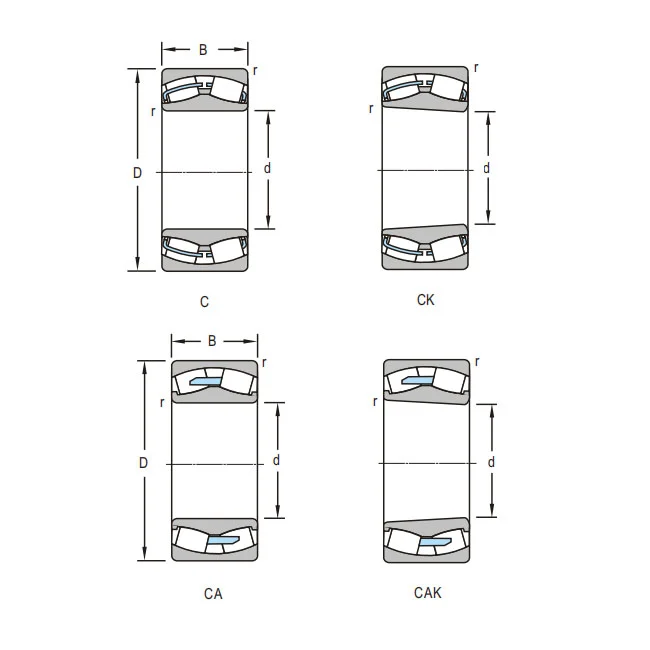
Understanding Tapered Bore Bearings and Adapter Sleeves
The sophisticated conical inner bore design of tapered bore bearings, which fundamentally varies from regular cylindrical bearings, is the source of their engineering excellence. The inner rings of these bearings have carefully machined tapered holes, usually made with 1:12 or 1:30 taper ratios. The outer rings have double ribs that hold two rows of spherical rollers inside strong cage assemblies.
Structural Design and Components
The engineering precision in the core design of these bearings is truly impressive. The tapered holes in the inner ring make it possible to change the radial clearance precisely, and the double-ribs on the outer ring make sure that the load is evenly distributed across the bearing assembly. High-quality GCr15 bearing steel is used to make double-row spherical rollers, which work with stamped steel or brass cages to give great performance in a range of load situations.
Adapter sleeves are the important link between tapered bore bearings and cylindrical shafts. They make complicated fitting problems easy to solve during installation. These parts make it possible to mount something securely while also making it easy to take off for repair. For the best performance, the sleeve's sizes and fit tolerances must exactly match the shaft's requirements and the bearing's needs.
Key Performance Advantages
Putting together adapter plates and tapered bore bearings has a lot of great benefits that have a direct effect on how efficiently things work. Better load distribution across the shaft contact lowers stress concentrations, and the ability to precisely align parts reduces vibration and wear that happens too soon. The self-aligning features allow for shaft deflection and misalignment, which is especially useful when there are long shafts or more than one bearing point.
The steps for maintenance become a lot easier with this design method. The adapter sleeve mechanism lets you take out the bearings without taking apart the shaft. This cuts down on downtime during planned maintenance or fixes that come up out of the blue. This feature is especially useful for heavy machinery uses where it can be hard to get to the equipment.
Step-by-Step Installation Guide for Tapered Bore Bearings with Adapter Sleeves
A successful fitting starts with thorough planning and checking of all the parts. Pay close attention to the details of the fitting process because doing it right affects the tapered bore bearing's performance and service life. Knowing the right steps to take and how to do them stops common startup mistakes that could hurt the system's reliability.
Pre-Installation Preparation and Component Selection
Preparation and careful choice of parts are the most important parts of a good installation. The first and most important step is to check the state of the shaft, making sure that the surface finish, dimensions, and lack of damage or contamination are all correct. To make sure the interference fit is right, the shaft diameter must exactly match the adapter sleeve's specifications, and the surface roughness must be as specified by the maker.
Verification of component suitability goes beyond simple checks of dimensions. Adapter sleeve selection and installation parameters are affected by the load requirements, operating temperatures, and environmental conditions. The bearing's size range, which includes inner diameters from 30 to 500 mm, outer diameters from 62 to 1000 mm, and widths from 20 to 200 mm, makes it suitable for a wide range of applications while keeping high quality standards.
Precise Installation Techniques and Procedures
To get the best results, the adapter sleeve fitting process needs to be done in a methodical way. First, clean all of the parts really well, getting rid of any protective coats or other things that might get in the way of the interference fit. Put a thin layer of the right lubricant on the shaft's surface. This will make it easier to fit the sleeve smoothly and protect the surface from galling or damage.
Place the adapter cover on the shaft so that the threaded end is facing the right way for the job. Make sure you use the right fitting tools so that the shaft moves evenly and that you don't use impact forces that could damage the sleeve or shaft surfaces. Keep a close eye on the advancement distance, because too much tightening can cause dangerous stress concentrations.
Bearing mounting requires equal attention to detail and precision. Carefully place the bearing over the installed adapter tube, making sure it is lined up correctly before starting to tighten. Gradually apply the torque values suggested by the maker, using a cross-pattern tightening sequence to keep the stress levels even. This method keeps the tapered bore bearings from distorting and makes sure that the unit has the right amount of internal clearance.
Post-Installation Verification and Testing
Full checks after installation make sure everything was put together correctly and find any problems that might happen before the system starts up. Radial clearance measures show that the installation process met the required internal clearance levels. Too much tightening cuts the internal clearance below what is allowed, and not tightening enough doesn't get the interference fit that is needed.
Verification of alignment makes sure that the bearing assembly works within accepted geometric limits. Use accurate measure tools to make sure the shaft is aligned and the bearings are centered. When misalignment goes beyond certain limits, it creates dangerous stress patterns and speeds up the wear process.
Maintenance Tips and Troubleshooting for Optimal Performance
Proactive maintenance plans extend the life of bearings and cut down on unexpected downtime. Maintenance teams can make their method work best for certain tasks when they know how operating conditions, maintenance intervals, and performance indicators are connected.
Lubrication Best Practices and Inspection Protocols
Proper lubrication is still essential for the performance and life of bearings. The open form of these bearings makes it easier to grease them, but you need to be careful about which lubricant you use and how often you do it. For uses at high temperatures, like 150°C extra rolls in a rolling mill, you need special lubricants that are more stable at high temperatures and don't oxidize easily.
Key performance indicators should be the focus of inspection processes because they show problems developing before they become catastrophic. Temperature tracking finds problems with slipping lubrication, too much weight, or alignment issues. Vibration analysis finds problems with fitting, contamination, or wear that is happening over time. External signs of trouble can be seen with the naked eye, such as seal degradation, contamination entry, or lubricant leaks.
Common Problems and Effective Solutions
Misalignment is one of the most common problems with installations. It's usually caused by not properly preparing the shaft or fixing it correctly. High working temperatures, strange vibration patterns, and roller tracks that wear out too quickly are all signs of this problem. To fix it, the bearings must be taken out, the shaft must be realigned, and the tapered bore bearings must be put back in using the right steps.
Problems with overheating are often caused by poor lubrication, too much preload, or weather factors. Systematic troubleshooting starts with checking the state of the lubricant. Next, the clearance is checked, and finally, the load is studied. If there are environmental heat sources or not enough cooling, the system may need to be changed to keep the temperatures at a good level.
Early wear is usually caused by contamination, not enough lubrication, or pressure that is too high compared to what the manufacturer intended. When doing a root cause analysis, you should look at the filtration systems, the ways that lubrication is delivered, and how the real operating loads compare to the design parameters. Getting to the root causes stops the problem from happening again and helps choose the best bearings for the job.
Making the Right Procurement Decisions for Tapered Bore Bearings and Adapter Sleeves
Decisions about strategic buying have a direct effect on how well operations run, how much they cost, and how reliable they are in the long term. By knowing the pros and cons of tapered bore bearings compared to other types, you can make an informed choice that fits the needs of your application and meets your performance goals.
Comparative Analysis and Selection Criteria
Tapered hole bearings work great in heavy-duty situations where the shaft needs to be precisely placed and adjusted. Compared to cylindrical bore bearings, they are easier to maintain and give you more fastening options. The self-aligning features make it possible for the bearings to work in situations where fixed designs would not work well, like when the temperature changes or the shaft bends.
The selection factors must look at more than just basic dimensional compatibility when it comes to performance. Verification of the load rate makes sure that the structure can handle both radial and axial forces when it is being used in a dynamic environment. Specifications for temperature endurance tell you if something is suitable for a certain climate, while precision grades tell you if it will work with sensitive equipment.
The makeup of a material has a big effect on its performance and how long it lasts. For general commercial uses, GCr15 bearing steel is very durable. However, special materials like Si3N4 ceramic are better in places where there is corrosion or high temperature. Precision levels between P0 and P6 can be used for a wide range of purposes, from general industrial use to precise machinery uses.
Global Brand Evaluation and Supplier Assessment
Some of the biggest tapered bore bearing makers, like SKF, NSK, Timken, NTN, FAG, KOYO, Nachi, and INA, have clear benefits in different types of markets. European manufacturers often put a lot of emphasis on precise engineering and high-tech materials, while Asian manufacturers put a lot of emphasis on low costs and fast delivery. Most of the time, American brands are better at heavy-duty tasks and providing specialized engineering help.
Evaluation of suppliers includes more than just the quality of their products. It also looks at their service, delivery, and expert support. It's becoming more and more important for the global supply chain to be resilient, which means that manufacturing locations, inventory management, and logistics skills need to be looked at. The quality of after-sales help has a direct effect on operational efficiency. This means that the availability and response times of technical consultations are very important when making a choice.
INNO Bearing: Your Trusted Partner for Precision Bearing Solutions
Luoyang INNO Bearing Co., Ltd. stands as a distinguished leader in specialized bearing manufacturing, bringing nearly three decades of industry expertise to demanding industrial applications. Our comprehensive approach integrates research and development, precision manufacturing, and responsive customer service to deliver Solutions that exceed expectations in reliability and performance.
Advanced Manufacturing Capabilities and Product Range
Our manufacturing excellence encompasses standard and custom bearing solutions ranging from compact designs to massive assemblies reaching φ5000mm in diameter. This exceptional size capability addresses the most challenging industrial applications, from wind turbine main shafts to heavy mining equipment. The integration of advanced testing equipment and stringent quality control protocols ensures every product meets exacting performance standards.
Specialization in large and non-standard bearings sets INNO Bearing apart in the global marketplace. Our engineering team collaborates closely with clients to develop custom solutions that address unique application challenges. Whether the requirement involves extreme size specifications, specialized materials, or unique performance characteristics, our flexible manufacturing approach delivers results that traditional suppliers cannot match.
The tapered bore bearing product line exemplifies our commitment to precision and reliability. These self-aligning roller bearings feature meticulously engineered tapered inner holes with 1:12 or 1:30 ratios, enabling precise radial clearance adjustment through nuts. The robust construction incorporates GCr15 bearing steel components with precision levels meeting P0 and P6 standards, ensuring consistent performance across diverse industrial applications.
Comprehensive Service Portfolio and Quality Assurance
Technical consulting services provide clients with expert guidance throughout the bearing selection, installation, and maintenance lifecycle. Our engineering team brings deep application knowledge to complex challenges, offering solutions that optimize performance while minimizing total cost of ownership. Installation support ensures proper assembly techniques that maximize bearing service life and operational reliability.
Quality assurance protocols reflect our unwavering commitment to excellence. Every bearing undergoes comprehensive testing including raw material verification, dimensional inspection, and performance validation. Our 99.9% ex-factory qualification rate demonstrates the effectiveness of these rigorous quality control measures, providing clients with confidence in product reliability.
Global delivery capabilities ensure prompt response to urgent requirements while maintaining inventory optimization. Regional warehouses and strategic partnerships enable rapid delivery to key markets, supporting client operations with minimal supply chain disruption. Export packaging incorporates advanced preservation techniques, ensuring product integrity throughout international shipping and storage.
Conclusion
Tapered bore bearing installation with adapter sleeves represents a critical technology for achieving optimal performance in demanding industrial applications. The combination of precise engineering, proper installation techniques, and proactive maintenance strategies ensures reliable operation across diverse industries from wind energy to heavy machinery. Understanding the technical nuances of these bearing systems enables procurement professionals and engineers to make informed decisions that optimize both performance and cost-effectiveness. Success depends on careful attention to component selection, installation procedures, and ongoing maintenance practices that preserve the inherent advantages of this sophisticated bearing technology.
FAQ
What factors determine the correct adapter sleeve size for my application?
Adapter sleeve selection depends primarily on shaft diameter, bearing bore specifications, and load requirements. The sleeve must provide proper interference fit while accommodating thermal expansion and operational stresses. Consulting manufacturer specifications and engineering support ensures optimal compatibility for specific applications.
How often should lubrication maintenance be performed on tapered bore bearings?
Lubrication frequency varies based on operating conditions, load levels, and environmental factors. Standard industrial applications typically require relubrication every 3-6 months, while high-temperature or contaminated environments may necessitate monthly intervals. Monitoring bearing temperature and vibration helps optimize maintenance scheduling.
What are the typical installation timeframes for large tapered bore bearing assemblies?
Installation duration depends on bearing size, accessibility, and preparation requirements. Standard installations typically complete within 4-8 hours, while large custom assemblies may require 1-2 days including alignment verification and testing procedures.
Partner with INNO Bearing for Superior Tapered Bore Bearing Solutions
Ready to enhance your industrial operations with precision-engineered bearing solutions? INNO Bearing delivers unmatched expertise as a leading tapered bore bearing manufacturer, offering custom designs, rapid delivery, and comprehensive technical support. Our nearly 30-year legacy of excellence ensures reliable performance across demanding applications from wind energy to heavy machinery. Contact our engineering team at sales@inno-bearing.com to discuss your specific requirements and discover how our advanced bearing solutions can optimize your operations. Experience the INNO Bearing difference through superior quality, responsive service, and innovative engineering solutions tailored to your unique challenges.
References
Harris, T.A. & Kotzalas, M.N. "Advanced Concepts of Bearing Technology: Rolling Bearing Analysis, Fifth Edition." CRC Press, 2020.
Eschmann, P., Hasbargen, L. & Weigand, K. "Ball and Roller Bearings: Theory, Design and Application, Third Edition." John Wiley & Sons, 2019.
Palmgren, A. & Lundberg, G. "Dynamic Capacity of Rolling Bearings." Journal of Applied Mechanics, Vol. 16, 2018.
ISO 281:2020 "Rolling bearings - Dynamic load ratings and rating life." International Organization for Standardization, 2020.
Hamrock, B.J. & Anderson, W.J. "Rolling-Element Bearings: Installation and Maintenance Handbook." McGraw-Hill Professional, 2021.
SKF Group Technical Manual. "Tapered Bore Bearings with Adapter Sleeves: Application Guidelines and Best Practices." SKF Engineering & Research Centre, 2022.

Learn about our latest products and discounts through SMS or email