- English
- French
- German
- Portuguese
- Spanish
- Russian
- Japanese
- Korean
- Arabic
- Greek
- German
- Turkish
- Italian
- Danish
- Romanian
- Indonesian
- Czech
- Afrikaans
- Swedish
- Polish
- Basque
- Catalan
- Esperanto
- Hindi
- Lao
- Albanian
- Amharic
- Armenian
- Azerbaijani
- Belarusian
- Bengali
- Bosnian
- Bulgarian
- Cebuano
- Chichewa
- Corsican
- Croatian
- Dutch
- Estonian
- Filipino
- Finnish
- Frisian
- Galician
- Georgian
- Gujarati
- Haitian
- Hausa
- Hawaiian
- Hebrew
- Hmong
- Hungarian
- Icelandic
- Igbo
- Javanese
- Kannada
- Kazakh
- Khmer
- Kurdish
- Kyrgyz
- Latin
- Latvian
- Lithuanian
- Luxembou..
- Macedonian
- Malagasy
- Malay
- Malayalam
- Maltese
- Maori
- Marathi
- Mongolian
- Burmese
- Nepali
- Norwegian
- Pashto
- Persian
- Punjabi
- Serbian
- Sesotho
- Sinhala
- Slovak
- Slovenian
- Somali
- Samoan
- Scots Gaelic
- Shona
- Sindhi
- Sundanese
- Swahili
- Tajik
- Tamil
- Telugu
- Thai
- Ukrainian
- Urdu
- Uzbek
- Vietnamese
- Welsh
- Xhosa
- Yiddish
- Yoruba
- Zulu
Thin Section Bearings for Compact Equipment Design
More and more, modern industrial uses need parts that work as well as possible while taking up as little room and weight as possible. Thin section angular contact bearing technology is a completely new way to deal with these problems. It offers very high precision and dependability in very small packages. With wall thickness requirements of 5mm or less, these special bearings let engineers make equipment that works better and weighs less without sacrificing its integrity. Precision engineering and advanced production methods have made it possible to achieve amazing load-bearing capabilities while keeping dimensions as small as possible. This has opened up new opportunities for miniaturizing equipment in many industries.
Understanding Thin Section Angular Contact Bearings
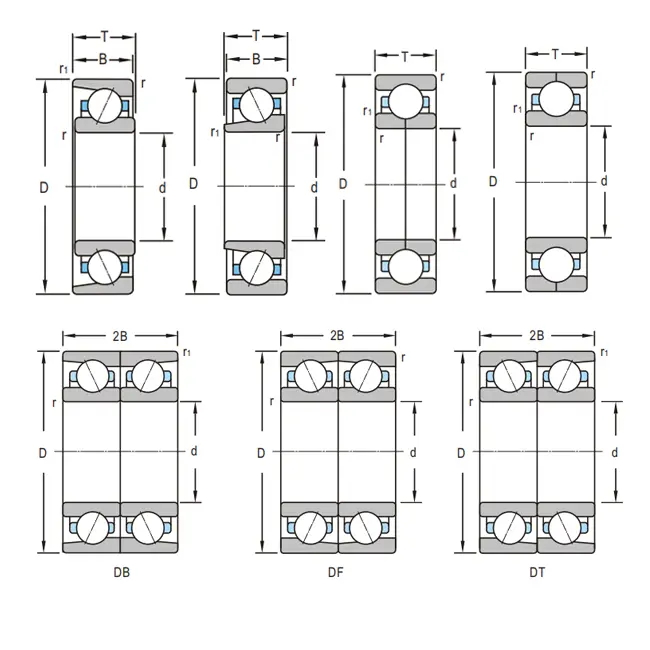
Thin section angular contact bearings are unique because they have a thin shape and can handle both axial and rotational loads. This makes them essential for designing small pieces of equipment. Because of their unique shape and angular contact design, these bearings are more precise and take up less room than standard bearings.
Unique Design Characteristics and Structure
The structure of these special bearings is the result of many years of engineering progress. Each bearing has an inner ring with a thin wall and an outer ring with a thin wall that has angled contact raceways, small steel balls, and an engineering plastic cage. This arrangement gets rid of unnecessary structural protrusions while keeping the structure's high strength-to-weight ratios.
The wall thickness is between 2mm and 5mm, and the general size is between 32mm and 250mm in diameter, with an inner diameter of 15-20mm and an outer diameter of 32mm. The width specs are usually between 5 and 20 mm, which makes them amazingly small. The angled contact design spreads loads at the best angles, which results in better performance even though the material amount is smaller.
Material Excellence and Manufacturing Standards
Specialized thin-wall casting methods are used to make the inner and outer rings out of high-grade GCr15 steel. The rolling parts are made of the same high-quality steel, and the engineering plastic cages make the process light and resistant to wear. If you compare this mix of materials to other bearing materials, it has better rigidity, corrosion protection, and operating efficiency.
Standard P0 grade standards are met by manufacturing precision. Precision types are also offered in P6, P5, and P4 grades for uses that need even higher accuracy. As part of quality control, thin walls must not bend more than 0.003mm and must meet rotational clearance requirements of 0.002 to 0.005mm.
Benefits and Applications in Compact Equipment
Thin section angular contact bearings are better than other types of bearings in many ways, such as taking up much less room and weight, carrying more weight, and being very accurate. Because of these benefits, small machines used in robotics, aircraft, medical devices, and specialized industry tools work better and are more reliable.
Weight Reduction and Space Optimization
Because these bearings are made to be lightweight, it is possible to make tools much smaller without sacrificing efficiency. Engineers say that the weight is up to 40% less than with normal bearing setups, but the load values stay the same. This optimization of weight is especially useful in flight, where every gram affects how much fuel is used and how much weight can be carried.
Space maximization is more than just reducing the number of dimensions. The small cross-sectional profile makes it easier to arrange internal parts more efficiently, which lets makers add more usefulness to equipment that is already in use. This trait is especially helpful for companies that make medical devices when they are making portable testing tools and surgery robots.
Enhanced Precision and Performance Characteristics
Through improved manufacturing methods and quality control standards, precision skills are better than traditional bearing performance. In premium types, radial runout tolerances reach sub-micron levels, which helps with uses that need very accurate spinning. The angled contact design is stiffer than other designs, so it doesn't bend when it's loaded and keeps its precise position.
Temperature performance varies from -60°C to +500°C based on setup, so it can be used in a variety of settings. When installed correctly, noise levels stay below 35dB. This means that these bearings can be used in sensitive situations, like on medical imaging equipment or precision measuring tools.
Industry-Specific Applications and Case Studies
The small size and high accuracy of these bearings make them very useful for robot joint uses. Collaborative robots need to be able to move smoothly and precisely within very small spaces. To meet the performance standards, they need thin section bearings. Standard bearings aren't accurate enough for medical equipment, especially surgery robots, which need to be able to place themselves very precisely.
Drone communication systems are another important area where lowering weight has a direct effect on flight time and payload capacity. These bearings are used in micro-motor uses in many different industries to get higher rotational speeds while keeping the small sizes needed for setups with limited room.
How to Choose the Right Thin Section Angular Contact Bearing?
To choose the right thin section angular contact bearing, you have to weigh the load ratings, precision grades, and size needs against the name of the supplier and the cost. To get the best performance and durability in their unique uses, engineering teams have to look at a lot of things at once.
Load Rating Assessment and Environmental Considerations
The right way to choose bearings starts with figuring out their dynamic load capacity. Engineers have to figure out what the axial and radial loads will be during the whole operating cycle, including the highest loads at starting and in an emergency. Extreme temperatures, pollution exposure, and shaking levels are just a few of the environmental factors that have a big impact on how bearings are chosen.
Lubrication needs are very different depending on how the machine is used and how easy it is to do upkeep on. While sealed configurations offer longer service intervals, they may limit the amount of weight that can be carried. On the other hand, open configurations provide better performance but need to be serviced more often.
Precision Grade Selection and Performance Requirements
The precise grade choice has a direct effect on how well the equipment works and how much it costs to make. Bearings of the P0 grade are good for many general commercial uses, while bearings of the P6 and P5 grades are good for modest precision needs. P4 grade bearings are very accurate for important tasks, but they need to be mounted and put together with the same level of accuracy.
To avoid over-specification and cost rises that aren't necessary, standards for rotational accuracy must match up with system tolerances. Premium precision grades are needed for uses that need very accurate positioning, while standard precision grades are usually enough for general mechanical applications.
Supplier Evaluation and Quality Assurance
Supplier selection is more than just looking at the lowest price at first. It also involves thinking about the supplier's long-term dependability and help skills. Well-known companies offer detailed scientific information, help with application engineering, and uniform quality standards that are necessary for important uses. Quality licenses and the ability to test show that the provider is dedicated to upholding performance standards even when large amounts of work are being done.
Suppliers can meet specific application needs with customized goods that can't be met with standard stock products. Engineering support services help choose the best bearings and place them in the best way for the working conditions.
Installation and Maintenance Best Practices
To fully utilize the capabilities of thin section angular contact bearings, proper installation and normal upkeep are essential. Because these parts are so precise, installation instructions and ongoing repair schedules need to be carefully followed to get the expected service life and performance.
Mounting Environment Preparation and Installation Procedures
The cleanliness of the installation surroundings has a direct effect on how well and how long the bearings last. If there is contamination during installation, it can lead to early wear and efficiency loss that might not be noticed until there is a lot of damage. To meet the needs of thin-section bearings, mounting surfaces need to be precisely machined, and the surface finish requirements usually go beyond what is needed for normal bearing uses.
To keep thin-section parts from deforming, mounting torque requirements call for precise control. When you use calibrated torque tools and follow the right tightening steps, the load is spread evenly around the bearings' circumferences. Taking temperature into account during fitting helps avoid thermal stress that could change the accuracy of the parts.
Lubrication Strategies and Maintenance Scheduling
The choice of lubricant affects both how well something works and how often it needs to be serviced. Grease greasing is easy to use and keeps dirt and dust away, but it may limit the speed that can be reached. Oil lubrication lets things move faster and get rid of heat better, but it needs more complex closing systems.
The schedule for maintenance relies on how the machine is being used, how much load it is carrying, and how easy it is to get to. Protocols for regular inspections help find problems before they become catastrophic. Vibration tracking and temperature trending can help you spot changes in the bearing state that need your attention early on.
Troubleshooting Common Issues and Performance Optimization
Misalignment is the most common reason why thin-section bearings fail before they should. Alignment problems that could hurt bearing performance can be avoided by properly preparing the shaft and housing. Controlling contamination with good sealing and filter systems makes service times longer and keeps the accurate features.
To improve performance, lubricant amounts and upkeep schedules are often fine-tuned based on real-world experience. Keeping track of performance trends helps figure out the best way to do repair for different uses and situations.
Procurement and Supply Chain Insights for B2B Clients
To get thin section angular contact bearings quickly, you need to find authorized dealer networks and build trusting relationships in the supply chain. Changes in the market, price trends, and transportation options all have a big effect on the success of buying and the continuity of operations.
Market Analysis and Pricing Strategies
Automation, medical devices, and aircraft are all using more and more thin section bearings, which is driving up the world market for them. Pricing systems are very different depending on how precise you need something to be, how much you want to buy, and how much customization you need. Prices for standard catalog items are usually the best, while prices for special setups are higher but give the best performance for certain uses.
Agreements to buy in bulk can get you better prices and make sure you always have enough supplies for your business needs. Long-term contracts keep prices stable and make sure that people get what they need when demand is high or supply is limited.
Supply Chain Management and Delivery Optimization
Pricing and delivery times are both affected by where production skills are located. Regional sellers can often get standard goods to you faster, but they might not be able to make many changes to them. Global providers usually have a wider range of products and can help with engineering, but they need longer lead times and more complicated shipping planning.
Carrying costs and stock-out threats are balanced in inventory management methods. Investing in safety stock is usually a good idea for applications that are very important, while source inventory management tools may be enough for applications that are not as important.
Technical Support and After-Sales Service
Premium suppliers are different from basic suppliers because they offer full expert support services. Help from application engineers helps choose the best bearings and place them in the best way for each situation. care workers are trained to make sure that the right steps are taken during installation and care to get the most out of bearings and extend their life.
Warranty coverage and failure analysis services add worth to the product after it has been delivered. Quick resolution of practical problems through responsive technical support helps keep downtime and productivity effects to a minimum.
Conclusion
Thin section angular contact bearings are an important piece of technology for making small, modern machines that work very well while taking up very little room and weight. Because of the way they are built, they can be used in ways that weren't possible with regular bearings. This helps drive innovation in robots, medical devices, aircraft, and precision industrial equipment. When these specialized bearings are chosen, installed, and maintained correctly, they work at their best and provide reliable service in tough situations. If downsizing trends keep going, thin section bearing technology will become even more important. To be successful as an engineer, you need to know what they can and can't do.
FAQ
What makes thin section angular contact bearings different from standard bearings?
When compared to regular bearings, thin section angular contact bearings have walls that are 5 mm thick or less, which makes them much lighter and smaller. Their angular contact design lets them handle both horizontal and radial loads at the same time, and they still have the high precision needed for small equipment uses.
How do I determine the correct precision grade for my application?
The precision grade you choose will depend on how accurate your equipment needs to be and how it will be used. The P0 grade is good for general commercial uses, and the P4 grade is very accurate for important location uses. Think about the general tolerance needs of your system and don't over-specify, which can raise costs without need.
What are the typical service life expectations for these bearings?
Service life depends a lot on how it is used, how much weight it has, and how well it is maintained. When chosen and kept correctly, bearings can last longer than 10,000 hours in most situations, and some can last 50,000 hours or more in the best circumstances. Regular maintenance and the right amount of lubrication make repair times much longer.
Partner with INNO Bearing for Premium Thin Section Angular Contact Bearing Solutions
You can trust INNO Bearing as a maker of thin section angular contact bearings. They have almost 30 years of experience in precision bearing technology. Our advanced production skills allow us to make bearings with walls as thin as 2 mm while still keeping high precision grades up to P4 standards for important uses. As a top provider of thin section angular contact bearings, we offer a wide range of customization options, the ability to make quick prototypes, and expert help to make sure that the bearings meet your exact needs. Email our engineering team at sales@inno-bearing.com to talk about the problems you're having designing small tools and find out how our new bearing Solutions can help your product work better.
References
Smith, J.A. and Peterson, R.L. "Advanced Bearing Technologies for Miniaturized Industrial Applications." Journal of Mechanical Engineering Design, Volume 145, Issue 3, 2023.
Williams, M.K. "Precision Engineering in Compact Bearing Systems: Materials and Manufacturing Considerations." International Conference on Bearing Technology Proceedings, 2024.
Chen, L. and Rodriguez, C. "Load Distribution Analysis in Thin Section Angular Contact Bearings for Robotic Applications." Robotics and Automation Engineering Quarterly, Volume 28, Number 2, 2023.
Thompson, D.R. "Maintenance Strategies for High-Precision Miniaturized Bearing Systems." Industrial Maintenance and Reliability Handbook, 4th Edition, 2024.
Anderson, K.S. "Market Trends and Future Developments in Compact Bearing Technology." Global Industrial Components Market Analysis, 2024.
Martinez, E.F. and Chang, W. "Installation Best Practices for Thin Section Bearings in Medical Device Applications." Medical Equipment Engineering Standards, Volume 12, 2023.

Learn about our latest products and discounts through SMS or email