- English
- French
- German
- Portuguese
- Spanish
- Russian
- Japanese
- Korean
- Arabic
- Greek
- German
- Turkish
- Italian
- Danish
- Romanian
- Indonesian
- Czech
- Afrikaans
- Swedish
- Polish
- Basque
- Catalan
- Esperanto
- Hindi
- Lao
- Albanian
- Amharic
- Armenian
- Azerbaijani
- Belarusian
- Bengali
- Bosnian
- Bulgarian
- Cebuano
- Chichewa
- Corsican
- Croatian
- Dutch
- Estonian
- Filipino
- Finnish
- Frisian
- Galician
- Georgian
- Gujarati
- Haitian
- Hausa
- Hawaiian
- Hebrew
- Hmong
- Hungarian
- Icelandic
- Igbo
- Javanese
- Kannada
- Kazakh
- Khmer
- Kurdish
- Kyrgyz
- Latin
- Latvian
- Lithuanian
- Luxembou..
- Macedonian
- Malagasy
- Malay
- Malayalam
- Maltese
- Maori
- Marathi
- Mongolian
- Burmese
- Nepali
- Norwegian
- Pashto
- Persian
- Punjabi
- Serbian
- Sesotho
- Sinhala
- Slovak
- Slovenian
- Somali
- Samoan
- Scots Gaelic
- Shona
- Sindhi
- Sundanese
- Swahili
- Tajik
- Tamil
- Telugu
- Thai
- Ukrainian
- Urdu
- Uzbek
- Vietnamese
- Welsh
- Xhosa
- Yiddish
- Yoruba
- Zulu
When to Use Thin Section Angular Contact Bearings?
When your application needs precise motion control in small areas while carrying both radial and axial loads, thin section angular contact bearings are the best choice. These special bearings have a wall width of less than 5 mm and work great in robots, medical devices, aerospace systems, and precision tools where regular bearings can't fit because of the size requirements. Their unique angular contact design makes it possible for better load distribution while keeping the size small. This makes them essential for current high-tech uses that need to save room and be accurate.
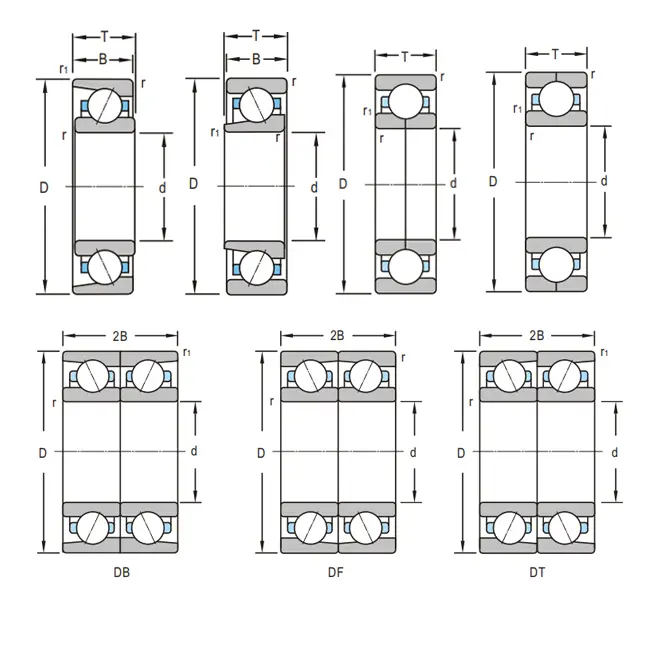
Understanding Thin Section Angular Contact Bearings
The engineering brilliance of angular contact bearings with thin-wall construction comes in their ability to save room while still performing exceptionally well. Because these bearings have a unique rotational contact angle, the load is spread out evenly across their raceway surfaces. This lets them handle both radial and axial pressures at the same time. Unlike regular bearings, their smaller cross-sectional shape makes the most of the room in assemblies while still keeping the structure strong.
Key Design Characteristics
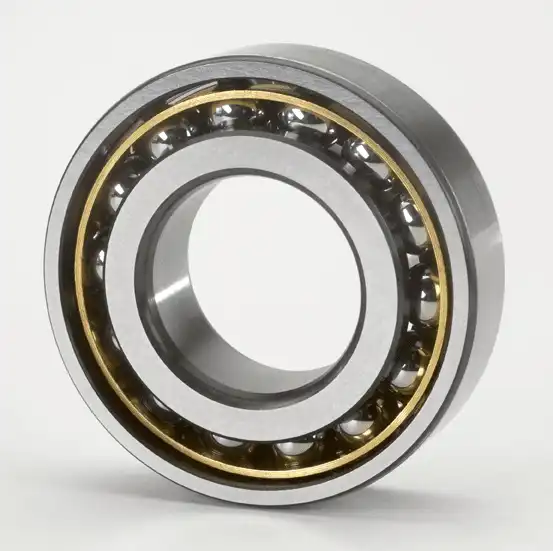
A lot of important parts go into making these precision bearings, and they all work together perfectly. Forgings of GCr15 high-grade steel make the thin-wall inner ring and outer ring, which are the building blocks for steady operation. The angular contact raceways in these rings are very carefully machined to move small steel balls along their working paths. Engineering plastic cages, which are chosen for being light and resistant to wear, keep the balls spaced correctly while lowering the weight of the whole system.
The strict needs of current industrial applications are reflected in manufacturing standards. Size ranges cover a wide range of needs, with inner diameters ranging from 15 to 20 mm, outer diameters from 32 to 250 mm, and widths from 5 to 20 mm. The wall thickness, which ranges from 2 to 5 mm, is an amazing feat of bearing engineering because it matches strength with saving room.
Performance Standards and Quality Control
Quality control methods make sure that these bearings meet strict performance standards in a wide range of settings. Standard P0 grade accuracy is good for most uses, while P6, P5, and P4 grade accuracy is achieved by precision models for very precise tasks that need it. Some important checking factors are measuring the thin-wall deformation (≤0.003mm), controlling the radial clearance (0.002-0.005mm), making sure the steel balls are in the right place, and trying how well the installation can be changed.
When to Choose Thin Section Angular Contact Bearings Over Other Bearing Types?
When choosing the right thin section angular contact bearing type, you need to carefully think about the needs of the application and the limitations of the operation. In situations where room is limited, combined loading is needed, and accuracy is important, angular contact bearings with thin walls are clearly better than other types of bearings.
Comparison with Deep Groove Ball Bearings
When radial loads are the only thing that's being applied, Deep groove ball bearings work great. But when mixed loads are present in small areas, they don't work as well. When both radial and vertical loads need to be supported at the same time, thin-wall angular contact types work better. Because of their angular contact shape, loads are spread out better across the bearing surfaces. This lowers stress densities and increases operating life when loads are mixed.
The benefits of saving room are especially clear in small systems where every millimeter counts. Traditional deep groove bearings often need extra axial support parts, which makes the system more complicated and takes up more room. Angular contact designs don't need this because they can handle pressure from different directions inside a single bearing unit.
Advantages Over Cross Roller Bearings
Cross roller bearings are very strong and can hold a lot of weight, but they can't be used at high speeds and are hard to make. Thin-wall angular contact bearings can handle more weight while still working at high speeds, making them ideal for most precision uses. Because they use a simpler manufacturing method, they are easier to get and cost less when large quantities are needed.
The ways that these bearing types work are very different from one another. Cross roller designs work best when maximum stiffness with little movement is needed. On the other hand, angular contact designs work best when smooth motion and low friction are needed. Because of this, angular contact bearings are perfect for robots and automation, where the quality of motion has a direct effect on how well the system works.
Single vs. Double Row Configurations
Engineers can balance performance trade-offs based on the needs of each application thanks to flexible configuration. For high-speed uses, single-row designs take up less room and have less friction, while double-row designs increase load capacity and axial rigidity. Because of this, the best bearing can be chosen for a wide range of technical problems without affecting important performance factors.
Ideal Applications for Thin Section Angular Contact Bearings
In modern manufacturing settings, parts that work exceptionally well within limited dimensions are becoming more and more important. Precision, simplicity, and dependability are still very important in many areas where these specialized bearings have found their place.
Robotics and Automation Systems
Robotic systems are likely the most difficult place for small precise bearings to be used. Joint parts need to be able to move smoothly and accurately while handling different loads during working cycles. When it comes to modern robots, angular contact thin section angular contact bearings with thin walls are the best way to get both precise motion control and space economy.
The fact that these bearings are very light makes the robot work better overall by lowering its moving mass and letting it accelerate more quickly. When loads are applied dynamically, engineering plastic bars keep the structure's integrity while reducing friction. These traits are especially useful in medical robots, where accuracy and dependability have a direct effect on patient safety.
Aerospace and Defense Applications
In aerospace applications, choices about which bearings to use are based on efforts to reduce weight. Every gram saved helps improve fuel economy and payload capacity. When compared to other types, thin-wall angular contact bearings save a lot of weight while still meeting the high standards of durability needed for aircraft operations.
The precision of these bearings and their ability to stay accurate in harsh environments make them useful for satellite tracking systems and radar sites. The ability to withstand temperatures from -60°C to +500°C makes sure that it works reliably in the harsh temperature ranges that are common in aircraft uses.
Medical Equipment and Semiconductor Manufacturing
To keep patients safe and avoid contamination, hospital and clean room settings have strict rules about the bearing materials and lubricants that can be used. The engineering plastic cages that are used in these bearings work smoothly and quietly, which is important for testing tools. They are also very good at working in medical settings.
Because they can work at high speeds, these bearings can be used in centrifuges and precise positioning systems that are popular in the medical and semiconductor industries. They have very low noise levels (below 35dB), which is important for MRI systems and other medical tools that need to keep noise disturbance to a minimum.
Precision Instruments and Optical Systems
Optical positioning systems need bearings that can keep them precisely aligned while also being able to handle operating noises and temperature changes. Thin-wall angular contact bearings stay the same size even when the environment changes. This makes sure that optical systems stay calibrated for long periods of time.
The lower starting force and smooth operation of these bearings make them useful for micromotor uses. Because they are small, motor makers can get the most power out of them while still keeping the accuracy needed for pointing and measuring tools.
Maintenance and Procurement Considerations for B2B Clients
To get the most out of angular contact bearings' performance and operating life, you need to follow thorough maintenance procedures and make smart buying choices. Knowing about these things helps businesses get the most out of their bearing purchases and make sure their equipment works well.
Lubrication and Maintenance Protocols
Proper lubrication is still very important for getting the expected life and performance from bearings. Because these bearings have thin walls, you need to be very careful about which oil you use and how you apply it so that you don't over-lubricate them, which can cause more friction and higher working temperatures. During regular inspections, the state of the grease and the temperature of the bearings should be checked to find problems before they affect operations.
Maintenance plans need to take into account the unique working conditions and load patterns of each application. For high-speed applications, tracking may need to happen more often, while systems that track bearing performance measures in real time are helpful for continuous operation situations. Companies can switch from reactive to proactive maintenance methods by using predicted maintenance strategies.
Supplier Selection and Quality Assurance
Long-term business success and total cost of ownership are greatly affected by choices made about procurement. When evaluating a supplier, you should look at their manufacturing skills, quality certifications, and expert help before you look at price. ISO approval and ABEC precision scores are reliable ways to tell how well and consistently a product is made.
When you need custom or non-standard thin section angular contact bearings, where wait times can grow greatly, supply chain reliability becomes even more important. Building relationships with providers who keep enough goods on hand and show they can make things in a variety of ways helps keep operations running smoothly and reduces the chance of supply disruptions.
Cost-Performance Optimization Strategies
To find the right balance between the original costs of acquisition and the total costs of ownership, you need to look at more than just the purchase price. Premium bearings made from better materials and exact grades often have lower total costs because they last longer and need less upkeep. Sample evaluation programs let businesses check how well bearings work in real-world situations before they buy a lot of them.
Buying in bulk can save you a lot of money and make sure that the quality is the same across all bearing groups. To get the best deals on goods, businesses must find a mix between the costs of keeping inventory and savings for buying in bulk. Working with providers who offer flexible shipping times is a good way to keep costs low while still managing inventory levels.
Making the Right Choice - Decision Support for Procurement Managers
To choose the right bearings, you need to carefully consider scientific needs, practical limitations, and cost considerations. Structured decision-making processes that put important performance metrics first while also thinking about long-term business effects are helpful for procurement managers.
Defining Technical Requirements
Load analysis is the first step in choosing the right bearing because it tells you how much and what kind of force the bearing has to handle over its entire life. Static and dynamic load estimates help figure out what the minimum bearing capacity needs to be. Speed analysis makes sure that the bearings chosen can safely work at the needed rotational speeds. Conditions in the environment, like temperature ranges, amounts of contamination, and vibration exposure, affect the choice of material and the need for covering.
The largest bearing sheet that can be used in an assembly is usually limited by its dimensions. Accurately measuring the fitting places, including the shaft and housing sizes, makes sure that the bearings fit correctly and stops interference problems. To get the best performance, the tolerances needed to prepare the shaft and case should match the exact grades of the bearings.
Evaluating Supplier Capabilities
Premium suppliers give application engineering help and customizing services as part of their technical support, which sets them apart from commodity suppliers. Suppliers with their own engineering teams can help you choose the right bearings and make sure that your setups work best for your needs. After-sales support, such as help with fixing problems and failure analysis services, is very important to the success of operations.
Manufacturing flexibility lets providers meet specific needs, such as changing sizes, using different materials, or making accurate grades better. Companies that need special products for specific uses should work with suppliers that can make goods just the way they need them, instead of only offering standard stock items.
Economic Analysis and ROI Considerations
When you figure out the total cost of ownership, you should include the price you paid for the bearings, the cost of installation, the cost of upkeep, and any downtime costs that might come with them breaking. Premium bearings that cost more at first often provide better economic value through longer service life and less upkeep. When bearing friction has a direct effect on running costs, like in high-speed situations, energy economy becomes important.
Risk assessment helps figure out how much it might cost if a thin section angular contact bearing fails in an important application. When breakdowns cause a lot of downtime or safety worries, it's worth spending money on premium bearings and redundant systems. On the other hand, standard quality bearings can be used in non-critical situations with the right servicing support.
Conclusion
Thin section angular contact bearings are very useful in situations where there isn't much room, accuracy is needed, and the loads are all at the same time. Their special design features make them work perfectly in many fields, such as robotics, aircraft, medical equipment, and precise instrumentation. To make sure long-term operating success, implementation must carefully take into account technical requirements, upkeep needs, and supplier skills. As industry equipment keeps getting smaller and more precise, these special bearings will become more and more important for making advanced technology Solutions possible.
FAQ
What makes thin section bearings different from standard bearings?
The main difference is that their walls are thinner (≤5mm) and their designs are better at saving room while still being able to support weight. The cross-sections of standard bearings are usually thicker, which means they might not work in robots and precision equipment where room is limited.
Can these bearings handle high-speed applications?
Because they are light and have low rotational forces, angular contact bearings with thin walls work well in high-speed situations. Engineering plastic bars reduce friction and heat production, which lets machines work reliably at high speeds while keeping their accuracy.
What precision grades are available for critical applications?
The standard P0 grade is good for most uses, while the P6, P5, and P4 grades are for more challenging situations. P4 grade bearings offer the best levels of accuracy and are perfect for medical devices and semiconductor equipment that needs to be precise in its positioning.
Partner with INNO Bearing for Superior Thin Section Angular Contact Bearing Solutions
With almost 30 years of experience in precision engineering, INNO Bearing is the name you can trust when it comes to making thin section angular contact bearings. Our advanced manufacturing skills allow us to create unique solutions from the creation of a prototype to mass production. We can handle applications up to φ5000mm and deliver them 70% faster than the norm in the industry. To make sure that your important applications are reliable, quality assurance includes checking all dimensions and performing full performance tests. Get in touch with our engineering team at sales@inno-bearing.com to talk about your unique needs and find out how our precision bearing solutions can help your equipment work better while also meeting strict space and accuracy requirements.
References
Harris, T.A. and Kotzalas, M.N. "Advanced Concepts of Bearing Technology: Rolling Bearing Analysis." CRC Press, 2019.
ISO 15243:2017. "Rolling Bearings - Damage and Failures - Terms, Characteristics and Causes." International Organization for Standardization.
Palmgren, A. "Ball and Roller Bearing Engineering." SKF Industries Technical Manual, 2018.
ABMA Standard 20-2018. "Radial Bearings of Ball, Cylindrical Roller and Spherical Roller Types - Metric Design." American Bearing Manufacturers Association.
Hamrock, B.J., Schmid, S.R., and Jacobson, B.O. "Fundamentals of Fluid Film Lubrication in Rolling Element Bearings." McGraw-Hill Professional, 2020.
NSK Technical Journal. "Advances in Thin Section Bearing Technology for Precision Applications." NSK Ltd. Motion & Control, Vol. 42, 2019.

Learn about our latest products and discounts through SMS or email