- English
- French
- German
- Portuguese
- Spanish
- Russian
- Japanese
- Korean
- Arabic
- Greek
- German
- Turkish
- Italian
- Danish
- Romanian
- Indonesian
- Czech
- Afrikaans
- Swedish
- Polish
- Basque
- Catalan
- Esperanto
- Hindi
- Lao
- Albanian
- Amharic
- Armenian
- Azerbaijani
- Belarusian
- Bengali
- Bosnian
- Bulgarian
- Cebuano
- Chichewa
- Corsican
- Croatian
- Dutch
- Estonian
- Filipino
- Finnish
- Frisian
- Galician
- Georgian
- Gujarati
- Haitian
- Hausa
- Hawaiian
- Hebrew
- Hmong
- Hungarian
- Icelandic
- Igbo
- Javanese
- Kannada
- Kazakh
- Khmer
- Kurdish
- Kyrgyz
- Latin
- Latvian
- Lithuanian
- Luxembou..
- Macedonian
- Malagasy
- Malay
- Malayalam
- Maltese
- Maori
- Marathi
- Mongolian
- Burmese
- Nepali
- Norwegian
- Pashto
- Persian
- Punjabi
- Serbian
- Sesotho
- Sinhala
- Slovak
- Slovenian
- Somali
- Samoan
- Scots Gaelic
- Shona
- Sindhi
- Sundanese
- Swahili
- Tajik
- Tamil
- Telugu
- Thai
- Ukrainian
- Urdu
- Uzbek
- Vietnamese
- Welsh
- Xhosa
- Yiddish
- Yoruba
- Zulu
Crane Slew Ring: Key Safety and Design Considerations
When choosing important parts for working with big machinery, crane slew rings are one of the most important factors that affects both safety and performance. These special spinning bearings make it possible for cranes to move smoothly while spreading heavy loads across their annular structure. Tower cranes, mobile cranes, and port machinery can't work without them. For engineering directors and sourcing managers who have to balance operational reliability with cost-effectiveness in tough industrial settings, it's essential to understand the complex link between design specifications, safety rules, and procurement factors.
Understanding Crane Slew Rings: Design Features and Functional Principles
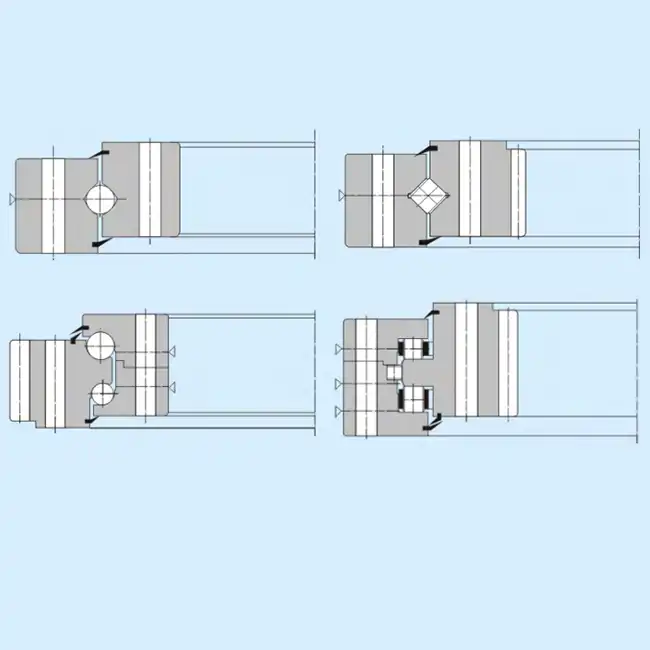
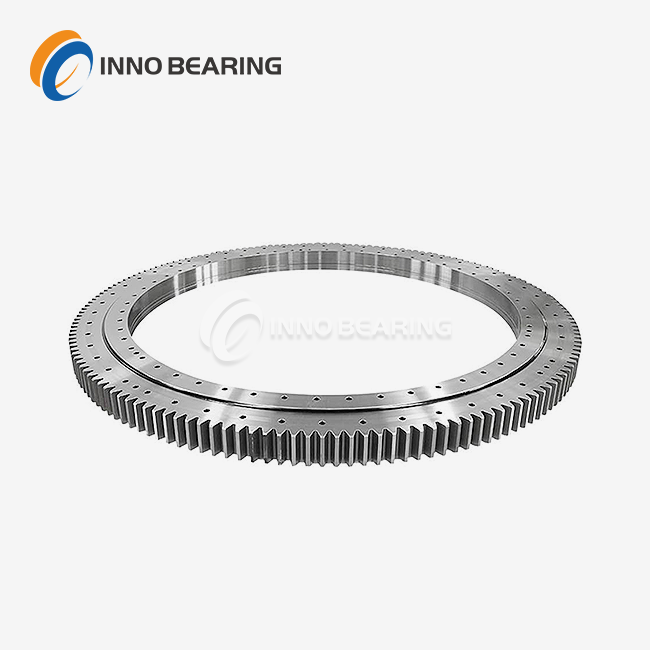
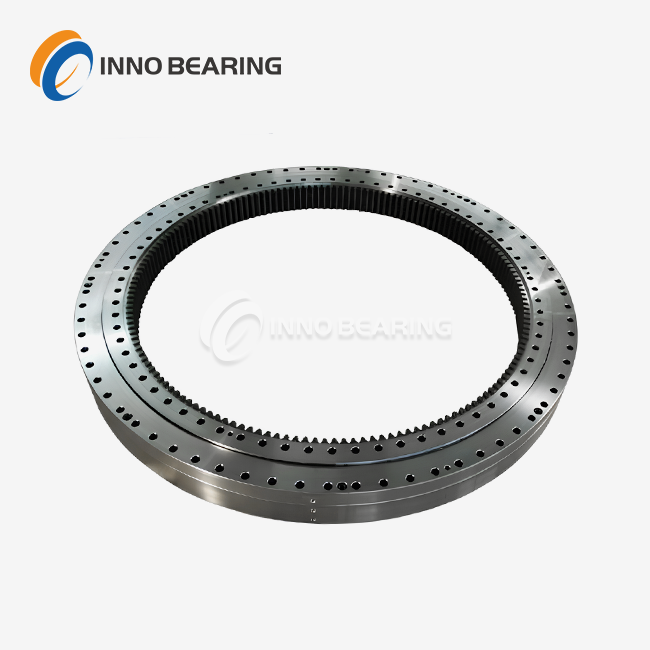
Crane Slewing Bearings allow the upper structure of the crane to rotate around its base, allowing it to move in all directions and carrying heavy axial, radial, and moment loads at the same time. The circular design has precisely made inner and outer rings, which are usually made of high-quality 50Mn or 42CrMo steel. They support the structure and distribute the load across the whole bearing assembly.
Single-Row vs. Double-Row Configurations
Choosing between single-row and double-row ball arrangements has a big effect on how well they work and what kinds of applications they are best for. Single-row designs work best in situations where installation room is limited and load capacities are moderate. This makes them perfect for small to medium-sized tower cranes used in urban construction sites. Double-row designs are better for heavy-duty uses like port cranes that move containers weighing more than 500 tons because they can hold more weight and resist moments better.
Depending on the needs of the job, the rolling elements in these designs are made of either GCr15 bearing steel or impact-resistant GCr15SiMn materials. When shock loads and cyclic stresses are taken into account, which of these materials to use becomes very important in mining and metallurgical uses. Advanced heat treatment methods make sure that the hardness grade is between HRC 58 and 62, which gives the best resistance to wear and keeps the shape stable during thermal cycling.
Raceway Design and Load Distribution
The shape of the track has a direct effect on how loads are distributed and how smoothly the system runs. Precision CNC grinding makes surfaces with finishes that reduce friction and increase the area where rolling elements and tracks touch each other. This way of making things makes sure that the accuracy is P4 and that the radial runout limits stay within 0.05mm. This keeps the noise level below 35dB even when the machine is running at full load.
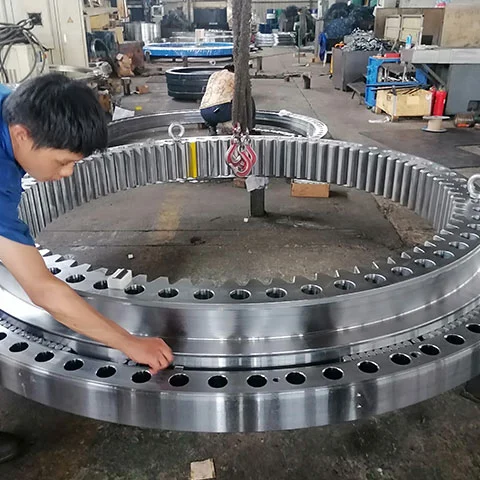
When they're present, integrated gear systems have carefully cut teeth that mesh with pinion drives to control rotation. These gear setups are induction hardened to make them resistant to wear from repeated engagement cycles. This is especially important in situations where the position needs to be changed often, like wind turbine yaw systems.
Safety Considerations and Common Issues with Crane Slew Rings
When using a crane, operational safety rests a lot on how well the slewing bearings are maintained, installed, and how well they are loaded. Knowing the most common ways that things go wrong lets you plan proactive maintenance that stops huge problems before they happen and makes sure that all kinds of industries follow the rules.
Wear Patterns and Lubrication Management
Lack of lubrication is the main reason why bearings fail too soon. This is because it causes more friction, higher working temperatures, and faster wear of the rolling elements and raceways. The right amount of time between lubrications depends on the working conditions. For example, outdoor applications need more frequent attention because they are more likely to be contaminated. For use in steel mill ladle cranes and other high-temperature areas, you need special oils that can keep their viscosity at temperatures close to 150°C.
Watching wear trends can help you find alignment problems, over-loading situations, or lubrication problems early on. If the wear is uniform across the track, it means that the machine is working correctly. If the wear is uneven or misaligned in certain places, it needs to be fixed right away.
Seal Integrity and Environmental Protection
Sealing systems keep oils inside the crane slewing rings assembly and keep the internal parts safe from outside contaminants. For most indoor uses, standard nitrile rubber seals are enough to keep things safe. However, fluororubber seals are better at keeping out oil and high temperatures. Designs that are waterproof up to IP66 and can handle salt spray rust and pressure washing are good for marine and offshore uses.
By checking the state of the seals on a regular basis, you can stop moisture from getting in, which can cause corrosion and early bearing failure. Visual inspection should show if the sealing elements are breaking, hardening, or moving, and they should be replaced before they become compromised.
Load Capacity Understanding and Overload Prevention
When you put something beyond its rated capacity, the rolling elements and raceways become permanently deformed. This causes more vibration and noise, and it could even fail catastrophically. Knowing how axial, radial, and moment loads relate to each other is important for making sure that the right application is made within the design limits. For dynamic load estimates, you need to think about more than just static weights. You also need to think about acceleration forces, wind loading, and impact forces that happen during normal operation.
While ISO 14728 and other industry standards help people choose the right slewing bearings for the job, OSHA rules make sure that cranes are inspected at certain times and that they follow certain safety rules. To meet these standards, you need to keep records of your load estimates, maintenance work, and inspection results.
How to Choose the Right Crane Slew Ring: Decision Support for Procurement
When choosing the right slewing bearings, you need to look at all of their technical specs, their working needs, and the total cost of ownership. Not only do choices about what to buy affect the initial prices of equipment, but they also affect long-term maintenance costs, operational reliability, and compliance with regulations throughout the lifecycle of the equipment.
Technical Specification Analysis
To choose the right bearings, you need to do load capacity estimates, which involve looking at the highest loads that can be applied, safety factors, and changing loading conditions. Standard sizes run from 500 mm to 2000 mm in outer diameter, which is enough for most small to medium-sized crane jobs. Custom designs can go up to 5000 mm in diameter for heavy-duty jobs that need it.
The choice of material between 50Mn and 42CrMo steel relies on how hard the job is and the weather. The 42CrMo material is very strong and doesn't melt in hot places, so it can be used in metallurgy and other high-temperature settings. For most uses, rolling elements can be made of standard GCr15 steel. For better impact resistance in mining and heavy building equipment, they can be made of GCr15SiMn.
Environmental and Application Considerations
The operating environment has a big effect on the design needs and material specifications for bearings. For outdoor use, special coatings and better sealing systems are needed to protect against rust even more. Materials and lubricants need to be able to keep working at temperatures above 150°C for high-temperature environments. For marine uses, they need to be resistant to salt spray and waterproof better.
Bearing selection parameters are affected by the type of crane and the job cycle. Continuously running port cranes need different specifications than building cranes that are only used sometimes, and they also need different maintenance and replacement schedules.
Customization and OEM Integration
Original equipment manufacturers (OEMs) often have special mounting requirements, gear ratios, or size limits that mean custom bearing designs are needed. Through collaborative engineering methods, bearing specifications can be improved for specific uses while still being compatible with current crane slewing rings.
It is important to be able to make custom parts when normal bearings can't meet specific needs. Lead times for custom designs are usually between 15 and 20 days for skilled manufacturers. Standard configurations, on the other hand, are available right away.
Procurement Insights: Buying and Sourcing Crane Slew Rings Efficiently
Procurement strategies that work well balance cost with quality needs, supply times, and the supplier's abilities. Knowing how the market works, how to evaluate suppliers, and how to figure out the total cost of ownership helps you make smart buying choices that improve long-term operational performance.
Supplier Evaluation and Quality Assurance
Certified testing methods, documented quality management systems, and traceable material certifications are all ways that reputable manufacturers show that their products are always of high quality. Important things that are looked at when judging are the ability to make things, the availability of testing tools, and compliance with industry standards. Ultrasonic testing for flaws in the material, laser scanning for accurate measurements, and load testing under fake operating conditions all give customers faith in the reliability of the product.
Inspection of raw materials, monitoring of the process, and final validation testing should all be part of quality assurance processes. Manufacturers that get 99.9% ex-factory approval rates through thorough testing show that they care about making great products and making sure customers are happy.
Pricing Structures and Lead Time Management
Understanding pricing models is important for keeping costs down and making sure high standards are met. For big projects or fleet maintenance plans, bulk order discounts can save you a lot of money. Standard sizes can usually be delivered right away, but custom designs have longer lead times that need to be worked into the project plan.
Total delivered costs are affected by shipping logistics and handling needs, especially for big bearings that need special transportation. When it comes to delivery speed and ease of communication, domestic suppliers may be better, while foreign sources may be better for saving money on large purchases.
Installation Support and Aftermarket Services
Professional installation services make sure that the bearings are mounted correctly, aligned correctly, and oiled properly at the start. This lowers the risk of failure due to mistakes made during installation. Full aftermarket support includes advice on maintenance, access to replacement parts, and expert help for the whole lifecycle of the equipment.
Responding to customer service requests quickly fixes technology problems and meets emergency replacement needs. Suppliers who give technical help 24 hours a day, seven days a week and fast delivery options are more valuable for mission-critical applications where the costs of downtime are higher than the premium service charges.
Our Expertise in Crane Slew Rings and Support Services
INNO Bearing brings nearly three decades of specialized experience in designing and manufacturing large-scale rotating components for demanding industrial applications. Our comprehensive understanding of crane slewing bearing requirements enables us to deliver Solutions that exceed performance expectations while maintaining competitive pricing and reliable delivery schedules.
Advanced Manufacturing Capabilities
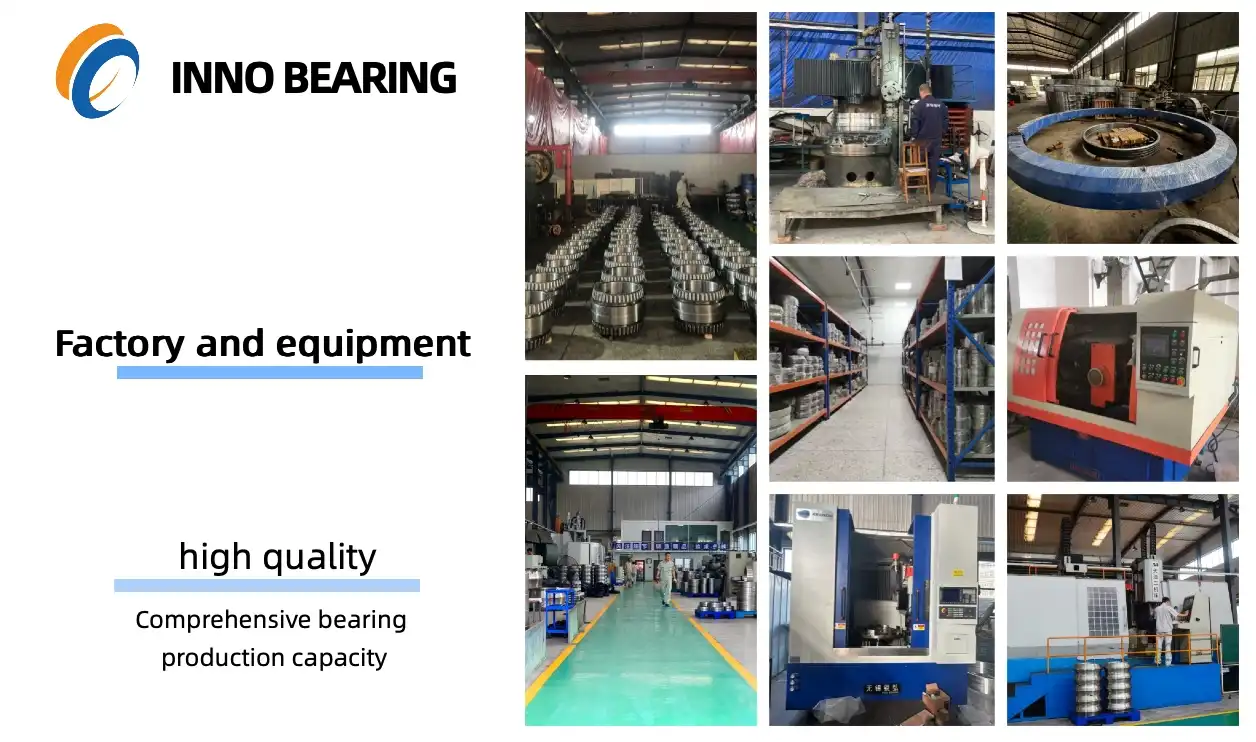
Our state-of-the-art production facilities accommodate bearing diameters up to 5000mm, utilizing precision CNC machining centers and automated testing equipment to ensure consistent quality across all product lines. Heat treatment capabilities include induction hardening processes that achieve optimal hardness profiles while maintaining dimensional stability. Quality control procedures encompass material certification, dimensional verification, and performance validation through comprehensive testing protocols.
Custom engineering services enable optimization of bearing designs for specific applications, working closely with OEM partners to achieve seamless integration with existing crane systems. Rapid prototyping capabilities support development projects requiring iterative design refinement and performance validation.
Comprehensive Product Portfolio
Our slewing bearing product range encompasses standard configurations suitable for common crane applications as well as specialized designs for extreme operating conditions. High-temperature variants utilize advanced materials and specialized lubricants to maintain performance in metallurgical applications approaching 500°C operating temperatures. Marine-grade options feature enhanced corrosion protection and improved sealing systems for offshore and port applications.
Standard inventory includes over 1,000 bearing configurations for immediate delivery, while custom manufacturing capabilities support unique requirements with typical lead times of 15-20 days. This combination of availability and flexibility ensures project schedules remain on track regardless of specification complexity.
Full-Lifecycle Support Services
Our commitment to customer success extends beyond initial product delivery through comprehensive aftermarket support programs. Installation consulting ensures proper bearing mounting and initial setup, while ongoing maintenance guidance maximizes operational lifespan and reliability. Technical support services include troubleshooting assistance, performance optimization recommendations, and upgrade planning for aging equipment.
Global logistics capabilities enable efficient delivery to project sites worldwide, with regional distribution centers reducing shipping times and costs. Emergency replacement services provide expedited delivery for critical applications where operational continuity demands immediate action.
Conclusion
Crane slew ring selection and procurement requires careful consideration of technical specifications, safety requirements, and long-term operational costs. Understanding the relationship between design features, application demands, and maintenance requirements enables informed decisions that optimize crane performance while ensuring regulatory compliance. Successful procurement strategies balance immediate cost considerations with total lifecycle value, emphasizing supplier capabilities, quality assurance, and comprehensive support services that contribute to sustained operational excellence in demanding industrial environments.
FAQ
What factors most significantly impact slewing bearing longevity?
Proper lubrication management, load limit adherence, and environmental protection represent the three most critical factors influencing bearing lifespan. Regular maintenance intervals, appropriate lubricant selection, and seal integrity monitoring can extend operational life by 200-300% compared to neglected installations.
How often should crane slewing bearings undergo inspection?
Inspection frequency depends on operating conditions and duty cycles. Standard outdoor applications require monthly visual inspections and quarterly detailed examinations. High-duty applications such as port cranes may necessitate weekly monitoring, while indoor applications with moderate usage can extend intervals to quarterly inspections.
What distinguishes premium slewing bearings from standard options?
Premium bearings feature enhanced materials such as 42CrMo steel construction, precision P4-grade manufacturing tolerances, and specialized sealing systems. These improvements provide superior load capacity, extended operational life, and enhanced environmental resistance compared to standard 50Mn steel configurations with standard manufacturing tolerances.
Partner with INNO Bearing for Superior Crane Slew Ring Solutions
INNO Bearing delivers unmatched expertise in crane slewing bearing design and manufacturing, combining three decades of industry experience with cutting-edge production capabilities. Our comprehensive product portfolio accommodates standard applications through immediate inventory availability while providing custom solutions within competitive lead times. Quality assurance protocols ensure reliable performance, while comprehensive support services maximize operational value throughout the equipment lifecycle. Contact our engineering team at sales@inno-bearing.com to discuss your specific crane slew ring supplier requirements and discover how our proven solutions can enhance your operational reliability.
References
American Society of Mechanical Engineers. "Design and Application Guidelines for Large Diameter Slewing Bearings in Mobile Crane Applications." ASME Standards Publication, 2023.
International Organization for Standardization. "Rolling Bearings - Slewing Bearings - Part 1: Design Principles and Calculation Methods." ISO 14728-1:2022.
Crane Manufacturers Association of America. "Safety Standards for Overhead and Gantry Cranes - Bearing Systems and Rotating Components." CMAA Specification 74, 2023.
National Institute for Occupational Safety and Health. "Criteria for Recommended Standard - Occupational Exposure to Crane Operation Hazards." NIOSH Publication 2023-106.
Society of Automotive Engineers. "Metallic Materials and Elements for Aerospace Vehicle Structures - Large Bearing Applications." SAE International Standard AS4340C, 2023.
Wind Power Engineering & Development. "Advanced Bearing Technologies for Wind Turbine Yaw and Pitch Systems - Performance Analysis and Selection Criteria." Technical Review, Vol. 27, 2023.

Learn about our latest products and discounts through SMS or email