- English
- French
- German
- Portuguese
- Spanish
- Russian
- Japanese
- Korean
- Arabic
- Greek
- German
- Turkish
- Italian
- Danish
- Romanian
- Indonesian
- Czech
- Afrikaans
- Swedish
- Polish
- Basque
- Catalan
- Esperanto
- Hindi
- Lao
- Albanian
- Amharic
- Armenian
- Azerbaijani
- Belarusian
- Bengali
- Bosnian
- Bulgarian
- Cebuano
- Chichewa
- Corsican
- Croatian
- Dutch
- Estonian
- Filipino
- Finnish
- Frisian
- Galician
- Georgian
- Gujarati
- Haitian
- Hausa
- Hawaiian
- Hebrew
- Hmong
- Hungarian
- Icelandic
- Igbo
- Javanese
- Kannada
- Kazakh
- Khmer
- Kurdish
- Kyrgyz
- Latin
- Latvian
- Lithuanian
- Luxembou..
- Macedonian
- Malagasy
- Malay
- Malayalam
- Maltese
- Maori
- Marathi
- Mongolian
- Burmese
- Nepali
- Norwegian
- Pashto
- Persian
- Punjabi
- Serbian
- Sesotho
- Sinhala
- Slovak
- Slovenian
- Somali
- Samoan
- Scots Gaelic
- Shona
- Sindhi
- Sundanese
- Swahili
- Tajik
- Tamil
- Telugu
- Thai
- Ukrainian
- Urdu
- Uzbek
- Vietnamese
- Welsh
- Xhosa
- Yiddish
- Yoruba
- Zulu
High-Speed Applications of Angular Contact Ball Bearings
Angular contact ball bearings are an important part of high-speed industrial machines because they provide better performance in situations where load distribution and rotational stability are important. Because of their unique contact angle design, these special bearings are great at handling both radial and axial forces. This makes them essential in many fields, from aircraft to wind energy. Their ability to keep working properly at high speeds while reducing friction and heat buildup has changed the way precision transmission systems work in many areas.
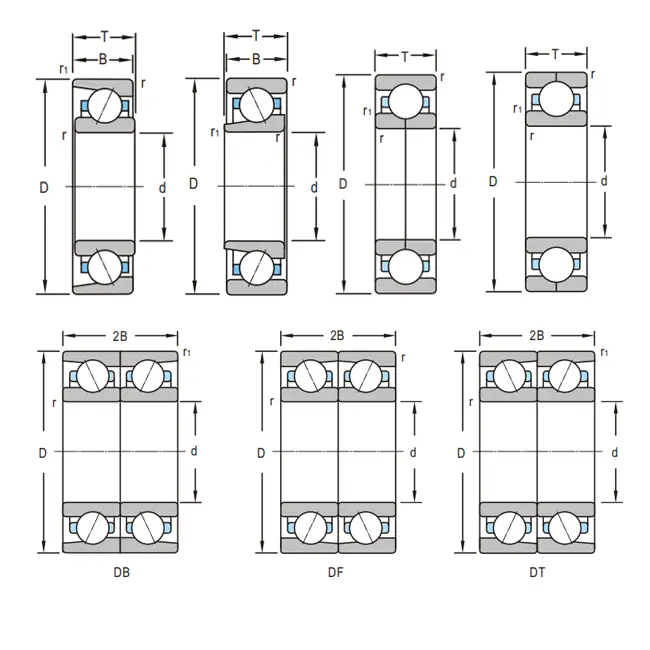
Understanding Angular Contact Ball Bearings in High-Speed Environments
The clever design architecture of these bearings strikes a perfect balance between their load capacity and spinning speed capabilities. Each bearing has a carefully measured contact angle that tells you how much weight it can hold and how long it can work.
Critical Design Features for High-Speed Performance
The shape of the contact angle is what makes high-speed possible. These bearings come in 15°, 25°, and 40° configurations to fit a range of load situations while still allowing for speed adjustment. The 15° angle is better for radial load capacity and higher speed ratings, while the 40° angle is better for managing axial load at modest speeds.
Coming up with new materials is just as important for reducing friction as it is for managing heat. The normal construction of GCr15 steel makes it very durable, and aerospace aluminum alloy cages in high-speed versions make them lighter and more stable while rotating. This mixture makes it possible to use the machine in places where normal bearings would break down quickly.
Load Distribution and Preload Optimization
For high-speed uses to keep running smoothly and without skidding, the load must be distributed precisely. The shape of the raceways makes sure that the rolling elements and races make good contact, which spreads the forces evenly throughout the bearing assembly. Preload methods make spinning more stable by getting rid of internal gaps that could make noise and vibrations while the machine is running.
When used in demanding situations, pairing setups offer extra benefits. When you need to handle the most axial load, face-to-face configurations are the best choice. Back-to-back arrangements are better for rigidity and moment load capacity. The choice is based on specific practical needs and mounting limitations.
Comparative Advantages Over Standard Ball Bearings
When it comes to speed tolerance and load control, angular contact ball bearings are better than Deep groove ball bearings. Because of their contact angle form, these bearings can handle combined loads better, which lowers stress levels that usually slow down operations. When the speed goes above 10,000 RPM, this benefit stands out even more, since normal bearings often have cage instability and make too much heat.
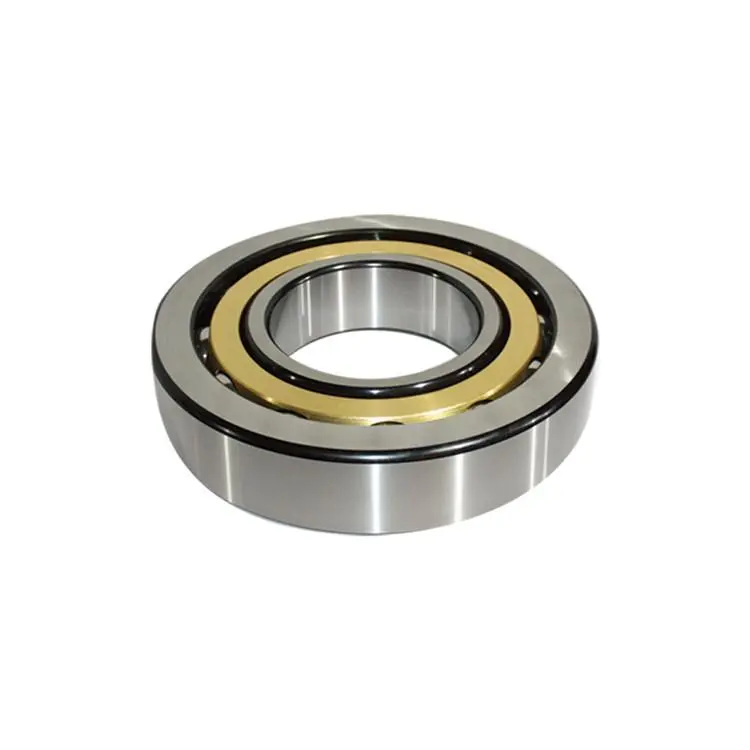
Performance Optimization for High-Speed Industrial Applications
To get the best performance in high-speed settings, you need to take care of a few important issues that affect how long bearings last and how reliable they are. Understanding these factors helps maintenance teams run their jobs more efficiently and avoid unplanned downtime as much as possible.
Thermal Management and Lubrication Strategies
The main thing that limits high-speed bearing uses is the amount of heat that they produce. Using the right lubricant has a direct effect on the temperature at which something works and how long it lasts. High-quality synthetic lubricants that are more thermally stable keep their viscosity over a wide range of temperatures. This keeps the film layer constant at high speeds.
The time between lubrications needs to match the needs of the work and the conditions of the environment. Machine tool spindles usually need to be re-greased every 2,000 to 3,000 hours of use. For continuous-duty uses, circulating oil systems may be better because they cool down the machine and remove contaminants all the time.
Monitoring methods have changed over time to give real-time information on performance. Vibration analysis finds early signs of contamination or wear, and thermal imaging finds hot spots that could mean that the bearings aren't aligned properly or the grease is failing. When compared to reactive maintenance tactics, these proactive methods increase the life of bearings by 30 to 40 percent.
Case Studies in Machine Tool and Motor Applications
A well-known maker of machine tools said that their spindle systems worked much better after they switched to precision angular contact bearings. The improved rigidity and speed made cutting speeds 25% faster and surface finish differences 60% smaller. Within eight months, the investment paid for itself through higher output and lower scrap rates.
Similar benefits can be seen in electric motor uses, especially in high-frequency drives used for industrial automation. Motors can work at their most efficient levels because they make less noise and can go faster. This means they use 8–12% less energy than standard bearing configurations.
Selection Criteria for High-Speed Angular Contact Ball Bearings
To make sure that the best bearings are chosen for each application, procurement choices need to be carefully considered based on a number of performance parameters. Knowing these factors helps procurement managers make smart choices that balance the costs of the original investment with the costs of running the business in the long run.
Essential Performance Metrics
Load capacity ratings are the basis for choosing a bearing, but for high-speed uses, you need to think about more than just basic load calculations. Ratings for speed must include safety factors that take into account how well the bearings are oiled, the temperature at which they are used, and how long they are expected to last.
When precision applications are used, rigidity traits affect how accurate the machine is and how good the surface finish is. Higher preload levels make the structure more stiff, but they may also slow it down. This needs to be carefully balanced based on the needs of the application. Noise levels are very important in places where people or sensitive equipment are present. Under normal working conditions, premium bearings produce sound levels below 45dB.
Configuration Comparisons and Material Selection
For moderate load uses, single-row configurations are easier to use and cost less, while double-row configurations offer higher load capacity and rigidity for tough environments. The choice is based on the amount of room available, how hard the mounting is, and how well the system needs to work.
There are trade-offs between cost and performance when choosing between steel and ceramic hybrid choices. Ceramic rolling elements are great for medical and aerospace uses where precision and dependability are very important because they are lighter and less likely to rust. For most industrial uses, standard steel construction is still the most cost-effective option while still offering excellent performance.
Industry Certifications and Quality Standards
Tolerances in manufacturing are set by precision grades from P0 to P4, which have a direct effect on cost and performance. For critical uses, P4 grade angular contact ball bearings offer the highest level of precision, while P6 grade bearings work very well for everyday industrial use. To avoid over-specification that raises costs without giving real benefits, the choice should be based on what the application actually needs.
Quality certifications make sure that all batches of a product work the same way and are reliable. Dimensional accuracy requirements are set by ISO 492 standards. For aerospace, medical, or nuclear uses, special certifications may be needed.
Procurement Insights: Sourcing Angular Contact Ball Bearings for High-Speed Use
Strategic sourcing means knowing how the market works, what the suppliers can do, and how to make sure that the quality control methods make sure that the bearings work reliably throughout the product's lifecycle.
Supplier Evaluation and Certification Requirements
Price isn't the only thing that goes into choosing a supplier; technical skills, quality processes, and the reliability of the supply chain are also important. Manufacturing certifications like ISO 9001 provide basic quality assurance. For regulated applications, you may need certifications specific to your business.
Verifying the identity of a product keeps it safe from fake parts that could fail catastrophically. Established suppliers provide traceability documentation that keeps track of materials and production processes. This makes sure that specific requirements are met and lets you find the root cause of problems if they happen.
Strategic Procurement and Market Dynamics
Opportunities to buy in bulk can save you a lot of money and make sure you have enough supplies for important uses. Minimum order amounts can lower unit costs by 15–25%, but they need to be weighed against the costs of keeping inventory and the risk of items becoming obsolete.
The market in 2025 is affected by current changes in the supply chain and changes in the cost of materials. Standard products usually have lead times between 4 and 8 weeks, while custom configurations can take anywhere from 12 to 16 weeks, based on how complicated they are and how much time the supplier has available.
Value-Added Services and Technical Support
Full technical consulting services help make bearing selection and application engineering work better. These services often offer more value than just lower prices because they make sure that the right bearings are chosen, installed, and maintained in a way that makes them work as reliably as possible.
After-sales support includes figuring out what went wrong, making sure replacement parts are available, and fixing problems with the application so that output can keep going. When suppliers offer these services, they show that they care about their customers' long-term success over short-term deals.
Conclusion
High-speed applications of angular contact ball bearings continue to expand across industries requiring precision, reliability, and performance optimization. The unique design characteristics of these bearings, including their contact angle geometry and advanced materials, provide superior capabilities for managing combined loads at elevated speeds. Proper selection criteria, encompassing load capacity, speed ratings, and precision requirements, ensure optimal performance while managing lifecycle costs. Strategic procurement approaches that emphasize supplier quality, technical support, and comprehensive service capabilities maximize the value proposition for industrial applications requiring uncompromising reliability.
FAQ
What makes angular contact ball bearings suitable for high-speed applications?
The contact angle design allows these bearings to handle combined radial and axial loads efficiently while maintaining stability at high rotational speeds. The precise raceway geometry and advanced cage materials minimize friction and heat generation, enabling reliable operation at speeds that would cause standard bearings to fail.
How do I select the correct contact angle for my application?
Contact angle selection depends on your load requirements and speed capabilities. A 15° angle provides the highest speed capability with moderate axial load capacity, while 25° offers balanced performance. The 40° configuration maximizes axial load handling but limits speed capability. Consider your primary load direction and speed requirements when making this selection.
What maintenance practices extend bearing life in high-speed applications?
Regular lubrication monitoring, vibration analysis, and thermal management are essential. Use high-quality synthetic lubricants appropriate for your speed and temperature conditions. Monitor operating temperatures and vibration levels to detect early signs of wear or contamination. Maintain clean operating environments and follow manufacturer recommendations for lubrication intervals.
INNO Bearing: Your Trusted Angular Contact Ball Bearings Manufacturer
At INNO Bearing, we understand the critical role that precision bearings play in your high-speed applications. With nearly 30 years of manufacturing expertise, our angular contact ball bearings deliver the reliability and performance your operations demand. Our comprehensive product range, from standard configurations to custom Solutions up to φ5000mm, ensures we can meet your specific requirements with exceptional quality and rapid delivery. Contact our technical team at sales@inno-bearing.com to discuss your high-speed bearing needs and discover how our precision-engineered solutions can optimize your equipment performance.
References
Harris, T.A. & Kotzalas, M.N. (2020). Essential Concepts of Bearing Technology: Rolling Bearing Analysis, Fifth Edition. CRC Press.
Hamrock, B.J., Schmid, S.R. & Jacobson, B.O. (2019). Fundamentals of Fluid Film Lubrication: Second Edition. Marcel Dekker.
Eschmann, P., Hasbargen, L. & Weigand, K. (2018). Ball and Roller Bearings: Theory, Design and Application, Third Edition. John Wiley & Sons.
Palmgren, A. (2021). Ball and Roller Bearing Engineering: Fourth Edition. SKF Industries.
ISO 492:2019. Rolling bearings - Radial bearings - Geometrical product specifications and tolerance values. International Organization for Standardization.
ANSI/ABMA Standard 20-2017. Radial Bearings of Ball, Cylindrical Roller and Spherical Roller Types - Metric Design. American Bearing Manufacturers Association.

Learn about our latest products and discounts through SMS or email