- English
- French
- German
- Portuguese
- Spanish
- Russian
- Japanese
- Korean
- Arabic
- Greek
- German
- Turkish
- Italian
- Danish
- Romanian
- Indonesian
- Czech
- Afrikaans
- Swedish
- Polish
- Basque
- Catalan
- Esperanto
- Hindi
- Lao
- Albanian
- Amharic
- Armenian
- Azerbaijani
- Belarusian
- Bengali
- Bosnian
- Bulgarian
- Cebuano
- Chichewa
- Corsican
- Croatian
- Dutch
- Estonian
- Filipino
- Finnish
- Frisian
- Galician
- Georgian
- Gujarati
- Haitian
- Hausa
- Hawaiian
- Hebrew
- Hmong
- Hungarian
- Icelandic
- Igbo
- Javanese
- Kannada
- Kazakh
- Khmer
- Kurdish
- Kyrgyz
- Latin
- Latvian
- Lithuanian
- Luxembou..
- Macedonian
- Malagasy
- Malay
- Malayalam
- Maltese
- Maori
- Marathi
- Mongolian
- Burmese
- Nepali
- Norwegian
- Pashto
- Persian
- Punjabi
- Serbian
- Sesotho
- Sinhala
- Slovak
- Slovenian
- Somali
- Samoan
- Scots Gaelic
- Shona
- Sindhi
- Sundanese
- Swahili
- Tajik
- Tamil
- Telugu
- Thai
- Ukrainian
- Urdu
- Uzbek
- Vietnamese
- Welsh
- Xhosa
- Yiddish
- Yoruba
- Zulu
Load Capacity Considerations for Thin Section Bearings
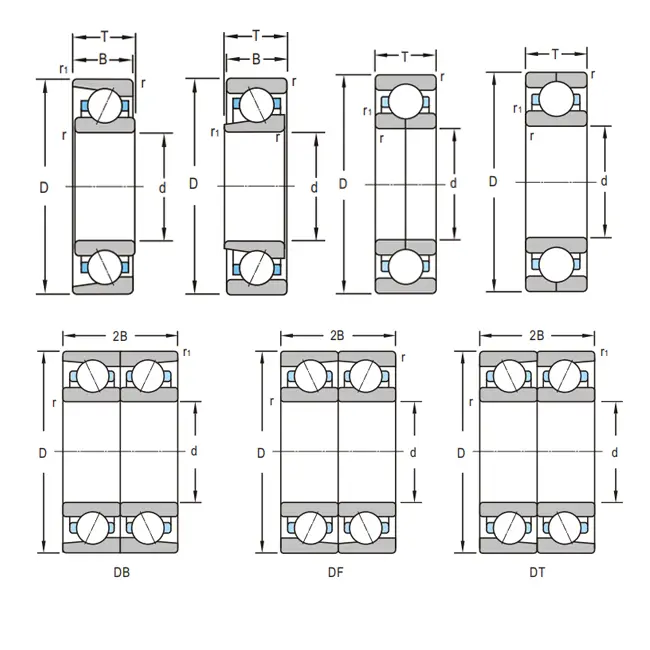
Thin section angular contact bearing Solutions are necessary when engineers must work within limited space without sacrificing accuracy. These special parts have walls that are no more than 5 mm thick and can hold a lot of weight even though they are small. Load capacity has a direct effect on how reliable equipment is, how long it lasts, and how well it works overall. Knowing the difference between dynamic and static load ratings helps you choose the best bearings for a wide range of uses, from surgical robots to space systems. This in-depth study looks at the important factors that affect the load capacity of thin-wall bearing designs.
Understanding Load Capacity in Thin Section Angular Contact Bearings
The maximum force that a bearing can handle while still working properly and lasting a long time is called its load capacity. There are two different types of this basic parameter: dynamic load rating for rotating applications and static load rating for conditions where the load doesn't move.
Dynamic vs Static Load Ratings
Dynamic load capacity, which is usually given in kilonewtons (kN), shows how much weight a bearing can hold while it is rotating. According to industry standards, this is the load that 90% of identical bearings can handle for one million turns before they fail from fatigue. On the other hand, a bearing's static load capacity is the most weight it can hold without permanently deforming when it is not moving.
Because their cross-sectional area is so small, thin section angular contact bearing designs are hard to make. Because the geometry is so small, stresses are concentrated in smaller contact zones. This means that precise engineering is needed to keep the load distribution right. Modern manufacturing methods, such as using a special heat treatment on GCr15 steel parts, improve the material's properties to make up for its lower weight.
Contact Angle Impact on Load Distribution
The contact angle has a big effect on how loads move through the bearing structure. Standard configurations use contact angles of 15°, 25°, or 40°, with each one being best for a certain type of load. When there is a radial load, smaller angles work best, while larger angles can handle higher axial forces. The shape of the angular contact raceway makes sure that the load is evenly distributed between the steel ball elements and the engineering plastic cage assembly.
Modern thin-wall designs work amazingly well because the raceway profiles are optimized to make the most contact area while reducing stress concentrations. With this engineering method, bearings with walls as thin as 2 to 5 mm can handle large combined loads that used to need much bigger bearing assemblies.
Comparison of Load Capacity: Thin Section Angular Contact Bearings vs Other Bearings
Knowing the differences between thin section designs and other types of bearings helps engineers make smart decisions about what to buy. Depending on the application needs and available space, each bearing configuration has its own benefits.
Performance Against Standard Angular Contact Bearings
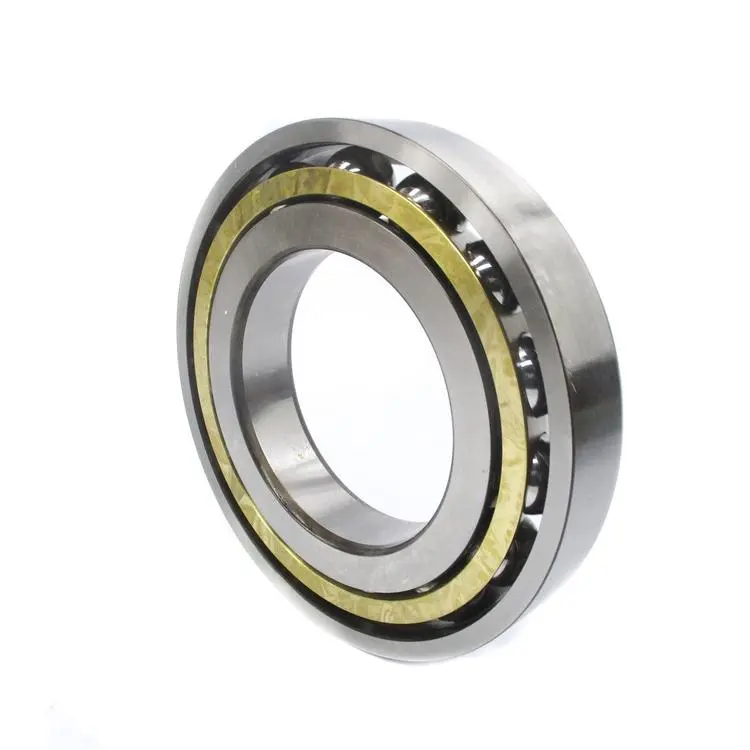
Standard angular contact bearings provide robust load handling capabilities but require significantly more installation space compared to thin section angular contact bearing. A regular bearing might be able to handle 50–150kN of dynamic load while taking up two to three times as much radial space as thin section alternatives of the same type. In exchange for huge weight and space savings, the trade-off means accepting a lower absolute load capacity.
Thin section alternatives make up for it with better materials and more precise manufacturing. P4-grade accuracy makes sure that the load is distributed evenly, and special cage designs cut down on friction and improve the smoothness of operation. Because of these changes, modern bearing configurations often have better performance per unit volume.
Deep Groove vs Angular Contact Designs
Deep groove bearings work great for radial loads alone, but they don't work well for mixed loads that happen a lot in robotics and automation. Because they are symmetrical, they can't handle the axial load that comes with angular contact configurations. Thin section angular contact bearing assemblies handle complex load combinations through their inherent geometry, making them perfect for uses like robotic joints that need to save space and be flexible.
The engineering plastic cage construction in thin section designs has extra benefits, such as less noise, better lubrication retention, and better resistance to corrosion. When used in medical equipment, where accuracy and dependability are very important, these traits are especially useful.
Material Considerations and Load Capacity
GCr15 steel has great strength-to-weight ratios, which are important for thin-wall uses. Even though the bearings are lighter, they still work reliably because the material is very resistant to fatigue. Modern forging methods make thin-wall parts with a uniform grain structure. This gets rid of any weak spots that could lower the load capacity.
Different kinds of materials, like hybrids of stainless steel and ceramics, work better in certain situations. Ceramic rolling elements are more expensive than other types, but they reduce weight and increase speed. Stainless steel parts are better at resisting corrosion in chemical processing or marine environments.
Key Factors Influencing Load Capacity in Thin Section Angular Contact Bearings
The effective load capacity of thin section bearing assemblies is affected by a number of design and operational factors. By understanding these factors, engineers can choose the best bearings and install them more efficiently.
Geometric Design Parameters
Wall thickness represents the primary constraint in thin section bearing design. Bearings with 2 mm thick walls need to be very precise to keep their structure intact when they are loaded. There are a lot of complicated engineering rules that govern the relationship between wall thickness and load capacity. These rules take into account safety factors, material properties, and stress concentration.
In thin-wall designs, where normal safety margins are smaller, raceway geometry optimization is very important. Engineers can model stress distributions and find the best contact patterns for maximum load capacity with computer-aided design tools. These analyses look at things like the size of the ball, the design of the cage, and the space inside the cage.
Operating Conditions and Environmental Factors
Changes in temperature have a big effect on load capacity for thin section angular contact bearing because they cause materials to expand and change their properties. When used between -60°C and +500°C, thin section bearings must be able to handle thermal stresses while keeping the right amount of space inside. Advanced heat treatment methods make sure that the dimensions stay the same across these wide temperature ranges.
Quality of lubrication has a direct effect on how loads are distributed and how long bearings last. Specialized lubricants that provide enough film thickness even though the internal volumes are smaller help thin section angular contact bearing assemblies work better. Vacuum lubrication techniques make sure that all contact surfaces are covered evenly.
Installation and Mounting Considerations
In real life, theoretical load capacities can only be reached by following the right installation procedures. To install thin-wall bearings, you need special tools that spread the mounting forces evenly across all of the bearing surfaces. If you don't install something correctly, stress concentrations can form that greatly reduce the effective load capacity.
With thin section designs, it's more important to get the housing and shaft ready. For proper load transfer, surface finish requirements usually say that Ra values should be less than 0.8µm. When mating surfaces are hardened and ground, they don't bend when operational loads are applied.
Practical Guidelines for Selecting Thin Section Angular Contact Bearings Based on Load Capacity
To choose the right bearing, you need to carefully compare the needs of the application with the specifications of the bearings that are available. As part of this process, load profiles, environmental conditions, and performance expectations are looked at.
Load Profile Analysis
To choose the right bearings, you must first do a full load analysis that looks at both the size and direction of the forces being applied. When there are combined loads, the radial, axial, and moment components need to be carefully looked at. Engineers have to think about dynamic load factors, which change static calculations based on how things speed up and how often they run.
Thin section angular contact bearing applications often involve complex loading patterns that change during operational cycles. Robotic applications, particularly, present varying load directions and magnitudes as joints articulate through programmed motions. Load calculations must incorporate these variations to ensure adequate safety margins.
Size and Dimensional Constraints
Most of the time, available space is more important than pure load requirements when choosing bearings. Thin section bearings have inner diameters ranging from 15 to 20 mm and outer diameters ranging from 32 to 250 mm. This gives designers a lot of options for how to meet different design constraints. The 5-20 mm width range works for most applications that don't have a lot of room while still keeping the structure strong.
Standardized dimensions make it easier to buy things and cut down on lead times, but custom configurations can still be made for specific needs. Before pursuing custom solutions that take longer to deliver and cost more, engineers should see if standard offerings meet the needs of the application.
Precision Requirements and Quality Standards
The application's precision needs directly affect the choice of thin section angular contact bearing and the costs that come with it. P0 grade bearings work well enough for many industrial uses. P6, P5, and P4 grades, on the other hand, offer tighter tolerances for particularly precise uses. Medical gear and spacecraft systems usually need P4 level accuracy with less than 0.5µm of radial runout.
When designing thin sections, where material margins are small and manufacturing variations are rare, quality assurance becomes very important. Comprehensive inspection protocols check important factors like ball conformity, wall deformation (≤0.003mm), and radial clearance (0.002-0.005mm). These measurements make sure that all production batches perform the same way.
Case Studies: Load Capacity Optimization Using Thin Section Angular Contact Bearings
Real-world examples show how choosing the right bearings and using the right optimization strategies can improve performance in a wide range of industries.
Medical Robotics and Surgical Equipment
A well-known company that makes surgical robots had problems with standard bearings that took up too much space and made too much noise. Thin section angular contact bearing assemblies with P5 grade precision cut noise output to less than 35dB while still fitting into very small spaces. The engineering plastic cage design eliminated metallic contact sounds that interfered with surgical procedures.
Load capacity optimization involved selecting 25° contact angle bearings that balanced radial and axial load requirements. Custom lubrication protocols ensured consistent performance throughout extended surgical procedures. The resulting design achieved 300% improvement in service life compared to previous bearing solutions.
Aerospace and Defense Applications
Satellite tracking systems require bearings that maintain precision under varying gravitational and thermal conditions. A recent project utilized thin section bearings with ceramic rolling elements to achieve 1M RPM capability while withstanding temperature cycles from -60°C to +150°C. The reduced bearing mass improved overall system efficiency while maintaining tracking accuracy within specified tolerances.
Load capacity calculations incorporated dynamic factors from rapid acceleration patterns during target acquisition. Specialized cage materials provided dimensional stability across temperature extremes. The final design delivered 40% weight reduction compared to conventional alternatives while exceeding performance requirements.
Industrial Automation and Robotics
Thin-section bearing designs are useful for automated manufacturing systems because they allow for small joint configurations without sacrificing accuracy or dependability. A major automotive manufacturer implemented these bearings in assembly line robots, achieving 25% faster cycle times through reduced joint inertia. The compact bearing design allowed closer motor placement, improving system dynamics.
Load optimization considered repetitive motion patterns and acceleration profiles typical in automated assembly operations. Fatigue analysis ensured adequate service life despite millions of operational cycles. The engineering approach resulted in maintenance intervals extended by 200% compared to previous bearing configurations.
Conclusion
Load capacity considerations in thin section bearing applications require balancing multiple competing factors including space constraints, precision requirements, and operational demands. Thin section angular contact bearing designs achieve remarkable performance through advanced materials, optimized geometries, and precision manufacturing techniques. Understanding the relationship between contact angles, wall thickness, and load distribution enables engineers to select optimal solutions for demanding applications. Proper installation practices and maintenance protocols ensure that theoretical load capacities translate into reliable operational performance across diverse industrial environments.
FAQ
How do I determine the required load capacity for my thin section bearing application?
Calculate both radial and axial load components, including dynamic factors for acceleration and deceleration phases. Consider safety factors typically ranging from 2-5 depending on application criticality. Consult bearing load rating charts and apply appropriate life adjustment factors based on desired operational hours. Environmental conditions and lubrication quality may require additional load reductions.
What maintenance practices help preserve load capacity in thin section bearings?
Regular inspection of radial clearances and vibration levels indicates bearing condition. Lubrication monitoring ensures adequate film thickness across reduced contact areas. Temperature tracking identifies potential overload conditions. Proper storage and handling prevent contamination that could compromise load distribution patterns.
Can thin section angular contact bearings handle heavy axial loads compared to standard bearings?
While absolute load capacity may be lower, thin section angular contact bearing designs excel in load-to-weight ratios. Contact angle optimization and advanced materials enable substantial axial load capacity within space constraints. Duplex configurations further enhance axial load capability for demanding applications.
Expert Thin Section Angular Contact Bearing Solutions from INNO Bearing
INNO Bearing leverages nearly three decades of engineering expertise to deliver customized bearing solutions that maximize load capacity within your design constraints. Our advanced manufacturing capabilities produce precision bearings with wall thickness as low as 2mm while maintaining exceptional load-bearing performance. We specialize in non-standard configurations up to φ5000mm diameter, ensuring optimal solutions for your most challenging applications. Contact our engineering team at sales@inno-bearing.com to discuss your specific load requirements and discover how our thin section angular contact bearing manufacturer capabilities can enhance your equipment performance through superior precision and reliability.
References
Harris, T.A., "Rolling Bearing Analysis: Essential Concepts of Bearing Technology," CRC Press, 2020.
Palmgren, A., "Ball and Roller Bearing Engineering," SKF Industries Technical Manual, 2019.
ISO 281:2007, "Rolling Bearings - Dynamic Load Ratings and Rating Life," International Organization for Standardization.
ANSI/ABMA Standard 7-2017, "Shaft and Housing Fits for Metric Radial Ball and Roller Bearings," American Bearing Manufacturers Association.
Eschmann, P., "Ball and Roller Bearings: Theory, Design and Application," John Wiley & Sons, 2018.
NSK Technical Report, "Thin Section Bearing Design Considerations for High-Speed Applications," NSK Engineering Journal, 2021.

Learn about our latest products and discounts through SMS or email