- English
- French
- German
- Portuguese
- Spanish
- Russian
- Japanese
- Korean
- Arabic
- Greek
- German
- Turkish
- Italian
- Danish
- Romanian
- Indonesian
- Czech
- Afrikaans
- Swedish
- Polish
- Basque
- Catalan
- Esperanto
- Hindi
- Lao
- Albanian
- Amharic
- Armenian
- Azerbaijani
- Belarusian
- Bengali
- Bosnian
- Bulgarian
- Cebuano
- Chichewa
- Corsican
- Croatian
- Dutch
- Estonian
- Filipino
- Finnish
- Frisian
- Galician
- Georgian
- Gujarati
- Haitian
- Hausa
- Hawaiian
- Hebrew
- Hmong
- Hungarian
- Icelandic
- Igbo
- Javanese
- Kannada
- Kazakh
- Khmer
- Kurdish
- Kyrgyz
- Latin
- Latvian
- Lithuanian
- Luxembou..
- Macedonian
- Malagasy
- Malay
- Malayalam
- Maltese
- Maori
- Marathi
- Mongolian
- Burmese
- Nepali
- Norwegian
- Pashto
- Persian
- Punjabi
- Serbian
- Sesotho
- Sinhala
- Slovak
- Slovenian
- Somali
- Samoan
- Scots Gaelic
- Shona
- Sindhi
- Sundanese
- Swahili
- Tajik
- Tamil
- Telugu
- Thai
- Ukrainian
- Urdu
- Uzbek
- Vietnamese
- Welsh
- Xhosa
- Yiddish
- Yoruba
- Zulu
Thin Section Bearings for Robotics and Automation
Thin section bearings for robotics and automation are a huge step forward in precision engineering. They solve important problems with space and weight in modern industrial systems. The profiles of these specialized parts are very thin, with wall thicknesses of 5 mm or less. This lets engineers get great performance in small spaces. A thin section angular contact bearing can hold more weight while keeping its cross-sectional size as small as possible. This makes it essential for robotic joints, medical devices, and automation equipment where regular bearings aren't enough.
Understanding Thin Section Angular Contact Bearings in Robotics
Precision robotics and automation systems that need to be very precise need parts that can work very well in very small spaces. The most difficult engineering requirements are met by thin section angular contact bearings, which have a unique combination of small size and strong performance.
Design Architecture and Engineering Principles
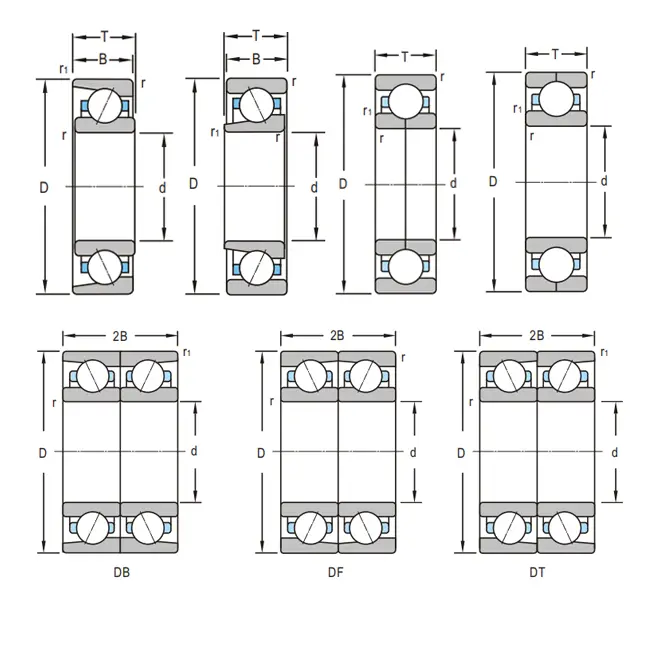
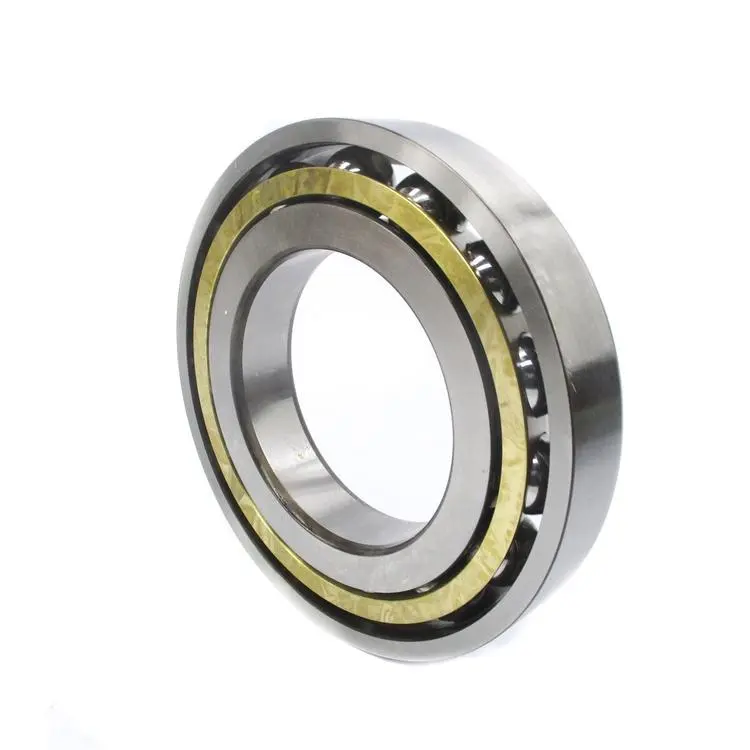
An optimized geometry that maximizes load capacity while minimizing space requirements is at the heart of the design of a thin section angular contact bearing. The inner and outer rings of these bearings are made of thin-walled GCr15 steel forgings, and they have angular contact raceways that are designed to handle both axial and radial loads. The angular contact geometry, which is set at precise angles, lets these bearings handle large thrust loads in only one direction while still being able to handle excellent radial loads.
A high-quality GCr15 material is used to make small steel balls that are part of the structure. These are paired with lightweight engineering plastic cages that reduce friction and wear. This arrangement gets rid of unnecessary structural parts, making an amazingly small assembly that still works very precisely. Because there are no extra protrusions, it can be easily integrated into applications that need to save space and every millimeter counts.
Material Excellence and Manufacturing Standards
Choosing the right materials is a very important part of how well thin section angular contact bearings work. Both the rings and the rolling elements of an INNO Bearing are made of high-quality GCr15 steel. This ensures that the metal's properties stay the same and that the bearing lasts a long time. These engineering plastic cages are much better than traditional metal ones because they are lighter, better at keeping lubrication in, and more resistant to wear.
The level of accuracy in manufacturing is very high; deformation tolerances are kept at ≤0.003mm for thin walls, and radial clearances are kept at 0.002-0.005mm. These requirements make sure that the steel ball fitting and installation work well in a wide range of situations. As part of quality control, measurements are checked carefully, the product is overloaded for 24 hours, and it is shaken up according to international standards.
Advantages and Applications of Thin Section Angular Contact Bearings
The remarkable benefits of thin section angular contact bearings become apparent when looking at their real-world applications across various industries. These components solve fundamental engineering challenges while enabling innovative design possibilities that were previously impossible with conventional bearing Solutions.
Space and Weight Optimization Benefits
The primary advantage of thin section angular contact bearing lies in the extraordinary space savings achieved through constant cross-sectional design. Regardless of bore diameter increases, the cross-section remains consistent, reducing weight and installation envelope by up to 85% compared to standard angular contact bearings. This trait is very useful in robotics, where payload capacity and energy efficiency have a direct effect on how well the robot works.
Getting rid of extra weight is a big part of making automated systems more energy efficient. Mobile robotic platforms with lighter rotating assemblies use less torque to start moving and keep going at the same speed, which means they use less power and have longer battery lives. The lower inertia also lets the system speed up and slow down more quickly, making it more responsive overall.
Load Handling Capabilities and Performance Characteristics
Furthermore, despite their small size, these bearings show exceptional load carrying abilities. The angular contact design does a great job of handling thrust loads and supporting radial loads adequately. They work well with moment loads and reversing thrust conditions that happen a lot in robotic articulation systems when set up in duplex arrangements (back-to-back or face-to-face mounting).
The standards for precision manufacturing make sure that there is little to no runout and vibration, which are important in situations where the product needs to be positioned precisely and run smoothly. When set up correctly, these bearings can keep noise levels below 35dB. This means they can be used in medical equipment and lab automation where quiet operation is important.
Industry Applications and Use Cases
Robotic joints represent the most common application area, where thin section angular contact bearing technology enables compact joint designs without sacrificing accuracy or load capacity. For articulated robotic arms, the lower weight and space requirements make it possible for them to reach farther and carry more weight.
Surgical robots are one type of medical equipment that needs to be very precise and small. The bearings allow for smooth, precise movements that are needed for delicate procedures. They also keep the sterile environment requirements by choosing the right materials and sealing methods. The low magnetic signature and quiet operation are also good for MRI machines and other medical imaging equipment.
Micromotors and drone transmission systems use these bearings to work at high speeds in places with very little space. The design makes it lighter, which helps unmanned aerial vehicles fly longer and carry more, and the precision features make sure that the transmission works reliably.
How to Choose the Best Thin Section Angular Contact Bearing for Your Application?
To choose the best bearing solution, you need to carefully look at a lot of technical and operational factors. As part of the decision-making process, performance needs are weighed against practical issues such as cost, availability, and installation.
Load Analysis and Specification Requirements
The first step in the selection process for thin section angular contact bearing is a full load analysis that looks at both static and dynamic loading conditions. Engineers have to look at the radial loads, axial loads, and combined loading situations that the bearing will face while it is in use. The angular contact design works great in situations where there is a lot of axial loading. This makes it perfect for vertical shaft situations and systems that have thrust loading.
The required speed is a very important factor in choosing the right material and lubrication. For high-speed uses, ceramic rolling elements or special cage materials that lower centrifugal forces and heat production may be helpful. It is important to think carefully about temperature operating ranges, especially in industrial settings where thermal cycling happens.
Size Range and Dimensional Considerations
INNO Bearing has a wide range of sizes, with inner diameters ranging from 15mm to 200mm and outer diameters ranging from 32mm to 250mm. You can choose between 5mm and 20mm in width, and between 2mm and 5mm in wall thickness. With such a wide range, engineers can choose the best dimensions that meet both space needs and load requirements.
Custom sizing goes beyond standard ranges to meet the needs of specific applications. The modular production method allows for quick prototyping and manufacturing to specific dimensions with lead times that are much shorter than the norm in the industry. In OEM applications that need non-standard sizes or certain performance traits, this flexibility comes in handy.
Precision Grade Selection and Quality Standards
There are different levels of accuracy, from the standard P0 to the very precise P4 levels. Each level is designed to meet the needs of a specific application. The standard P0 grade is good for general automation tasks that don't need very much precision. The P6, P5, and P4 grades, on the other hand, offer more precise performance for more demanding tasks.
The choice of precision grade has a direct effect on cost and lead time. Higher precision grades need stricter manufacturing controls and longer processing times, but they work better in situations where precise positioning and smooth operation are very important. In order to meet performance standards, medical and aerospace applications usually need P5 or P4 grade accuracy.
Maintenance, Lifespan, and Reliability in Industrial Environments
The operational life and dependability of thin section angular contact bearing installations are greatly affected by how well they are maintained. Understanding what maintenance needs to be done and putting the right plans into action will ensure the best return on investment and the least amount of unplanned downtime.
Preventive Maintenance Strategies
Regular inspections that check the condition of bearings without stopping normal operations are the first step in making maintenance programs work. Inspections by looking at something can find early signs of contamination, bad lubrication, or seal degradation. Vibration monitoring tells you a lot about the condition of the bearings, and taking baseline measurements lets you look at trends and plan maintenance ahead of time.
Managing lubrication is an important part of maintenance, especially for thin section designs that have specific needs. Because the internal volume is smaller, the amount and quality of lubricant must be carefully considered. If you use too much lubrication, it can increase drag and heat, and if you use too little, it can speed up wear and failure.
Environmental Considerations and Seal Selection
There are many problems that can happen in industrial settings, such as dust, moisture, chemical exposure, and changes in temperature. Choosing the right seals and keeping them in good shape are important for protecting the inside of bearings and keeping their performance. Seals with an IP67 rating are very good at keeping out water and other harmful things, but they may require a little more torque.
Temperature control is especially important in thin section applications where there aren't many ways for heat to escape. Monitoring the ambient temperature and taking thermal cycling into account can help keep bearings from wearing out too quickly. For uses that involve extreme temperatures, you might need special materials or lubrication systems.
Lifespan Optimization and Performance Monitoring
The length of time a bearing lasts depends on many things, such as the load, the operating speed, the environment, and how well it is maintained. When you install something correctly and use the right tools, you can avoid damage that could shorten the service life by a large amount. Because the walls are thin, they need to be carefully handled during installation so that they don't deform or stress concentrate.
Performance monitoring systems can let you know about problems before they get too bad, so you can do preventative maintenance. Modern IoT-based monitoring systems keep an eye on temperature, vibration, and other important factors. They then use data analysis to help with planned maintenance and the best times to replace things.
Conclusion
Thin section angular contact bearing technology represents a critical advancement in precision engineering, enabling innovative solutions across robotics, medical equipment, and automation industries. The unique combination of space efficiency, load capacity, and precision performance addresses fundamental design challenges that conventional bearings cannot solve. INNO Bearing's comprehensive product range, from 15mm to 200mm inner diameter with precision grades up to P4, demonstrates the versatility and capability of modern thin section bearing technology. The proven benefits in weight reduction, space optimization, and energy efficiency make these bearings indispensable for next-generation automation systems where every millimeter and gram impacts overall performance.
FAQ
What makes thin section angular contact bearings superior to standard bearings in robotics applications?
Thin section angular contact bearing designs offer up to 85% weight reduction compared to standard bearings while maintaining equivalent load capacity. Its constant cross-section geometry lets designers make joints that are small and light, which is important for robotic articulation. The angular contact configuration, on the other hand, makes it easier to handle thrust loads, which is needed in vertical shaft applications and systems that have to deal with combined loading conditions.
How do you determine the correct size and precision grade for specific automation applications?
The choice of size is based on an analysis of the loads, which includes radial, axial, and moment loads, along with the speed and environmental needs. INNO Bearing has a range of inner diameters from 15 to 20 mm and precision grades from P0 to P4. The standard P0 grade is good for general automation, while the P4 precision grade is best for medical and aerospace applications that need to be precise within 0.5µm of axial runout.
What maintenance intervals are recommended to maximize bearing lifespan?
Maintenance schedules depend on how the machine is being used, but they usually include visual checks every month, lubrication checks every three months, and vibration checks once a year. Harsh environments may need to be checked on more often, while clean automation environments can go longer between checks. Service life expectations are greatly affected by using the right tools for installation and keeping radial clearances between 0.002 and 0.005 mm.
Contact INNO Bearing for Premium Thin Section Angular Contact Bearing Solutions
INNO Bearing specializes in making world-class thin section angular contact bearing solutions engineered for demanding robotics and automation applications. Because we've been making things for almost 30 years, we can quickly customize your order. We can deliver a prototype in 5 to 7 days and mass production in 15 to 20 days. We keep a large stock of more than 1,000 standard models that can be shipped right away, and our technical team provides full application support from the initial design phase through long-term maintenance planning. Our experts can help engineering directors, procurement managers, and technical teams by emailing sales@inno-bearing.com. We offer custom solutions, low bulk prices, and trustworthy partnerships with thin section angular contact bearing suppliers that will improve the performance and dependability of your automation systems.
References
The Society of Lubrication Engineers and Tribologists. "Thin Section Bearing Design Guidelines for Precision Applications." Proceedings of the STLE Annual Conference 2023.
The ISO is the International Organization for Standardization. A standard specification from ISO 12240-1:2022 says, "Rolling Bearings – Thin Section Ball Bearings – Dimensions and Tolerances."
Association of American Bearing Manufacturers. The ABMA Engineering Report from 2023 is called "Angular Contact Ball Bearing Performance Analysis in Robotics Applications."
The Institute of Electrical and Electronics Engineers. In IEEE Transactions on Robotics, Volume 39, 2023, they wrote about "Precision Bearing Applications in Medical Robotics and Automation Systems."
Its name is the National Institute of Standards and Technology. The NIST Technical Publication 1875 from 2022 is called "Measurement and Calibration of Thin Section Bearing Precision."
Association of the Robotics Industries. The RIA Technical Manual, Fourth Edition, 2023, has "Component Selection Guidelines for Industrial Automation Equipment."

Learn about our latest products and discounts through SMS or email