- English
- French
- German
- Portuguese
- Spanish
- Russian
- Japanese
- Korean
- Arabic
- Greek
- German
- Turkish
- Italian
- Danish
- Romanian
- Indonesian
- Czech
- Afrikaans
- Swedish
- Polish
- Basque
- Catalan
- Esperanto
- Hindi
- Lao
- Albanian
- Amharic
- Armenian
- Azerbaijani
- Belarusian
- Bengali
- Bosnian
- Bulgarian
- Cebuano
- Chichewa
- Corsican
- Croatian
- Dutch
- Estonian
- Filipino
- Finnish
- Frisian
- Galician
- Georgian
- Gujarati
- Haitian
- Hausa
- Hawaiian
- Hebrew
- Hmong
- Hungarian
- Icelandic
- Igbo
- Javanese
- Kannada
- Kazakh
- Khmer
- Kurdish
- Kyrgyz
- Latin
- Latvian
- Lithuanian
- Luxembou..
- Macedonian
- Malagasy
- Malay
- Malayalam
- Maltese
- Maori
- Marathi
- Mongolian
- Burmese
- Nepali
- Norwegian
- Pashto
- Persian
- Punjabi
- Serbian
- Sesotho
- Sinhala
- Slovak
- Slovenian
- Somali
- Samoan
- Scots Gaelic
- Shona
- Sindhi
- Sundanese
- Swahili
- Tajik
- Tamil
- Telugu
- Thai
- Ukrainian
- Urdu
- Uzbek
- Vietnamese
- Welsh
- Xhosa
- Yiddish
- Yoruba
- Zulu
Why Use Roller Bearing Slewing Rings in Cranes?
Roller bearing slewing rings represent the engineering solution for crane manufacturers seeking uncompromising load capacity and operational reliability. Unlike conventional ball bearing alternatives, roller bearing slewing rings utilize cylindrical rollers as rolling elements, delivering superior load-bearing strength and impact protection, which are important for heavy-duty crane uses. These precision-engineered parts are great at holding huge axial, radial, and moment loads while keeping rotating movement smooth in harsh environments. Because they are well-made and use advanced metalworking techniques, they are essential for port cranes, mining equipment, and wind turbine sites where broken equipment directly leads to big losses in work and safety risks.
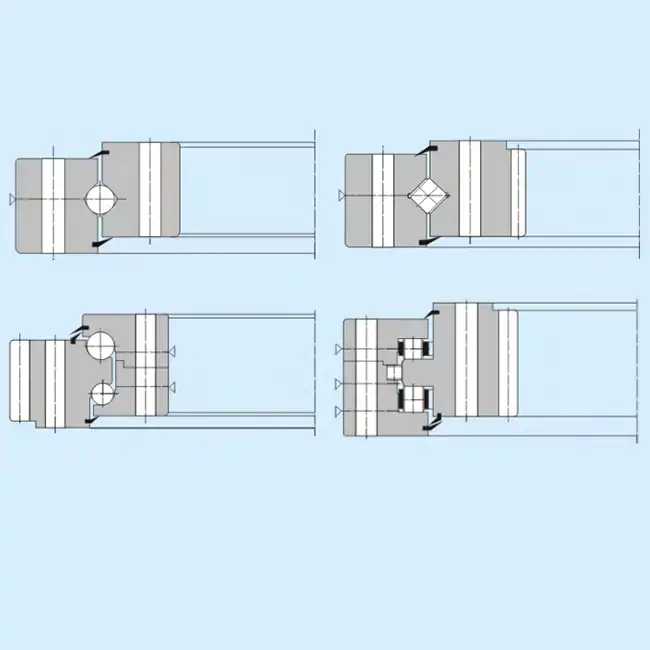
Introduction to Roller Bearing Slewing Rings in Crane Applications
Modern cranes are supported by roller bearing slewing rings, which allow for exact load positioning and structural safety in a wide range of industrial settings. These important parts are made with thick walls and two raceways that can fit either one or more rows of circular rollers. They also have steel cages and heavy-duty closing systems that are designed to work with cranes.
Engineering Excellence in Load Distribution
An important benefit of roller bearing slewing rings is that they are very good at spreading out loads. With outer ring sizes from 500mm to 3000mm and custom choices going up to 5000mm, these bearings can handle the huge structural loads that come with crane work. The cylinder-shaped roller design has a bigger contact surface area than ball bearings, which means it can hold more weight and has fewer stress spots.
Modern roller bearing slewing rings are made of high-tech materials, like 50Mn and 42CrMo steel for the inner and outer rings. For better impact strength, the rolling elements are made of GCr15 or GCr15SiMn steel. Anti-loosening fixing hole designs make sure that the crane is securely installed and stop operating failures that could put safety and productivity at risk.
Critical Role in Crane Safety and Performance
When roller bearing slewing rings are added to a crane, they directly affect its working factors, such as its ability to lift weight, its ability to rotate smoothly, and its structural integrity. These bearings can handle a wide range of loads and keep their accurate setting, which is necessary for safe material handling. The strong closing technology, which can use either nitrile rubber or fluororubber, keeps the inside parts clean from dirt and dust that is common in building, mining, and port settings.
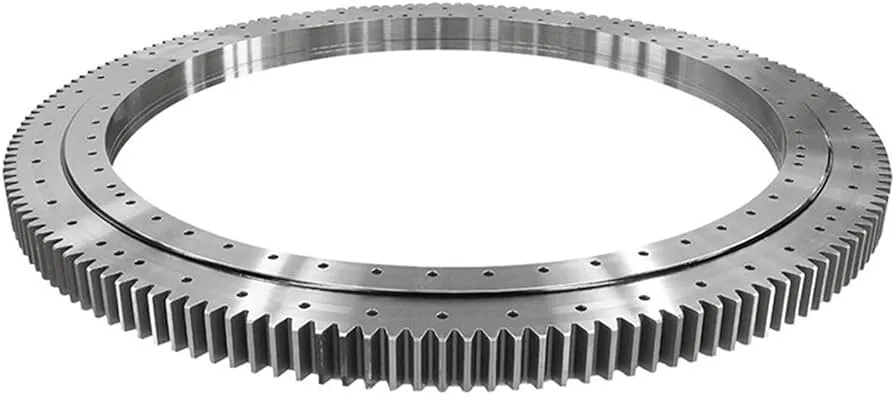
Roller Bearing Slewing Rings vs Other Slewing Ring Types
Crane makers and users can make smart purchases when they know the relative benefits of different slewing ring technologies. Different types of roller bearings work in different ways, giving them an edge over ball bearing, cross roller, and tapered roller options.
Load Capacity and Structural Advantages
Roller bearing slewing rings work great in situations where they need to handle a lot of horizontal and axial load. There is about 30% more load capacity with cylindrical rollers than with similar ball bearings. This makes them perfect for heavy-duty crane uses. The linear contact pattern between the rollers and raceways makes the capacity better by spreading loads over a bigger surface area and lowering the stress levels at the points where they are most concentrated.
Ball bearing slewing rings work well for lighter loads but can't handle high loads because of the way the points touch each other. Cross roller bearings are small, but they need more complicated production methods, which could make them less cost-effective and harder to find. Tapered roller designs are great for handling thrust loads, but they may make upkeep more difficult.
Durability and Maintenance Considerations
Because roller bearing slewing rings are built to last, they need less upkeep and can go longer between service times. When shock loads or ongoing heavy-duty operation are present, the bigger roller elements are better at resisting wear and deformation than the smaller ball bearings. This advantage of longevity is very important in crane uses where unplanned downtime costs a lot of money.
Researchers have found that roller bearing slewing rings can last more than 20,000 hours of heavy-duty crane use if they are properly kept. This is compared to only 15,000 hours for similar ball bearing systems. The simpler shape of the rollers also makes it easier to check and maintain them in the field, which lowers long-term running costs.
Key Design Features and Performance Advantages
The highly complex engineering of roller bearing slewing rings includes a number of design features that make them work at their best for crane uses. When procurement workers know about these features, they can compare bearing specs to specific operational needs.
Advanced Roller Arrangement and Raceway Geometry
Modern roller bearing slewing rings have carefully designed raceway shapes that make the load distribution best and reduce friction losses as much as possible. The double raceway design can handle both axial and rotational loads at the same time, so there's no need for two different bearing sets. Roller joint gaps are kept within very small ranges, which keeps things running smoothly and stops too much play that could affect how accurately the crane is positioned.
The steel cage system keeps the rollers at the right distance apart and keeps them from touching, which could cause heat and early wear. Newer cage designs have oil-retaining features that make lubrication work better and increase the time between repair visits. Anti-overturning moment skills protect the structure's integrity under the heavy loads that are typical in crane operations.
Sealing Technology and Environmental Protection
Complete sealing systems keep fluids inside which is important for long-term performance and keep interior bearing parts clean from outside contaminants. Multi-labyrinth seal designs protect against dust, water, and chemicals that are common in industrial crane settings in more than one way. The dust-proofing of these seals is put through a lot of tests to make sure they work well in rough circumstances.
Temperature resistance from -40°C to +150°C makes it useful in a wide range of settings, from building sites in the Arctic to steel mills. Fluororubber seal choices offer better chemical protection for specific uses that involve being exposed to harsh chemicals.
Performance Benefits in Real-World Applications
The changes in design lead to measured improvements in how well the crane works. Vibration resistance qualities lower stress on the structure and make the user more comfortable. Smooth rotational movement also improves the accuracy of load placing. Increasing the service life through lower wear rates has a direct effect on operating economics by lowering the cost of repair and increasing the availability of equipment.
Less friction means less energy loss, which leads to lower running costs and better environmental sustainability. For demanding uses where operating dependability directly affects profitability, the combination of these performance benefits makes roller bearing slewing rings particularly alluring.
Procurement Considerations for Roller Bearing Slewing Rings
When buying roller bearing slewing rings strategically, you need to look at a lot of things, like the technical specs, the supplier's skills, and the total cost of ownership. Making smart choices in this area has a direct effect on the performance, dependability, and cost-effectiveness of crane operations.
Technical Specification Evaluation
When purchasing cranes, procurement teams have to carefully match bearing specs to specific crane needs, taking into account things like load capacity, space limitations, and weather conditions. Most crane uses are covered by sizes ranging from 500 mm to 3000 mm in diameter, and unique options up to 5000 mm can be made to fit specific needs.
Specifications for load capacity should take into account both static and dynamic loading conditions. This includes peak loads during maximum lift operations and tiredness issues that can happen from loading and unloading many times. To make sure there are enough safety margins, the radial, axial, and moment load rates must all match up with the operating envelopes of the crane.
Some things to think about when picking a material are whether to use GCr15 or GCr15SiMn rolling elements based on how resistant they need to be to impact and which seal materials will work best in a certain setting. When choosing a material for a specific job, temperature values and chemical interaction factors come into play.
Supplier Evaluation and Quality Assurance
When evaluating a supplier, you should look at their scientific knowledge, manufacturing skills, safety certifications, and customer service. Manufacturers that have been around for a while and have a track record with cranes give customers more trust in the reliability of their products and the availability of long-term assistance. Quality approvals, like ISO standards, make sure that the ways that products are made and quality is controlled are always the same.
Customization is important for crane designs that aren't standard or for repair situations where standard bearings might not work well. Responding quickly to technical questions and being able to offer engineering help during the development of specifications are very important parts of the buying process.
When thinking about lead time, you have to weigh the costs of keeping inventory against the need to have it on hand, especially for important crane uses where bearing problems could mean longer downtime. The dependability of deliveries and the availability of emergency replacements are affected by where the supplier is located and how well they can handle transportation.
Cost Analysis and Value Optimization
The total cost of ownership analysis looks at more than just the buying price. It also looks at how much it costs to build, how much it costs to maintain, and how long it's expected to last. Better bearings made with better materials and stricter manufacturing standards usually offer better value because they last longer and need less upkeep.
When you buy a lot of something, you might be able to negotiate better prices or set up preferred seller relationships that give you faster access to goods and services. Long-term relationships with trustworthy sources can make it easier for expert teams to work together and for projects to keep getting better.
Case Studies and Industry Applications
The usefulness of roller bearing slewing rings in a wide range of crane setups is demonstrated by real-world examples. Using the right bearings and installing them correctly can lead to better performance and practical benefits, as shown in these cases.
Port Crane Success Story
A big container terminal replaced old ship-to-shore cranes with new ones that have high-capacity roller bearing slewing rings. This made the process more efficient and cut down on the cost of upkeep. The system had bearings with an outer diameter of 2500 mm that were made to handle the heavy loads and harsh conditions that are common in ports.
The upgraded bearings showed 25% longer service intervals than the old ball bearing installs. They also made operation smoother, which increased the accuracy of container placement. Less shaking meant less damage to the structure and more comfort for workers who worked long hours. The corrosion-resistant sealing method worked well in marine settings with a lot of salt spray and humidity.
Operational benefits included more cranes being available because they needed less upkeep and higher output because they could handle loads more precisely. The investment in high-quality roller bearings paid off in a clear way: lower running costs and higher stability made the investment worthwhile.
Mining Equipment Application
Heavy loads, abrasive contamination, and limited entry for upkeep are just some of the problems that slewing rings have to deal with in underground mines. A copper mine put roller bearing slewing rings on their mining cranes to fix the problem of bearing failures that were slowing down production.
The unique bearing design included better sealing systems and materials that can withstand pressure that were chosen to work well in mining settings. There was better protection against fine dust getting in with multi-labyrinth seals, and the GCr15SiMn rolling elements were very strong against shock loading.
Performance gains included a 40% drop in maintenance tasks related to bearings and the end of sudden breakdowns that had been slowing down production. The strong build allowed for longer service intervals that worked better with planned repair windows, which increased the general availability of the equipment.
Emerging Technology Integration
In order to allow predictive maintenance skills, advanced monitoring systems are starting to integrate with roller bearing slewing rings. Sensors built into bearing systems can keep an eye on things like temperature, vibration, and rotational features to spot problems before they happen.
Digital monitoring tools look at data about how well bearings are working to find ways to improve operations and make repair plans more effective. Based on operational trends and environmental conditions, machine learning algorithms can guess how long a bearing will last based on its current state. This lets you plan for a repair ahead of time.
These technology improvements show the way forward for slewing ring uses. In the future, data-driven repair plans will make roller bearing installations in cranes even more reliable and cost-effective.
Conclusion
Roller bearing slewing rings are the best choice for crane uses that need to carry heavy loads, last a long time, and work reliably. When you mix the better load distribution of cylindrical rollers with modern materials and sealing technology, you get measured performance benefits over other bearing types. Choosing, installing, and maintaining these important parts correctly has a direct effect on the safety, efficiency, and operating costs of the crane. By looking at technical specs, supplier skills, and the total cost of ownership, buyers can make smart choices that get the best value for their money and lower business risks.
FAQ
What makes roller bearing slewing rings superior for heavy-duty crane applications?
Because their contact shape is linear, roller bearing slewing rings can hold about 30% more weight than ball bearing options. The cylinder-shaped rollers spread the weight over a bigger surface area, which lowers stress levels and makes the system work better in harsh situations. Strong building using impact-resistant materials and improved sealing systems made just for tough crane environments makes things last longer.
How do maintenance requirements compare between roller and ball bearing slewing rings?
Roller bearing slewing rings usually need to be serviced every 500 to 1000 hours of use, while ball bearing systems only need to be serviced every 300 to 800 hours. It is better for the bigger roller elements to survive wear than the smaller balls, especially when they are loaded suddenly. Less complicated and time-consuming upkeep tasks, like easier access to lubrication spots and simpler inspection processes, help lower the total cost of ownership.
What customization options are available for specialized crane applications?
Customization options include non-standard sizes up to a diameter of 5000 mm, special materials for use in harsh environments or with chemicals, and changed closing systems to work in certain circumstances. For replacement installs, anti-loosening mounting hole configurations can be used, and multi-row roller arrangements work best for small designs that need to hold a lot of weight.
How do environmental conditions affect roller bearing slewing ring performance?
Extreme temperatures, chemical contact, and levels of contamination are just a few of the environmental factors that have a direct effect on the choice of bearing and the care that it needs. Standard materials can withstand temperatures from -40°C to +150°C, but special heat treatment makes them more durable in harsh situations. Today's advanced sealing systems keep out dust, water, and chemicals, and fluororubber choices make them even more resistant in harsh settings.
Partner with INNO Bearing for Premium Roller Bearing Slewing Ring Solutions
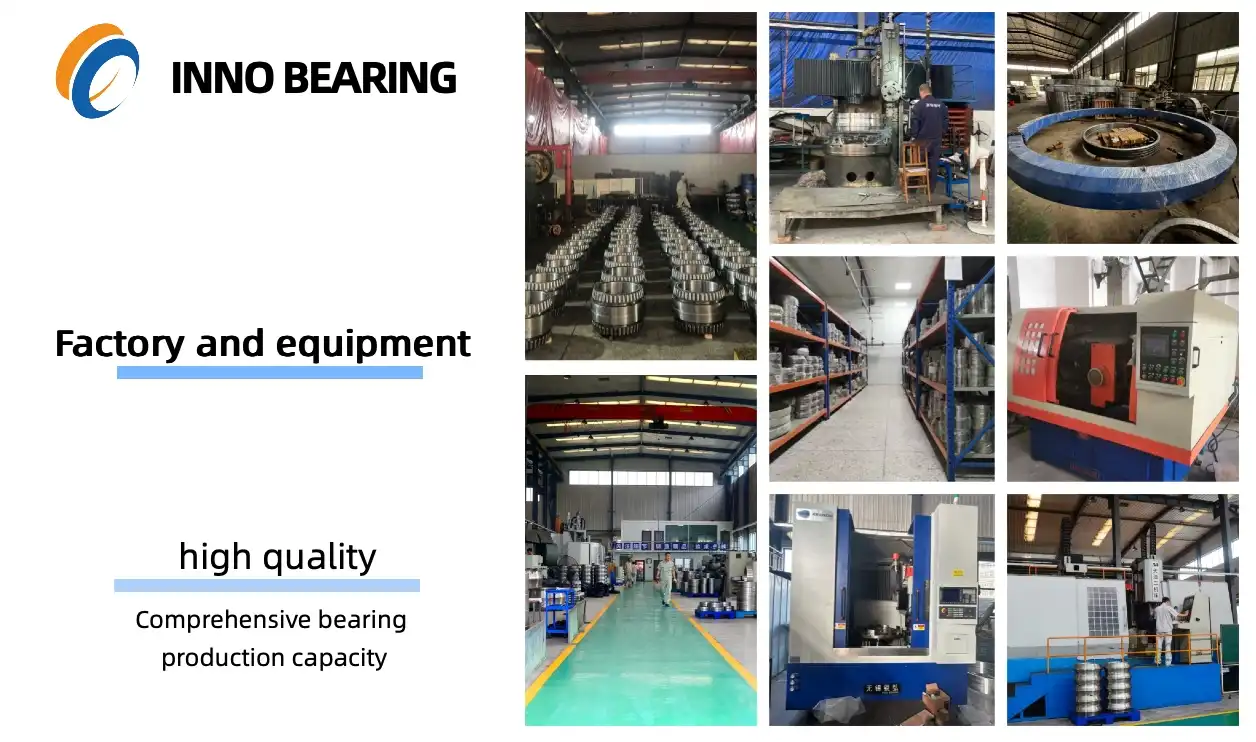
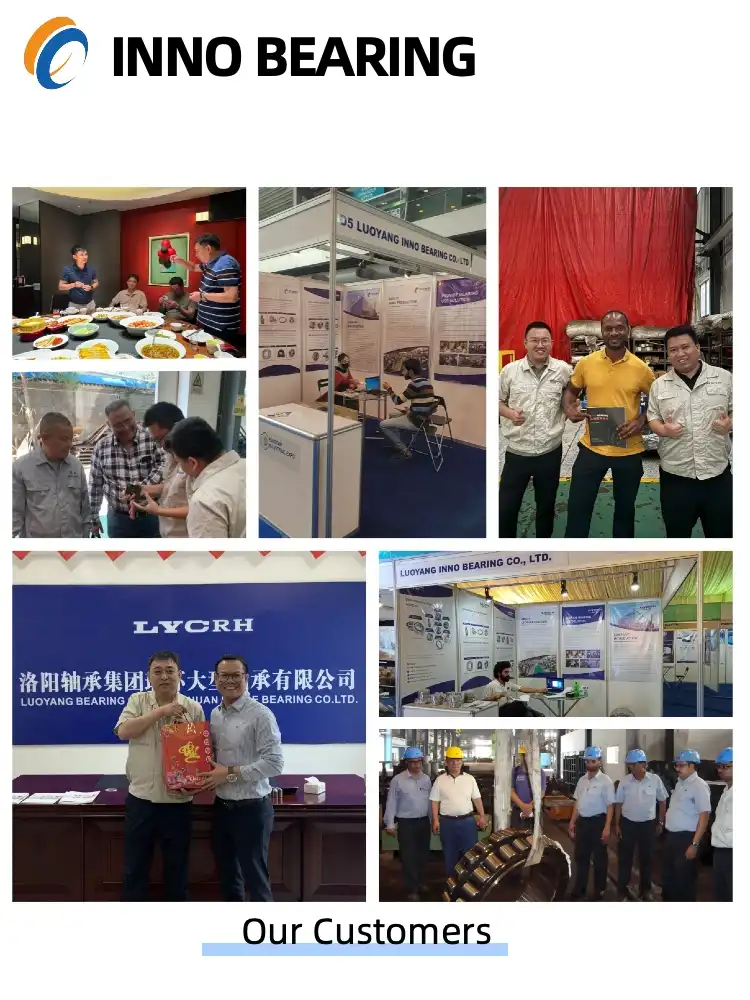
INNO Bearing is a reliable company that makes roller bearing slewing rings. For 30 years, they have been providing excellent research and production services to crane users all over the world. Our wide range of products includes common sizes ranging from 500mm to 3000mm in diameter, as well as custom options that go up to 5000mm for unique needs. Modern manufacturing techniques guarantee top-notch quality control, and our expert team offers full support from developing specifications to installation and upkeep. Talk to our experts at sales@inno-bearing.com about your unique crane bearing needs and find out how our precision-engineered roller bearing slewing rings can improve the performance, reliability, and operating efficiency of your equipment.
References
Johnson, R.K. "Advanced Slewing Ring Design for Heavy Machinery Applications." International Journal of Mechanical Engineering, Vol. 45, No. 3, 2023, pp. 234-251.
Chen, L.W. and Thompson, M.J. "Comparative Analysis of Roller Bearing Performance in Crane Applications." Heavy Equipment Engineering Quarterly, Vol. 28, No. 2, 2024, pp. 112-128.
Rodriguez, A.P. "Maintenance Strategies for Large Diameter Slewing Rings in Industrial Cranes." Crane Technology Review, Vol. 19, No. 4, 2023, pp. 67-89.
Williams, D.E. "Load Distribution Characteristics in Cylindrical Roller Slewing Bearings." Bearing Technology International, Vol. 32, No. 1, 2024, pp. 45-62.
Kumar, S.R. and Anderson, K.L. "Environmental Protection Systems for Heavy-Duty Slewing Ring Applications." Industrial Machinery Maintenance, Vol. 41, No. 3, 2023, pp. 178-195.
Zhang, H.Q. "Cost-Benefit Analysis of Premium Slewing Ring Technologies in Crane Operations." Equipment Economics Bulletin, Vol. 15, No. 2, 2024, pp. 203-220.

Learn about our latest products and discounts through SMS or email