- English
- French
- German
- Portuguese
- Spanish
- Russian
- Japanese
- Korean
- Arabic
- Greek
- German
- Turkish
- Italian
- Danish
- Romanian
- Indonesian
- Czech
- Afrikaans
- Swedish
- Polish
- Basque
- Catalan
- Esperanto
- Hindi
- Lao
- Albanian
- Amharic
- Armenian
- Azerbaijani
- Belarusian
- Bengali
- Bosnian
- Bulgarian
- Cebuano
- Chichewa
- Corsican
- Croatian
- Dutch
- Estonian
- Filipino
- Finnish
- Frisian
- Galician
- Georgian
- Gujarati
- Haitian
- Hausa
- Hawaiian
- Hebrew
- Hmong
- Hungarian
- Icelandic
- Igbo
- Javanese
- Kannada
- Kazakh
- Khmer
- Kurdish
- Kyrgyz
- Latin
- Latvian
- Lithuanian
- Luxembou..
- Macedonian
- Malagasy
- Malay
- Malayalam
- Maltese
- Maori
- Marathi
- Mongolian
- Burmese
- Nepali
- Norwegian
- Pashto
- Persian
- Punjabi
- Serbian
- Sesotho
- Sinhala
- Slovak
- Slovenian
- Somali
- Samoan
- Scots Gaelic
- Shona
- Sindhi
- Sundanese
- Swahili
- Tajik
- Tamil
- Telugu
- Thai
- Ukrainian
- Urdu
- Uzbek
- Vietnamese
- Welsh
- Xhosa
- Yiddish
- Yoruba
- Zulu
How to Choose the Right Slewing Bearing for Cranes?
When choosing the best slewing bearing for a crane, you should think about how much weight it needs to hold, how it will be used, and what is around it. These important parts that spin must be able to hold a lot of weight in all directions and keep their shape for thousands of cycles. So, it's important to know the exact technical details, properties of the material, and design rules that your crane needs. The crane's performance, safety, and running costs will all depend on the bearing you choose.
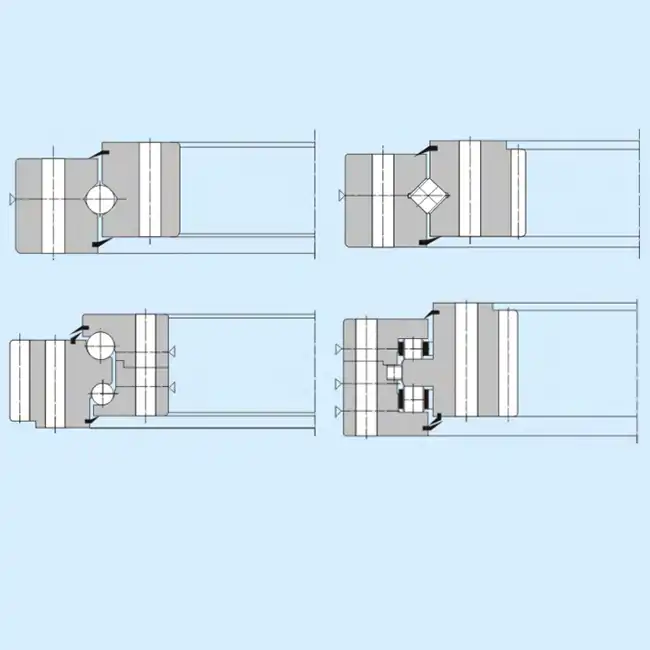
Understanding Slewing Bearings and Their Function in Cranes
What Are Slewing Bearings and How Do They Work?
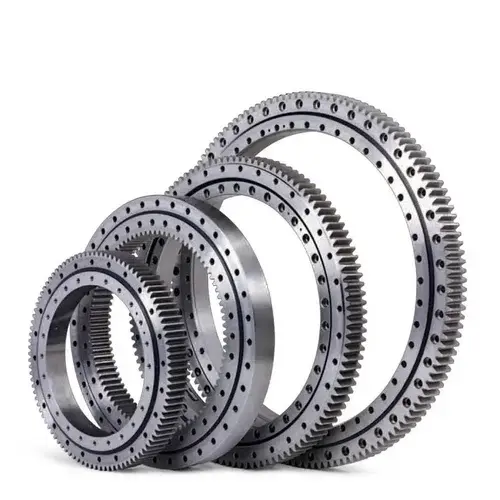
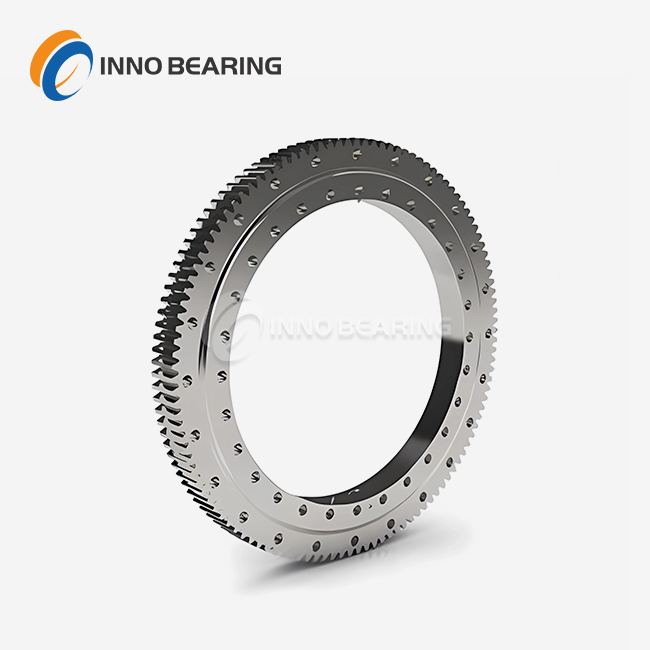
The rotating bases, or Slewing Bearings, of cranes make it easy for them to move in any direction and carry heavy loads. These one-of-a-kind bearings do the work of Thrust bearings, radial bearings, and rotational support all at the same time. Regular ball bearings and slewing bearings are not the same. Slewing bearings have large diameters that allow them to fit directly onto crane turntables. They can lift heavy things because of this.
In the bearing, there are very precisely machined raceways that show the rolling elements how to turn. Even when the load changes, the machine still works the same way because it has advanced sealing systems and lubrication channels built in. These keep the inside parts clean from dirt on the outside. You don't need any extra hardware to connect most slewing bearings to crane frames these days; they come with mounting holes already there.
Types of Slewing Bearings for Crane Applications
What kinds of bearings do different kinds of cranes need to stay in good shape and work well? Once the engineers know these differences, they can choose the best answer for their needs.
Single-row ball bearings are good for lighter cranes that don't have a lot of room because they are small. There are times when these bearings are perfect for moving heavy things quickly. These double-row ball sets are great for mid-range cranes since they have two raceways and can hold more weight.
Rollers in cross-roller bearings move back and forth, which makes them very rigid. This makes the load spread out evenly. Bearings don't bend too much when they're heavy because of how they're made. This makes them perfect for precise crane work. Cross-roller designs for slewing bearing work best most of the time when you need both a high load capacity and straight rotation.
A crane's triple-row slewing bearing are said to be the best way to move heavy things. The weight of their roller sets is spread out over a number of their three separate raceways. This lets them handle the strong pulls of big mobile cranes and units that bring containers from ships to shore. There are strong options with and without gears, as well as external and internal gears. This means it can be used with different kinds of drives.
Key Criteria for Selecting Slewing Bearings for Cranes
Load Assessment and Capacity Requirements
The first thing you need to do to choose the right bearings is get the right load reading. Crane boom extensions put radial loads on the load, and loads that are out of place put moment loads on the load. There is one of these loads that engineers need to figure out. You need to think about dynamic load factors before you do these math rules. These think about things like acceleration forces, wind loads, and load swing.
What kind of weight the bearing can hold before it breaks is called its static load rating. The dynamic load rating of a bearing tells you how much pulling force it can handle over its long life. These days, loads often come together in ways that need bearings that can handle all three types of loads at the same time and keep the crane turning at the right angle.
Anywhere from 1.5 to 3.00 is a safe factor, based on how important the application is and how much the load changes. Because ship-to-shore cranes are used all the time and carry different loads, they may need stricter safety rules.
Environmental and Operational Considerations
How well bearings work and how long they last can be affected by what's around them. Things like materials, lubricants, and bearing clearances change how they work when temperatures get very high or very low. Installations near the coast need special seals and materials that won't rust since they'll be exposed to salt air.
Another very important issue is the risk of contamination, especially for crane installations that are outside. Enough oil and dust should be kept out, but just the right amount of water and other debris should be let in. A lot of barriers are used in advanced seal designs to keep everything safe. Some of these are exclusion seals, contact seals, and labyrinth seals.
The duty cycles and operational frequency have an effect on the bearing choice. You can measure these things with fatigue life. Bearings need to last a long time before they need to be serviced if they are used all the time. On the other hand, cranes that are only used sometimes might need bearings that work in a different way. The specs of a slewing bearing must match how it is meant to be used for it to work well for its whole life.
Material Selection and Quality Standards
The materials they are made of change how much they cost, how long they last, and how well they work. 50Mn, 42CrMo, and 42CrMo4 are good bearing steels that are strong and don't wear down quickly. They are best for tough crane jobs. Two ways that heat can be used to make something stronger are through-hardening and case-hardening.
Certifications for quality of slewing bearing make sure that the bearings work in a way that meets government and business standards. Companies that use ISO 9001 quality management systems can promise their customers that the goods they buy will always be the same. They also have certifications from the crane industry that show they work well in certain situations. It is possible for quality control teams to check the whole supply chain to see where the materials came from and what steps were taken to make the product.
Procurement Considerations: How to Buy Slewing Bearings for Cranes?
Supplier Evaluation and Quality Assurance
If you want to buy bearings from more than one supplier, you should make sure that their quality, delivery, and customer service meet the needs of the project. When a company gets a certification, it tells you about their Process Controls and quality management systems. These show how consistent and trustworthy their products are.
What you can make and how you can deliver it directly impacts how much you need to stock and how long a project takes to finish. They can meet quality standards and urgent needs at the same time if they have enough capacity and can change their schedules as needed. Being close to someone can help a lot with things like delivery times, customer service, and talks.
Quality documents like material Certificates, dimensional reports, and performance test data can help you make sure the bearing specs are right. Traceability systems keep track of the steps and materials that are used to make something. This helps teams that check for quality meet standards in the field and meet customer needs.
Customization and Engineering Support
Different types of slewing bearing are needed for different crane uses so that they can meet certain performance or design limits. Bearing suppliers who are good at engineering can make sure that the designs are the best they can be for each use while still being cheap and simple to make.
It is easier to find problems and choose the right bearings for each job when you get technical help during the design phase. Knowing what materials to use, how to design seals, and how much lubrication you need can help you decide what to do. This is because they have experience with the technology and how it works in real life.
If suppliers want to meet certain needs, they don't have to pay more or wait longer for a fully customized solution because they can change standard designs. Some of the changes that are often made are better sealing systems, different mounting arrangements, and different materials for each type of environment.
Practical Tips for Maintenance and Troubleshooting to Maximize Crane Bearing Life
Preventive Maintenance Strategies
If you take care of your slewing bearing, they will last a lot longer and save you money on replacement costs and unplanned downtime. If you check on them often, you can find patterns of wear, dirt, and lack of lubrication early on, before they get so bad that they break.
One of the most important things to remember when taking care of crane bearings is to keep an eye on this. How well and how long a bearing lasts depend on the type of lubricant used, how often it is used, and how much of it is used. Grease-filled bearings need to be oiled again and again, depending on how often they are used and the weather. For systems that use oil, on the other hand, the oil needs to be checked and filtered often.
You can tell right away if the bearings are broken because there isn't enough oil, there is dirt on them, or there is too much load. With infrared thermography, you can check something's temperature without touching it. If you need to, sensors built into the thing let you keep an eye on it at all times.
Troubleshooting Common Issues
Bearings that make noise usually need to be oiled, are dirty, or are wearing out faster than they should. Different sound patterns help figure out what the issue is. If you hear grinding sounds, it's likely that the bearings are dirty or don't have enough oil. If you hear clicking sounds, it could mean that the rollers are broken or the raceways aren't working right. Trouble can be found early, before they show up in other ways, as long as you listen for them.
There might be a problem with the mounting or the insides of the bearings are worn out if the system has too much return or play. You can tell how good a bearing is and how much wear it's getting over time by measuring it with a dial indicator or a laser system. Too much play in slewing bearing assemblies needs to be checked right away so they don't break completely.
Problems with maintenance that cause seals to fail need to be fixed right away to protect the bearings. There is no doubt that the seal is broken because the contamination in the lubrication analysis makes that clear. Seals will keep you safe from damage from the outside world as long as you replace them the right way.
Conclusion
When choosing the best slewing bearing for a crane, you should think about how much weight it needs to hold, how it will be used, and what is around it. You should make sure that the axial, radial, and moment loads are correct so that the bearings can handle them. You should also think about safety issues and how the load is changing. Temperature, dirt, and the chance of corrosion are some of the environmental factors that affect the seal's design and the material that is used. Remember that bearings are reliable and work well if you buy them from a reputable company that has been making them for a long time and has all the right certifications and technical support. An important part of regular maintenance that keeps things running smoothly and increases the life of bearings is making sure they are oiled and checked regularly.
FAQ
What size slewing bearing do I need for my crane?
The largest load the crane can hold, the length of the boom, and how the crane is set up are some of the things that affect the choice of bearing size. The machine was under the most axial load when the weights were lifted. The most radial load was on the boom because it was extended, and the most moment load was on it because the load was out of place. We can figure out what the smallest bearing size should be by using these math rules and the right safety factors. You should look over the load tables and engineering specifications that the manufacturer gives you to make sure that the bearing capacity meets your application demands.
What are the advantages of triple-row roller bearings for heavy-duty cranes?
Triple-row roller bearings can hold a lot of weight because they have three separate raceways. The force is spread out over a lot of roller sets. Plus, it keeps the structure strong, so they can handle high loads in all directions at the same time. They last longer and are less likely to get worn out than single- or double-row options because they are well made. They are great for heavy-duty crane jobs that need to be done all the time because of this.
Can I switch from grease to oil lubrication in my crane bearing?
When you change the lubrication system, you should think about how the bearings are made, how well the seals fit together, and how the machine will be used. Most of the time, oil systems are better than grease systems at getting rid of heat and dirt. But it needs more infrastructure, like pumps, filters, and tools for keeping an eye on things. Before you change the way the bearings are oiled, you should call the company that makes them to make sure the seals will still work and won't need to be changed.
Partner with INNO Bearing for Your Crane Slewing Bearing Needs
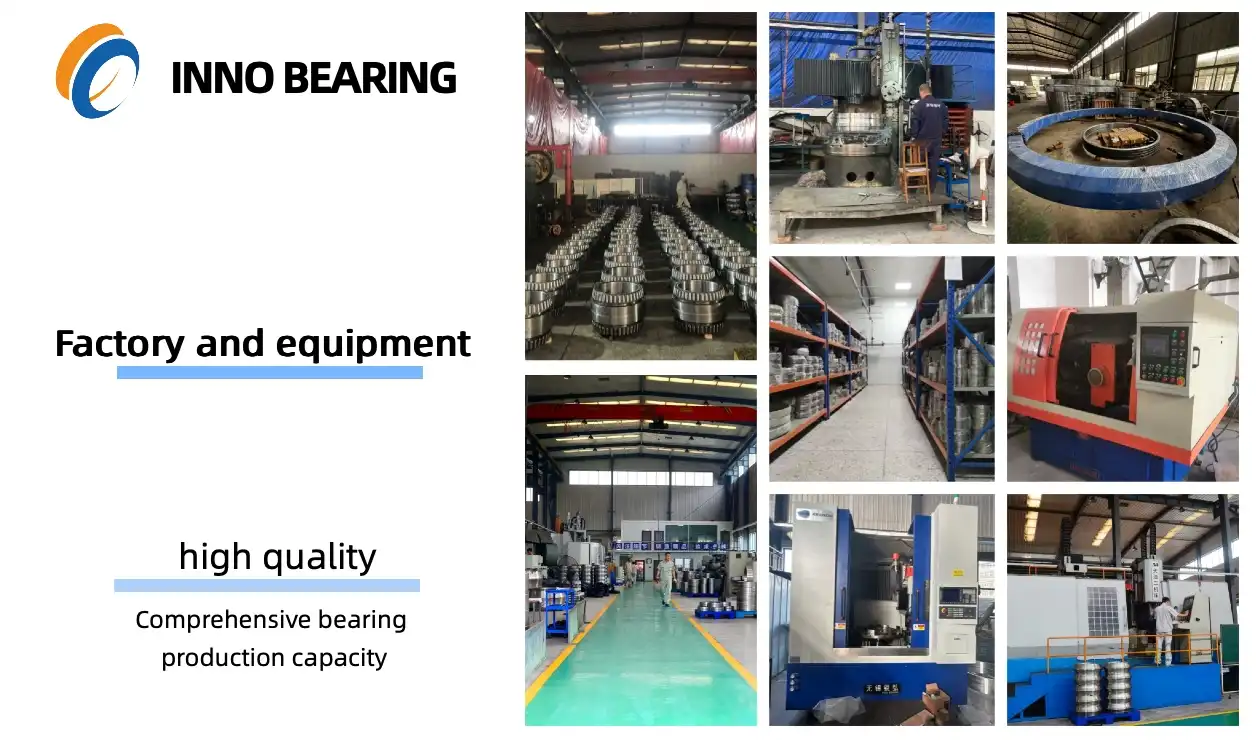
INNO Bearing has been making tough crane slewing bearing that work well for almost 30 years. Heavy-duty metals like 42CrMo and 50Mn are worked on with high-tech tools to create custom bearing designs that can be up to 5000 mm in diameter. There are strict systems in place to make sure that the bearings always work well. We support full technical help, from planning to setting up and maintaining the bearings. We are a well-known company that makes slewing bearings. If you email sales@inno-bearing.com, our engineering team will be happy to talk to you about your needs and give you unique technical specifications for your crane.
References
American Society of Mechanical Engineers. "Design Standards for Large Diameter Slewing Bearings in Mobile Crane Applications." ASME B30.5 Mobile Crane Safety Standard, 2018.
International Organization for Standardization. "Rolling Bearings - Slewing Bearings - Geometrical Product Specifications and Tolerance Values." ISO 12043-1:2007.
Crane Manufacturers Association of America. "Bearing Selection Guidelines for Mobile and Crawler Crane Applications." Technical Bulletin TB-401, 2019.
Society of Automotive Engineers. "Performance Requirements for Heavy-Duty Slewing Ring Bearings in Construction Equipment." SAE J1061 Standard, 2020.
European Committee for Standardization. "Cranes - Safety Requirements for Design and Construction of Slewing Bearing Systems." EN 13001-3-1:2018.
American Bearing Manufacturers Association. "Load Rating and Life Calculation Methods for Large Diameter Slewing Bearings." ABMA Standard 16-2021.

Learn about our latest products and discounts through SMS or email