- English
- French
- German
- Portuguese
- Spanish
- Russian
- Japanese
- Korean
- Arabic
- Greek
- German
- Turkish
- Italian
- Danish
- Romanian
- Indonesian
- Czech
- Afrikaans
- Swedish
- Polish
- Basque
- Catalan
- Esperanto
- Hindi
- Lao
- Albanian
- Amharic
- Armenian
- Azerbaijani
- Belarusian
- Bengali
- Bosnian
- Bulgarian
- Cebuano
- Chichewa
- Corsican
- Croatian
- Dutch
- Estonian
- Filipino
- Finnish
- Frisian
- Galician
- Georgian
- Gujarati
- Haitian
- Hausa
- Hawaiian
- Hebrew
- Hmong
- Hungarian
- Icelandic
- Igbo
- Javanese
- Kannada
- Kazakh
- Khmer
- Kurdish
- Kyrgyz
- Latin
- Latvian
- Lithuanian
- Luxembou..
- Macedonian
- Malagasy
- Malay
- Malayalam
- Maltese
- Maori
- Marathi
- Mongolian
- Burmese
- Nepali
- Norwegian
- Pashto
- Persian
- Punjabi
- Serbian
- Sesotho
- Sinhala
- Slovak
- Slovenian
- Somali
- Samoan
- Scots Gaelic
- Shona
- Sindhi
- Sundanese
- Swahili
- Tajik
- Tamil
- Telugu
- Thai
- Ukrainian
- Urdu
- Uzbek
- Vietnamese
- Welsh
- Xhosa
- Yiddish
- Yoruba
- Zulu
The Evolution of Roller Bearing Slewing Rings
The development of roller bearing slewing rings is a result of decades of engineering progress aimed at solving important industrial problems. Instead of traditional ball bearings, these parts use cylindrical or tapered rollers as rolling elements, which make them better at holding weight and resisting impact. Modern roller bearing slewing ring technology has changed how well heavy machinery works in wind energy, mining, and ports. Newer metals and sealing systems have made the machinery last longer while keeping its accuracy in harsh conditions.
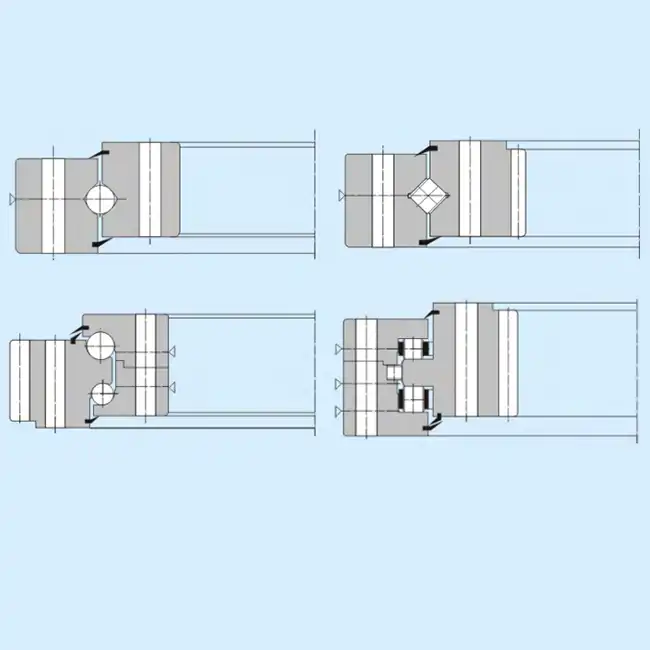
Understanding Roller Bearing Slewing Rings: Design, Function, and Applications
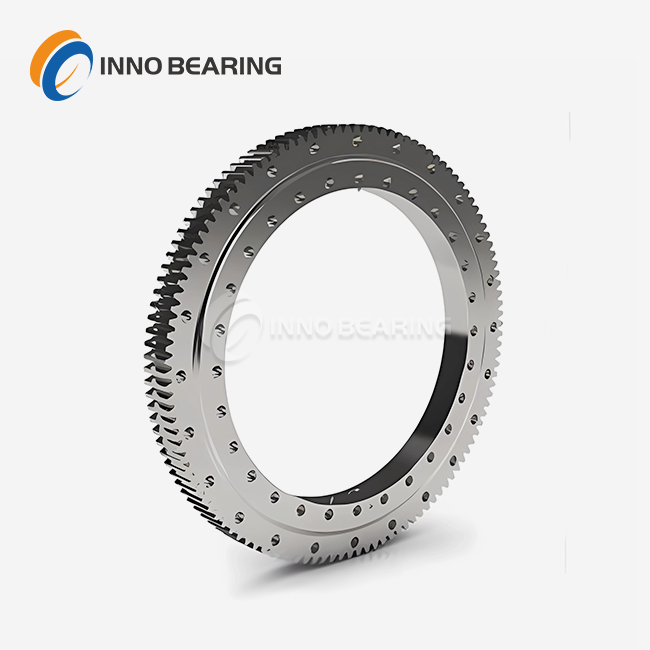
The inner and outer rings of these bearings have double raceways and a thick-walled annular structure. They can hold single-row or multi-row cylindrical or tapered rollers inside steel cages.
Core Structural Components and Design Principles
The sophisticated design includes a number of important parts that make it work better. The inner and outer rings, which are usually made of 50Mn or 42CrMo steel, are very strong and stable in their shape. Rolling elements are made of GCr15 or GCr15SiMn materials. The latter is better at withstanding impacts in tough situations.
Another important part of design is heavy-duty sealing systems. Standard uses are covered by nitrile rubber seals, while oil- and heat-resistant fluororubber types can work in environments up to 150°C. There are anti-loosening designs in mounting holes that keep structures from breaking during dynamic loading cycles.
Operational Advantages Over Ball Bearing Alternatives
The load capacity of roller elements is much higher than that of ball bearings because they have line contact instead of point contact. Because of this basic difference, roller bearing slewing ring assemblies can handle very high axial, radial, and moment loads all at the same time without losing their shape.
Impact resistance is very important for things like mining equipment and port cranes that have to deal with sudden changes in load. The roller design spreads shock forces over a larger contact area. This lowers stress concentrations that usually lead to early bearing failure in harsh working conditions.
Industrial Applications Across Critical Sectors
Main shaft bearings, yaw systems, and pitch control mechanisms depend on these parts to work for 20 years, which is why they are used in wind energy applications. For the best power generation efficiency, the bearings must be able to handle changing wind loads while keeping their precise position.
Saltwater corrosion, continuous operation cycles, and extreme overturning moments during container handling are some of the unique problems that port crane installations have to deal with. These environmental factors can be dealt with by using specialized coatings and better sealing systems that keep the rotational performance stable.
In mining, roller bearing slewing ring need to be able to handle rough dust, changes in temperature, and huge changes in load. Multi-labyrinth seal designs keep lubrication from getting contaminated and keep it working well over long periods of time.
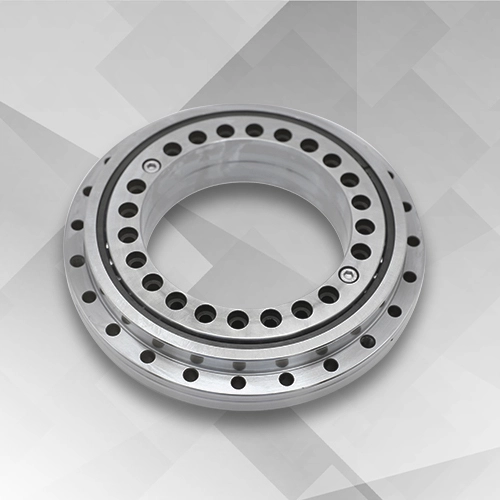
Evolution and Technological Advancements in Roller Bearing Slewing Rings
Patterns of development over time show how engineering limitations led to big steps forward in roller bearing design. Early generations had to deal with a lot of problems, such as lubrication systems that didn't work well, limited load capacity, and early wear from dynamic loading.
Material Science Breakthroughs
Through complex heat treatment methods, advanced metallurgy has changed the way bearings work. The techniques of carburizing and nitriding make the surface harder than 60 HRC while keeping the core tough. This meets the needs for fatigue resistance in heavy machinery applications.
The development of high-strength steel made it possible for bearings to have larger diameters without adding significantly to their weight. Modern alloy compositions have 15% higher fatigue strength than traditional materials. This means that they can last longer in critical applications where the cost of replacement is too high.
Multi-Row Configuration Innovations
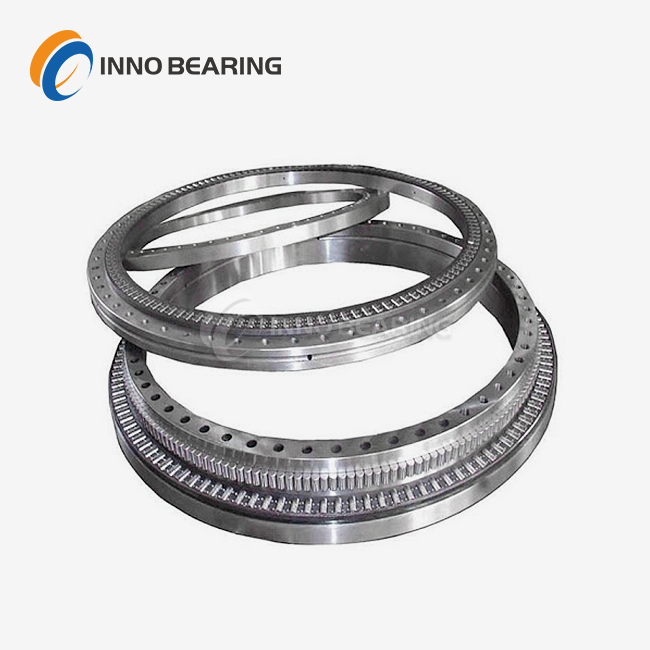
Traditional single-row designs had problems when they had to handle high axial and radial loads at the same time. Multi-row roller configurations spread loads across multiple contact paths, which lets small designs handle high forces without affecting the accuracy of rotation.
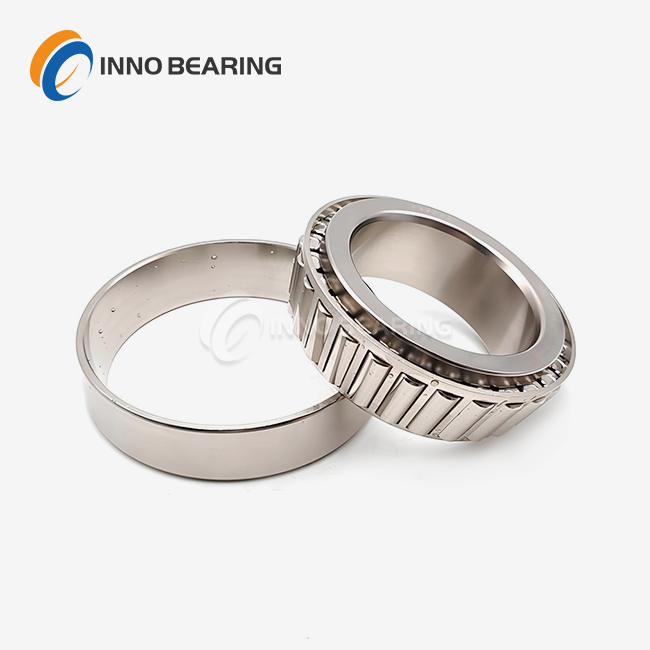
Tapered roller arrangements offer better moment resistance, which is especially useful in wind turbines where uneven loading happens when the wind blows in different directions. These arrangements keep the geometry of the bearings even when they are under load, so performance doesn't suffer because of deflection.
Sealing and Lubrication Advances
Modern sealing systems use multi-stage labyrinth designs that keep things clean and allow for thermal expansion. Modern elastomer compounds don't break down easily when exposed to chemicals and stay flexible over a wide range of temperatures.
Integrated lubrication systems let you plan ahead for maintenance by keeping an eye on the system's condition. Designs that are ready for sensors can include vibration analysis and temperature monitoring systems that find problems early on, before they become too big to fix.
Comparing Roller Bearing Slewing Rings: Making the Right Choice for Your Application
Specific operational needs must be taken into account in the selection criteria for roller bearing slewing ring, such as the size of the load, the environment, the need for precision, and the ease of maintenance. By understanding these factors, you can choose the best bearings that meet your performance needs and your budget.
Load Capacity Considerations
Roller bearing slewing ring designs work great in situations where you need to carry a lot of weight in a small space. Standard configurations can handle radial loads of up to 10,000kN and axial loads of up to 15,000kN, which is a lot more than what ball bearings can do in the same size envelope.
Moment load resistance is very important in places like excavator turntables and crane pedestals where overturning forces are the main source of operational stresses. The roller contact geometry is better at resisting these forces while keeping the smooth rotation.
Environmental Adaptability
Specialized material choices and better sealing are helpful for applications that are in harsh environments. Zinc-nickel coatings protect against corrosion in marine environments, and special elastomers keep the seals intact in temperatures that are too high or too low.
Different types of bearings have very different levels of dust and contamination resistance. Roller bearings have bigger gaps that keep particles from getting stuck and keep the right amount of preload for precise applications.
Maintenance and Service Requirements
Accessibility factors affect the choice of bearing, especially in situations where scheduled maintenance windows are limited. Compared to ball bearings, roller bearings can usually go longer periods of time without needing to be oiled, which keeps operations running smoothly.
Inspection needs vary depending on the type of bearing and how important the application is. Important things to check for during an inspection are the roller assembly clearance, the anti-overturning moment capacity, and the dust-proof performance of the seal. Each of these needs a different set of measuring tools and knowledge.
Procurement Insights: How to Source the Best Roller Bearing Slewing Rings for Your Business?
Strategic approaches to procurement for roller bearing slewing ring maximize value while ensuring reliable performance in the supply chain. Knowing how the market works, what suppliers can do, and what the quality standards are helps you make smart buying decisions that support your long-term business goals.
Supplier Evaluation Criteria
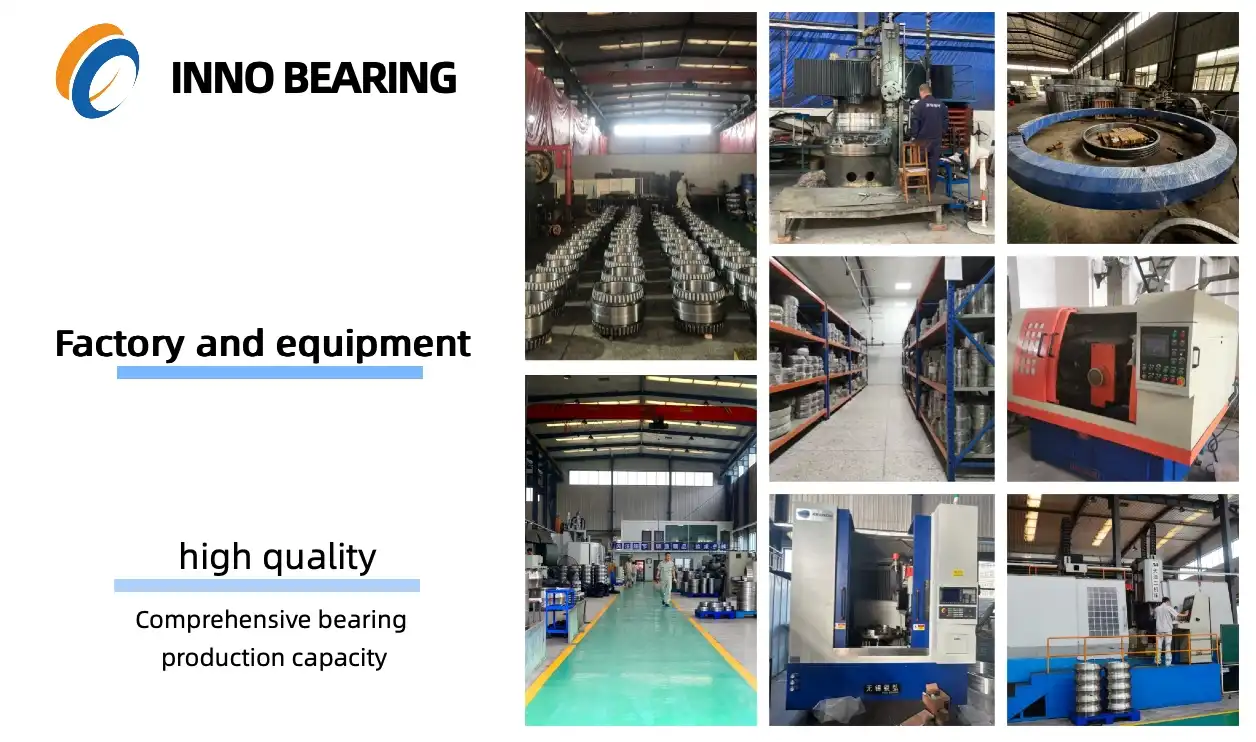
A manufacturing capability assessment looks at things like the factory's ability to make things, its quality control systems, and its technical support resources. When compared to suppliers who only do assembly, integrated manufacturers who handle forging, machining, and quality control all in-house usually offer better consistency.
For specialized applications that need non-standard configurations, the ability to customize is essential. Suppliers who have their own engineering teams can make designs better fit the needs of specific operations while still meeting tight delivery dates.
Quality Standards and Certification
ISO precision grades set limits on sizes and shapes that have a direct effect on performance. Standard grades P5–P6 are good for most industrial uses, while P4 precision is best for medical and robotics uses that need very high accuracy.
Material certifications make sure that the requirements of the specification are met. This is especially important for uses in industries that are regulated. Quality assurance is provided throughout the supply chain by being able to track all of the materials from where the raw materials come from to where they are inspected at the end.
Delivery and Support Considerations
To manage lead times, you need to know the difference between standard product availability and custom manufacturing needs. As a result, many roller bearing slewing ring suppliers keep stock of common sizes but need more time to deliver custom configurations.
Technical support includes installation advice, help with fixing problems, and consultation services for retrofits. Suppliers who offer full support lower the risks of implementation and make sure that the bearing works at its best for the whole life of the service.
Maintenance and Longevity: Maximizing Roller Bearing Slewing Ring Performance
Strategies for proactive maintenance for roller bearing slewing ring have a big effect on how well bearings work and how much they cost to run. Knowing how things wear down, how often they need to be oiled, and how to inspect them allows for predictive maintenance methods that stop expensive breakdowns and make the best use of service intervals.
Lubrication Management Protocols
For roller bearing applications to last as long as expected, they need to be properly oiled. The lubricant that is chosen must take into account the operating temperatures, load conditions, and the amount of contamination that will be exposed, as well as the film thickness that is needed for the roller-raceway interfaces.
When to re-oil depends on how the machine is being used and the environment. Lubrication may need to be done once a month in heavy-duty applications, but once every three months or once a year in protected installations. The best time to replace lubricant is found by using analysis programs to keep an eye on its condition.
Condition Monitoring Strategies
Vibration analysis can find roller wear and raceway damage early on, before they show any visible signs of damage. Trending analysis lets you plan replacements ahead of time, which cuts down on unplanned downtime and makes the best use of bearings.
Temperature monitoring finds situations where lubrication is breaking down and loads are too high, which speed up the wear process. Integrated sensor systems allow for monitoring in real time, which helps with scheduling maintenance automatically and improving performance.
Common Failure Modes and Prevention
When used in industrial settings, contamination is the main reason why roller bearing slewing ring fail too soon. Proper sealing maintenance and regular inspection prevent abrasive particle ingress that causes accelerated wear and surface damage.
Overloading conditions, whether from operational changes or equipment modifications, can exceed design capacity and reduce service life. Regular load analysis makes sure that operating conditions stay within certain limits and finds chances to improve bearings.
Conclusion
The development of roller bearing slewing rings shows how continuous innovation is solving problems in industry by using new materials, better sealing systems, and more efficient manufacturing methods. Modern designs offer great load capacity, resistance to environmental factors, and service life, and they can be used in a wide range of situations, such as in wind energy, mining, port operations, and heavy machinery. Strategic approaches to buying things that focus on the skills, standards, and technical support of suppliers make sure that the best bearings are chosen and that they work well for long periods of time between service intervals.
FAQ
What advantages do roller bearing slewing rings offer over ball bearing alternatives?
Roller bearings can hold more weight through line contact than point contact, which means they can handle more axial, radial, and moment loads in the same amount of space. Better resistance to impact and durability are especially useful in heavy machinery where sudden changes in load happen a lot.
How do you calculate load capacity requirements for roller bearing slewing ring applications?
When figuring out load capacity, you have to take into account the highest axial, radial, and moment loads that can happen at the same time during operation. Depending on how important the application is and how much the load changes, safety factors are usually between 1.5 and 3.0. Professional engineering analysis makes sure that the right bearings are chosen, and it also improves performance and service life.
What are typical lead times for custom roller bearing slewing ring projects?
Most standard configurations with diameters up to 3000mm ship within 48 hours to two weeks. Custom projects that need special materials or configurations may take 25 to 45 days. Delivery times can be extended to 60–90 days for complicated applications that need special mounting or very large sizes.
Partner with INNO Bearing for Superior Roller Bearing Slewing Ring Solutions
INNO Bearing has been making bearings for almost 30 years and has advanced production tools that allow them to make roller bearing slewing ring Solutions that are better than the norm in the industry. Our streamlined manufacturing process guarantees full quality control from the handling of raw materials to the final inspection. We can also make changes to fit specific application needs up to a diameter of ±5000mm. Email our engineering team at sales@inno-bearing.com to talk about your specific needs and find out how our experience as a roller bearing slewing ring manufacturer can help your equipment work better and be more reliable.
References
Harris, T.A. and Kotzalas, M.N. "Advanced Concepts of Bearing Technology: Rolling Bearing Analysis, Fifth Edition." CRC Press, 2006.
Budynas, R.G. and Nisbett, J.K. "Shigley's Mechanical Engineering Design, Tenth Edition." McGraw-Hill Education, 2014.
ISO 12043-1:2007. "Rolling bearings – Single-row Angular contact ball bearings – Chamfer dimensions for outer ring non-thrust side." The International Organization for Standardization.
Warda, B. and Chudzik, A. "Effect of Ring Misalignment on the Fatigue Life of the Radial Cylindrical Roller Bearing." Materials Science and Engineering, 2016.
Palmgren, A. "Ball and Roller Bearing Engineering, Third Edition." SKF Industries Inc., 1959.
Hamrock, B.J., Schmid, S.R. and Jacobson, B.O. "Fundamentals of Fluid Film Lubrication, Second Edition." Marcel Dekker Inc., 2004.

Learn about our latest products and discounts through SMS or email