- English
- French
- German
- Portuguese
- Spanish
- Russian
- Japanese
- Korean
- Arabic
- Greek
- German
- Turkish
- Italian
- Danish
- Romanian
- Indonesian
- Czech
- Afrikaans
- Swedish
- Polish
- Basque
- Catalan
- Esperanto
- Hindi
- Lao
- Albanian
- Amharic
- Armenian
- Azerbaijani
- Belarusian
- Bengali
- Bosnian
- Bulgarian
- Cebuano
- Chichewa
- Corsican
- Croatian
- Dutch
- Estonian
- Filipino
- Finnish
- Frisian
- Galician
- Georgian
- Gujarati
- Haitian
- Hausa
- Hawaiian
- Hebrew
- Hmong
- Hungarian
- Icelandic
- Igbo
- Javanese
- Kannada
- Kazakh
- Khmer
- Kurdish
- Kyrgyz
- Latin
- Latvian
- Lithuanian
- Luxembou..
- Macedonian
- Malagasy
- Malay
- Malayalam
- Maltese
- Maori
- Marathi
- Mongolian
- Burmese
- Nepali
- Norwegian
- Pashto
- Persian
- Punjabi
- Serbian
- Sesotho
- Sinhala
- Slovak
- Slovenian
- Somali
- Samoan
- Scots Gaelic
- Shona
- Sindhi
- Sundanese
- Swahili
- Tajik
- Tamil
- Telugu
- Thai
- Ukrainian
- Urdu
- Uzbek
- Vietnamese
- Welsh
- Xhosa
- Yiddish
- Yoruba
- Zulu
Thin Section Angular Contact Bearing Preload Tips
Proper preloading of thin section angular contact bearings is an important engineering practice that decides how reliably they work in a wide range of precision machinery uses. These very thin bearings (wall thickness ≤ 5mm) need to be carefully preloaded calibrated to get the best axial and rotational stability while keeping the benefits of their small size. When engineers understand preload mechanics, they can make sure that bearings work as well as possible in tight spaces where regular bearings can't.
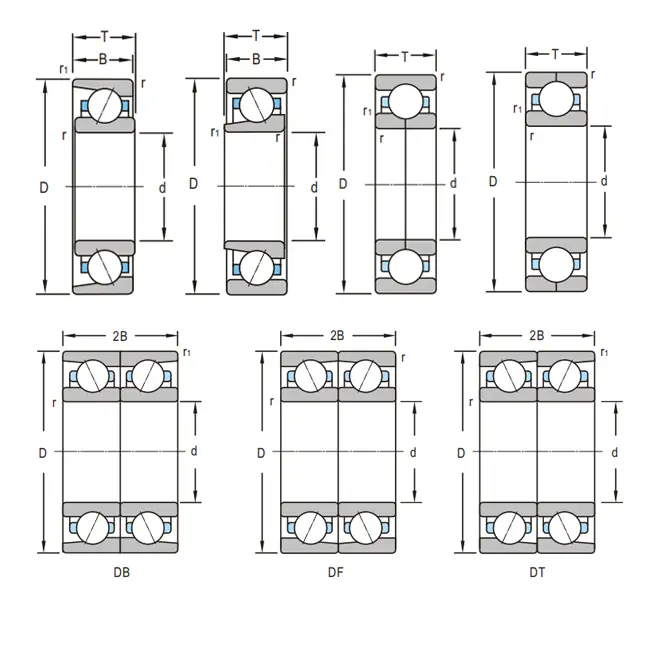
Understanding Thin Section Angular Contact Bearing Preload
The preload on a thin section angular contact bearing is a key factor in removing internal space, which has a direct effect on the tension and load distribution of the bearing. This important factor affects how well these small bearings handle axial and rotational forces together in precise situations.
The Physics Behind Preload Mechanics
Applying preload controls the stress inside the bearing system, which makes the contact angles between the rolling elements and raceways the best they can be. When used correctly, preload changes the bearing from a part that fits with some extra space around it into a hard mechanical joint that can precisely control motion. The thin walls of these bearings (usually between 2 and 5 mm) mean that the preload needs to be carefully calculated to keep the structure from deforming while still getting the stiffness qualities that are wanted.
Engineering studies show that the right preload settings can make bearings up to 300% stiffer than when they are not loaded. This increase in stiffness is very important in robotics applications that need more precise positioning than normal bearings can handle.
Impact on Bearing Performance Characteristics
Managing the preload correctly has a big impact on the working factors of a bearing, such as its noise level, vibration characteristics, and thermal stability. When they are used in medical equipment, ultra-slim bearings need preload sets that keep the placement accuracy within micrometers and keep noise levels below 35dB.
The link between preload and bearing life is based on a well-known optimization curve. Not enough preload leads to raceway wear patterns, while too much preload speeds up rolling element fatigue. Precision-grade P4 and P5 bearings have the longest service life when the rotational gap stays between 0.002 and 0.005 mm, according to studies.
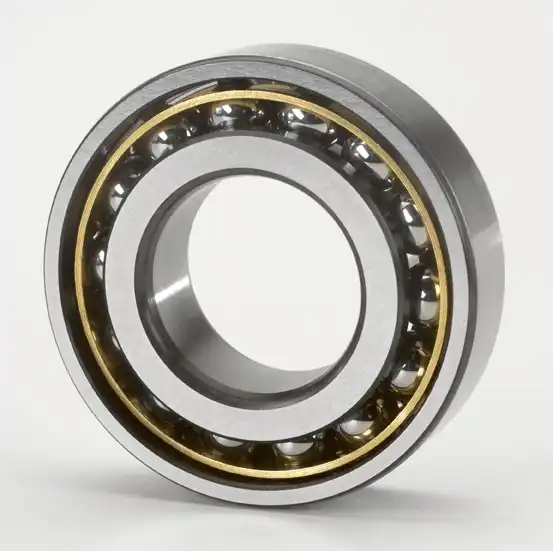
Key Factors to Consider When Applying Preload to Thin Section Angular Contact Bearings
Finding the best preload for ultra-slim thin section angular contact bearing systems is affected by a number of engineering factors. By understanding how these factors affect each other, you can precisely set the preload in a way that combines performance needs with practical limitations.
Geometric and Material Considerations
Bearing shape has a big impact on how to apply preload and what the error ranges are. The safest amount of mechanical stress that can be put on these special bearings during preload adjustment is limited by their cross-sectional dimensions and thin walls. When you put GCr15 steel rings inside engineering plastic cages, you get special heat expansion factors that you need to take into account when you figure out the preload.
The link between axial preload force and radial stiffness is based on the contact angle geometry, which is usually between 15° and 45° in angular contact setups. Higher contact angles allow for more axial load capacity, but they need different setup methods to keep working at their best.
Choosing between normal steel and hybrid ceramic designs has a huge impact on the preload needs. Ceramic rolling elements have a higher stiffness modulus and less heat expansion, which lets you have tighter preload limits while keeping service intervals longer.
Operational Environment Variables
When used in thin-wall bearing situations, temperature changes make it hard to keep the loading constant. Differences in the thermal expansion coefficients of the housing material and the bearing parts can cause preload changes that are bigger than what was intended during normal operation. Differential growth rates need to be taken into account when figuring out the preload for advanced uses that work at temperatures up to 500°C.
The best preload choices are directly affected by the load factors, such as the size, direction, and number of the cycles. Load vectors in wind turbine uses are always changing, so preload optimization is needed for wear resistance instead of peak load capacity. Dynamic loading analysis helps find the right preload levels to keep bearings from worrying while still keeping them stiff enough for accurate control systems.
Through centrifugal force production inside the bearing system, rotational speeds change the preload. In high-speed situations above 10,000 RPM, the preload may go down because rolling parts create outward forces that cancel out the preload tension.
Practical Preload Adjustment Methods and Best Practices
To get accurate preload in thin section angular contact bearings, you need to use both systematic testing methods and tried-and-true ways to change them. By following these steps, you can be sure of regular results and avoid damaging the bearings during the fitting process.
Measurement Techniques and Tools
To get an accurate reading of the preload, you must first check the baseline clearance using precise dial indicators that can pick up changes in movement as small as 0.001mm. By looking at how sound travels through the bearing system, ultrasonic testing tools can check the preload without damaging it.
The following testing methods make sure that the preload is found correctly:
- To measure axial displacement, known loads must be applied while the bearing is moved to find load-deflection relationships that show internal clearance removal.
- Monitoring torque during spinning gives real-time information on whether the setup is correct by measuring resistance during low-speed operation
- During run-in, measuring temperature finds the best preload levels by keeping an eye on heat production patterns that show how the load should be distributed.
All of these testing methods work together to give full preload proof in a range of working situations. Temperature tracking is especially helpful for thin-wall bearings because temperature changes have a big effect on how stable they are before they load up.
Implementation Strategies
The most precise way to control thin section bearing sets is to change the preload mechanically using precision spacers. To get reliable goal preload values, when you figure out the thickness of a spacer, you have to take into account how much the material expands and contracts with temperature and how the assembly fits together.
Thermal expansion methods offer an additional way to apply preload by heating the outer rings in a controlled way during installation. This method works especially well for thick-section bearings with bigger diameters that can't be adjusted mechanically because of their size.
Spring-loaded preload systems can automatically adjust for changes in temperature and wear over long working periods. These methods keep the preload levels stable while also being able to handle the thermal cycle that is common in industrial settings.
Comparing Thin Section Angular Contact Bearings Preload with Other Bearing Types
Knowing the changes in preload between bearing configurations helps engineers choose the best options for each job and avoid common mistakes in specification that hurt performance.
Structural Differences Affecting Preload
When it comes to preloading, standard deep groove or tapered roller setups are very different from thin section angular contact bearings. The smaller cross-sectional area limits the safe amount of mechanical force that can be used. This means that calculations need to be more accurate and fitting needs to be done in a certain way.
Cross roller bearings can hold more weight, but they can't go as fast as angular contact types. Due to the different geometry of line contact and point contact, their preload characteristics follow different optimization curves. This means that straight comparison is not a good idea for high-speed uses.
Performance Optimization Strategies
The goal of angular contact bearing preload optimization is to get the hardness to its highest level while keeping the speed and service life the same. This balance is very different from deep groove bearings, where preload mostly changes the noise and shaking traits instead of the basic load capacity.
The thin-wall construction helps reduce weight, which is important for robots and aircraft uses, but it needs preload methods to keep the structure from deforming. Standard bearing setup methods don't always work for these unique parts, so they need to be changed based on material stress analysis.
Selecting and Procuring Thin Section Angular Contact Bearings with Optimal Preload Support
To successfully buy preloaded thin section bearings, you need to carefully consider the skills of the provider, the availability of expert support, and the customization options that meet the needs of the application.
Supplier Evaluation Criteria
The accuracy of manufacturing has a direct effect on the security and regularity of the preload over time. It's more likely that suppliers will meet specifications if they have written quality control methods that include 100% dimensional proof and preload testing. When you mix ISO certification with quality standards relevant to your business, it shows that you have a deep understanding of all the important bearing parameters.
When working with complicated preload formulas and application-specific optimization, being able to provide technical help becomes very important. Suppliers that offer engineering consulting services can give helpful advice on how to choose the right preload and help you avoid common application mistakes that cause bearings to fail too soon.
Customization and Engineering Support
In modern manufacturing settings, non-standard bearing configurations with specific preload properties are being used more and more. Suppliers who can do fast development and custom production can make sure that the preload parameters are optimized for specific operating needs without affecting delivery times.
Engineering assistance throughout the lifetime of the application makes sure that the best upkeep and adjusting methods for the preload are used. In important situations, where a bearing failure could cause major problems with operations or safety, this ongoing relationship is especially helpful.
Conclusion
The best way to handle loading in thin section angular contact bearings is an important area of engineering that has a direct effect on how well the equipment works, how reliable it is, and how long it lasts. Engineers can choose bearing Solutions that meet tough application needs while keeping costs as low as possible by understanding the link between preload parameters and operating features. Because ultra-slim bearing preload is so specific, it needs careful attention to material qualities, heat effects, and load conditions that are very different from those used in regular bearings. To make application work, you need to combine your theoretical knowledge with practical measurement methods and ongoing tracking procedures that make sure the bearing performs the same way throughout its service life.
FAQ
What is the optimal preload range for thin section angular contact bearings?
The best preload values rely on the application, but as a general rule, you should keep the radial clearance between 0.002 and 0.005 mm after applying preload. For ultra-precision uses, tolerances may need to be as tight as 0.001mm, while settings with high temperatures need wider ranges to account for thermal effects.
How can I identify improper preload in operating equipment?
If the setup isn't right, it usually shows up as more noise, changes in the intensity of vibrations, or higher temperatures during operation. When there isn't enough preload, there is noticeable rattling and inaccurate placement. When there is too much preload, heat builds up and the bearings lasts less long. Monitoring these factors on a regular basis lets you know early on when the preload is going down.
What tools are essential for accurate preload measurement?
Some important measuring tools are precise dial signs with a range of 0.001mm, torque measurement devices for checking rotational resistance, and temperature monitors for studying temperatures. Ultrasonic measurement tools that can check the pressure without damaging the part may be useful for more advanced uses.
How does temperature affect preload stability?
When the temperature changes, the bearing parts and the housing materials expand and contract at different rates. This can change the preload by a large amount. When temperatures change by more than 50°C, applications need to use setup formulas that take thermal expansion coefficients into account to keep working at their best across the whole operating range.
Partner with INNO Bearing for Advanced Thin Section Bearing Solutions
INNO Bearing's thin section angular contact bearing solutions are carefully engineered for demanding industrial uses and can help your precision machinery work better. Our 30 years of experience in manufacturing lets us precisely optimize preload in a wide range of working conditions, from medical robots that need accuracy down to the micron level to high-temperature metallurgical equipment that needs to work at 500°C. As a reliable thin section angular contact bearing maker, we offer full technical support, which includes figuring out the preload, giving fitting instructions, and keeping an eye on the equipment's performance to make sure it works at its best. Email our engineering team at sales@inno-bearing.com to talk about your specific application needs and find out how our custom bearing solutions can help you run your business more efficiently.
References
Harris, Tedric A. and Kotzalas, Michael N. "Essential Concepts of Bearing Technology: Rolling Bearing Analysis, Fifth Edition." CRC Press, 2006.
Hamrock, Bernard J. and Dowson, Duncan. "Ball Bearing Lubrication: The Elastohydrodynamics of Elliptical Contacts." John Wiley & Sons, 1981.
Palmgren, Arvid. "Ball and Roller Bearing Engineering, Third Edition." SKF Industries Inc., 1959.
Jones, A.B. "A General Theory for Elastically Constrained Ball and Radial Roller Bearings Under Arbitrary Load and Speed Conditions." Journal of Basic Engineering, Transactions of ASME, 1960.
Eschmann, Paul and Hasbargen, Ludwig. "Ball and Roller Bearings: Theory, Design and Application, Second Edition." K.G. Heyden & Son Ltd., 1985.
Bossmanns, Bart and Tu, Jack F. "A Thermal Model for High Speed Motorized Spindles." International Journal of Machine Tools and Manufacture, Vol. 39, 1999.

Learn about our latest products and discounts through SMS or email